What to Do When Easter Lilies Get Pests? 2 Pest and 2 Disease Control Methods
When growing Easter lilies, the last thing we want to encounter is pests and diseases. These problems are extremely harmful to the plants, not only affecting their shapely appearance, but in severe cases even causing the plants to wither and die. So what should you do when Easter lilies get pests? How should pest and disease control for Easter lilies be done? Below, the editor will walk you through it.
I. What to Do When Easter Lilies Get Pests: Find the Cause
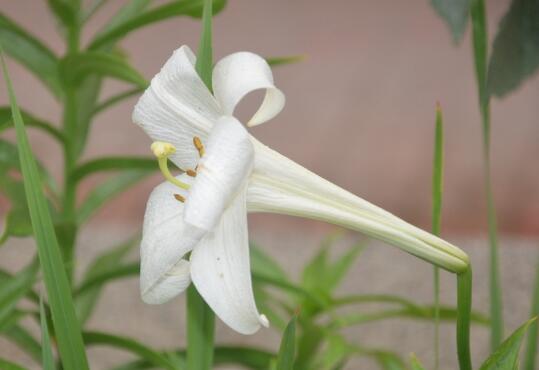
To know what to do when Easter lilies get pests, we first need to understand what kind of pest it is, so that we can deal with it in a targeted way, because the control methods for each pest and disease are different. The details are introduced below, and those troubled by this can take a look.
II. Pest and Disease Control for Easter Lilies (Pests)
1. Root mite (Rhizoglyphus echinopus)
The root mite is a pest of the family Acaridae, genus Rhizoglyphus. This pest mainly harms the bulbs of Easter lilies underground, usually attacking the base of the scales first, then gradually spreading upward. The affected parts turn black and rot, and in severe cases the entire plant dies.
Control method: When dealing with this pest and disease of Easter lilies, you can directly spray with 10% Uranus EC at 6000 times dilution or 30% Emamectin mite powder WP at 2000 times dilution to kill it.
2. White grubs
White grubs are the larvae of scarab beetles, also known as white soil worms or walnut worms. They are a worldwide underground pest with great destructive power, often biting through the roots of Easter lilies and causing the plants to wilt and die.
Control method: For this pest and disease of Easter lilies, we can use black light traps to kill the adults, or drench the flower roots with 50% phoxim emulsion at 1000 times dilution to kill them directly.
III. Pest and Disease Control for Easter Lilies (Diseases)
1. Leaf spot
Leaf spot is a disease caused by fungi. Its peak period is in spring and autumn each year, so you must pay extra attention during these two seasons. Leaf spot mainly harms the leaves of Easter lilies. When the disease occurs, many round spots appear on the leaves, and the spots gradually expand and become irregular in shape, eventually causing the plant to gradually wither and die.
Control method: When controlling leaf spot, this pest and disease of Easter lilies, you can spray diseased plants with 80% mancozeb at 400-600 times dilution, generally once every 10-15 days, and 1-2 applications will cure it.
2. Soft rot
Among the pests and diseases of Easter lilies, soft rot is a relatively common disease. When it occurs, many water-soaked spots appear on the roots of the plant. Over time, the rhizome gradually rots and gives off a foul odor, eventually causing it to rot and die.
Control method: When controlling this disease, we can use 38% oxadixyl and copper and kresoxim-methyl diluted at 1000 times for root drenching, generally applying once a week, and after 2-3 times it can be controlled.
What to Do When St. John's Wort Gets Pests: Pest and Disease Control for St. John's Wort / 2 Pests and 2 Diseases
When growing St. John's wort, the last thing we want to encounter is pests and diseases. These problems are extremely harmful to the plants, not only affecting their ornamental value, but in severe cases even causing their death. So what should you do when St. John's wort gets pests? How should pest and disease control for St. John's wort be done? Below, the editor will walk you through it.
I. What to Do When St. John's Wort Gets Pests: Find the Cause
To know what to do when St. John's wort gets pests, we first need to understand what kind of pest it is, so that we can deal with it in a targeted way, because the control methods for each pest and disease are different. The details are introduced below, and those troubled by this can take a look.
II. Pest and Disease Control for St. John's Wort (Pests)
1. Red spider mite
Red spider mite is a relatively common pest for many plants, and St. John's wort is no exception. When this pest appears on the plant, the leaves gradually turn yellow and white, and if left untreated for a long time it can also cause the plant to wither.
Control method: When dealing with this pest and disease of St. John's wort, we can increase the humidity of the environment to prevent its reproduction. We can also directly spray with 10% fenbutatin oxide and pyridaben EC at 1000 times dilution to kill it.
2. Noctuid moths
Noctuid moths are a phytophagous pest of the order Lepidoptera. They mainly harm the leaves of St. John's wort. Their larvae feed on plant leaves, often eating all the host's leaves, seriously affecting the growth and ornamental value of the trees.
Control method: The main damage period of noctuid moths is from July to September each year, so you must pay extra attention at this time. For this pest and disease of St. John's wort, we can directly spray with 2.5% trichlorfon powder to kill it.
III. Pest and Disease Control for St. John's Wort (Diseases)
1. Powdery mildew
Powdery mildew is a relatively common disease of St. John's wort. This disease mainly threatens the leaves of the plant. When it occurs, many powdery mold spots appear on the leaves. In the early stage it causes the leaves to lose their green color, and in severe cases the entire leaf is covered with a powdery mold layer, preventing the plant from photosynthesizing and causing it to gradually shrivel.
Control method: When controlling this pest and disease of St. John's wort, we can use 10% polyoxin at 1000 to 1500 times dilution to spray the plant, generally spraying once every 10 days, and about 2-3 times will cure it.
2. Brown spot
Brown spot, also called Rhizoctonia blight, is a fungal disease caused by Rhizoctonia solani. When it occurs, many yellow-brown to light-brown spots with a diameter of 0.1-0.5 cm appear on the leaves, and over time the spots gradually spread, eventually causing the plant to wither and die.
Control method: When we discover this pest and disease of St. John's wort, if the number of diseased leaves is relatively small, we can promptly remove and destroy them. If there are many, we should use 50% procymidone at 2000 times dilution for treatment, generally spraying the diseased plant once a week, and about 3 times will cure it.
What to Do When Purple Loosestrife Gets Pests: Pest and Disease Control for Purple Loosestrife / 2 Pests and 2 Diseases
When growing purple loosestrife, the last thing we want to encounter is pests and diseases. These problems are extremely harmful to the plants, not only affecting their ornamental value, but in severe cases even causing the plants to wither and die. So what should you do when purple loosestrife gets pests? How should pest and disease control for purple loosestrife be done? Below, the editor will walk you through it.
I. What to Do When Purple Loosestrife Gets Pests: Find the Cause
To know what to do when purple loosestrife gets pests, we first need to understand what kind of pest it is, so that we can deal with it in a targeted way, because the control methods for each pest and disease are different. The details are introduced below, and those troubled by this can take a look.
II. Pest and Disease Control for Purple Loosestrife (Pests)
1. Aphids
Aphids are a phytophagous insect of the order Homoptera. They can be said to be one of the most destructive pests on Earth, harming most plants, and purple loosestrife is one of them. This pest mainly harms the leaves, stems, tender tips and tender spikes of purple loosestrife, gradually sucking out the sap, causing the plant to lose a large amount of nutrients and eventually gradually wither and die.
Control method: When dealing with this pest and disease of purple loosestrife, we can spray with 50% malathion emulsion at 1000 times dilution or 40% imidacloprid water-soluble concentrate at 1500-2000 times dilution to kill it.
2. Red spider mite
Among the pests and diseases of purple loosestrife, red spider mite is a relatively common one. Its peak period is every summer, so you must pay extra attention at this time. When this pest occurs, the leaves of the plant gradually turn yellow and white, and if left untreated for a long time it can also cause the plant to wither.
Control method: When dealing with this red spider mite pest, we can directly spray with 40% dicofol EC at 1000-1500 times dilution, and generally three consecutive sprays can completely kill this pest.
III. Pest and Disease Control for Purple Loosestrife (Diseases)
1. Mosaic disease
Mosaic disease is a worldwide viral disease with great harm to purple loosestrife. In the early stage of the disease, chlorotic angular spots appear on the leaves, which eventually turn brown. In severe cases it can also affect the yield and quality of cut flowers.
Control method: When dealing with this pest and disease of purple loosestrife, we can use 40% dimethoate EC at 1000 times dilution to spray the plant, generally once every 10 days, and after 2-3 times it can be cured.
2. Powdery mildew
Powdery mildew is a relatively common disease of purple loosestrife. This disease mainly threatens the leaves of the plant. When it occurs, many powdery mold spots appear on the leaves. In the early stage it causes the leaves to lose their green color, and in severe cases the entire leaf is covered with a powdery mold layer, preventing the plant from photosynthesizing and causing it to gradually shrivel.
Control method: When controlling this pest and disease of purple loosestrife, we can use 70% thiophanate-methyl WP at 1000 times dilution to spray the plant, generally spraying once every 10 days, and about 2-3 times will cure it.