What to Do When African Violets Get Aphids? Common 3 Pests and 4 Diseases and Their Chemical Control
When growing African violets indoors, there are some care techniques and pest and disease control methods everyone needs to master. I won't say much about African violet care techniques here, as I believe everyone has already mastered them. Next, let's talk about pests and diseases, and aphids are the pest most likely to appear on African violets, so what should you do when African violets get aphids? Below are several common pest and disease control methods for African violets; let's take a look together.
I. What to Do When African Violets Get Aphids - Spray with Chemicals
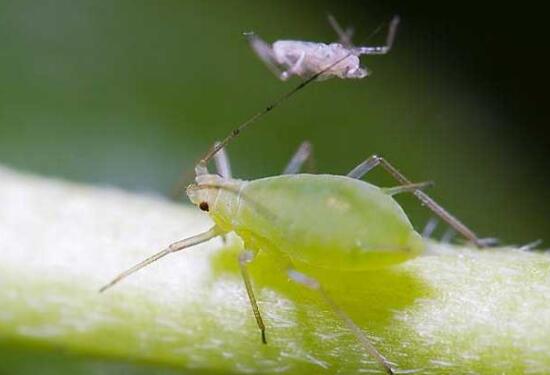
When operational mistakes lead to high air humidity, insufficient light and poor ventilation, African violets are prone to aphids, which harm the tender leaves and stems, sucking out the sap and affecting the plant's normal growth. Control method: if there are few aphids, you can brush them off with a tool such as a soft brush; if there are many aphids, you can spray a 1200-fold dilution of 2.5% rotenone emulsifiable concentrate for control, and generally several consecutive sprays will be effective.
II. Control of Common Pests and Diseases of African Violets
Besides aphids, there are 6 other common pests and diseases of African violets to control, among which the pests are red spider mites and scale insects, and the diseases are leaf spot, root-knot nematode disease, southern blight and Phytophthora blight, all of which will seriously affect the plant's ornamental value. For these, you should promptly spray chemicals for control once they are discovered.
1. Red spider mites
When it comes to insects on African violets, red spider mites are also something to watch out for. They pierce the African violet leaves with their mouthparts and suck out the sap, destroying the plant's chlorophyll, causing the leaves to show grayish-yellow spots or patches, and the leaves to turn withered and yellow or even drop off.
Control method: For red spider mites, you must always be on guard, and it is best to observe frequently; when the above symptoms are found, promptly check the undersides of the leaves. When only individual leaves are affected, the infested leaves can be removed; when many leaves are affected, spray propargite, dimethoate, huachongjing, fenvalerate or similar chemicals as early as possible for control.
2. Scale insects
Scale insects are generally prone to appear on African violets in environments with poor ventilation and inadequate light. These insects usually attach themselves to the leaf surface of the plant, and their secretions contaminate the leaves, and can also cause the serious consequence of African violet leaves turning yellow and dropping off.
Control method: When few scale insects are found, dip a cotton ball in rice vinegar and gently wipe the affected leaves, which can wipe away and kill the scale insects; when there are many scale insects, spray a 1000-fold dilution of 40% omethoate for control, spraying once a week, and 2 to 3 consecutive sprays will be effective.
3. Leaf spot
When the indoor temperature fluctuates greatly in a short period, or when too much water is given during the dormant period, African violets are prone to leaf spot. This disease mainly harms the lower leaves of African violets, and the diseased leaves develop many small brown spots, which in severe cases spread across the entire leaf.
Control method: When the above symptoms are found, promptly remove the diseased leaves and destroy them together to reduce the source of infection; then use carbendazim, chlorothalonil, thiophanate-methyl or similar chemicals for foliar spraying, once every 7-8 days, for 2-3 consecutive times, and the plant can basically recover.
4. Root-knot nematode disease
Another disease of African violets, it is a root disease caused by root-knot nematodes. After contracting this disease, the fibrous roots and lateral roots of the African violet develop knot-like root galls of varying sizes. In addition, this disease also causes the plant to be stunted and poorly developed.
Control method: This disease is mainly prevented. Before planting, evenly apply 15 grams of 3% carbofuran granules into the potting soil, then cover with 10 cm of soil, and then water thoroughly; this generally can eliminate many kinds of pests.
5. Southern blight
When the environment is hot and humid, the soil is waterlogged, and ventilation and light transmission are poor, African violets are prone to southern blight. This disease mainly harms the stem base and roots of African violets, causing purple-brown spots to appear on the leaves, followed by an obvious white layer of mycelium, and in severe cases the plant withers and eventually dies.
Control method: After the above symptoms are found, promptly spray fungicides such as carbendazim, Bordeaux mixture and lime-sulfur mixture on the stem base of the plant and the substrate. In addition, when the disease occurs, lime powder can be spread, once every 15 days, and 2-3 times is enough to cure it.
6. Phytophthora blight
Among the common pests and diseases of African violets to control, Phytophthora blight is one everyone should pay particular attention to. This disease mainly harms the leaves and the ground-level parts of African violets, causing the diseased leaves to develop water-soaked spots, which then quickly expand and turn dark brown and rotten, and cause leaf drop; sometimes there is a thin white mold layer on the surface of the affected leaves.
Control method: Promptly cut off the diseased leaves and burn them together or bury them in soil to reduce the source of infection. When the disease occurs, spray chemicals such as metalaxyl, fosetyl-aluminum, copper hydroxide and oxadixyl for control.
That's all the editor has to introduce about the control of common pests and diseases of African violets. I believe everyone should know what to do when African violets get insects or diseases! Overall, African violets are not difficult to grow; you just need to follow the African violet cultivation methods to care for them. Only then will insects not come calling. Finally, may everyone's African violets grow beautifully~
Control of Common Pests and Diseases of African Violets
African violet generally refers to the African violet (Saintpaulia)
African violet, Latin scientific name: (Saintpaulia ionantha Wendl), also known as African violet, is a perennial herbaceous plant.
Stemless, the whole plant is covered with hairs. Leaves ovate, petioles thick and fleshy. Flowers single or several together, light purple. There are many cultivated varieties, including large-flowered, single, semi-double, double, and variegated-leaf types, with flower colors including purple-red, white, blue, pink and bicolor, etc.
It prefers a warm climate, dislikes high temperatures, is relatively shade-tolerant, and is suitable for growing in diffused light. It prefers fertile, loose neutral or slightly acidic soil. Native to the tropical regions of East Africa, the plant is small and delicate, with colorful flowers and blooms in all four seasons; it is an excellent indoor flower and also a world-famous potted flower, especially popular for cultivation in Europe and America.
Under high temperature and high humidity conditions, it is prone to fusarium wilt, powdery mildew and leaf rot, and a 1000-fold dilution of 10% antibacterial agent 401 acetic acid solution can be sprayed or poured into the potting soil. Scale insects and red spider mites often harm African violets during the growing period, and a 1000-fold dilution of 40% omethoate emulsifiable concentrate can be sprayed to kill them.A diseased African violet shows different symptoms in different parts of its appearance; for example, the flower part may fail to bloom, be deformed, die prematurely, have dull colors, reduced numbers, or rot, etc. Leaf tissue may show deformity, curling, yellowing, discoloration, brown spot formation and rot, etc. The stem part may show excessive elongation (longer internodes), browning, rot, insect or fungal parasitism, etc. The root part may show browning and discoloration, rot or insect or fungal parasitism, etc. If the diseases of African violets are classified by the factors that cause them (pathogens), they can be divided into two categories:
(1) Physiological diseases - factors causing physiological diseases include: environmental factors such as temperature too low or too high, humidity too low or too high, unsuitable light source and air pollution, etc.; cultivation techniques such as improper watering control, improper repotting, poor physical and chemical properties of the medium, improper use of pesticides, growth regulators and fertilizers, etc.
The key to preventing and treating physiological diseases is to learn correct environmental management and cultivation techniques; recognize various symptoms and make correct disease diagnoses; and improve environmental factors or cultivation techniques based on the disease diagnosis. Physiological diseases are not contagious, and as long as the environmental factors are adjusted in the early stage of occurrence, most plants can still recover.
(2) Infectious diseases - can be divided into pest damage - common ones include red spider mites, aphids, scale insects, root mealybugs and thrips, etc.; although these pathogens are tiny, most are visible to the naked eye; and diseases - pathogenic bacteria include viruses, viroids, bacteria, fungi and nematodes, etc. Diseases caused by plant pathogens are contagious, so as long as one plant in a group is sick, it may cause all plants in the entire cultivation area to be infected.
Therefore, to avoid the occurrence of infectious diseases, you should prevent outside diseased plants from infecting existing plants - external plants should first be isolated for at least 1 month or more, and if no disease occurs, then moved to the cultivation area for planting; once a diseased plant is found, it must be isolated immediately, and pesticides sprayed or the diseased plant directly discarded. At the same time, to prevent plants carrying pathogens from becoming diseased again and spreading, it is best to spray pesticides over the whole area; tools and media that have come into contact with diseased plants must be sterilized or discarded.
African Violet Cultivation and Management Techniques
African violet is translated from the English "African Violet"; it is native to the mountains of East Africa. Because the flowers of the native species resemble those of the pansy, with five petals arranged as three large and two small, it is so named. Placed indoors, it can purify indoor air, improve indoor air quality, beautify the environment, harmonize the mood and relieve stress, and is also an ideal material for horticultural therapy. The African violet is thus able to be close to humans and bring endless pleasure and contributions, so it is a "green pet" worthy of our affection.
The Charms of African Violets
1. Indoor flowering plant - general flowering plants have high light requirements and cannot grow normally indoors, so indoor plants are mostly foliage plants; however, African violets have low light requirements, and as long as they are placed in a brighter indoor window or under a fluorescent light source, they can grow and bloom normally, making them one of the rare indoor flowering (flower-viewing) plants.
2. Can bloom in all four seasons - the flowering period of some flowering plants is affected by day length or temperature, and they can only bloom in a specific season or only once a year, whereas the flowering period of African violets often lasts as long as 1-2 months; as long as there is proper care and a suitable growing environment, they can bloom once every 3-4 months, and if there are enough plants, you can enjoy blooming flowers all year round.
3. Flowers are ever-changing - there are currently more than 10,000 varieties worldwide, with flower colors including blue, pink, red, purple, green, white and yellow and other color ranges, and variations such as picotee edges, speckling, striped colors, bicolor or tricolor blends; petals are also divided by the number of whorls into three categories: single (one whorl, five petals), double (two or more whorls) and semi-double (between one and two whorls); petal shapes include round, violet-shaped, trumpet-shaped and wasp-wing-shaped, etc.
4. Small plants that do not take up space - the diameter of the plants is mostly between 5-40 cm. Such plants are smaller than many indoor plants, so growing them indoors does not take up too much space; and you can choose varieties of different sizes to grow according to personal preference or to match the indoor arrangement.
5. Easy to propagate - leaf cuttings are enough for propagation, so ordinary enthusiasts can easily do it at home or in the office, and thereby enjoy the pleasure of creating life.
6. Easy to produce new varieties - due to their own genetically unstable characteristics, mutated new varieties can appear during the cultivation process, and thus often bring growers unexpected surprises and gains.
Key Points of Indoor Cultivation
1. Management of Environmental Factors
(1) Light source - the light intensity required by African violets is about 200-800 foot-candles, with an irradiation time of about 8-12 hours; if you want to promote flowering, you can gradually extend the light time to 16 hours. The intensity of outdoor direct light is often greater than 8,000 foot-candles, which easily causes sunburn to the plant leaves and is not suitable for African violet growth. However, indoor light supply is also often insufficient, causing the plant to grow slowly, fail to bloom or become leggy. Generally, the light level suitable for reading is only about 100-200 foot-candles, so it can be seen that indoor locations with light below the level suitable for reading are not suitable for growing African violets; an appropriate indoor placement is by a window with bright, non-direct sunlight, and if the indoor light is too low, artificial light must be added for cultivation.
(2) Temperature - the suitable growth temperature for African violets is similar to that for humans, about 18-26°C, so an environment that humans find comfortable, such as an air-conditioned office or home environment, is most suitable for African violet growth.
(3) Humidity - the native environment of African violets is beside streams in rainforests, on humid cliffs or in swampy areas, and its humidity during the rainy season is usually 90-95%, so African violets love high-humidity environments, and the appropriate humidity for the growth of most varieties is 50-70%. The average annual humidity in Taiwan, China is about 60%, and even indoors it can mostly be maintained above 50%, so the humidity of the home environment in Taiwan, China is suitable for African violet growth; however, when growing in an air-conditioned environment, the plant must be protected from direct blowing by cold air.
(4) Air - African violets grow better in an environment with air conditioning equipment or air circulation; the main purpose is that circulating air helps lower the temperature around the plant, so as to avoid a high-temperature and high-humidity environment being unfavorable to African violet growth.
2. Cultivation Techniques
(1) Growing medium - an ideal growing medium must have good aeration, water and fertilizer retention, a pH value suitable for plant growth and good cation exchange capacity. There are three commonly used growing media: peat moss - a brown sediment of decomposed plant matter from swampy areas, with good water and fertilizer retention; perlite - white granular material formed after limestone is treated at high temperature, does not absorb water, has poor fertilizer retention, but has excellent aeration; vermiculite - fragments formed by mica expanding and splitting when heated, with good aeration but poor water and fertilizer retention.
African violets have different requirements for the physical and chemical properties of the medium at different growth stages, such as: vegetative growth stage - the moisture-retaining medium (namely peat moss) can be between 50-60%; cutting propagation stage - during this period there is no root tissue and water cannot be absorbed, so the medium should not contain too much water; therefore, a medium with good aeration is mainly used, and perlite and vermiculite can be between 60-80%.
(2) Water management - generally, the watering temperature should be as close as possible to that of the plant, and it is enough to try to avoid watering at noon in midsummer (above 35°C) or at night in winter (below 15°C).
The timing and amount of watering are mainly determined by the moisture content of the medium. There are several methods for testing the moisture content of the medium:
˙Touch the medium with a finger - when the surface soil is already dry, it should be watered.
˙Weighing - the higher the moisture content of the medium, the heavier the plant; conversely, the lighter the plant. Generally, when the weight of the plant together with the pot is about 1/3 to 1/2 of that at maximum water content, it needs watering.
˙Leaf appearance - African violets are more tolerant of water shortage than many indoor plants, so when the leaves are slightly wilted, it means the plant is short of water and water should be replenished in time.
˙Visual inspection of the medium surface - when the surface soil is dry, its color is whiter than when moist, and this can be used to judge the timing of watering.
Each watering should, in principle, fully moisten the medium and allow excess water to flow out from the bottom of the pot. In a general indoor environment, the watering cycle for African violets is about 3-7 days, but it must vary according to the current environment. The watering methods are:
˙Spraying method - water with a watering can, which can also wash off dust and accumulated salts on the plant, but avoid using water with too large a temperature difference that causes water damage.
˙Irrigation - irrigate with a long-spout pot, which can avoid water contacting the plant or flowers and thus will not cause water-damage spots, and is also suitable for the flowering period.
˙Bottom-tray absorption - pour water into the bottom reservoir tray, let the medium absorb water into it by capillary action, and after a few minutes when the medium is saturated with water, pour off the remaining water.
(3) Fertilization - generally, when the light source is sufficient, only a small amount of fertilizer needs to be added to maintain normal plant growth, and too much fertilizer will instead cause growth disorders; however, in an environment with insufficient light, even if sufficient fertilizer is provided, the plant will grow poorly or even die. Therefore, fertilizer application should generally be carried out when there is no concern about the light source for its effectiveness to be shown. As long as the light source is sufficient, the environment is appropriate and management is correct, merely mixing base fertilizer into the medium or the fertility stored in the medium is enough for the plant to grow and bloom normally even without adding any fertilizer during the growing period. However, if you want to pursue the plant's growth vigor and flower quality, you must use suitable fertilizers according to different growth stages.
For African violets, the fertilizers required and fertilization key points at different growth stages are as follows:
1. Rooting stage - such as propagation, transplanting and repotting. Just after treatment, because there are no roots or the roots are injured, the absorption function is poor, so it is not suitable to apply fertilizer immediately; you should wait 2-4 weeks before fertilizing. Fertilizers with higher nitrogen and potassium content are suitable, such as fertilizers with nitrogen, phosphorus and potassium ratios of 7-6-19, 14-12-14, etc.
2. Vegetative growth stage - such as from seedling growth to before flowering and after the flowering period. Fertilizers with higher nitrogen content are suitable, such as fertilizers with nitrogen, phosphorus and potassium ratios of 30-10-10, 25-5-20, 5-1-1, etc.
3. Flowering stage - begin application about 2 months before the expected flowering. Fertilizers with higher phosphorus content are suitable, such as fertilizers with nitrogen, phosphorus and potassium ratios of 10-30-20, 15-30-15, 12-36-14, 0-10-10, etc.
(4) Repotting - aged plants, seedlings being moved to new pots, plants with diseased roots, pots with accumulated salts on the rim and outer wall, and plants with an out-of-shape or unattractive appearance should be repotted in good time. Plants in different conditions have their own suitable repotting methods and key points. Taking a healthy plant (small or medium seedling) being moved from a small pot to a larger pot and an aged plant as examples, the sequence and key points are as follows:
1. Tidying up the plant and inspecting the health status of the roots - first, you can remove the lowest, smaller or poorly growing leaves, and inspect the roots: if they are white, they are healthy; if they are brown or dark brown, they are unhealthy or even rotten. Unhealthy root tissue must be removed with a blade or scissors along with about 1/3 to 1/2 of the medium; generally, the more severe the browning, the greater the proportion of medium removed. For healthy plants, however, no treatment of the roots is needed, and injury to the root tissue should be avoided as much as possible.
2. Putting into a new pot - when moving a plant from a small pot to a large pot, first place a little new medium at the bottom of the larger pot to be used, put the plant with its medium into the large pot, and fill the gaps with new medium.
3. Treatment after repotting - water thoroughly and then place in a suitable environment for cultivation. Plants after repotting are usually weaker or have injured roots, and the root absorption capacity is reduced, so avoid fertilizing within 2 weeks after repotting.
It is best to choose a season with a suitable environment and climate for repotting, so that the plant can recover smoothly. Generally, it is appropriate to maintain the temperature between 18-26°C when repotting. In Taiwan, China, spring and autumn are more suitable, but if grown in an environment with air conditioning equipment where the temperature can be maintained at around 25°C, repotting can be carried out in all four seasons.
(5) Propagation methods - divided into five methods: leaf cuttings, axillary buds, flower bud cuttings, seeds and tissue culture. For home cultivation, African violet leaf cuttings are the simplest and most popular propagation method. The steps are as follows:
1. Selection of leaves - the older the leaf, the worse its differentiation ability, so the leaves used for propagation are best chosen young, healthy and disease-free. For a mature plant, the leaves in the 3rd and 4th rings counted from the center are the most ideal propagation material; as long as they are healthy, not yellowed and not infected by pests or diseases, even the outermost ones or those accidentally dropped can be used.
2. Removing the leaf - you can hold the petiole between your thumb and index finger and shake it left and right several times to detach the petiole from the plant at the base, or use a blade to cut it off from the base of the petiole.
3. Treatment of the leaf - with the leaf facing up, use a blade to cut at about a 45° angle at a distance of 1.5-2 cm from the leaf base.
4. Cutting into a solid medium - insert the treated leaf from the cut end into a moistened propagation medium (some media are water-repellent when too dry and are not easy to moisten, so they must be moistened before use) to a depth of about 0.5-1 cm, with the principle of merely being able to hold the leaf in place (if buried too deep, new shoots will not easily emerge later), then leave it still in an environment with a light level of about 200-250 foot-candles, 8-12 hours of light per day and a temperature range of about 18-25°C for cultivation.
5. Rooting and sprouting - the time for leaf rooting is affected by variety, environment, season, leaf age, health condition and care, generally ranging from 1 week to 2 months. After roots grow, a high-nitrogen fertilizer diluted 2,500-3,000 times can be applied every 7-10 days. New shoots grow about 1 month after rooting.
6. Division - about 2-3 months after the new shoots grow, when the small seedlings have 4-6 leaves, take the mother leaf together with the small seedlings out of the propagation container, remove part of the medium, and then use a small blade to separate the small seedlings. Poorly developed or too-small seedlings (with fewer than 4 leaves) can be discarded to ensure plant quality, and then use cultivation medium to plant the plants in small pots and water thoroughly.
7. Care of seedlings - generally, seedlings are less tolerant of water shortage, and once short of water it may affect future growth and development, so water shortage should be avoided. After 2-3 months, they can be planted out in larger pots. Green-leaf varieties take about 8-12 months from leaf cutting to flowering, while variegated-leaf varieties, because they grow more slowly, often need to grow for more than 12 months before their first flowering.
3. Overview of Pest and Disease Management
A diseased African violet shows different symptoms in different parts of its appearance; for example, the flower part may fail to bloom, be deformed, die prematurely, have dull colors, reduced numbers, or rot, etc. Leaf tissue may show deformity, curling, yellowing, discoloration, brown spot formation and rot, etc. The stem part may show excessive elongation (longer internodes), browning, rot, insect or fungal parasitism, etc. The root part may show browning and discoloration, rot or insect or fungal parasitism, etc. If the diseases of African violets are classified by the factors that cause them (pathogens), they can be divided into two categories:
(1) Physiological diseases - factors causing physiological diseases include: environmental factors such as temperature too low or too high, humidity too low or too high, unsuitable light source and air pollution, etc.; cultivation techniques such as improper watering control, improper repotting, poor physical and chemical properties of the medium, improper use of pesticides, growth regulators and fertilizers, etc.
The key to preventing and treating physiological diseases is to learn correct environmental management and cultivation techniques; recognize various symptoms and make correct disease diagnoses; and improve environmental factors or cultivation techniques based on the disease diagnosis. Physiological diseases are not contagious, and as long as the environmental factors are adjusted in the early stage of occurrence, most plants can still recover.
(2) Infectious diseases - can be divided into pest damage - common ones include red spider mites, aphids, scale insects, root mealybugs and thrips, etc.; although these pathogens are tiny, most are visible to the naked eye; and diseases - pathogenic bacteria include viruses, viroids, bacteria, fungi and nematodes, etc. Diseases caused by plant pathogens are contagious, so as long as one plant in a group is sick, it may cause all plants in the entire cultivation area to be infected.
Therefore, to avoid the occurrence of infectious diseases, you should prevent outside diseased plants from infecting existing plants - external plants should first be isolated for at least 1 month or more, and if no disease occurs, then moved to the cultivation area for planting; once a diseased plant is found, it must be isolated immediately, and pesticides sprayed or the diseased plant directly discarded. At the same time, to prevent plants carrying pathogens from becoming diseased again and spreading, it is best to spray pesticides over the whole area; tools and media that have come into contact with diseased plants must be sterilized or discarded.