What to Do When Coreopsis Gets Bugs? 2 Pest and 3 Disease Control Methods
In the process of growing coreopsis, the last thing we want to encounter is pests and diseases. These problems are extremely harmful to the plants, so we must deal with them as soon as we discover them. What to do when coreopsis gets bugs? How should pest and disease control for coreopsis be done? Below, the editor will walk you through it.
1. What to Do When Coreopsis Gets Bugs - Find the Cause
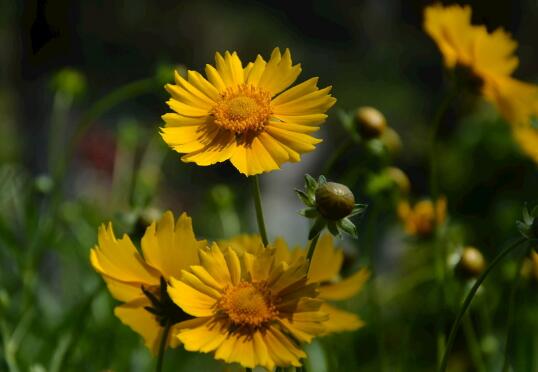
To know what to do when coreopsis gets bugs, we first need to understand what kind of bug it is, so that we can deal with it in a targeted way, because the treatment methods for each pest and disease are different. The details are described in the text below, and friends troubled by this can take a look.
2. Pest and Disease Control for Coreopsis (Pests)
Thrips
Thrips is the collective name for insects of the order Thysanoptera. They are relatively small, generally 0.5-2mm in body length, and rarely exceed 7mm. This pest mainly harms the corm and leaf area of coreopsis, gradually absorbing the nutrients within, which causes the leaves to gradually lose their green color and turn yellow and dry up.
Control method: When dealing with this coreopsis pest, we can use 25% imidacloprid 3000 times dilution and 70% Amello 6000-10000 times dilution for alternating spray control.
Red Spider Mite
Among the pests and diseases of coreopsis, the red spider mite is a relatively common one. Its peak period is every summer, so everyone must pay extra attention at this time. When this pest appears, the plant's leaves will gradually turn yellow and white, and if left untreated for a long time, it will also cause the plant to wither.
Control method: When dealing with this red spider mite pest, we can directly use 40% dicofol emulsifiable concentrate 1000-1500 times dilution for spray killing. Generally, three consecutive sprays can completely kill this pest.
3. Pest and Disease Control for Coreopsis (Diseases)
White Star Disease
White star disease mainly threatens the leaves of coreopsis. When it occurs, many dark brown spots appear on the leaves, which later become dark brown around the edges with a grayish-white center. This disease mostly occurs on the lower leaves, and in severe cases the leaves will curl and dry up.
Control method: For this coreopsis pest and disease, we can use 75% chlorothalonil wettable powder 500-800 times dilution to spray the diseased plants, generally once every half month, and after 1-2 times they can recover.
Rust Disease
Rust disease is one of the more frequently occurring pests and diseases of coreopsis. This disease mainly threatens the plant's leaves, stems and fruits. When it occurs, many small blister spots appear on the affected parts, and in severe cases the blister spots merge into dense patches, and the plant will rapidly wither and die as a result.
Control method: When rust disease appears on coreopsis, we can use 50% carboxin wettable powder 2000 times dilution to spray it, generally once every 7-10 days, and after 1-2 times it can recover.
Leaf Spot Disease
Leaf spot disease is a disease caused by fungi. Its peak period is every spring and autumn, so everyone must pay extra attention in these two seasons. Leaf spot disease mainly harms the leaves of coreopsis. When it occurs, many round spots appear on the leaves, and the spots gradually expand and become irregular in shape, ultimately causing the plant to gradually wither and die.
Control method: When controlling leaf spot disease, a coreopsis pest and disease, we can use 80% mancozeb 400-600 times dilution to spray the diseased plants, generally once every 10-15 days, and after 1-2 times they can recover.
What to Do When Chrysanthemum paludosum Gets Bugs - Pest and Disease Control for Chrysanthemum paludosum / 2 Pests and 3 Diseases
During the growth of Chrysanthemum paludosum, the last thing we want to encounter is pests and diseases. These problems are extremely harmful to the plants, not only affecting their attractive shape, but also causing the plants to wither and die if not dealt with in time. So what to do when Chrysanthemum paludosum gets bugs? How should pest and disease control for Chrysanthemum paludosum be done? Below, the editor will walk you through it.
1. What to Do When Chrysanthemum paludosum Gets Bugs - Find the Cause
To know what to do when Chrysanthemum paludosum gets bugs, we first need to understand what kind of bug it is, so that we can deal with it in a targeted way, because the treatment methods for each pest and disease are different. The details are described in the text below, and friends troubled by this can take a look.
2. Pest and Disease Control for Chrysanthemum paludosum
1. Aphids
Aphids are a pest that exists on many plants, and Chrysanthemum paludosum is no exception. They are a phytophagous insect that mainly harms the leaves and stems of Chrysanthemum paludosum, gradually absorbing the sap within, causing the plant to lose a large amount of nutrients, and over time causing the plant to gradually wither and die.
Control method: When dealing with this Chrysanthemum paludosum pest, if the number of pests is relatively small, we can prune off the affected branch tips and then disinfect the plant. If the number is larger, we can directly use 50% pirimicarb wettable powder 3000 times dilution for direct spray killing.
2. White Grubs
White grubs are an underground pest. Their peak period is from June to September each year, so everyone must pay extra attention. This pest mainly bites the roots and stems of chrysanthemums, mainly occurring during the seedling recovery period, and in severe cases will cause the entire plant to wither and die.
Control method: For this Chrysanthemum paludosum pest, we can directly use 80% trichlorfon soluble powder and 25% carbaryl wettable powder, each at 800 times dilution, for root drenching, and this will kill them.
3. Leaf Spot Disease
Leaf spot disease is a common plant disease. Its peak period is generally in spring and autumn. When it occurs, many oval brown spots appear on the leaves of Chrysanthemum paludosum, and over time the spots gradually spread and the color slowly deepens, ultimately causing the plant to be unable to carry out photosynthesis and wither and die.
Control method: For this Chrysanthemum paludosum pest and disease, we can use 20% simeconazole · prochloraz 1000 times dilution to spray the diseased plants, generally once every 7-10 days, and after 2-3 times they can recover.
4. Rust Disease
Rust disease is a disease caused by fungi. It mainly harms the leaves, stems and fruits of Chrysanthemum paludosum. When it occurs, many small blister spots of different colors appear on the affected parts, and over time they gradually spread. When the blister spots merge into dense patches, the plant will rapidly wither and die due to massive water loss from within.
Control method: For rust disease, a Chrysanthemum paludosum pest and disease, we can use 50% carboxin wettable powder 3000 times dilution to spray for control, generally once every 7-12 days, and after 1-2 times it can recover.
5. Fusarium Wilt
Fusarium wilt is a disease caused by fungi. The pathogen generally invades through root wounds and gradually spreads over time. Generally from onset to death, the course of the disease is 15-45 days. It is an extremely harmful disease.
Control method: When dealing with this Chrysanthemum paludosum pest and disease, we can use carbendazim or benomyl 800-1000 times dilution to water the roots of Chrysanthemum paludosum, generally once a week, and after 5-6 times it can recover.
What to Do When Buddleja officinalis Gets Bugs - Pest and Disease Control for Buddleja officinalis / 2 Pests and 3 Diseases
During the process of growing Buddleja officinalis, the last thing we want to encounter is pests and diseases. These problems are extremely harmful to the plants, not only affecting their attractive shape, but also causing the plants to gradually wither and die if left untreated for a long time. So what to do when Buddleja officinalis gets bugs? How should pest and disease control for Buddleja officinalis be done? Below, the editor will walk you through it.
1. What to Do When Buddleja officinalis Gets Bugs - Find the Cause
To know what to do when Buddleja officinalis gets bugs, we first need to understand what kind of bug it is, so that we can deal with it in a targeted way, because the treatment methods for each pest and disease are different. The details are described in the text below, and friends troubled by this can take a look.
2. Pest and Disease Control for Buddleja officinalis
1. Stem Borers
Stem borers are a pest of the order Lepidoptera. They mainly harm the young seedling heart leaves of Buddleja officinalis, causing dead hearts. If we do not deal with them in a targeted way in time, they will gradually gnaw at the lower part of the plant and cause the entire plant to die.
Control method: When dealing with this Buddleja officinalis pest, we can use 800-1000 times dilution of omethoate or 21% fenpropathrin emulsifiable concentrate 2000 times dilution for direct spray killing of the pests.
2. Red Spider Mite
The red spider mite, also known as the cotton red spider mite, is a pest of the family Tetranychidae. This pest is very small and generally hard to spot. It harms plants by piercing its mouthparts into the leaves to suck sap, causing chlorophyll to be destroyed and yellowing to appear, and in severe cases causing the leaves to fall off or even drop completely.
Control method: When dealing with this Buddleja officinalis pest, if only a few individual leaves are affected, we can remove them. If more leaves are affected, we can use 40% dimethoate emulsifiable concentrate 1500 times dilution to spray the plant, thereby eliminating this pest.
3. Leaf Blight
Leaf blight is a relatively common disease of Buddleja officinalis, mainly threatening its leaf margins, leaf tips and other areas. When it occurs, many irregularly sized spots appear on the leaves, and over time they gradually spread, ultimately causing the plant to wither and die.
Control method: When dealing with leaf blight disease, we can use 50% thiophanate 1000 times dilution to spray the plant, generally once every 10 days or so, and after 1-2 times it can recover.
4. Rust Disease
Rust disease is a disease that appears on many plants, and Buddleja officinalis is no exception. This disease mainly threatens the plant's leaves, stems and fruits. When it occurs, many small blister spots appear on the affected parts, and in severe cases the blister spots merge into dense patches, and the plant will rapidly wither and die as a result.
Control method: When controlling this Buddleja officinalis pest and disease, we can use 20% carboxin emulsifiable concentrate 400-600 times dilution spray to spray Buddleja officinalis, generally once every 15 days or so, and after 2-3 times it can recover.
5. Leaf Spot Disease
Leaf spot disease is a disease caused by fungi. Its peak period is every spring and autumn, so everyone must pay extra attention in these two seasons. Leaf spot disease mainly harms the leaves of Buddleja officinalis. When it occurs, many round spots appear on the leaves, and the spots gradually expand and become irregular in shape, ultimately causing the plant to gradually wither and die.
Control method: When controlling leaf spot disease, a Buddleja officinalis disease, we can use 80% mancozeb 400-600 times dilution to spray the diseased plants, generally once every 10-15 days, and after 1-2 times they can recover.