What to Do When African Violets Get Pests or Diseases? 2 Pests and 3 Diseases Prevention and Treatment Methods
As a beautiful flower, the African violet has many benefits. It is not only good-looking, but can also repel mosquitoes and insects, and can beautify the home. However, when grown indoors, because the environment is too poor and care is improper, the plant often gets pests and diseases. So what should be done when African violets get pests? The above are several common pest and disease prevention and treatment methods for African violets. Let's take a look together!
I. African Violets Getting Pests
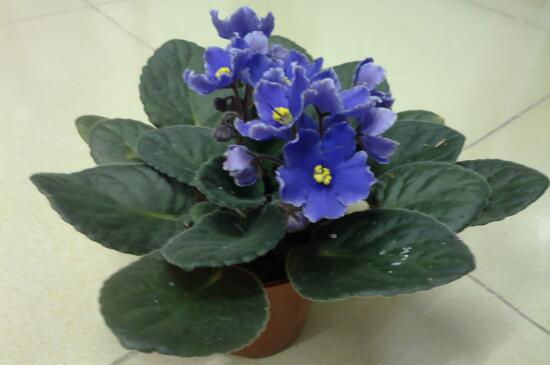
When growing African violets indoors, they are actually not prone to pests and diseases. However, due to operational mistakes that lead to high air humidity, insufficient light, and poor ventilation, they are also susceptible to Fusarium wilt, powdery mildew, leaf rot, scale insects, red spider mites, and other pests and diseases, which will seriously affect the plant's ornamental value. In response, everyone should promptly spray pesticides for prevention and treatment after discovery.
II. Prevention and Treatment of African Violet Pests and Diseases
1. Scale insects
Scale insects are the main pest of African violets, generally appearing in environments with poor ventilation and poor light. These insects generally float and attach to the surface of the plant's leaves, and their secretions pollute the leaves, and can also cause the serious consequence of African violet leaves turning yellow and falling off.
Prevention and treatment method: When there are few scale insects, rice vinegar can be used. Soak a cotton ball in rice vinegar, gently wipe the affected leaves, and the scale insects can be wiped off and killed. When there are many scale insects, spray 40% omethoate 1000 times dilution for prevention and treatment. Spray once a week, and results can be seen after 2 to 3 consecutive times.
2. Red spider mites
When talking about African violets getting pests, red spider mites are also something everyone needs to pay attention to. They pierce into the African violet leaves with their mouthparts to suck sap, causing the plant's chlorophyll to be destroyed. The leaves show gray-yellow spots or patches, and the leaves become withered and yellow, or even fall off.
Prevention and treatment method: Usually pay attention to observing the flowers, and when the above symptoms are found, promptly check the underside of the leaves. When individual leaves are affected, the infested leaves can be removed. When more leaves are affected, spray propargite, dicofol, dimethoate, huachongjing, fenvalerate, and other pesticides as early as possible for prevention and treatment.
3. Fusarium wilt
Besides insect pests, during the growth process, African violets can also contract diseases, among which the most common is Fusarium wilt. This is a plant disease caused by fungi or bacteria. This disease can show several symptoms: severe spotting, wilting, or death of leaves, flowers, fruits, stems, or the entire plant.
Prevention and treatment method: After discovering the above symptoms, spray 600-800 times dilution of Kuwei Like, 600 times dilution of 50% carbendazim, etc. Also promptly remove and burn diseased branches to reduce sources of infection.
4. Powdery mildew
Powdery mildew is another disease of African violets. It mainly harms leaves, young stems, flower buds, and buds. After contracting this disease, the diseased leaves will show many white powdery disease spots. Such spots greatly affect photosynthesis, and over time can even lead to plant death.
Prevention and treatment method: When the above symptoms are found, promptly prune off severely diseased plants or severely diseased parts and burn them in a centralized manner to reduce sources of infection. In the early stage of the disease, spray 800 times dilution of 50% carbendazim wettable powder, 500 times dilution of 80% zineb, or 500 solution of 75% chlorothalonil for prevention and treatment. Alternating them gives better results.
5. Leaf rot
When talking about African violet diseases, there is another one that cannot be ignored, and that is leaf rot. After contracting this disease, the diseased leaves show water-soaked lesions, and halos form around the lesions. Later, the lesions expand quickly, showing concentric ring patterns in alternating light and dark shades.
Prevention and treatment method: When the above symptoms are found, promptly spray 72% agricultural streptomycin sulfate soluble powder or 4000 times dilution of Xinzhi mycin for prevention and treatment. To prevent drug resistance, everyone can spray alternately, once every 10 days, and results can be seen after 2 to 3 consecutive treatments.
What to Do When African Violets Get Aphids? Common Pest and Disease Prevention and Treatment for African Violets / 3 Pests and 4 Diseases with Spray Treatments
When growing African violets indoors, some care techniques and pest and disease prevention and treatment are things everyone needs to master. The techniques for growing African violets will not be discussed much here; I believe everyone has already mastered them. Next, let's talk about pests and diseases, and African violets are most prone to aphids. So what should be done when African violets get aphids? The following are several common pest and disease prevention and treatment methods for African violets. Let's take a look together.
I. What to Do When African Violets Get Aphids, Use Spray Treatment
Due to operational mistakes causing high air humidity, insufficient light, and poor ventilation, African violets are prone to aphids, which will harm tender leaves and stems, suck sap, and affect the plant's normal growth. Prevention and treatment method: If there are few aphids, everyone can use tools such as a brush to brush the insects off. If there are many aphids, spray 1200 times dilution of 2.5% rotenone emulsifiable concentrate for prevention and treatment. Generally, spraying several consecutive times can achieve results.
II. Common Pest and Disease Prevention and Treatment for African Violets
Besides aphids, there are 6 other common pest and disease prevention and treatment issues for African violets. Among them, the pests include red spider mites and scale insects, and the diseases include leaf spot, root-knot nematode disease, southern blight, and phytophthora blight. They will seriously affect the plant's ornamental value. In response, everyone should promptly spray pesticides for prevention and treatment after discovery.
1. Red spider mites
When talking about African violets getting pests, red spider mites are also something everyone needs to pay attention to. They pierce into African violet leaves with their mouthparts to suck sap, causing the plant's chlorophyll to be destroyed. The leaves show gray-yellow spots or patches, and the leaves become withered and yellow, or even fall off.
Prevention and treatment method: For red spider mites, everyone should always guard against them, and it is best to observe more. When the above symptoms are found, promptly check the underside of the leaves. When individual leaves are affected, the infested leaves can be removed. When more leaves are affected, spray propargite, dimethoate, huachongjing, fenvalerate, and other pesticides as early as possible for prevention and treatment.
2. Scale insects
Generally, in environments with poor ventilation and poor light, African violets are prone to scale insects. These insects generally float and attach to the surface of the plant's leaves, and their secretions pollute the leaves, and can also cause the serious consequence of African violet leaves turning yellow and falling off.
Prevention and treatment method: When few scale insects are found, soak a cotton ball in rice vinegar, gently wipe the affected leaves, and the scale insects can be wiped off and killed. When there are many scale insects, spray 40% omethoate 1000 times dilution for prevention and treatment. Spray once a week, and results can be seen after 2 to 3 consecutive times.
3. Leaf spot
When the indoor temperature fluctuates greatly in a short period, or when too much water is given during the dormant period, African violets are prone to leaf spot. This disease mainly harms the lower leaves of African violets. The diseased leaves show many small brown spots, and in severe cases the spots cover the entire leaf.
Prevention and treatment method: When the above symptoms are found, promptly remove diseased leaves and destroy them in a centralized manner to reduce sources of infection. Then use carbendazim, chlorothalonil, thiophanate-methyl, etc. for foliar spraying, once every 7-8 days, for 2-3 consecutive times, and it can basically recover.
4. Root-knot nematode disease
Another disease of African violets, it is a root disease caused by root-knot nematodes. After contracting this disease, the fibrous roots and lateral roots of African violets will develop root knots of varying sizes. In addition, this disease can also cause the plant to be short and stunted.
Prevention and treatment method: This disease is mainly prevented. Before planting, evenly apply 15 grams of 3% carbofuran granules into the potting soil, then cover with 10 cm of soil, and then water thoroughly. Generally, it can eliminate many kinds of pests.
5. Southern blight
When the environment is hot and humid, the soil is waterlogged, and ventilation and light transmission are poor, African violets are prone to southern blight. This disease mainly harms the stem base and roots of African violets, causing purple-brown spots on the leaves, followed by an obvious white mycelial layer. In severe cases, the plant withers and eventually dies.
Prevention and treatment method: After discovering the above symptoms, promptly spray fungicides such as carbendazim, Bordeaux mixture, and lime sulfur mixture on the stem base of the plant and the substrate. In addition, when the disease occurs, lime powder can be spread, once every 15 days, and it can be cured after 2-3 times.
6. Phytophthora blight
In the common pest and disease prevention and treatment of African violets, phytophthora blight is something everyone should pay special attention to. This disease mainly harms the leaves and ground-level parts of African violets, causing water-soaked spots on diseased leaves, which then quickly expand and become dark brown rotten areas, and cause leaf drop. Sometimes there is a thin white mold layer on the affected surface of the leaves.
Prevention and treatment method: Promptly cut off diseased leaves and burn them in a centralized manner or bury them in soil to reduce sources of infection. When the disease occurs, spray metalaxyl, fosetyl-aluminum, copper hydroxide, and etridiazole, among other agents, for prevention and treatment.
Regarding common pest and disease prevention and treatment for African violets, the editor has introduced this much. I believe everyone should know what to do when encountering African violets with pests or diseases! Overall, African violets are not difficult to grow. Everyone only needs to care for them according to African violet cultivation methods. Only in this way will pests not come looking for them. Finally, may everyone's African violets grow beautifully.
Knowledge on Prevention and Treatment of African Violet Pests and Diseases
Knowledge on Prevention and Treatment of African Violet Pests and Diseases
Pest and disease prevention and treatment: Under high temperature and high humidity conditions, Fusarium wilt, powdery mildew, and leaf rot are prone to occur. Spray 1000 times dilution of 10% antibacterial agent 401 acetic acid solution or pour it into the potting soil. Scale insects and red spider mites often harm African violets during the growing period, and 1000 times dilution of 40% omethoate emulsifiable concentrate can be sprayed to kill them.
A diseased African violet will show different symptoms in the appearance of different parts. For example, the flower part may fail to bloom, be deformed, die prematurely, have dull colors, decrease in number, rot, etc. Leaf tissue may show deformity, curling, yellowing, discoloration, formation of brown spots, and rot. The stem part may show excessive growth (elongated internodes), browning, rot, insect or fungal parasitism, etc. The root part may show browning and discoloration, rot, or insect or fungal parasitism. If African violet diseases are divided by the factors that cause them (pathogens), they can be divided into two categories:
(1) Physiological diseases - Factors causing physiological diseases include: environmental factors such as temperature too low or too high, humidity too low or too high, unsuitable light source, and air pollution; cultivation techniques such as improper watering control, improper repotting, poor physical and chemical properties of the medium, and improper use of pesticides, growth regulators, and fertilizers.
The key points for prevention and treatment of physiological diseases are to learn correct environmental management and cultivation techniques; recognize various symptoms and make correct disease diagnoses; and improve environmental factors or cultivation techniques based on disease diagnosis. Physiological diseases are not contagious, and as long as environmental factors are adjusted in the early stage of occurrence, most plants can still recover.
(2) Infectious diseases - can be divided into pest damage - common ones include red spider mites, aphids, scale insects, root mealybugs, and thrips. Although these pathogens are tiny, most are visible to the naked eye; diseases - pathogenic bacteria include viruses, viroids, bacteria, fungi, and nematodes. Diseases caused by plant pathogens are contagious, so as long as one plant in the cultivation area is sick, it may cause all plants in the entire cultivation area to be infected.
Therefore, to avoid the occurrence of infectious diseases, prevent external diseased plants from infecting existing plants - external plants should first be isolated for at least 1 month or more, and if they do not develop disease, then move them to the cultivation area for planting. Once a diseased plant is found, it must be immediately isolated, and pesticides should be sprayed or the diseased plant should be directly discarded. At the same time, to prevent plants carrying pathogens from developing disease again and spreading, it is best to spray pesticides over the entire area. Tools, media, etc. that have come into contact with diseased plants must be sterilized or discarded.
Common damage from Fusarium wilt, powdery mildew, and leaf rot can be treated by spraying 600 times dilution of 65% zineb wettable powder. For pests such as red spider mites and mealybugs, use 2000 times dilution of 40% dimethoate emulsifiable concentrate to spray and kill them.