What to Do When Purple Loosestrife Gets Pests? I'll Teach You How to Control 2 Pests and 2 Diseases
When we grow purple loosestrife (Lythrum salicaria), the last thing we want to encounter is pests and diseases. These problems are extremely harmful to the plant, not only affecting its ornamental value, but in severe cases even causing the plant to wither and die. So what should you do when purple loosestrife gets pests? And how should pest and disease control for purple loosestrife be carried out? Let's take a look below.
I. What to Do When Purple Loosestrife Gets Pests - Find the Cause
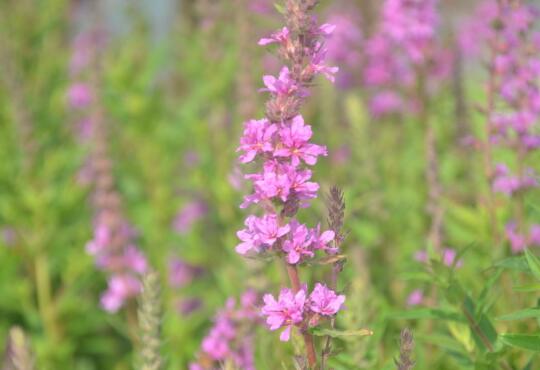
To know what to do when purple loosestrife gets pests, we first need to understand what kind of pest it is, so that we can deal with it in a targeted way, because the treatment methods for each pest and disease are different. The details are described below, and those troubled by this can take a look.
II. Pest and Disease Control for Purple Loosestrife (Pests)
1. Aphids
Aphids are a type of phytophagous insect in the order Homoptera, and they can be said to be one of the most destructive pests on Earth. They are harmful to most plants, and purple loosestrife is one of them. This pest mainly harms the leaves, stems, tender tips and tender spikes of purple loosestrife, gradually sucking out the juices within, causing the plant to lose large amounts of nutrients and eventually gradually wither and die.
Control method: When dealing with pests and diseases of purple loosestrife, we can use a 1000-fold dilution of 50% malathion emulsion or a 1500-2000-fold dilution of 40% imidacloprid water-soluble concentrate to spray and kill them.
2. Red Spider Mites
Among the pests and diseases of purple loosestrife, red spider mites are one of the more frequently occurring ones. Their peak period is every summer, so everyone must pay special attention at this time. When this pest infestation occurs, the plant's leaves will gradually turn yellow and white, and if left untreated for a long time, it can also cause the plant to wither.
Control method: When dealing with red spider mites, we can directly use a 1000-1500-fold dilution of 40% dicofol emulsifiable concentrate to spray and kill them. Generally, three consecutive sprays can completely kill this pest.
III. Pest and Disease Control for Purple Loosestrife (Diseases)
1. Mosaic Disease
Mosaic disease is a worldwide viral disease that is extremely harmful to purple loosestrife. In the early stages of the disease, chlorotic angular lesions appear on the leaves, which eventually turn brown. In severe cases, it can also affect the yield and quality of cut flowers.
Control method: When dealing with this pest and disease of purple loosestrife, we can use a 1000-fold dilution of 40% dimethoate emulsifiable concentrate to spray the plant, generally once every 10 days, and it can be cured after 2-3 treatments.
2. Powdery Mildew
Powdery mildew is a relatively common disease of purple loosestrife. This disease mainly threatens the plant's leaves. When it occurs, many powdery mildew spots appear on the leaves. In the early stages, it causes the leaves to lose their green color, and in severe cases, the entire leaf is covered with a powdery mildew layer, causing the plant to be unable to carry out photosynthesis and gradually shrink.
Control method: When controlling this pest and disease of purple loosestrife, we can use a 1000-fold dilution of 70% thiophanate-methyl wettable powder to spray the plant, generally once every 10 days, and it can be cured after about 2-3 treatments.
Control of the Main Pests and Diseases of Purple Loosestrife
The main pests and diseases of purple loosestrife areleaf spot disease, which produces elliptical or irregular lesions on the leaves, grayish-brown, without edges, with small black dots on them. Under conditions of drought and high temperature, this disease is prone to occur.
Control method:
① Clean the garden before overwintering;
② In the early stages of the disease, spray a 500-fold dilution of 75% chlorothalonil or a 300-fold dilution of 50% carbendazim.
How to Grow Purple Loosestrife, Cultivation Methods and Precautions for Purple Loosestrife / Plenty of Sunlight Is Needed
Purple loosestrife is a relatively well-known flowering plant worldwide. It can be seen in Asia, Europe, Africa and other regions, but growing it well is not easy, and there are many things to pay attention to. How do you grow purple loosestrife? What are the cultivation methods and precautions for purple loosestrife? Let's take a look below.
I. How to Grow Purple Loosestrife - Understand Its Habits
To know how to grow purple loosestrife, we first need to understand its growth habits. This plant prefers an environment with plenty of sunlight and is also relatively cold-resistant. It can be said to have very strong survival ability, but if you want it to grow better, then daily water and fertilizer management cannot be careless. The specific care techniques are described in detail below, so let's take a look.
II. Cultivation Methods and Precautions for Purple Loosestrife
1. Soil - Humus Soil
Before growing purple loosestrife, we first need to choose the soil. This is the step of laying a good foundation and is very important. Generally, it is best to choose loose and fertile humus soil. This kind of soil is rich in sufficient organic matter and has relatively good drainage and aeration, allowing the plant to grow better.
2. Fertilizing - Once a Month
Fertilizer is one of the main nutrients in the growth process of purple loosestrife. Especially after entering the growth period, its demand for fertilizer is very high, and it basically needs to be fertilized once every month. However, when fertilizing, there is one thing we must pay attention to: the fertilizer must first be diluted with water before application. If the concentration is too high, it will burn the plant.
3. Water - Avoid Waterlogging
Watering is an indispensable part of a plant's growth process, and purple loosestrife is no exception. When growing it, we should water frequently to maintain a certain level of humidity in the soil so that it can grow better. However, we need to pay attention to controlling the amount of water. This plant is not tolerant of waterlogging, and if water accumulates, it can easily cause its root system to rot.
4. Light - Plenty of Sunlight Is Needed
Purple loosestrife prefers an environment with plenty of sunlight. The stronger the light, the better it will grow, because then it can carry out photosynthesis better. So when growing it, it is best not to place it in a shaded place, otherwise it will affect its growth, and in severe cases, it can also cause the plant to shrink and die.
5. Pests and Diseases - Timely Control
When growing purple loosestrife, if we are not careful enough, it is easy for pests and diseases to take advantage of the situation. These problems are extremely harmful to the plant, so when we discover a problem, we must deal with it promptly, because the longer it drags on, the greater the harm to the plant. As for the specific treatment methods, everyone can refer to the article on pest and disease control for purple loosestrife, which has detailed descriptions.