What to do when Buddleja officinalis gets bugs? 2 pests and 3 diseases prevented and controlled this way
In the process of growing Buddleja officinalis, the last thing we want to run into is pests and diseases. These problems are extremely harmful to the plant, not only affecting the beauty of its form, but if left untreated for a long time, they can also cause the plant to gradually wither and die. So what should be done when Buddleja officinalis gets bugs? How should pest and disease control for Buddleja officinalis be carried out? Below, the editor will walk everyone through it.
I. What to do when Buddleja officinalis gets bugs, find the cause
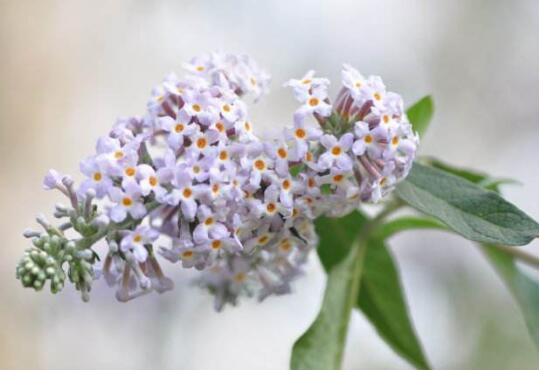
If you want to know what to do when Buddleja officinalis gets bugs, first we need to understand what kind of bug it is, so that we can deal with it in a targeted way, because the treatment methods for each pest and disease are different. The specific details are introduced in detail below, and friends troubled by this can take a look.
II. Pest and disease control for Buddleja officinalis
1. Stem borer
The stem borer is a pest of the order Lepidoptera. It mainly harms the young leaves at the heart of Buddleja officinalis seedlings, causing dead heart. If we do not deal with it in a targeted way in time, it will also gradually gnaw at the lower part of the plant, causing the whole plant to die.
Control method: When dealing with this Buddleja officinalis pest, we can use an 800-1000 times dilution of omethoate or 21% fenvalerate emulsifiable concentrate at 2000 times to directly spray and kill the pest.
2. Red spider mite
The red spider mite, also known as the cotton red spider mite, is a pest of the family Tetranychidae. This pest is very small in size and generally difficult to spot. Its method of harm is to pierce its mouthparts into the leaves and suck the sap, thereby destroying chlorophyll and causing yellowing. In severe cases, it can also cause the leaves to fall off or even drop completely.
Control method: When dealing with this Buddleja officinalis pest, if only a few individual leaves are affected, we can remove them. If more leaves are affected, we can use a 1500 times dilution of 40% dimethoate emulsifiable concentrate to spray the plant, thereby eliminating this pest.
3. Leaf blight
Leaf blight is a relatively common disease of Buddleja officinalis, mainly threatening the leaf margins, leaf tips and other areas. When the disease occurs, many irregularly sized lesions appear on the leaves, and as time goes on they gradually spread, finally causing the plant to wither and die.
Control method: When dealing with leaf blight, we can use a 1000 times dilution of 50% thiophanate to spray the plant, generally once about every 10 days, and after 1-2 times it can recover.
4. Rust disease
Rust disease is a disease that appears in many plants, and Buddleja officinalis is no exception. This disease mainly threatens the plant's leaves, stems and fruits. When it occurs, many small blister-like spots appear on the affected parts. In severe cases, the spots densely merge into patches, and the plant will rapidly wither and die because of it.
Control method: When preventing and controlling this Buddleja officinalis pest and disease, we can use a 400-600 times dilution of 20% carboxin emulsifiable concentrate spray to spray Buddleja officinalis, generally once about every 15 days, and after 2-3 times it can recover.
5. Leaf spot disease
Leaf spot disease is a disease caused by fungi. Its peak period is in spring and autumn each year, so everyone must pay special attention in these two seasons. Leaf spot disease mainly harms the leaves of Buddleja officinalis. When it occurs, many round lesions appear on the leaves, and the lesions gradually expand and their shape also becomes irregular, finally causing the plant to gradually wither and die.
Control method: When preventing and controlling leaf spot disease, a disease of Buddleja officinalis, we can use a 400-600 times dilution of 80% mancozeb to spray the diseased plant, generally spraying once every 10-15 days, and after 1-2 times it can recover.
How to grow Buddleja officinalis, cultivation methods and precautions for Buddleja officinalis/plenty of light
Buddleja officinalis is a shrub plant of the genus Buddleja in the family Loganiaceae. It can be seen in many regions of our country, but if we want to grow it well, there are many points we need to pay attention to. Regarding how to grow Buddleja officinalis? What are the cultivation methods and precautions for Buddleja officinalis? Below, the editor will walk everyone through it.
I. How to grow Buddleja officinalis, understand its habits
If you want to know how to grow Buddleja officinalis, first we need to understand its growth habits. This plant likes a warm and humid environment and has a certain cold tolerance, but it is not tolerant of waterlogging, so when watering it we must pay attention to controlling the amount of water. In addition, we should also pay attention to daily light, fertilisation and other aspects. The specific details are introduced in detail below, let's take a look.
II. Cultivation methods and precautions for Buddleja officinalis
1. Soil, humus soil
If we want Buddleja officinalis to grow vigorously, then we need to choose suitable soil for it. This is the step of laying a good foundation, and it is very important. Generally, it is best to choose loose, fertile humus soil. This kind of soil is rich in nutrients and has relatively good drainage and aeration, allowing the plant to absorb nutrients better.
2. Temperature, 18-25°C
When growing Buddleja officinalis, environmental temperature is also something we need to pay attention to, because only when it grows at a suitable temperature can it grow better. The suitable growth temperature for Buddleja officinalis is between 18-25°C. The temperature must not be too high or too low, otherwise it is not conducive to its growth.
3. Fertilisation, fertilise three times
Buddleja officinalis does not have a high demand for fertiliser, so when growing it we do not need to fertilise too much. It only needs to be fertilised three times each year. First, when planting, we should apply an appropriate amount of base fertiliser into the soil, and afterwards fertilise once each before flowering and during the fruiting period. For fertiliser, we can choose a mixed fertiliser combining nitrogen, phosphorus and potassium.
4. Water, avoid waterlogging
Buddleja officinalis likes to grow in a warm and humid environment, so when growing it we should water frequently to keep the soil at a certain humidity, and the plant will also grow better this way. However, we need to pay attention to controlling the amount of water; it must not be watered too much, because Buddleja officinalis is not tolerant of waterlogging, and if water accumulates, its root system can easily rot.
5. Light, avoid strong light
Buddleja officinalis is a light-loving plant, but it is not tolerant of strong light. In spring and autumn, when the light is relatively suitable, we can place it outdoors to receive light all day. However, after entering summer, because the light is relatively strong, we still need to pay attention to shading, so as to avoid strong light scorching the plant.
6. Pests and diseases, deal with them in time
In the process of growing Buddleja officinalis, if we are not careful enough, pests and diseases will take advantage of the gap and invade. These problems are extremely harmful to the plant, so once discovered we must deal with them in time, because prolonging the time will cause the plant to wither and die directly. As for the specific treatment methods for such problems, everyone can refer to the article on pest and disease control for Buddleja officinalis, which has detailed teaching.
How does Buddleja officinalis reproduce, propagation methods for Buddleja officinalis/seed propagation has a high survival rate
Buddleja officinalis is a relatively common flowering plant in people's lives. It can be seen in many regions of our country. As more people grow it in various places, questions about its propagation have also drawn people's attention. Regarding how Buddleja officinalis reproduces? What are the propagation methods for Buddleja officinalis? Below, the editor will walk everyone through it.
I. How does Buddleja officinalis reproduce, seed propagation
When it comes to how Buddleja officinalis reproduces, it is actually mainly seed propagation. This propagation method, after countless experiments by people, still has a very high survival rate. Of course, the premise is that we must master the operation method, and the process must also be careful. The specific details of seed propagation are below, and interested friends can take a look.
II. Propagation methods for Buddleja officinalis
1. Substrate selection
Before propagating Buddleja officinalis, we first need to choose soil. This is the step of laying a good foundation, and it is very important. Generally, it is best to choose loose, fertile humus soil as the substrate. This kind of soil is rich in nutrients and has relatively good drainage and aeration, allowing the plant to absorb nutrients better.
2. Substrate disinfection
After choosing the substrate for Buddleja officinalis, we also need to disinfect it, so as to avoid it carrying pests and diseases that could infect the plant. When disinfecting, we can break it up and spread it flat under the sun to bake, or put it into an iron wok and stir-fry it over high heat. This way, even if there are pests and diseases in it, they will be killed by the high temperature.
3. Seed germination
In addition to substrate selection and disinfection, before sowing we also have a pre-treatment to do, which is to germinate the seeds of Buddleja officinalis. We can put the seeds into warm water at 30-40°C and soak them for about 12 hours. When the seeds begin to absorb water and swell, take them out and sow them. This can make the seeds sprout faster.
4. Sowing method
Before sowing and propagating Buddleja officinalis, we first need to apply an appropriate amount of base fertiliser into the substrate, then evenly scatter the germinated seeds on the soil surface. After scattering, cover them with 1-2cm of soil and then water. When watering, it is best to use the immersion method, because the seeds of Buddleja officinalis are relatively small, and if watered directly they can easily be washed away.
5. Follow-up management
After everyone has successfully propagated it according to the above method, we can carry out follow-up care for it. When caring for Buddleja officinalis, there are also many points we need to pay attention to, such as watering, fertilisation and other aspects, all of which require care. If you do not know how to grow it, everyone can refer to the article on cultivation methods for Buddleja officinalis, which has detailed care teaching.