What to Do When Buddleja Gets Pests? 2 Pest and 2 Disease Control Methods
When growing Buddleja, the last thing we want to encounter is pests and diseases. These problems are extremely harmful to the plant, not only affecting its shape and beauty, but in severe cases even causing the plant to wither and die. So what should you do when Buddleja gets pests? And how should the common pests and diseases of Buddleja be controlled? Let's take a look below.
1. What to Do When Buddleja Gets Pests: Find the Cause
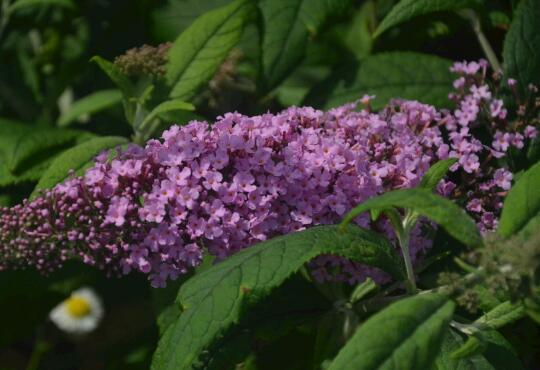
To know what to do when Buddleja gets pests, we first need to understand what kind of pest it is, so that we can deal with it in a targeted way, because the treatment methods for each pest and disease are different. The details are introduced below, and those troubled by this can take a look.
2. Common Pest and Disease Control for Buddleja
1. Whitefly
Whitefly is a tiny plant-feeding pest belonging to the order Hemiptera. It mainly harms the new buds, leaves and flowers of Buddleja. It inserts its piercing-sucking mouthparts from the underside of the leaves and gradually sucks out the sap inside, causing the plant to lose a large amount of nutrients and develop yellowing and withering.
Control method: For this Buddleja pest and disease, we can use a 1500x spray of 25% buprofezin EC to spray and kill it directly. It can kill eggs, nymphs and adults.
2. Aphids
Aphids are one of the most destructive pests on Earth, harming many plants, and Buddleja is one of them. The damage caused by this pest is mainly through adult and nymph aphids sucking the sap of leaves, stems, tender tips and tender spikes, causing the plant to lose a large amount of nutrients and develop wilting.
Control method: When dealing with this Buddleja pest and disease, we can use a 3000x solution of 50% pirimicarb WP or a 3000x solution of 2.5% fenpropathrin EC to spray and kill it.
3. Soft Rot
Among the pests and diseases of Buddleja, soft rot is a relatively common disease. When it occurs, many water-soaked lesions appear on the roots of the plant. As time goes on, the rhizome gradually rots and gives off waves of foul odor, finally causing it to gradually rot to death.
Control method: When controlling this disease, we can use 38% oxadixyl, pyrimethanil and copper acrylate diluted at 1000x for root drenching. Generally, apply once a week, and after 2-3 times it can be controlled.
4. Leaf Spot
Leaf spot is a common plant disease, and its peak period is generally in spring and autumn. When it occurs, many oval brown lesions appear on the leaves of Buddleja, and as time goes on the lesions gradually spread and the color slowly deepens, finally causing the plant to be unable to carry out photosynthesis and wither to death.
Control method: For this Buddleja pest and disease, we can use a 1000x solution of 20% simeconazole · prochloraz to spray the diseased plant. Generally spray once every 7-10 days, and after 2-3 times it can be cured.
How to Grow Buddleja: Cultivation Methods and Precautions / Avoid Waterlogging
Buddleja is a relatively common plant worldwide, and people cultivate it in Asia, the Americas, Africa and other regions. However, growing it well is not easy, and there are many points we need to pay attention to. Regarding how to grow Buddleja, what are the cultivation methods and precautions? Let's take a look below.
1. How to Grow Buddleja: Understand Its Habits
To know how to grow Buddleja, we first need to understand its growth habits. This plant likes to grow in a warm and humid environment and is relatively light-loving, so when growing it we should keep it in sufficient light. In addition, we also need to pay attention to daily water and fertilizer management. The details are introduced below, so let's take a look.
2. Buddleja Cultivation Methods and Precautions
1. Soil: Sandy Loam
If we want Buddleja to grow vigorously, we need to choose suitable soil for it. This is the step of laying a good foundation and is very important. Generally, it is best to choose loose, fertile sandy loam. This kind of soil has relatively good drainage and aeration, allowing the plant to absorb nutrients better, and it is also less prone to water accumulation.
2. Fertilizing: Very Little Fertilizer
Buddleja does not have a very high demand for fertilizer during growth, so we do not need to fertilize regularly. We only need to apply an appropriate amount of base fertilizer to the substrate soil before planting, because too much growth can promote leaf growth rather than flower production. Therefore, unless it is growing in poor soil, it does not need fertilization during its growth process.
3. Water: Avoid Water Accumulation
Buddleja likes a warm and humid environment, so when growing it we should water frequently to keep the soil at a certain moisture level, so that it can grow vigorously. However, we still need to control the amount of watering. This plant is not tolerant of waterlogging. If too much watering causes water accumulation, it will cause the plant's root system to rot.
4. Light: Avoid Strong Light
Buddleja is relatively light-loving but not tolerant of strong light. When growing it, if it is spring and autumn, because the light is relatively suitable, we can let it receive light all day, so that it can carry out photosynthesis better and thus grow better. However, after entering summer, because the light is relatively strong, we still need to provide appropriate shade to avoid strong light scorching the plant.
5. Pests and Diseases: Deal with Them in Time
In the process of growing Buddleja, if we are not careful enough, it is easy for pests and diseases to take advantage of the opportunity. These problems are extremely harmful to the plant, so after discovering the problem we must deal with it in time, because the longer it is delayed, the greater the harm to the plant. As for the specific treatment methods, everyone can refer to the article on Buddleja pest and disease control, which has detailed introductions.
Can Buddleja Be Propagated by Cuttings? Buddleja Cutting Methods / Note 5 Points to Easily Master It
Buddleja is a flowering plant with high ornamental value, and it can be seen in many provinces in China such as Jiangsu, Anhui and Zhejiang. As more people grow it, questions about its propagation have also attracted attention, and the most frequently asked is whether Buddleja can be propagated by cuttings. The answer to this question is yes, so what should be noted in Buddleja cutting methods? Let's take a look below.
1. Can Buddleja Be Propagated by Cuttings? Yes
2. Buddleja Cutting Methods
1. Substrate Selection
Before propagating Buddleja by cuttings, we first need to choose a substrate. This is the step of laying a good foundation and is very important. Generally, it is best to choose loose, fertile sandy loam as the substrate. This kind of soil has relatively good drainage and aeration, allowing the plant to absorb nutrients better, and it is also less prone to water accumulation.
2. Substrate Disinfection
After choosing the substrate for Buddleja, we also need to disinfect it to prevent it from carrying pests and diseases that could infect the plant. There are two disinfection methods. One is to break it up and spread it under the hot sun for solar disinfection. The other is to put it in a pot and stir-fry it for disinfection. This can effectively eliminate pests and diseases.
3. Cutting Selection
The selection of cuttings also has a great influence on the survival rate of Buddleja cuttings. Generally, it is best to choose relatively robust branches free of pests and diseases as cuttings. If the branch we choose looks very thin, then it can basically be judged that the cutting will fail, so choosing cuttings is a very important step.
4. Cutting Method
Among the propagation methods of Buddleja, cutting propagation is a relatively simple method. First, we can use chopsticks to poke a hole in the soil, then insert the cutting into two-thirds of the soil and water it. When watering, be careful to water thoroughly at one time, and remember not to cause water accumulation.
5. Follow-up Management
After everyone has successfully taken cuttings according to the above method, we can carry out follow-up care for them. There are also many points we need to pay attention to when caring for Buddleja, such as watering and fertilizing, which all have particular requirements. If you do not know how to grow it, you can refer to the article on Buddleja cultivation methods, which has detailed care instructions.