What to do when Gaillardia gets bugs? 2 pests and 2 diseases prevention and control
When we grow Gaillardia, the last thing we want to encounter is pests and diseases. These problems are extremely harmful to the plant, not only affecting its ornamental value, but in severe cases even causing the plant to wither and die. So what should you do when Gaillardia gets bugs? How should pest and disease prevention and control for Gaillardia be done? Below, the editor will walk you through it.
I. What to do when Gaillardia gets bugs - find the cause
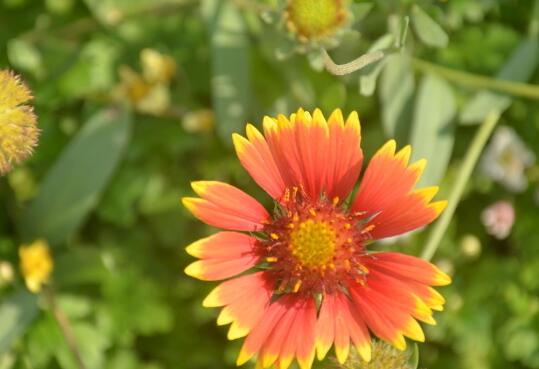
To know what to do when Gaillardia gets bugs, we first need to understand what kind of bug it is, so that we can handle it in a targeted way, because the treatment methods for each pest and disease are different. The details are described in detail below, and friends troubled by this can take a look.
II. Pest and disease prevention and control for Gaillardia
1. Aphids
Among the pests and diseases of Gaillardia, aphids are one of the most harmful. They mainly harm the leaves, stems, tender tips and tender spikes of Gaillardia, gradually sucking out the sap inside, causing the plant to lose a large amount of nutrients and gradually wither and die.
Prevention and control method: For aphids, this pest of Gaillardia, if the number is small, we can manually catch and kill them, pinching each one we see. If the number is large, we can use a 40% imidacloprid water-soluble agent at 1500-2000 times dilution for spraying and killing.
2. Scarab beetles
The scarab beetle is an invertebrate. It mainly harms the root system, leaves and flower buds of Gaillardia, thereby affecting the yield and quality of its flowering, and in severe cases even causing the plant not to bloom.
Prevention and control method: When dealing with this pest of Gaillardia, we can use a 2.5% deltamethrin at 2000-3000 times dilution to spray and kill them, or we can trap and kill them under light.
3. Rust disease
Rust disease is one of the more frequently occurring pests and diseases of Gaillardia. This disease mainly threatens the leaves, stems and fruits of the plant. When it occurs, many small blister spots appear on the affected parts, and in severe cases the blister spots become densely packed into patches, and the plant will rapidly wither and die because of it.
Prevention and control method: When rust disease appears on Gaillardia, we can use a 50% carboxin wettable powder at 2000 times dilution to spray it, generally spraying once every 7-10 days, and it can be cured after 1-2 times.
4. Black spot disease
Black spot disease is a disease caused by fungi. When it occurs, many black disease spots appear on the leaves of Gaillardia, and as time goes on the spots gradually spread, finally causing the plant to gradually wither and die.
Prevention and control method: When preventing and controlling this pest and disease of Gaillardia, we can use a 7% thiophanate at 800 times dilution to spray it, generally spraying once every 7-10 days, and it can be cured after 2-3 times.
How does Gaillardia reproduce? Gaillardia propagation methods / mainly seed propagation
Gaillardia is a flowering plant native to tropical America, later introduced to China, and today it can be seen in many regions of China. As more people grow it in various places, questions about its propagation have also drawn concern. How does Gaillardia reproduce? What are the propagation methods of Gaillardia? Below, the editor will walk you through it.
I. How does Gaillardia reproduce - seeding / cuttings
Speaking of how Gaillardia reproduces, it is mainly divided into two methods: seed propagation and cutting propagation. Seed propagation is generally carried out in summer, while cutting propagation is more suitable in spring and autumn. As for how these two propagation methods are specifically operated, there is a detailed introduction below. Let's take a look.
II. Propagation methods of Gaillardia
Seed propagation
Seed germination: Before carrying out seed propagation of Gaillardia, we first need to germinate its seeds. We can put the harvested seeds into warm water and soak them for about 3-10 hours. When the seeds begin to absorb water and swell, we can take them out and sow them. This can increase the germination rate of the seeds.
Sowing method: Among the propagation methods of Gaillardia, seed propagation is a relatively commonly used method. First, before sowing, we need to apply an appropriate amount of base fertilizer to the potting soil, then evenly scatter the seeds on the soil surface. After scattering, cover them with 1-2 cm of soil and then water. When watering, it is best to use the soaking pot method, because Gaillardia seeds are relatively small, and if you water directly it is easy to wash them away.
Cutting propagation
Selection of cuttings: Before carrying out cutting propagation of Gaillardia, we need to select suitable cuttings. This is a very important step. We should preferably choose relatively robust branches free of pests and diseases as cuttings, so the survival rate will be very high. If you choose branches that look very thin and weak, then it can basically be declared a cutting failure, and the survival rate will not be very high.
Cutting method: Among the propagation methods of Gaillardia, the operation of cutting propagation is still relatively simple. Before cutting, we can first use chopsticks to poke a hole in the potting soil, then insert the cutting into it. This operation can avoid damage to the cutting and is very practical. After cutting is completed, we also need to pay attention to light management. The stronger the light, the higher the temperature inside the cutting, and the more water it consumes, which is not conducive to the survival of the cutting.
Follow-up management
After we have successfully propagated it according to the above methods, we can carry out daily care for it. There are also many points to note in terms of care, such as watering and fertilizing, all of which require attention. If you do not know how to grow it, you can refer to the article on Gaillardia cultivation methods, which contains detailed teaching.
When to sow Gaillardia, how to plant Gaillardia seeds / substrate disinfection / seed germination before planting
Among the propagation methods of Gaillardia, seed propagation is a relatively commonly used method. This method has been tested by countless people and still has a high survival rate. However, to succeed in sowing, there are many points we need to note. When to sow Gaillardia? And how should Gaillardia seeds be planted? Below, the editor will walk you through it.
I. When to sow Gaillardia - sow in summer
Speaking of when to sow Gaillardia, choosing the right time is very important. This plant relatively prefers a high-temperature environment, so we can sow it in summer, because the climate in this season is more suitable for its growth, so the survival rate will be relatively higher.
II. How to plant Gaillardia seeds - be careful
Regarding how to plant Gaillardia seeds, there are many points we need to note, such as the selection and disinfection of the substrate, and the germination of the seeds, all of which are relatively important. Of course, the most important thing is to operate carefully. As for the specific planting techniques, there is a detailed introduction below, and interested friends can take a look.
1. Substrate selection
Before planting Gaillardia, we first need to select a substrate. This is the step of laying a good foundation and is very important. Generally, it is best to choose loose, fertile humus soil. This plant is rich in nutrients, and the soil has good drainage and air permeability, which allows the plant to better absorb nutrients and makes water accumulation less likely.
2. Substrate disinfection
After choosing the soil, we also need to disinfect it, so as to avoid pests and diseases in it being transmitted to Gaillardia. When disinfecting, we can choose to break it up and spread it flat under the blazing sun to disinfect it, or we can put it in a pot and stir-fry it over a fire, so that if there are pests in the soil they will also be killed.
3. Seed germination
Before planting Gaillardia seeds, we also need to germinate the seeds. We can put the harvested seeds into warm water and soak them for about 3-10 hours. When the seeds begin to absorb water and swell, we can take them out and sow them. This can increase the germination rate of the seeds.
4. Planting method
When planting Gaillardia, we first need to apply an appropriate amount of base fertilizer to the potting soil, then evenly scatter the seeds on the soil surface. After scattering, cover them with 1-2 cm of soil and then water. When watering, it is best to use the soaking pot method, because Gaillardia seeds are relatively small, and if you water directly it is easy to wash them away.