How to prevent and control pests and diseases in Polyscias? 2 pests and 2 diseases treated by spraying
Keeping a potted green plant indoors is a choice many people make today, and Polyscias ( Ming aralia ) is loved by many flower enthusiasts for its large, green leaves. However, when growing Polyscias indoors, many enthusiasts run into the problem of pests. So what should you do when Polyscias gets pests? The following are several common pests and diseases of Polyscias. Follow along with the editor to learn the prevention and control methods.
I. Polyscias gets pests
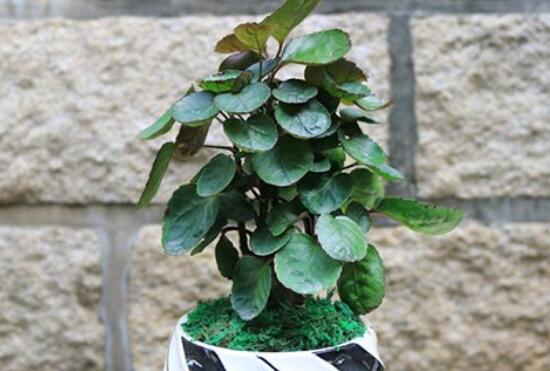
As a common foliage plant, Polyscias is not difficult to grow, but not difficult does not mean it can be grown carelessly. Once there is negligence in cultivation, Polyscias will not only get pests but also catch diseases, thereby affecting the health of the plant. It is understood that the pests and diseases of Polyscias include: scale insects, red spider mites, anthracnose, brown spot disease, etc. Next, let's go see how to prevent and control pests in Polyscias.
II. Prevention and control of pests and diseases in Polyscias
1. Scale insects
Although Polyscias generally does not easily get pests, in poorly ventilated and poorly lit environments it is also prone to scale insects. These insects generally float and attach to the surface of the plant's leaves, and their secretions pollute the leaves, causing the leaves to wilt and inducing sooty mold, doing great harm.
Prevention and control method: When there are few scale insects, you can use a brush dipped in water to gently brush off the insect bodies, then spray white vinegar to prevent them; when there are many scale insects, promptly spray 40% omethoate 1000-fold solution for control, spraying once a week, and 2 to 3 consecutive times will show results; if discovered in time, during the hatching period of scale insect larvae, you can spray the plant with 25% buprofezin wettable powder 1500-fold solution or 40% methidathion 2000-fold solution, which can directly kill the scale insects.
2. Red spider mites
When talking about Polyscias getting pests, you also need to consider red spider mites, because they are the common enemy of foliage plants. It is understood that red spider mites mainly pierce their mouthparts into the leaves of Polyscias to suck sap, damaging the plant's chlorophyll, causing the leaves of Polyscias to turn yellow and even fall off.
Prevention and control method: For red spider mites, everyone should always be on guard and promptly check the undersides of leaves. When individual leaves are damaged, the infested leaves can be removed; when more leaves are damaged, propargite, dimethoate, huachongjing, fenvalerate and other pesticides should be sprayed as early as possible for control.
3. Anthracnose
Besides getting pests, Polyscias can also catch diseases. Under causes such as insufficient light, poor ventilation and excessive nitrogen fertilizer, Polyscias can also be infected with anthracnose. If Polyscias shows blackened leaf tips and yellow spots on the leaves, it has probably caught anthracnose.
Prevention and control method: In winter and spring, promptly remove and destroy diseased leaves when found, and sprinkle quicklime on the soil to disinfect it. In the early stage of the disease, spray the leaf surfaces with 80% thiophanate-methyl wettable powder or 50% carbendazim wettable powder, spraying once every 10 days, and 3-4 times will show results.
4. Brown spot disease
Brown spot disease, the main disease of Polyscias, generally occurs under conditions of high temperature and high humidity and poor ventilation. When suffering from this disease, the leaves of Polyscias will develop round or oval spots, appearing purplish-brown and later turning black, and in severe cases the leaves even wither, turn yellow and fall off.
Prevention and control method: When the above symptoms are found, promptly remove the diseased leaves and destroy them together to reduce the source of disease; in the early stage of the disease, spray 50% carbendazim wettable powder 600-fold solution or 40% chlorothalonil suspension 500-fold solution for control, spraying the leaves once every 10 days, for 3 to 4 consecutive times, with excellent results.
5. Other conditions
① Freezing injury: Polyscias is not cold-tolerant. In winter, once the temperature drops below 10°C, combined with wet potting soil, it is easy for the plant's young leaves to be damaged by cold and collapse, and in severe cases it can cause the tubers to rot, making it very difficult to recover. Prevention and control method: In winter, move Polyscias indoors, ensure the overwintering room temperature stays above 10°C, and keep the potting soil in a slightly dry state.
② Sunscald: Polyscias likes light, but it dislikes direct strong light. Once exposed to direct sunlight for a long time, it is very easy for the leaves to be sunscalded, causing part of the leaf to lose chlorophyll and turn white, or the entire leaf to be scalded. Prevention and control method: In summer, Polyscias should be moved indoors to a place with diffused light for care.
Pests and diseases of Polyscias and their prevention and control
Diseases of Polyscias
Anthracnose of Polyscias
The most common disease of Polyscias is anthracnose. The causes of anthracnose are insufficient light, poor ventilation, excessive nitrogen fertilizer, etc. Under these conditions, Polyscias will develop anthracnose.
Symptoms of anthracnose: When Polyscias develops anthracnose, water-soaked yellow spots appear on the leaves, and grayish-white areas and cloud-like patterns appear in the middle of the leaves, which later turn into small black spots, causing the plant to show symptoms of drying up.
Prevention and control of anthracnose in Polyscias
Prevention and control methods for anthracnose in Polyscias
In the early stage of the disease, spray the leaf surfaces with 80% thiophanate-methyl wettable powder or 50% carbendazim wettable powder, spraying once every 10 days, and spraying three or four consecutive times is enough.
During usual care, when fertilizing, pay attention to the balance of nitrogen, phosphorus and potassium, and be careful to place it in a place with sufficient light and good ventilation.
Pests of Polyscias
Scale insects of Polyscias
The cause of scale insect damage in Polyscias is poor ventilation, poor light, and high temperature and high humidity. Under these conditions, the plant is most prone to scale insect damage.
Symptoms of scale insect damage: they devour the leaves, causing poor growth of the plant.
Prevention and control of scale insects in Polyscias
Prevention and control methods for scale insect damage in Polyscias: during the hatching period of the larvae, spray the plant with 25% buprofezin wettable powder 1500-fold solution or 40% methidathion 2000-fold solution or 40% omethoate emulsifiable concentrate 1000-fold solution to directly kill the scale insects.
Or manually pick off the insects, then spray with pesticide to thoroughly remove the pests and diseases.
Alright, the editor has already told you the methods, so hurry and save your sick plant.