What to Do When the Malus spectabilis Gets Bugs? 3 Pests and 2 Diseases and Their Control Methods
When we grow Malus spectabilis, the last thing we want to run into is pests and diseases. These problems are extremely harmful to the plant, not only affecting its ornamental value but, in severe cases, causing the plant to wither and die. So what should you do when the Malus spectabilis gets bugs? And how should pest and disease control for Malus spectabilis be carried out? Let's take a look below.
I. What to Do When the Malus spectabilis Gets Bugs: Find the Cause
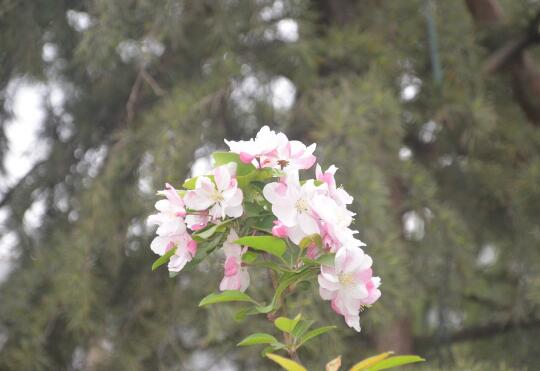
If you want to know what to do when the Malus spectabilis gets bugs, you first need to identify what kind of bug it is, so that you can deal with it in a targeted way, because the treatment methods for each pest and disease are different. The details are described below, so those troubled by this can take a look.
II. Pest and Disease Control for Malus spectabilis
1. Scarab beetles
Scarab beetles are a soil-dwelling pest and one of the more common pests and diseases of Malus spectabilis. These pests mainly feed on the main root and stem of the Malus spectabilis, gradually eating away at the base of the plant, which causes the plant to become incomplete and die.
Control method: When dealing with this pest, we can spray the soil with a 1000-times dilution of 40% omethoate solution. After spraying, loosen the surface soil so the solution can penetrate better. This pesticide kills scarab beetles on contact.
2. Aphids
Aphids are a plant-eating insect with strong destructive power against Malus spectabilis. They attach to the undersides of the leaves and gradually suck out the sap, causing the plant to lose large amounts of nutrients. The leaves slowly turn yellow and dry up, and in severe cases the plant can wither and die.
Control method: Aphids are a plant with a very strong reproductive capacity, so once discovered, they must be controlled promptly. The most direct way to deal with this pest is to spray with a 3000-times dilution of 50% pirimicarb wettable powder.
3. Red spider mites
Red spider mites, also known as cotton red spider mites, are a pest of the family Tetranychidae. These pests are very small and generally hard to spot. They cause damage by piercing the leaves with their mouthparts and sucking out the sap, which destroys the chlorophyll and causes yellowing. In severe cases, the leaves can fall off or even drop completely.
Control method: When dealing with this pest and disease of Malus spectabilis, if only a few individual leaves are affected, we can pick them off. If many leaves are affected, we can spray the plant with a 1500-times dilution of 40% dimethoate emulsifiable concentrate to eliminate this pest.
4. White star disease
White star disease mainly threatens the leaves of Malus spectabilis. When the disease occurs, many dark brown spots appear on the leaves, which later become dark brown around the edges with a grayish-white center. This disease mostly occurs on the lower leaves, and in severe cases the leaves can curl and dry up.
Control method: For this pest and disease of Malus spectabilis, we can spray the diseased plant with a 500-800-times dilution of 75% chlorothalonil wettable powder, generally once every half month or so. After 1-2 applications, it can be cured.
5. Rot disease
Rot disease is a disease caused by fungi. It is a disease that can both infect young seedlings and occur during the flowering period, and can develop on the flowers, fruits, leaves and stems of Malus spectabilis. If this disease is not treated promptly, it will cause the plant to gradually wither and die.
Control method: When dealing with this pest and disease of Malus spectabilis, we can use 15—20g of 40% procymidone wettable powder to treat the diseased plant, generally once every 3-5 days. After 2-3 applications, it can be cured.
How to Propagate Malus spectabilis: Propagation Methods for Malus spectabilis / Sowing / Division / Grafting
Malus spectabilis is a flowering plant with high ornamental value, and many people grow it in every province of our country. As more people grow it, questions about its propagation have also drawn people's attention. How do you propagate Malus spectabilis? What are the propagation methods for Malus spectabilis? Let's take a look below.
I. How to Propagate Malus spectabilis: Sowing / Division / Grafting
When it comes to how to propagate Malus spectabilis, it is mainly divided into three methods: seed propagation, division propagation and grafting propagation. As long as we operate properly and carefully enough, all three methods have very high survival rates. As for the specific details of the three propagation methods, they are described in detail below. Let's take a look.
II. Propagation Methods for Malus spectabilis
Seed propagation
Seed germination: Before propagating Malus spectabilis by sowing, there is a pre-treatment to do, which is to germinate its seeds. First, we can soak its seeds in warm water for 12-24 hours, then wait until the seeds begin to absorb water and swell, take them out and sow them. This allows the seeds to sprout faster.
Sowing method: Before sowing, we first need to apply an appropriate amount of base fertilizer to the soil, then evenly scatter the germinated Malus spectabilis seeds on the soil surface. After scattering, cover them with 1-2cm of soil and then water. When watering, it is best to use the soaking pot method, because its seeds are small in size, and if watered directly from above, the seeds are easily washed away.
Division propagation
When propagating Malus spectabilis by division, we can do it together with repotting, and the time can be chosen in spring. When dividing, we should lift the overly dense mother plant out of the pot soil, then cut it into several clumps and pot them separately, planting them as we divide. They root very easily. Generally, after potting, it is already a complete flowering plant.
Grafting propagation
Grafting propagation is mainly suitable for superior varieties of Malus spectabilis. We can select their branches as scions, then carry out cut grafting and cleft grafting in spring, and approach grafting during the growing season. The grafting method can follow the general grafting methods for woody plants.
Crabapple: Malus spectabilis, Malus spectabilis Pictures
LargeMost Chinese people have heard of crabapple, and Malus spectabilis is one of them. Malus spectabilis is a crabapple of the genus Malus, and its flowers usually have a light fragrance when they first open. Before the flowers open, the buds are bright red, like dots of rouge; after opening, they gradually turn pink, like morning clouds at dawn. Malus spectabilis flowers are relatively large, in clusters of four to seven, each facing upward, very beautiful. Below we will take a detailed look at knowledge about Malus spectabilis and see real pictures of Malus spectabilis.
Malus spectabilis Among Crabapples
[Plant Profile]
——————————————————————————————————————————————
Chinese name:Malus spectabilis
Scientific name:Malus micromalus
Aliases:Haihong (Compendium of Materia Medica), Xiaoguo Haitang (Flora of North China Economic Plants), Zimu Haitang (local name in Hebei)
Family:Rosaceae
Genus:Malus
Origin:Yunnan, Gansu, Shaanxi, Shandong, Shanxi, Hebei, Liaoning and other places in mainland China, growing in areas from 100 m to 2,400 m above sea level. It has now been introduced and cultivated artificially.
Morphological characteristics:Deciduous tree, up to 8 m tall; branchlets cylindrical, upright, red-brown when young, covered with short soft hairs, dark brown and hairless when old; leaves elliptical to oblong, with fine serrations along the edges. Inflorescence nearly umbel-like, with 5-8 flowers; pedicels slender, 2-3 cm long; flowers 4-5 cm in diameter; petals ovate, with a short claw at the base, 2-2.3 cm long, white, pink to red when first opening; fruit nearly spherical, 1.5-2 cm in diameter, yellow. Flowering period April-May, fruiting period September.
1 Uses of Malus spectabilis
——————————————————————————————————————————————
Because the flowers are brightly colored, it is generally mostly cultivated in gardens for landscaping. Malus spectabilis is planted in the Imperial Garden of the Forbidden City and the Summer Palace in Beijing. At the turn of spring and summer, it stands tall against the wind, with bright and charming flowers and a lovely graceful bearing, adding much color to the famous gardens and scenic spots, and together with magnolia, peony and osmanthus, it forms the artistic conception of "Yutang Fugui". The fruit of Malus spectabilis is yellow with red, sweet and sour, and tastes and looks like hawthorn. It can be eaten fresh or made into candied fruit, and it is planted more in northern China.
Malus spectabilis flower buds in spring rain
Charmingly lovely Malus spectabilis flowers
Petal form of Malus spectabilis
2 Cultivation techniques for Malus spectabilis
——————————————————————————————————————————————
Malus spectabilis likes sunny, fertile, moist environments, is cold-resistant, and fears drought and waterlogging; it is not choosy about soil, but if there is too much fertilizer and water, the plant tends to grow leggy, the flowering branches decrease, and the ornamental value is affected. To make Malus spectabilis bloom abundantly with bright colors and a beautiful plant shape, the following should be done:
① Timely pruning: Every year before buds sprout in early spring, prune overly dense and overly thin branches as well as dead, diseased and pest-infested branches. This helps ventilation and light penetration, promotes growth and flowering, and reduces the occurrence of pests and diseases. For old plants, old branches should be renewed. In early spring, use a sharp saw to cut off the upper ends of large branches with few small branches. After new branches sprout, select and keep several robust branches, cut off the thin and weak branches, and after another year of cultivation they can bloom.
② Fertilizer and water management: Plant before buds sprout in early spring, and apply decomposed organic fertilizer before planting. After leaf fall each autumn, dig a trench around the root zone and apply decomposed organic fertilizer, then cover with soil and water thoroughly. Established plants should not be watered too much; too much water easily causes yellow leaves. Generally, water 2-3 times in spring, 1-2 times in summer and autumn, and water once more when winter begins.
③ Timely fruit removal: After the flowers fade, remove the young fruit promptly to save nutrients and help increase the number of flowers the next year.
④ Pest and disease control: Malus spectabilis is susceptible to damage from pests such as aphids, red spider mites, scale insects and longhorn beetles, and pesticides must be sprayed promptly for control.
Malus spectabilis fruit
Potted cultivation of Malus spectabilis
" Conclusion:After reading the text and pictures in this article, I wonder if you have gained a little more understanding of Malus spectabilis? Friends in the north might as well observe the Malus spectabilis around you more, take some nice pictures of Malus spectabilis, and share them with more people who want to get to know Malus spectabilis!