5 Major Diseases of Tiger Lily and Their Chemical Control Methods, Fast-Acting
During the growth of tiger lily (Lilium lancifolium), if we are not careful enough with its care, diseases can easily take advantage. Such problems not only affect the ornamental value of the plant, but in severe cases can also cause it to wither and die. So how should tiger lily diseases be controlled? Let's take a look below.
Tiger Lily Diseases and Control Methods
1. Blue mold
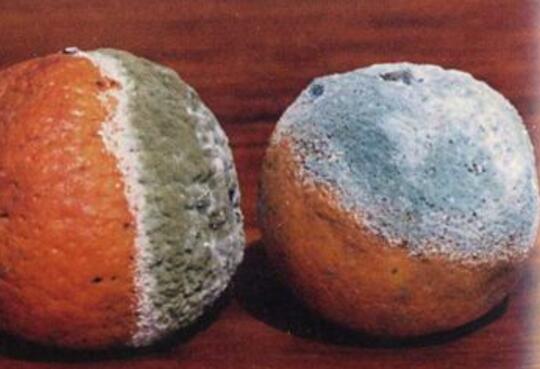
This disease mainly occurs during storage, and sometimes during the growing period as well. When the disease is severe, the surface of stored tubers becomes covered with a large amount of Penicillium conidia, which easily infects healthy tubers, and if not treated in time, will also cause the plant to rot.
Control method: When dealing with this tiger lily disease, we can use 75% thiophanate-methyl 800x solution to soak the affected root tubers for 10 to 15 minutes, then dry them and replant, which can reduce the possibility of disease occurrence.
2. Root rot
Root rot is a disease caused by fungi. As its name suggests, this disease mainly harms the roots of tiger lily, causing them to gradually rot. The peak period of this disease is around March to April each year, so special attention must be paid at this time.
Control method: To control root rot, we can use 50% baicaoqing wettable powder 500-800x solution to drench the roots of tiger lily, generally once every 3-5 days. After 1-2 applications, this disease can basically be eliminated.
3. Leaf spot
Leaf spot is a disease caused by fungi. Its peak periods are in spring and autumn each year, so everyone must pay extra attention during these two seasons. Leaf spot mainly harms the leaves of tiger lily. When the disease occurs, many round lesions appear on the leaves, and the lesions gradually expand and become irregular in shape, ultimately causing the plant to gradually wither and die.
Control method: When controlling leaf spot, a tiger lily disease, we can use 80% mancozeb 400-600x solution to spray the affected plants, generally once every 10-15 days. After 1-2 applications, it can be cured.
4. Rhizoctonia
Rhizoctonia is a disease caused by fungi. In mild infections, many sunken light brown spots appear on the leaves of tiger lily. If the infection is severe, it will also hinder the growth of the upper part of the plant, ultimately causing the plant to gradually wilt and die.
Control method: When dealing with this disease, we can use a soil disinfectant to disinfect soil suspected of being infected. After disinfection, the soil must be guaranteed not to become reinfected. If the previous crop has already shown infection, general soil disinfectants cannot be applied; in that case, treat the soil in advance with a fungicide for controlling Rhizoctonia before planting.
5. Powdery mildew
Powdery mildew, just like its name, causes many white powdery mold layers to appear on the leaves when the disease occurs. If left untreated for a long time, it will cause premature aging of tiger lily.
Control method: When this disease appears, we must carry out control at the early stage, because the longer it drags on, the harder it is to cure. When dealing with it, we can use 10% polyoxin 1000-1500x solution to spray the affected plants for control.
Cultivation Techniques for Edible Lily
In our lives, lilies include not only the lily flowers seen everywhere, but also the edible lilies commonly seen in our meals. Lilies have many varieties and variants, and edible lilies have effects such as moistening the lungs and stopping cough, calming the mind, relieving constipation, and fighting cancer. Today we will mainly introduce the cultivation methods of edible lily, for everyone's study and reference only.
Cultivation Techniques for Edible Lily
1. Site selection and land preparation
For edible lily, choose a plot with higher terrain, facing the sun, good drainage and irrigation conditions, deep soil layers, and medium-to-high fertility for planting. Edible lily cannot be planted continuously on the same land, nor can it be rotated with onion or garlic crops. The previous crop should preferably be legumes or grasses. Before planting, apply 2500 to 3000 kg of decomposed organic fertilizer and 25 kg of superphosphate per mu as base fertilizer, and simultaneously plow 0.6 kg of 50% diazinon into the soil for soil disinfection. Then deep plow 25-30 cm. Land preparation should fully mix the base fertilizer with the soil to fully improve the soil's physical and chemical properties, creating good conditions for the root development and bulb expansion of edible lily.
2. Selection of seed bulbs
Edible lily has a low propagation coefficient and a high seed requirement. For planting edible lily, Longya lily is the best in quality. This variety has large scales shaped like dragon teeth, is white and tender, has no bitter taste, commands a high price, and sells well. When introducing edible lily seeds, be sure to select seed bulbs that are white in color, have large scales, no pitting, and no bitter taste. Generally, using 50-60 g medium bulbs for planting gives the best economic benefit. About 150 to 200 kg of seed bulbs are needed per mu.
3. Timely sowing and pinching.
Edible lily is generally best sown from late September to early October. After sowing, seedlings do not emerge until early March of the following year. In hilly and mountainous areas, the sowing specification is generally 40 cm × 30 cm row-to-plant spacing, ensuring a population density of more than 6000 plants per mu. After sowing, straw or leaves must be used to cover and retain moisture, keeping the plot dry, with no standing water in the field.
Edible lily should be topped when the plant has grown more than 60 leaves and the daily average temperature has not exceeded 23°C. Topped plants yield more than untopped ones, timely topping yields more than late topping, and the more leaves retained at timely topping, the greater the yield increase. When seedlings are 30-35 cm tall, promptly top and pinch off the growing tip to promote concentrated nutrient transport to the bulb.
4. Field management and fertilization
After sowing, edible lily should be covered with plastic film. Experiments show that covering edible lily with film for 30-40 days in early spring can shorten the seedling emergence period by 7-15 days and increase yield by 12%. To prevent early withering of green leaves in the later stage of edible lily and extend the lifespan of functional leaves, in late June when the bulb expansion of edible lily slows down, apply a foliar fertilizer of 0.2% potassium dihydrogen phosphate mixed with 0.3%-0.5% urea once. In early July, apply 10 kg of high-grade compound fertilizer per mu dissolved in 50 kg of water as a foliar spray to prevent premature aging.
5. Pest and disease control and harvest
Within 1-2 days after sowing edible lily, spray 50-80 g of acetochlor per mu to prevent weeds from growing rampantly. During the growth period of edible lily, the main pests and diseases are cutworms, aphids, and viral diseases. In the early stage of viral disease, spray 1.5% plant virus inhibitor emulsion 1000x solution, or antiviral agent No. 1 300x solution, once every 10 days, spraying 2-3 times consecutively. Aphids after seedling emergence should be controlled with 40% omethoate. In late April, apply 0.5 kg of phoxim per mu as poisoned soil to kill underground pests. In the later growth stage of edible lily, the more green leaves per plant, the larger the bulb and the higher the yield.
For edible lily, after the Beginning of Autumn, when the stems have turned yellow and died and the flowers have fallen, harvest in a timely manner on a sunny day, as the bulbs are fully developed at this time, with high yield and good storability. During harvest, dig out the bulbs, cut off the aboveground parts, immediately transport them indoors for burying, and store them in clean river sand to prevent discoloration and shriveling, which would affect economic returns.
Classification of Main Lily Varieties
1. Tiger lily
Tiger lily, also known as juan dan, tiangai lily, inverted lotus, tiger-skin lily, pearl flower, and yellow lily. Because the flower color is orange-red and the petals curl backward, it is named "juan dan."
Also, because the petals have purple-black markings that closely resemble the stripes on a tiger's back, it has the elegant name of tiger-skin lily. It is native to China, Japan, Korea, and other places, and is now planted in many areas. The plant height is 70-100 cm, with some reaching 1.5 m, which can be called the tallest of lilies. The bulb is plump, white in color, and can be used for food and medicine, with a slightly bitter taste. The stems bear black-purple spots, giving the stalks a dark brown appearance. The plant grows vigorously, and bulbils grow in the leaf axils, which can be used for propagation. Triploid tiger lily pollinated with many Asian lily species shows interspecific compatibility and can produce interspecific hybrids.
2. Beautiful lily
Beautiful lily, also known as deer-fawn lily and bright red lily.
Deer-fawn lily is native to Jiangxi Province, Zhejiang Province, and Taiwan, China, as well as the coastal areas of Kyushu and southwestern Shikoku in Japan, with a plant height of 60-100 cm. The leaves are opposite, wide and sparse, hence the name large-leaf lily. Several flowers bloom on the upper part of the stem, the petals curl outward, and the stamens extend beyond the petals. The flowers are white and light red, with rose-colored patterns and spots on the petals resembling the markings on a deer, hence the beautiful name deer-fawn lily. Those with white flowers are called white deer-fawn lily, and those with red or purple flowers are called red deer-fawn lily. The rare variety Yanhong deer-fawn lily of Taiwan, China, is called "the most beautiful lily in East Asia."
3. Shandan lily
Shandan lily, also known as shandan flower, shandandan, coral lily, linear-leaf lily, and fine-leaf lily. It is named for its fine and numerous leaves and coral-like corolla. The stalk height is 30-40 cm, with leaves 50-80 cm on the stem, small and delicate, narrow and long like pine needles. The flowers bloom in late spring and early summer, drooping, with petals curling outward, bright red in color, and glossy. The bulb is egg-shaped or conical, and the scales are oblong or long egg-shaped. The capsule is oblong. The flowering period is July to August, and the fruit ripening period is September to October.
4. Easter lily
Easter lily, also known as iron cannon lily and Easter lily, is a representative variety of flowering lily, with pure white, trumpet-shaped flowers that open horizontally. It is native to Taiwan, China.
Lily Propagation Methods
1. Bulb propagation. Use secondary small bulbs for propagation. This method takes effect quickly and has fewer diseases. The aboveground stem surface portion of the lily grows small bulbs 1 cm-2 cm in size, which are left behind when harvesting lilies, buried in sand, and used as seed for autumn planting.
2. Bulbil propagation. Easter lily does not produce bulbils, but other lilies can grow broad bean-sized bulbils (aerial small bulbs) in their leaf axils in summer, with more than 40 per plant. As summer temperatures continue to rise, the bulbils will fall off, so they should be harvested before falling and kept as seed, sown in September-October of the same year.
3. Scale propagation. This method has a high propagation coefficient and is relatively commonly used. After the bulb is fully mature, dig it up, select plump ones free of pests and diseases, cut the scales from the base with a sharp knife, and immediately plant them in a seedbed covered with sandy loam. For scale propagation, select healthy disease-free plants, and first subject them to a summering treatment of 7 days above 35°C so that they sprout quickly and uniformly.
How to Select Lilies
When selecting fresh lilies, choose ones that are large, white in color, uniform in segments, thick in flesh, and with little soil in the concave part at the bottom. If the lily is yellow in color and the soil in the concave part is moist, it may be rotten at the heart. Dried lilies are best when dry, free of impurities, thick in flesh, and crystal clear.
For edible lily, those that are homegrown, not bitter in taste, and have broad and thin scales are superior. For medicinal lily, wild ones that are more bitter in taste and have small and thick scales are best.
Because the market demand for edible lily is growing, while domestic planting area is too small, and the fewer the varieties, the supply has fallen short of demand in the past two years, causing prices to soar. Stimulated by this situation, many friends want to plant lilies and carry out industrial restructuring. In this situation, varieties and cultivation techniques have become key. Therefore, mastering the cultivation techniques of edible lily has become very important.