The propagation methods of the golden spider lily are mainly division of bulbs
The golden spider lily (Lycoris aurea) is a fairly common flowering plant in people's daily lives, and it can be seen in all parts of our country. As more people grow it, questions about its propagation have drawn more attention. How does the golden spider lily propagate? What propagation methods does the golden spider lily have? Below, the editor will walk you through them.
I. How the golden spider lily propagates: three methods
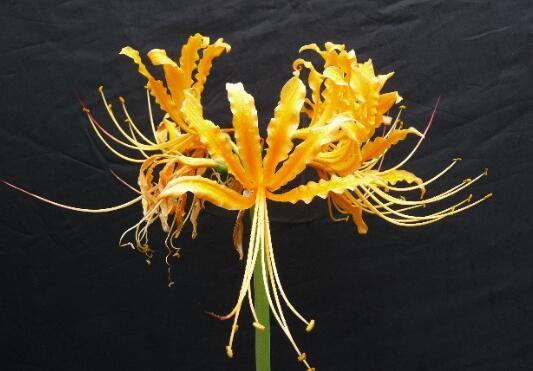
How the golden spider lily propagates is mainly divided into three methods: the bulb division method, the scale-base cutting method, and the tissue culture propagation method. As long as they are carried out properly, the survival rate of all three methods is very high. The specific details of the three methods are given below, and interested friends can take a look.
II. Propagation methods of the golden spider lily
1. Substrate selection: sandy soil
Before propagating the golden spider lily, we first need to choose a substrate. Although this plant is highly adaptable, it can still grow better in a suitable substrate. We can choose loose, fertile sandy soil as the substrate; this kind of soil has good drainage and aeration, and can make its flowers bloom especially abundantly.
2. Substrate disinfection: sun exposure or high-heat frying
After choosing the substrate, it is best to disinfect it first, so as to prevent bacteria in it from infecting the golden spider lily. When disinfecting, we can break it up and then expose it to the sun to disinfect it. It can also be put into an iron wok and stir-fried over high heat, so that even if there are bacteria, they will be killed.
3. Division method: blooms in 1-2 years
Among the propagation methods of the golden spider lily, the division method is a relatively simple one. We generally carry out this propagation method during its dormant period or after flowering. At this time, we can dig the plant out of the pot soil, then remove the daughter bulbs attached to the side of the mother bulb and plant them. When propagated by this method, it generally blooms after 1-2 years.
4. Tissue culture propagation method: roots in one month
The tissue culture propagation method generally uses MS medium, with flower stalks and ovaries taken as explant material; after culturing, callus tissue can be produced at the cut. After 1 month, adventitious roots can form, and after 3-4 months, adventitious buds can form. Using flower stalks and scales with stems as explant material can also produce adventitious buds and bulblets.
5. Scale-base cutting method: adventitious buds form in three months
When carrying out the scale-base cutting method, we must first cut the cleaned bulb base downward in a rice-character-shaped eight-part cut, with a cutting depth of about 1/2-2/3 of the bulb length. Then disinfect, dry in the shade, and insert into a moist substrate such as sand or perlite. After 3 months, adventitious bud formation can be seen at the junction of the scales and the basal disc, gradually producing small bulbils, which can become seedlings after separation and cultivation.
Golden spider lily Lycoris aurea (L'Herit) Herb Golden spider lily guide: how to grow the golden spider lily / how the golden spider lily propagates
Golden spider lily profileGolden spider lily Lycoris aurea (L'Herit) Herb
Growing methods and precautions for the golden spider lily Introduction to the golden spider lily
The golden spider lily (scientific name: Lycoris aurea), also known as iron-colored arrow (Compendium of Materia Medica) and yellow-flowered stone garlic, is a plant of the genus Lycoris in the family Amaryllidaceae.
Morphological characteristics of the golden spider lily
Perennial herb. Bulb ovoid, about 5 cm in diameter. Leaves basal, thick in texture, broadly linear, emerging in autumn, sword-shaped, about 60 cm long, up to 2.5 cm at the widest point, gradually narrowing toward the base, about 1.7 cm wide, apex acuminate, with an obvious pale-colored band in the middle. Flower stalk about 60 cm tall; spathes 2, lanceolate, about 3.5 cm long, about 0.8 cm wide; umbel with 4-8 flowers; flowers yellow or orange; tepal lobes with a pale green midrib on the back, oblanceolate, about 6 cm long, about 1 cm wide, strongly recurved and wrinkled, perianth tube 1.2-1.5 cm long; stamens slightly protruding beyond the perianth, about 1/6 longer than the perianth, filaments yellow; upper part of the style rose-red. Capsule triangular, dehiscing loculicidally; seeds few, nearly spherical, about 0.7 cm in diameter, black, each locule of the capsule with several seeds. Flowering period August-September, fruiting period October.
Perennial herb. Bulb broadly elliptic. Leaves emerge in early winter, linear or strap-shaped. Flower stalk emerging before the leaves, about 30 cm tall, bearing 4-6 flowers at the top; flowers bright red or with white margins, perianth tube extremely short, upper part 6-lobed, lobes narrowly lanceolate, 4 cm long, margins wrinkled, recurved outward; stamens 6; ovary inferior, 3-locular, style slender. Capsule dehiscing loculicidally. Seeds numerous. Flowering period September-October, fruiting period October-November. Grows on shaded, damp mountain slopes or under thickets, also cultivated. Stem up to 6 cm tall, composed of 10-20 layers of persistent leaf-sheath bases, outer coat brown. Leaves emerge in autumn, sometimes flowers and leaves emerging together in summer and autumn. Leaves 4-8, sword-shaped, green, leathery, 50-60 cm long, 2-3.5 cm wide, gradually narrowing toward the base and folded, apex acuminate, midvein flat above and raised beneath. Flower stalk 60-80 cm tall, sometimes reaching 100 cm, green, sometimes tinged with purple, 5-15 mm thick. Spathes 2, lanceolate, membranous, white, 3-4 cm long, 1-1.5 cm wide, apex acuminate, reflexed at full bloom; umbel with 4-9 flowers, each flower with 1 bracteole, bracteoles white, linear-lanceolate, 0.5-1.5 cm long, 1-2 mm wide; pedicels green, triangular, 1 cm long; perianth 7 cm long; perianth tube ) cm long; tepal lobes 6, yellow, indistinctly in 2 whorls, equal, strap-shaped, gathered upward, recurved upward, 5-6 cm long, 5-10 mm wide, midrib keeled on the back, apex with a beaked small apiculus, both lateral margins thin in texture, with 3-6 pairs of wavy wrinkles; stamens 6, gathered below, filaments yellow, basally adnate to the perianth tube, free at the throat, 6-7 cm long, sometimes up to 10 cm, extending forward, then curving upward; anthers purplish-brown, linear, 10 mm long, about 1.2 mm wide, dorsifixed and T-shaped, 2-locular, dehiscing outwardly, after dehiscence contracting and curving downward into a horseshoe shape; style linear, yellow, purple in the upper part, 9-10 cm long; ovary green, nearly spherical, 34 mm long. Capsule triangular, dehiscing loculicidally; seeds few, black, nearly spherical, 6-7 mm in diameter, surface finely tuberculate. Flowering period May-August, fruiting period November. Bulb ovoid, 2-3 cm in diameter, outer coat brown. Leaves emerge in autumn. Leaves strap-shaped, more than 40 cm long, 1.5-2 cm wide. Spathes 2, lanceolate. Umbel with 3-8 flowers, pedicels 3.5-4 cm long; perianth zygomorphic, about 7.5 cm long; red, perianth tube up to 1.5 cm long, lobes oblanceolate, 6 cm long, about 1.2 cm wide, apex obtuse; stamens gathered below, apex curved upward, filaments 6.5 cm long, nearly equal to the perianth; style 8 cm long.
Ecological habits of the golden spider lily
Grows on shaded, damp rocks or in fertile soil beneath stone cliffs. A shade plant, it likes warm, shaded, humid environments and is also slightly tolerant of cold; it has the habit of summer dormancy and is not particular about soil, but soil rich in humus, moist and well-drained is preferable.
Likes warm, humid environments; grows on shaded, damp rocks or in fertile soil beneath stone cliffs. Its cold tolerance is somewhat poor; in the middle and lower reaches of the Yangtze River, the aboveground parts often wither due to freezing damage in winter, but the underground bulbs can overwinter safely. It has the habit of summer dormancy, and the flowering period is August-September.
The golden spider lily can also be grown in water for ornamental display like narcissus, offering a special charm. The method is: after June each year, when the aboveground leaves of the golden spider lily have completely fallen off, dig the bulb out of the soil, taking care to keep the root system as intact as possible, soak the roots in 25°C-30°C warm water with a little potassium permanganate for 24-36 hours, then plant it in a narcissus bowl or other container with water and fix it with crushed stones, and place it indoors in a ventilated spot with sufficient light. Generally, it can open beautiful flowers in 10-15 days. During its flowering period, apart from adding water promptly, generally no fertilization is needed. After the flowers fade, the flower stalk can be cut off and the bulb replanted in soil and cared for until the next year.
Daily management: the golden spider lily is cold-tolerant, drought-tolerant, and salt-alkali-tolerant, but fears waterlogging and scorching sun; excessively strong light is the main factor causing it not to bloom. Daily management should pay attention to keeping the soil moist, especially before the flowering period; if dry weather occurs, it is also necessary to water thoroughly 2-3 times in succession. During its growing period, some dilute, quick-acting chemical fertilizer can be applied as appropriate; when the flower stalk gradually begins to emerge, a thin, thoroughly decomposed phosphorus-potassium fertilizer can be applied once more along with watering. As it approaches the dormant period, watering should be gradually reduced and fertilization stopped.
Origin of the name of the golden spider lily
"Crab-claw filaments twine around one another, a colorful embroidered ball with a rare charm. Silent all day, quietly gathering strength; when autumn comes, the ravines ripple with laughter filling the streams." The golden spider lily is a plant that is excellent in both flower and foliage and is also very peculiar: its originally luxuriant clumps of green leaves, every early summer, wither silently and disappear without a trace; in midsummer, its flower stalks suddenly rise from the ground, blooming with uniquely charming, golden, brilliant flowers, bringing people joy and surprise, and it is from this that its name is derived.
Distribution range of the golden spider lily
Distributed in Japan, Myanmar, Taiwan, China, as well as Hubei, Hunan, Guangxi, Yunnan, Guangdong, Fujian, Sichuan and other places in mainland China; it grows in areas at altitudes of 600 m to 2,300 m and is found on shaded, damp mountain slopes. It has not yet been introduced and cultivated artificially.
Landscape uses of the golden spider lily
The golden spider lily is upright and straight, with yellow inflorescences at the top, bright and eye-catching; planted in groups under semi-shaded forest or dotted in rock gardens, it can also be used as a cut flower.
Ornamental application: although the golden spider lily's flowers and leaves cannot be enjoyed at the same time, its leaves are emerald green, upright and straight, and it often sprouts and reveals its green in the bitter cold of ice and snow; although its flowers bloom unexpectedly, they are dazzling and richly gorgeous. It can not only be used in garden arrangements, adorning bamboo groves and secluded paths, but can also be potted or water-grown and placed indoors or in courtyards; the peculiar alternation of flowers and leaves often gives people a fresh and refreshing natural beauty.
This species has emerald green leaves in winter and brilliant golden flowers in summer and autumn, and is suitable for arranging flower beds, flower borders, rock gardens, and for use as understory ground cover.
The bulb can be used to make alcohol, from which lycorine can be extracted, and it can also be used as a pesticide. It can be used as an ornamental flower for courtyards and rooms, used as an ornamental flower for courtyards and rooms, and can also be used as a cut flower. The bulb can be used to make alcohol, from which lycorine can be extracted, and it can also be used as a pesticide.
Medicinal value: besides being used for ornament, the golden spider lily is also an excellent traditional Chinese medicine. It is sweet and warm in nature, slightly toxic, and has effects such as clearing heat and detoxifying, dispersing nodules and reducing swelling; it can be used to treat swellings, toxic sores, venomous snake bites, rheumatoid arthritis, and other conditions.
Functions and uses of the golden spider lily
Can be used for ornament; the bulb is toxic, and besides being able to extract lycorine for medicinal use, it can also be used to extract starch for industrial use.
Dietary or medicinal value of the golden spider lily
The medical information and healthy dietary information on Huhua Web is for reference only and cannot be used as a basis for diagnosis or medical treatment. For any health problem, consult professional medical personnel; for the treatment of any disease, please follow medical advice.
Ultimate flower-protecting mission: love yourself, start from reality, and strictly follow medical advice. Toward illness, do not be careless, do not delay, do not give up hope; face it bravely, warm the silent world with love, and care for the flower field in your heart with your heart.
The medical content on Huhua Web is for reference only and cannot be regarded as professional advice. For any health problem, consult professional medical personnel.
Medicinal information (1)
[Chinese name] Golden spider lily, yellow-flowered stone garlic, rock garlic, yellow dragon claw, single-foot garlic head, large single arrow, heavenly garlic, single garlic, old crow garlic, dragon claw flower, golden lantern flower, crab flower
[Chinese pinyin] Hudixiao
[English name] Golden Stonegarlic
[Latin scientific name] Lycoris aurea (L'Her.) Herb.
[Family and genus] Amaryllidaceae, Lycoris
[Plant morphology] Perennial herb. Bulb stout, nearly ovoid, about 5 cm in diameter, covered outside with dark brown bulb coat. Leaves emerge in autumn, basal; leaf blades thick in texture, broadly linear, about 60 cm long, up to 2.5 cm at the widest point, gradually narrowing toward the base, about 1.7 cm wide, apex acuminate, yellow-green and glossy above, grayish-green beneath, midvein sunken above and raised beneath. Leaf veins and leaf bases tinged with purplish-red. Flowers before leaves; flower stalk 30-60 cm tall, spathes 2, lanceolate, about 3.5 cm long, about 8 mm wide; umbel with 4-8 flowers, flowers relatively large, yellow or orange, slightly zygomorphic; tepal lobes 6, oblanceolate, about 6 cm long, about 1 cm wide, with a pale green midrib on the back, strongly recurved and wrinkled; perianth tube about 1.2-1.5 cm long, stalked; stamens 6, protruding beyond the perianth together with the style, filaments yellow; upper part of the style rose-red, ovary inferior, 3-locular. Capsule 3-angled, dehiscing loculicidally; seeds few, nearly spherical, about 7 mm in diameter, black. Flowering period August-September, fruiting period October.
[Habitat and distribution] Grows on shaded, damp mountain slopes, rocks, and in fertile soil beneath stone cliffs. Distributed in the southwest and Jiangsu, Anhui, Zhejiang, Jiangxi, Fujian, Taiwan, Hubei, Hunan, Guangdong, Guangxi and other places.
[Medicinal part] The bulb is used as medicine. Chinese medicine name: iron-colored arrow.
[Harvesting and processing] In autumn, dig out the bulbs; select the large ones, wash them clean, and use them fresh or dry them in the sun for medicinal use; the small ones are used as seed.
[Main components] The bulb contains lycorine, lycrenine, galanthamine, pseudolycorine, homolycorine, tazettine, and lycoramine. The stem contains galanthamine and lycoramine.
[Pharmacological effects] Anti-tumor, anti-viral, analgesic, emetic, and has the effect of exciting the uterine and small intestinal smooth muscle of animals.
[Nature, flavor and functions] Pungent, sweet, slightly cold, toxic. Moistens the lungs and stops cough, detoxifies and reduces swelling.
[Indications and usage] Lung-heat cough, or coughing blood, yin deficiency consumptive fever, difficult urination, carbuncle swelling and toxic sores, furuncles and scrofula, scalds and burns. External use: appropriate amount, pound and apply or pound for juice and apply.
1. To treat carbuncle swelling and toxic sores: golden spider lily, wild chrysanthemum leaves, and Sanpifeng, pounded together into a mash to extract juice and apply to the affected area. (Sichuan Traditional Chinese Medicine Records)
2. To treat red swelling below the ear: golden spider lily and chrysanthemum leaves pounded together into a mash to extract juice, add yellow anguo tree sap, mix well and apply to the affected area. (Sichuan Traditional Chinese Medicine Records)
Pharmacological effects
1. Anti-cancer and anti-viral effects: the contained pseudolycorine has anti-cancer and anti-viral effects. It has an inhibitory effect on rat W256 carcinosarcoma and human cervical cancer (Hela) cells; it has inhibitory effects on mouse lymphocytic choriomeningitis virus, encephalomyocarditis virus, and Japanese B encephalitis virus.
2. Other effects: the contained lycrenine has the effect of exciting the uterine and small intestinal smooth muscle of animals. The contained galanthamine has anti-cholinesterase and certain analgesic effects. The fluid extract of this product has an emetic effect on dogs and pigeons, and the emesis is produced through both reflex action and central action. When gavaged to rabbits at 0.1 g (crude drug)/kg, it increases respiratory tract secretion and has a significant expectorant effect.
3. Toxicity: the median lethal dose by gavage in mice is 26.42 g (crude drug)/kg/.
Textual research
In the "Compendium of Materia Medica," under the entry for stone garlic, it says: "There is a kind whose leaves resemble large chives, which sends up a stem in the fourth and fifth months, and blooms with flowers like small tubular flowers, yellow-white in color; it is called iron-colored arrow, and its functions are the same as this (stone garlic). Both send up stems and bloom, and afterward produce leaves; leaves and flowers do not meet, the same as golden lantern." According to the description of iron-colored arrow in the "Compendium of Materia Medica," it is the Amaryllidaceae plant golden spider lily.
Traditional Chinese medicine components
The bulb contains lycorine, lycrenine, galanthamine, pseudolycorine, homolycorine, tazettine, and lycoramine. The stem contains galanthamine and lycoramine.
Harvesting and storage
In autumn, dig out the bulbs; select the large ones, wash them clean, and use them fresh or dry them in the sun for medicinal use; the small ones are used as seed.
Propagation methods of the golden spider lily
The golden spider lily is mostly cultivated and propagated by the method of dividing the bulbs. The best time for dividing the bulbs is from April to June, when the old bulbs are in a dormant state and the outer skin is relatively loose. Vigorous old plants that are perennial and have multiple small bulbs can be selected; the small bulbs are broken off, keeping as many fibrous roots as possible to facilitate flowering in the same year. Generally, division propagation requires an interval of 4-5 years. For sowing, sow immediately after collection in autumn; in the same year, radicles grow, and they sprout the following spring. Seedlings need to be cultivated for 5-6 years before flowering.
① Cut the golden spider lily bulb downward from the top of the basal disc in a rice-character shape, with a cutting depth of 1/2-2/3 of the mother bulb's height;
② Soak the above cut mother bulb in culture solution for 30 minutes, remove and dry in the shade; the culture solution is a mixed solution formed from the following compositions diluted 1000-fold with water, and the volume ratio of each composition in the mixed solution is disinfectant: 30-35%, medium: 3-3.5%, growth regulator: 62-67%; the medium is a mixed solution formed from MS, 6BA at a concentration of 0.1 mg/L, and NAA at a concentration of 0.15 mg/L, and the volume ratio of each composition in this mixed solution is MS: 11-13%, 6BA: 74-78%, NAA: 11-13%; the growth regulator is a mixed solution formed from a 1% gibberellin crystalline granule aqueous solution and a 2% potassium oxide aqueous solution, and the volume ratio of each composition in this mixed solution is gibberellin crystalline granule aqueous solution: 75-80%, potassium oxide aqueous solution: 20-25%;
③ Plant the shade-dried mother bulb upside down on the cultivation substrate and tend it for 3 months to induce adventitious buds; wherein the cultivation substrate is made by mixing perlite, peat soil, and vermiculite in a ratio of 1:1:1;
④ Transplant the adventitious buds that have unfolded leaves separately onto culture soil and spray with water.
Cultivation techniques of the golden spider lily Cultivation:
Likes warm, humid environments. Its cold tolerance is somewhat poor; in the middle and lower reaches of the Yangtze River, the aboveground parts often wither due to freezing damage in winter, but the underground bulbs can overwinter safely. It has the habit of summer dormancy, and the flowering period is August-September. Choose a semi-shaded site with good drainage and fertile soil for planting; fertile soil can also be used for potting. For ground planting, generally no fertilization is needed, and the planting depth is about 2/3 to 3/4 of the bulb diameter. For ground planting, the plant and row spacing is preferably 10 to 15 cm, and for potting, 3 to 5 plants per pot is suitable. After planting, water thoroughly, and keep the soil moist but not waterlogged regularly. The optimum temperature for new root growth is 22°C to 30°C; generally, new leaves can grow 15 to 20 days after planting.
The golden spider lily is highly adaptable and likes shaded, humid environments and fertile sandy loam and calcareous loam containing humus. It is relatively cold-tolerant and salt-alkali-tolerant, not drought-tolerant, and fears waterlogging and scorching sun. For ground-planted golden spider lilies, apart from frequent watering, generally no excessive fertilization is needed. If fertilizing, some quick-acting chemical fertilizer can be applied to promote vegetative leaf growth; a small amount of topdressing can be applied between March and April to promote bulb enlargement; during the plant's dormant period from June to July, a small amount of organic fertilizer can be applied. If dry weather occurs before summer flowering, water thoroughly 2 to 3 times in succession; when the flower stalk gradually begins to emerge, apply a thin, thoroughly decomposed phosphorus-potassium fertilizer once along with watering. As it approaches the dormant period, watering should be gradually reduced and fertilization stopped. In winter, its bulbs can be left in the ground to overwinter.
The golden spider lily can also be grown in water for ornamental display like narcissus, offering a special charm. The method is: after June each year, when the aboveground leaves of the golden spider lily have completely fallen off, dig the bulb out of the soil, taking care to keep the root system as intact as possible, soak the roots in 25°C-30°C warm water with a little potassium permanganate for 24-36 hours, then plant it in a narcissus bowl or other container with water and fix it with crushed stones, and place it indoors in a ventilated spot with sufficient light. Generally, it can open beautiful flowers in 10-15 days. During its flowering period, apart from adding water promptly, generally no fertilization is needed. After the flowers fade, the flower stalk can be cut off and the bulb replanted in soil and cared for until the next year.
Daily management: the golden spider lily is cold-tolerant, drought-tolerant, and salt-alkali-tolerant, but fears waterlogging and scorching sun; excessively strong light is the main factor causing it not to bloom. Daily management should pay attention to keeping the soil moist, especially before the flowering period; if dry weather occurs, it is also necessary to water thoroughly 2-3 times in succession. During its growing period, some dilute, quick-acting chemical fertilizer can be applied as appropriate; when the flower stalk gradually begins to emerge, a thin, thoroughly decomposed phosphorus-potassium fertilizer can be applied once more along with watering. As it approaches the dormant period, watering should be gradually reduced and fertilization stopped.
Growth characteristics
The golden spider lily likes warm, humid environments. Its cold tolerance is somewhat poor; in the middle and lower reaches of the Yangtze River, the aboveground parts often wither due to freezing damage in winter, but the underground bulbs can overwinter safely. It has the habit of summer dormancy, and the flowering period is August-September.
Propagation is mainly by bulb division, carried out after autumn flowering or when the leaves have just withered in spring. When dividing and breaking off the bulbs, keep as many fibrous roots as possible, which is beneficial for flowering in the same year. Generally, division propagation requires an interval of 4-5 years.
For sowing, sow immediately after collection in autumn; they sprout the following spring. Seedlings need to be cultivated for 5-6 years before flowering. For cultivation, ground planting generally does not need fertilization, and the planting depth is 12-14 cm. If dry weather occurs before summer flowering, water thoroughly 1-2 times, and in early autumn the flower stalks emerge neatly. In October, when the fruit ripens, it splits open on its own and releases seeds; be careful to collect and keep seeds. In winter, the bulbs remain in the ground to overwinter.
Pest and disease control of the golden spider lily
The golden spider lily rarely suffers from pests and diseases; occasionally anthracnose harms the leaves. Diseased leaves can be cut off promptly, and 50% thiophanate 500-fold solution can be used for spraying control.
This species is a toxic plant included in the Chinese plant atlas database; its toxicity is that the whole plant is toxic, with the bulb being more toxic. After ingestion, there are symptoms of salivation, vomiting, diarrhea, stiff tongue, convulsions, cold limbs, shock, and even death from respiratory paralysis. In Guangxi, there have been cases of poisoning and death due to accidental ingestion. The LD50 by gavage in mice is 26.42 g/kg bulb (extract); after administration, there are ataxia, head drooping, limb weakness, and salivation, with convulsions and difficulty breathing before death; gavage in dogs at 0.76 g/kg, after half an hour there are salivation, severe vomiting, and refusal to eat, with death on the second to third day; anatomical examination shows congestion of the gastrointestinal mucosa. The emetic effect of this plant is the result of reflex action stimulating the gastric mucosa and direct action on the vomiting center.
Flower language of the golden spider lily
Because the whole plant of the golden spider lily is highly toxic, its flower language and legends carry a certain mysterious color. Legend says the golden spider lily is the tenderness of demons. It is a flower in heaven that voluntarily threw itself into hell, but was sent back by the demons; however, because it could not return to heaven, it still wandered on the road to the underworld. The demons could not bear it, so they agreed to let the golden spider lily bloom on this ordinary road, giving guidance and comfort to the souls that have left the human world. Therefore, its flower language is: love of death, love that is very painful.
Golden spider lily pictures
Propagation and cultivation of the golden spider lily
Flower name: golden spider lily
Latin scientific name: Lycoris aurea (L/"Herit) Herb
Alternative names: iron-colored arrow, yellow-flowered stone garlic, yellow equinox flower
Family and genus: Amaryllidaceae, Lycoris
The golden spider lily (scientific name: Lycoris aurea), also known as iron-colored arrow (Compendium of Materia Medica) and yellow-flowered stone garlic, is a plant of the genus Lycoris in the family Amaryllidaceae. It is distributed in Japan, Myanmar, Taiwan, China, as well as Hubei, Hunan, Guangxi, Yunnan, Guangdong, Fujian, Sichuan and other places in mainland China; it grows in areas at altitudes of 600 m to 2,300 m and is found on shaded, damp mountain slopes.
Origin and distribution
Native to the Fujian and Taiwan areas of our country. It is now distributed in Shaanxi, Henan, Jiangsu, Zhejiang, Fujian, Guangdong, Guangxi, Guizhou, Yunnan and other provinces and regions. Also found in Japan and Laos.
Morphological characteristics
Bulb ovoid, about 5 cm in diameter. Leaves emerge in autumn, sword-shaped, about 60 cm long, up to 2.5 cm at the widest point, gradually narrowing toward the base, about 1.7 cm wide, apex acuminate, with an obvious pale-colored band in the middle.
Flower stalk about 60 cm tall; spathes 2, lanceolate, about 3.5 cm long, about 0.8 cm wide; umbel with 4-8 flowers; flowers yellow; tepal lobes with a pale green midrib on the back, oblanceolate, about 6 cm long, about 1 cm wide, strongly recurved and wrinkled, perianth tube 1.2-1.5 cm long; stamens slightly protruding beyond the perianth, about 1/6 longer than the perianth, filaments yellow; upper part of the style rose-red. Capsule triangular, dehiscing loculicidally; seeds few, nearly spherical, about 0.7 cm in diameter, black. Flowering period August-September, fruiting period October.
Perennial herbaceous plant. Bulb stout, nearly spherical, about 5 cm in diameter. Leaves basal, thick in texture, broadly linear, up to 60 cm long and about 1.5 cm wide. Flower scape 30-60 cm tall, umbel with 5-10 flowers. Flowers yellow or orange. Each locule of the capsule has several seeds.
Growth habits
Grows on shaded, damp rocks or in fertile soil beneath stone cliffs. A shade plant, it likes warm, shaded, humid environments and is also slightly tolerant of cold; it has the habit of summer dormancy and is not particular about soil, but soil rich in humus, moist and well-drained is preferable.
Likes warm, humid environments; grows on shaded, damp rocks or in fertile soil beneath stone cliffs. Its cold tolerance is somewhat poor; in the middle and lower reaches of the Yangtze River, the aboveground parts often wither due to freezing damage in winter, and the flowering period is August-September. The golden spider lily can also be grown in water for ornamental display like narcissus, offering a special charm.
The method is: after June each year, when the aboveground leaves of the golden spider lily have completely fallen off, dig the bulb out of the soil, taking care to keep the root system as intact as possible, soak the roots in 25°C-30°C warm water with a little potassium permanganate for 24-36 hours, then plant it in a narcissus bowl or other container with water and fix it with crushed stones, and place it indoors in a ventilated spot with sufficient light. Generally, it can open beautiful flowers in 10-15 days. During its flowering period, apart from adding water promptly, generally no fertilization is needed. After the flowers fade, the flower stalk can be cut off and the bulb replanted in soil and cared for until the next year.
Daily management: the golden spider lily is cold-tolerant, drought-tolerant, and salt-alkali-tolerant, but fears waterlogging and scorching sun; excessively strong light is the main factor causing it not to bloom. Daily management should pay attention to keeping the soil moist, especially before the flowering period; if dry weather occurs, it is also necessary to water thoroughly 2-3 times in succession.
During its growing period, some dilute, quick-acting chemical fertilizer can be applied as appropriate; when the flower stalk gradually begins to emerge, a thin, thoroughly decomposed phosphorus-potassium fertilizer can be applied once more along with watering. As it approaches the dormant period, watering should be gradually reduced and fertilization stopped. The golden spider lily rarely suffers from pests and diseases; occasionally anthracnose harms the leaves. Diseased leaves can be cut off promptly, and 50% thiophanate 500-fold solution can be used for spraying control.
Propagation and cultivation
Propagation: the golden spider lily is mostly cultivated and propagated by the method of dividing the bulbs. The best time for dividing the bulbs is from April to June, when the old bulbs are in a dormant state and the outer skin is relatively loose. Vigorous old plants that are perennial and have multiple small bulbs can be selected; the small bulbs are broken off, keeping as many fibrous roots as possible to facilitate flowering in the same year. Generally, division propagation requires an interval of 4-5 years. For sowing, sow immediately after collection in autumn; in the same year, radicles grow, and they sprout the following spring. Seedlings need to be cultivated for 5-6 years before flowering.
Cultivation: likes warm, humid environments. Its cold tolerance is somewhat poor, and it has the habit of summer dormancy. Choose a semi-shaded site with good drainage and fertile soil for planting; fertile soil can also be used for potting. For ground planting, generally no fertilization is needed, and the planting depth is about 2/3 to 3/4 of the bulb diameter.
For ground planting, the plant and row spacing is preferably 10 to 15 cm, and for potting, 3 to 5 plants per pot is suitable. After planting, water thoroughly, and keep the soil moist but not waterlogged regularly. The optimum temperature for new root growth is 22°C to 30°C; generally, new leaves can grow 15 to 20 days after planting.
The golden spider lily is highly adaptable and likes shaded, humid environments and fertile sandy loam and calcareous loam containing humus. It is relatively cold-tolerant and salt-alkali-tolerant, not drought-tolerant, and fears waterlogging and scorching sun. For ground-planted golden spider lilies, apart from frequent watering, generally no excessive fertilization is needed.
If fertilizing, some quick-acting chemical fertilizer can be applied to promote vegetative leaf growth; a small amount of topdressing can be applied between March and April to promote bulb enlargement; during the plant's dormant period from June to July, a small amount of organic fertilizer can be applied. If dry weather occurs before summer flowering, water thoroughly 2 to 3 times in succession; when the flower stalk gradually begins to emerge, apply a thin, thoroughly decomposed phosphorus-potassium fertilizer once along with watering. As it approaches the dormant period, watering should be gradually reduced and fertilization stopped. In winter, its bulbs can be left in the ground to overwinter.
The golden spider lily can also be grown in water for ornamental display. The method is: after June each year, when the aboveground leaves of the golden spider lily have completely fallen off, dig the bulb out of the soil, taking care to keep its root system as intact as possible. Soak the roots in 25°C to 30°C warm water with a little potassium permanganate for 24 to 36 hours, then place it in a container with water, fix it with crushed stones, and place it indoors in a ventilated spot with sufficient light. Generally, it can bloom in 10 to 15 days.
During the flowering period, apart from adding water promptly, generally no fertilization is needed. After the flowers fade, the flower stalk can be cut off and the bulb replanted in soil and cared for until the next year. The main pest and disease problem of the golden spider lily is anthracnose; diseased leaves should be cut off promptly, and 50% thiophanate 500-fold solution should be used for spraying control.
Propagation methods
① Cut the golden spider lily bulb downward from the top of the basal disc in a rice-character shape, with a cutting depth of 1/2-2/3 of the mother bulb's height;
② Soak the cut mother bulbs mentioned above in a culture solution for 30 minutes, then remove and dry them in the shade; the culture solution is a mixed solution formed from the following composition, diluted with water to 1000 times; in the mixed solution, the volume ratio of each composition is disinfectant: 30-35%, medium: 3-3.5%, growth regulator: 62-67%;
The medium is a mixed solution formed from MS, 6BA at a concentration of 0.1mg/L, and NAA at a concentration of 0.15mg/L; in this mixed solution, the volume ratio of each composition is MS: 11-13%, 6BA: 74-78%, NAA: 11-13%; the growth regulator is a mixed solution formed from an aqueous solution of gibberellin crystalline granules at a concentration of 1% and an aqueous solution of potassium oxide at a concentration of 2%; in this mixed solution, the volume ratio of each composition is gibberellin crystalline granule aqueous solution: 75-80%, potassium oxide aqueous solution: 20-25%;
③ Plant the shade-dried mother bulbs upside down on the cultivation substrate, and maintain them for 3 months to induce adventitious buds; wherein the cultivation substrate is made by mixing perlite, peat soil, and vermiculite in a ratio of 1:1:1;
④ Transplant the adventitious buds that have unfolded leaves separately onto the culture soil, and spray with water.
Pest and disease control: anthracnose is the main disease damaging the leaves. In addition to promptly pruning diseased leaves, spraying with 500-times diluted 50% thiophanate can be used 2-3 times.
This species is a toxic plant recorded in the Chinese Plant Atlas Database. Its toxicity is that the whole plant is toxic, with the bulb being more toxic. After ingestion, there are symptoms of salivation, vomiting, diarrhea, stiff tongue, convulsions, cold limbs, shock, and even death from respiratory paralysis. There have been cases in Guangxi of poisoning and death due to accidental ingestion. The LD50 by gavage in mice is 26.42g/kg bulb (extract). After administration, ataxia, head drooping, limb weakness, and salivation appear, and convulsions and difficulty breathing occur before death; gavage in dogs at 0.76g/kg results in salivation, severe vomiting, and refusal to eat after half an hour, with death on the second to third day. Autopsy examination shows congestion of the gastrointestinal mucosa. The emetic effect of this plant is the result of reflex action stimulating the gastric mucosa and direct action on the vomiting center.
Growth Characteristics
Propagation is mainly by bulb division, carried out after flowering in autumn or when the leaves have just withered in spring. When separating and digging the bulbs, keep as many fibrous roots as possible, which is beneficial for flowering in the same year. Generally, bulb division propagation requires an interval of 4-5 years. For sowing, sow immediately after collection in autumn, and they germinate in the following spring of that year. Seedlings need to be cultivated for 5-6 years before flowering. For field cultivation, fertilization is generally not necessary, and the planting depth is 12-14 cm. If dry weather occurs before flowering in summer, water thoroughly 1-2 times, and in early autumn the flower stems will emerge neatly. In October, when the fruit ripens, it splits open on its own and releases seeds; pay attention to collecting and saving seeds. In winter, the bulbs remain in the ground to overwinter. Pests and diseases mainly damage the leaves. In addition to promptly pruning diseased leaves, spraying with 500-times diluted 50% thiophanate can be used 2-3 times. Lycoris aurea is upright and tall, with terminal yellow inflorescences that are brilliant and eye-catching. It can be planted in groups under semi-shaded forest or dotted in rock gardens, and can also be used as cut flowers. Perennial herb. Bulb broadly ovate. Leaves emerge in early winter, linear or strap-shaped. The flower stem emerges before the leaves, about 30 cm tall, with 4-6 flowers terminal; flowers bright red or with white edges, perianth tube very short, upper part 6-lobed, lobes narrowly lanceolate, 4 cm long, margins wrinkled, recurved outward; stamens 6; ovary inferior, 3-locular, style slender. Capsule dehiscing along the back. Seeds numerous. Flowering period September-October, fruiting period October-November. Grows in shady and humid mountain areas or under thickets, and is also cultivated. The stem is up to 6 cm tall, composed of 10-20 layers of persistent leaf sheath bases, with brown outer skin.
Leaves emerge in autumn, and sometimes flowers and leaves emerge together in summer and autumn. Leaves 4-8, sword-shaped, green, leathery, 50-60 cm long, 2-3.5 cm wide, gradually narrowed toward the base and folded, apex acuminate, midrib flat on the upper side and raised on the back. Flower stem 60-80 cm tall, some reaching 100 cm, green, sometimes purplish, 5-15 mm thick. Involucral bracts 2, lanceolate, membranous, white, 3-4 cm long, 1-1.5 cm wide, apex acuminate, recurved at full bloom; umbel with 4-9 flowers, each flower with 1 bractlet, bractlets white, linear-lanceolate, 0.5-1.5 cm long, 1-2 mm wide; pedicel green, triangular, 1 cm long; perianth 7 cm long; perianth tube ) cm long; perianth lobes 6, yellow, indistinctly in 2 whorls, equal, strap-shaped, gathered above, recurved upward, 5-6 cm long, 5-10 mm wide, keeled on the back of the midrib, apex with a beaked small apiculus, lateral margins thin, with 3-6 pairs of wavy wrinkles; stamens 6, gathered below, filaments yellow, base connate with the perianth tube, free at the throat, 6-7 cm long, sometimes up to 10 cm, extending forward, then curving upward; anthers purplish brown, linear, 10 mm long, about 1.2 mm wide, dorsifixed and versatile, 2-locular, dehiscing outward, after dehiscence contracting and curving downward into a horseshoe shape; style linear, yellow, purple in the upper part, 9-10 cm long; ovary green, nearly spherical, 34 mm long.
Capsule 3-angled, dehiscing along the septa; seeds few, black, nearly spherical, 6-7 mm in diameter, surface with fine tubercles. Flowering period May-August, fruiting period November. Bulb ovoid, 2-3 cm in diameter, outer skin brown. Leaves emerge in autumn. Leaves strap-shaped, more than 40 cm long, 1.5-2 cm wide. Involucral bracts 2, lanceolate. Umbel with 3-8 flowers, pedicel 3.5-4 cm long; perianth bilaterally symmetrical, about 7.5 cm long; red, perianth tube up to 1.5 cm long, lobes oblanceolate, 6 cm long, about 1.2 cm wide, apex obtuse; stamens gathered below, apex curved upward, filaments 6.5 cm long, nearly as long as the perianth; style 8 cm long.
Landscape Uses
Ornamental Application: Although Lycoris aurea cannot be enjoyed for both flowers and leaves at the same time, its leaves are emerald green, upright and tall, and it often sprouts and reveals its fresh green even in ice and severe cold; although its flowers bloom unexpectedly, they are dazzling and splendid. It can not only be used in garden arrangements and to accent secluded bamboo paths, but can also be potted or hydroponically grown, placed indoors or in courtyards. The peculiar alternation of flowers and leaves often gives people a fresh and pleasing natural beauty.
Medicinal Value: Besides being used ornamentally, Lycoris aurea is also an excellent traditional Chinese medicine. It is sweet and warm in nature, slightly toxic, and has effects such as clearing heat and detoxifying, dispersing nodules and reducing swelling. It can be used to treat swollen toxins and boils, venomous snake bites, rheumatoid arthritis, and other conditions.
This species has emerald green leaves in winter and brilliant golden-yellow flowers in summer and autumn. It is suitable for arranging flower beds, flower borders, rock gardens, and for use as ground cover under forests.
The bulb can be used to make alcohol, extract lycorine, and also serve as a pesticide. It can be used as an ornamental flower in courtyards and rooms, and can also be used as a cut flower.