When is the best month to sow Zinnia seeds? Zinnia planting method for April to June
Among the propagation methods for zinnias, seed sowing is a relatively common one, and relatively speaking the survival rate is also fairly high. However, if you want to succeed in growing them, there are many things to pay attention to. When is the best month to sow Zinnia seeds? What are the planting methods for zinnias? Below, the editor will walk you through it.
1. When is the best month to sow Zinnia seeds? April to June
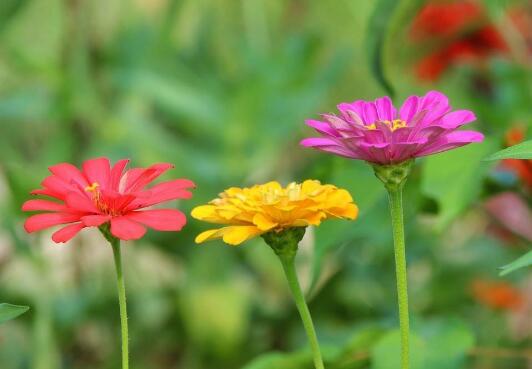
When we propagate zinnias by sowing, choosing a suitable time is very important. As for when it is most suitable to sow zinnias, we can choose any time from early April to late June, because the climate during this period is relatively suitable for their growth, so the survival rate will also be relatively higher.
2. Zinnia planting methods
1. Substrate: good drainage is required
Before planting zinnias, we first need to choose a substrate. This is the step that lays the foundation, so we must choose a suitable one. Zinnias prefer loose, fertile sandy soil. This kind of soil has good drainage and air permeability, allows them to absorb nutrients better, and is not prone to waterlogging.
2. Disinfection: sterilise with chemicals
Before propagating zinnias from seed, we also need to disinfect the substrate and the seeds. For the seeds, we can soak them in a 1% potassium permanganate solution for 30 minutes to disinfect them, while for the substrate we can use 0.05% potassium permanganate or 1000-fold formaldehyde to disinfect it, or we can use high-temperature fumigation to kill pathogens, pests and weed seeds in it.
3. Germination: soak in warm water
After disinfecting the seeds and substrate, we also need to soak the seeds in warm water for 1 day. When they begin to absorb water and swell, take them out. This can help germinate zinnia seeds and increase their germination rate and germination speed.
4. Planting: sprouting in 3-5 days
Before sowing zinnias, we first need to apply an appropriate amount of base fertiliser to the soil, then evenly scatter the disinfected seeds on the surface of the soil, and then cover them with 1-2 cm of soil. After sowing is complete, we need to keep the temperature between 21-23°C and place them in semi-shade. After that, they will sprout in 3-5 days.
5. Follow-up: temperature control
When the zinnia seedlings have grown 2 leaves and are 5-8 cm tall, we can transplant them once. From planting out to flowering takes 45-60 days depending on the variety. Their optimum growing temperature is 15-30°C. Apart from the seedling stage, when they need shading from light and rain, they all need plenty of sunlight. For planting out into pots, you can use loose, fertile, well-drained sandy soil.
[Zinnia]Zinnia pictures | Zinnia seed sowing
❤ ❤`•.¸¸.•´´¯`•Houseplants. This article comes from [Decoration News]
The zinnia stem is upright and sturdy, covered with short hairs, and rough on the surface. The leaves are opposite and sessile, with the leaf base clasping the stem. Flower diameter is 4~10 cm, and large flowers are 12~15 cm across. The flowers come in many colours, including white, green, yellow, pink, red and orange. The tubular florets are concentrated in the centre of the flower head in yellow-orange, with split edges. The flowering period is June to September, and the fruit ripening period is August to October. The thousand-seed weight is 5.9 g, and the lifespan is 3 years. In this issue, the editor shares zinnia pictures and its sowing method.
Zinnia - growing habits
It likes warmth, is not cold-tolerant, fears extreme summer heat, is vigorous, drought-tolerant, tolerant of poor soil, and dislikes continuous cropping. Its roots are deep and its stems hard, so it does not lodge easily. It is best grown in fertile, deep soil. The optimum temperature during the growing period is 15~30°C, and it is suitable for cultivation in the north. In hot regions, the dwarf types should be planted in light shade. The genus contains about 20 species, such as Zinnia angustifolia and Zinnia tenuiflora. It likes a warm climate, is not cold-tolerant, likes sunlight, is drought-tolerant and tolerant of poor soil. Its suitable growing temperature is 15-30°C, and it is suitable for planting in the north.
Zinnia - medicinal value
The whole plant of the zinnia can be used as medicine, with the effects of clearing heat, draining dampness and detoxifying. It can also be used to treat damp-heat dysentery, breast abscess and boils. For internal use: decoct in water, 15-30 g. For external use: prepare and apply fresh plant pounded into a paste.
Zinnia - flower language
Zinnia (magenta) - lasting love
Zinnia (mixed colours) - remembering an absent friend
Zinnia (purplish red) - enduring and unchanging
Zinnia (white) - kindness
Zinnia (yellow) - daily greetings
Zinnia - seed sowing
1. During sowing, zinnias require a well-drained, loose and fertile soil environment. The usual germination temperature is 21-22°C, and the seeds need to be covered with soil when germinating; they will sprout in 2-5 days. During growth, the daytime temperature should be kept at 18°C, and the night temperature should reach 21°C. From sowing to flowering, the time required is generally 9-10 weeks. It is also worth noting that zinnias dislike continuous cropping, so they should be rotated in good time.
2. Because zinnias tend to grow leggy in the later stages of growth, growers usually take measures to control this: first, lower the temperature appropriately and increase ventilation; second, ensure a sufficient nutritional area by increasing the spacing between plants and rows; third, pinch out the growing tips in good time to promote the growth of axillary buds. To keep plants short while still flowering, a dwarfing agent is often sprayed when the axillary buds have grown to about 3 cm after pinching. If you want to limit their growth height, you also need to pinch out the growing tips.
3. Zinnias have strong growth vigour and like a warm, dry environment with plenty of sunlight. The optimum growing temperature is 20~25°C. They are not tolerant of extreme summer heat; when the temperature is above 35°C, growth noticeably weakens, flowering is sparse, and the flowers are smaller. Under short-day conditions, the ligulate florets become smaller and the tubular florets increase. For the best growth, choose deep, well-drained fertile soil.
4. Zinnias are mainly propagated from seed, and can also be propagated by cuttings. Seed propagation is best done by spring sowing, generally in mid-to-late April. Its seeds are light-shy, so after sowing they should be covered with soil, watered and kept moist. The germination rate is generally around 60%. Cut a 10~15 cm length of young shoot, remove the lower leaves, keep the upper two leaves, insert it into the soil, spray with water frequently, provide appropriate shade, and after about 2 weeks it will take root and sprout.
Conclusion:The flower language of the zinnia is missing a friend far away, and everlasting. The zinnia has a very long flowering period, with flowers opening one after another and blooming beautifully over a long time, and it also symbolises everlasting friendship. Zinnia flowers come in very rich colours, and as potted plants for appreciation their ornamental value is very high. Each flower grows taller than the one before, which inspires people to strive upward.
How to sow zinnia seeds
Zinnia sowing method
Suitable soil
It should have a sandy potting soil with four qualities: containing humus, fertile, loose and well-drained.
Suitable temperature
Ensure the suitable temperature for germination is 20°C-25°C. Make sure the ambient temperature for sowing is suitable and not too high or too low. If the temperature is too low, the seedlings will grow into "little old seedlings".
Things to note when sowing zinnias
Zinnias should not be planted densely; it is best to grow one plant per pot. So when sowing seeds, the number of seeds per pot should not be too dense. For potted zinnias, choose dwarf series and dwarf large-flowered varieties, and they can be sown in pots in a greenhouse in early February. Make sure the room temperature is stable, with sufficient light, air circulation, and sufficient water and nutrients.