How Does a Sago Palm Reproduce? A Detailed Guide to Three Methods: Cuttings, Offsets, and Seeding
As a common potted plant, the sago palm has many benefits; besides looking attractive, it also has good medicinal value. Nowadays, keeping a sago palm at home is the choice of many flower enthusiasts, but is a single sago palm too monotonous? At this point, we need to master the propagation methods of the sago palm, so how does a sago palm reproduce? Today, the editor will introduce this to everyone in detail.
I. How Does a Sago Palm Reproduce: Cuttings/Offsets/Seeding
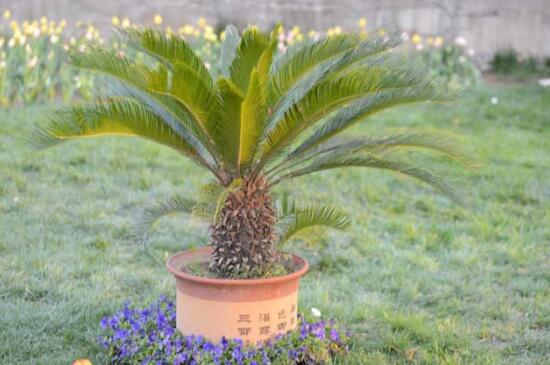
For beginners in cultivation, knowing the growing methods of the sago palm is enough, but if you are an old hand, you should also master its propagation methods, because that makes growing it more interesting. As for how a sago palm reproduces, there are mainly three methods: cuttings, offsets, and seeding. If you want to turn one sago palm into many pots, follow the editor and let's get to the specific operations!
II. The Three Propagation Methods of the Sago Palm
(1) Seeding Propagation of the Sago Palm
When it comes to the propagation methods of the sago palm, many people think of seeding. However, a sago palm takes 10 years, or even 20 years, to bloom, and the seeds only germinate the following year, so the seeding method is rarely used. Next, the editor will focus on the two propagation methods of cuttings and offsets.
(2) Cutting Propagation of the Sago Palm
1. Cutting Time
When it comes to propagation methods for indoor potted plants, cuttings are the first thing everyone thinks of. According to reports, the sago palm can also be propagated by cuttings, and the time can be chosen in May.
2. Selection of Cuttings
From a well-growing sago palm, select robust, pest- and disease-free young branches as cuttings. Then cut off part of the leaves on the branches, and cut off the lower part of the cutting.
3. Starting the Cuttings
Insert the cuttings into the prepared growing medium, with the insertion depth being 1/2-1/3 of the cutting. To avoid splitting the base of the cutting, you can first make a hole with a wooden stick and then insert it. After inserting, press firm and water thoroughly.
(3) Offset Propagation of the Sago Palm
1. Offset Time
Besides seeding and cuttings, the most suitable propagation method for the sago palm is actually the offset method. The specific time can be chosen when growth stops in winter, or from early spring in January to February until early summer, but March to April is best.
2. Selection of Offsets
When the offsets growing from the stem base of an old sago palm plant are the size of an egg, you can use a sterilized sharp blade to cut them away from the mother plant and place them in a shady, cool place for about a week. Note that when cutting, try to damage the stem bark as little as possible, and cut off the leaves.
3. Starting the Offsets
Plant the prepared offsets in plain sand, with the depth being 1/2 of the offset's height. To prevent the wound from rotting, before planting you should apply wood ash, charcoal powder, or sulfur powder to the wound. After planting, water thoroughly once, place in half shade, and maintain 27—30℃; roots will form in 45 days, and leaves will grow at the same time.
Overall, propagating the sago palm is not difficult; cuttings, offsets, and seeding can all succeed, but the most suitable one for indoor use by flower enthusiasts is still offset propagation. Of course, methods are fixed, but people are flexible; everyone can choose a method to propagate according to the actual situation. That is all the editor has to introduce about the propagation methods of the sago palm, and I hope it can be helpful to everyone.
Propagation Methods of the Sago Palm
Cycas mainly propagates by offset branches, and can also be propagated by seeding or cuttings.Seeding propagation: In October, harvest cycad seeds, or plump seeds no more than two years old, soak them in warm water at about 50℃ for 24 hours, then soak them in dilute hydrochloric acid or dilute sulfuric acid for 10-15 minutes, then rinse them clean with clear water. During soaking, change the clear water once every other day. After the seed coat has fully absorbed water, expanded, and softened, manually peel off the outer seed coat, wash off the fruit flesh, dry the seeds, and then store them well. Around December, carry out sand storage treatment for the seeds. Because the seeds have a thick and hard coat, they can be treated by a variable temperature method, and finally stored in sand. Use clean sandy loam, river sand, perlite, and other materials with good water retention and air permeability to make a seeding bed, with a thickness of no less than 40 cm, and water thoroughly. Sow the prepared seeds into the bed at a spacing of 5-20℃ cm between plants and rows, at a depth of about 3 cm. Immediately cover with river sand 3 cm thick, and control the amount of watering according to the dryness of the soil in the bed and the fine sand covering. After watering, cover with plastic film to retain moisture and heat. Once a week, choose a sunny morning to uncover the film for ventilation. When the soil is dry, water to keep it moist, and cover the film again at sunset in the afternoon. Generally, cycad sand storage takes 4-6 months. During this period, maintain the temperature and humidity of the sand storage, with an suitable temperature of 18-25℃ and relative humidity of 80-90%. Winter insulation must be done well, and it must not be lower than 12℃. In May-June of the second year, the seeds stir and break out of the shell, and in July-August they germinate and grow one true leaf.
Division propagation: Division propagation should be done in summer. Separate the suckers from the mother plant's stem, insert them into open ground or pots, and bury half in soil. The survival rate of division propagation can reach 80-90%. Suckers grow slowly, so it is best to take suckers produced after 3 years for division; suckers with small wounds are easier to survive. You can also cut the stem into long sections of 15-20 cm and bury them in sandy soil so that new buds form around the stem, and then divide and cultivate them.
Cycas is suitable for growing in direct sunlight or bright scattered light; in summer, it is best to provide half shade, maintain the temperature at 15-20℃, and keep soil and air humidity somewhat high, frequently misting the leaf cluster. This plant has no dormant period. The winter temperature should preferably be 12-16℃, and the plant has a considerable degree of cold resistance. From March to September, apply liquid fertilizer once a month. The cultivation substrate should preferably be a mixture of equal amounts of organic soil, peat, and fine sand. Change the potting soil once every 2-3 years, adding new soil and base fertilizer to aid growth. In summer, liquid fertilizer can be applied several times, and ferrous sulfate solution can be added, which can make the leaf color more deeply green. After autumn begins, reduce watering. For cycad pests and diseases, scale insects harming the leaves are the most common. First, keep ventilation good. After discovering scale insects, observe the hatching period and spray lime sulfur mixture or ammonium fluoroacetate.
How to Propagate a Sago Palm
The sago palm is called cycad in botany, with the aliases phoenix-tail banana, foreign banana, and fire-avoiding banana. It belongs to the Cycadaceae family and the Cycas genus, and is an evergreen tree. It is native to central and southern China, India, Japan, and Indonesia, and originated in East Asia and Southeast Asia. It is widely cultivated in Zhejiang, Jiangxi, Hunan, Sichuan, and other places. In North China, Northwest China, and other places, it is grown as a potted plant for indoor viewing. Cycas likes sunlight, dryness, and a well-ventilated environment. It is not cold-tolerant, likes fertilizer, prefers sandy soil, and grows slowly.
In its place of origin, cycad can reach 8 m tall; indoors as a potted plant it can reach 3 m tall. The stem is thick and cylindrical, without branches, with large leaf scars forming a fish-scale pattern. The leaves are clustered at the top of the stem and are large pinnately compound leaves, about 1 m long. The leaflets are linear, leathery, with hard tips, dark green and glossy, and the leaf margins are recurved. Each spring it produces 2-3 rounds, and the old leaves fall off one after another. The flowers are unisexual and grow at the top of the stem, with male and female flowers on separate plants. The male flowers are arranged in a spiral, shaped like a pineapple, covered with downy hair, fresh pale yellow when first opening, and turning brown after maturity. The female flowers are larger, with many palmate scales, shaped like a flat cylinder, gradually splitting to form a pinecone shape. Cycads rarely bloom; old trees of twenty or thirty years can bloom, hence the saying "a thousand-year cycad blooms once." The flowering period is June-August.
Cycas mainly propagates by offset branches, and can also be propagated by seeding or cuttings.
Seeding propagation: In October, harvest cycad seeds, or plump seeds no more than two years old, soak them in warm water at about 50℃ for 24 hours, then soak them in dilute hydrochloric acid or dilute sulfuric acid for 10-15 minutes, then rinse them clean with clear water. During soaking, change the clear water once every other day. After the seed coat has fully absorbed water, expanded, and softened, manually peel off the outer seed coat, wash off the fruit flesh, dry the seeds, and then store them well. Around December, carry out sand storage treatment for the seeds. Because the seeds have a thick and hard coat, they can be treated by a variable temperature method, and finally stored in sand. Use clean sandy loam, river sand, perlite, and other materials with good water retention and air permeability to make a seeding bed, with a thickness of no less than 40 cm, and water thoroughly. Sow the prepared seeds into the bed at a spacing of 5-20℃ cm between plants and rows, at a depth of about 3 cm. Immediately cover with river sand 3 cm thick, and control the amount of watering according to the dryness of the soil in the bed and the fine sand covering. After watering, cover with plastic film to retain moisture and heat. Once a week, choose a sunny morning to uncover the film for ventilation. When the soil is dry, water to keep it moist, and cover the film again at sunset in the afternoon. Generally, cycad sand storage takes 4-6 months. During this period, maintain the temperature and humidity of the sand storage, with an suitable temperature of 18-25℃ and relative humidity of 80-90%. Winter insulation must be done well, and it must not be lower than 12℃. In May-June of the second year, the seeds stir and break out of the shell, and in July-August they germinate and grow one true leaf.
Division propagation: Division propagation should be done in summer. Separate the suckers from the mother plant's stem, insert them into open ground or pots, and bury half in soil. The survival rate of division propagation can reach 80-90%. Suckers grow slowly, so it is best to take suckers produced after 3 years for division; suckers with small wounds are easier to survive. You can also cut the stem into long sections of 15-20 cm and bury them in sandy soil so that new buds form around the stem, and then divide and cultivate them.
Cycas is suitable for growing in direct sunlight or bright scattered light; in summer, it is best to provide half shade, maintain the temperature at 15-20℃, and keep soil and air humidity somewhat high, frequently misting the leaf cluster. This plant has no dormant period. The winter temperature should preferably be 12-16℃, and the plant has a considerable degree of cold resistance. From March to September, apply liquid fertilizer once a month. The cultivation substrate should preferably be a mixture of equal amounts of organic soil, peat, and fine sand. Change the potting soil once every 2-3 years, adding new soil and base fertilizer to aid growth. In summer, liquid fertilizer can be applied several times, and ferrous sulfate solution can be added, which can make the leaf color more deeply green. After autumn begins, reduce watering. For cycad pests and diseases, scale insects harming the leaves are the most common. First, keep ventilation good. After discovering scale insects, observe the hatching period and spray lime sulfur mixture or ammonium fluoroacetate.