When to sow sage? A detailed guide to planting methods in spring and autumn
Among the propagation methods for sage, sowing is one of the more commonly used methods, but to sow successfully, there are many points we need to pay attention to. When to sow sage? What are the planting methods for sage? Below, the editor will walk you through it.
1. When to sow sage: spring and autumn
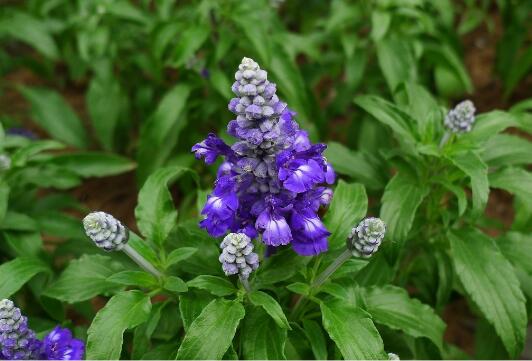
When propagating sage by sowing, choosing a suitable time is very important. As for when it is most suitable to sow sage, we can choose spring and autumn, because the climate in these two seasons is more suitable for its growth, so the survival rate will be relatively higher.
2. Planting methods for sage
1. Substrate selection: neutral or slightly alkaline soil
Before propagating sage by sowing, we must first choose a substrate. Generally, it is best to choose loose, fertile neutral or slightly alkaline soil as the substrate, because this kind of soil has good drainage, allows the plant to absorb nutrients better, and is less prone to waterlogging.
2. Substrate disinfection: high-temperature sterilization
After choosing the substrate for sage, we also need to disinfect it to prevent pests and diseases from lurking in it. When disinfecting, we can break it up and put it in the sun to sterilize it, or put it in a pot and heat it by stirring, so that any pests and diseases can be killed by the heat.
3. Seed germination: soaking in warm water
Because the seed coat of sage is relatively hard, before sowing it is best to soak the seeds in warm water at about 40°C for about 1-2 days. When the seeds begin to absorb water and swell, take them out and plant them. This can promote germination and allow the seeds to sprout faster.
4. Sowing method: seedlings emerge in 10-15 days
Before propagating sage by sowing, we must first apply an appropriate amount of base fertilizer to the soil, then evenly scatter the seeds on the surface of the soil, and afterward cover them with 1-2cm of soil before watering. When watering, be careful to water thoroughly in one go, and after about 10-15 days the seedlings will emerge.
5. Follow-up management: pay attention to daily care
After the seedlings emerge, sowing can be declared successful, and then we can carry out follow-up care. There are also many points to pay attention to in terms of care, such as watering and fertilizing, all of which require attention. If you do not know how to grow them, you can refer to the article on sage cultivation methods, which contains detailed care instructions.
Sage planting methods: plant in spring and autumn
Sage planting method 1. Planting timeSage can be grown by sowing seeds, and the sowing time can be every year in spring or early autumn.
2. Soil requirementsFor planting sage, the soil can generally be loose garden soil with good aeration. In addition, an appropriate amount of organic fertilizer and compound fertilizer can be added to the soil. You can also use a mix of 7 parts peat and 3 parts garden soil, and add an appropriate amount of ammonium nitrogen fertilizer, then plant with soil into a nutrient pot with a diameter of more than 10cm.
3. Seed treatmentBefore planting sage seeds, it is recommended to soak the seeds in warm water at 50°C, and they need to be stirred. After keeping them at that temperature for 5 minutes, wait until the temperature drops to 30°C, rinse them several times with clean water, then place them at a constant temperature of 25-30°C to promote germination, or continue soaking them in clean water for 24 hours before sowing and planting.
4. Planting methodGardeners can directly plant the soaked seeds into the prepared soil. After planting, cover the seeds with a thin layer of soil, and at the same time water to keep them moist, then place the flowerpot in a cool, ventilated place. Generally, they will sprout about 10 days after sowing.
5. Field planting and transplantingWhen the sage has 2 to 3 true leaves, it can be transplanted into a pot. Generally, a 12cm to 13cm nutrient pot is chosen for transplanting.
Sage sowing and seedling-raising methods
Sage is also known as medicinal sage, Salvia officinalis, Japanese purple-flowered sage, southern Danshen, etc. It is an aromatic plant of the genus Salvia in the Lamiaceae family. Many friends grow sage as a potted plant to use as an herb or medicinal herb, and placing it at home can also play a certain role in improving the environment. The editor will introduce the sowing and seedling-raising methods for sage, and friends who like sage can learn from it.
Sage
There are about 920 seeds per gram. Generally, 200-cell or 288-cell plug trays are chosen for sowing. The medium is generally imported seedling-raising peat soil or disinfected domestic seedling-raising peat soil, and its pH value should be 5.5 to 5.8. After sowing, cover with a thin layer of vermiculite, then cover with plastic film. The suitable germination temperature is 20°C to 23°C, and the germination days are 5 to 8 days.
In the first stage of germination, the radicle appears, and the root begins to form. At this stage, no fertilizer is needed, but it is very important to keep the seedling medium moist, and a certain amount of light is required. After the seedlings emerge, gradually remove the film. Use 1000-times dilution of chlorothalonil or thiophanate-methyl once a week to prevent damping-off disease, spraying continuously 2 to 3 times.
In the second stage of germination, rooting continues, stems appear, and the cotyledons have unfolded. Maintain appropriate humidity, prevent excessive moisture, and appropriately apply a water-soluble fertilizer with an N-P-K ratio of 20-10-20.
In the third stage of germination, the roots can insert into the holes of the plug tray, and several true leaves appear. Increase the fertilizer concentration, control humidity and temperature, lower the temperature to about 20°C, and a certain amount of light is needed to prevent the seedlings from growing leggy at this stage.
In the fourth stage of germination, the root system forms a mass, with 2 to 3 pairs of true leaves. Continue to increase the fertilizer concentration. The temperature and humidity are the same as in the third stage. Appropriately control moisture, strengthen ventilation, and still prevent leggy growth, to prepare for transplanting.