How to Propagate Salvia? Master the Method for a Survival Rate as High as 95%
Salvia is a flowering plant with high ornamental value, and it can be seen in many regions of our country. However, as more people grow salvia, questions about its propagation have also drawn considerable attention. How to propagate salvia? What are the propagation methods for salvia? Below, the editor will walk you through it.
I. How to Propagate Salvia: Seeding / Cuttage
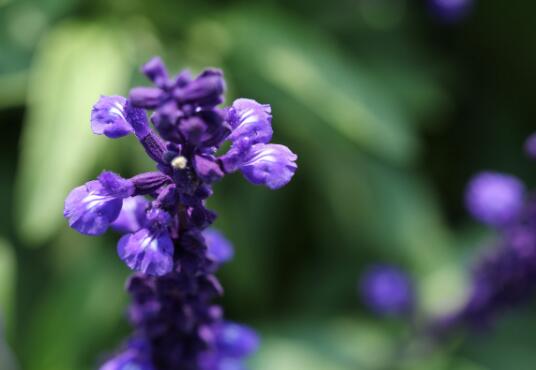
When it comes to how to propagate salvia, there are mainly two methods: seed propagation and cuttage propagation. As long as we operate according to the requirements, the survival rate of both methods is very high. Below are the specific operating details of these two propagation methods, and those interested can take a look.
II. Propagation Methods for Salvia (Seed Propagation)
1. Substrate: Good drainage is required
Seed propagation is a relatively commonly used method among salvia propagation methods. Before carrying out seed propagation, we must first choose a substrate. Generally, it is best to choose loose, fertile neutral or slightly alkaline soil as the substrate, because such soil has good drainage, allows the plant to absorb nutrients better, and is less prone to water accumulation.
2. Germination promotion: Soak for 1-2 days
Because the seed coat of salvia is relatively hard, before sowing it is best to soak the seeds in warm water at about 40°C for about 1-2 days. When the seeds begin to absorb water and swell, take them out and plant them. This can play a role in promoting germination and allow the seeds to sprout faster.
3. Sowing: Seedlings emerge in 10-15 days
Before carrying out seed propagation of salvia, we must first apply an appropriate amount of base fertilizer into the soil, then evenly scatter the seeds on the soil surface, and afterward cover them with 1-2cm of soil before watering. When watering, be careful to water thoroughly in one go, and after about 10-15 days the seedlings will emerge.
III. Propagation Methods for Salvia (Cuttage Propagation)
1. Cutting time: May-June in the north / March in the south
When carrying out cuttage propagation of salvia, choosing a good time point is very important, because cutting at a suitable time can improve the survival rate. If in the south, we can choose May-June for cutting, while in the north we can choose March.
2. Selection of cuttings: Growth must be robust
In the cuttage process of salvia, the selection of cuttings is also a very important step. It is best to choose branches that grow relatively robustly and are free of pests and diseases, as this will give a high survival rate. If you choose thin and weak branches that look fragile, then the cutting can basically be declared a failure, and the survival rate will not be high.
3. Cutting method: Roots in 20-30 days
Among salvia propagation methods, cuttage propagation is a relatively simple one. Before cutting, we can first use chopsticks to poke a hole in the soil, then insert the cutting into it, press the soil flat, and water. When watering, be careful to water thoroughly in one go, and after 20-30 days when new roots grow, it can be planted out.
Salvia Salvia japonica Thunb. Salvia gallery: How to grow salvia / How to propagate salvia
Salvia ProfileSalvia Salvia japonica Thunb.
Salvia Cultivation Methods and Precautions Salvia Introduction
Salvia is an aromatic plant in the genus Salvia of the Lamiaceae family. It is a perennial herb with woody stems, gray-green leaves, and blue to blue-purple flowers. It is native to southern Europe and the Mediterranean coastal regions.
Salvia has many different uses and effects, and some plants in the same genus also have the same effects. It is often cultivated as a kitchen herb or medicinal herb, and is sometimes also called garden sage, kitchen sage, or Dalmatian sage. In southern Europe, plants similar to salvia are sometimes grown as herbs and medicinal herbs, and these plants in the same genus as salvia are often confused with true salvia.
Salvia mainly uses its flowers, leaves, and essential oil, and has preservative, antibacterial, and anti-diarrheal effects.
Morphological Characteristics of Salvia
Salvia is 30 cm to 60 cm tall, a perennial herb, with a four-angled columnar stem that is hairy, slightly woody in the lower part, and subshrub-like. The leaves are opposite, long elliptical on the petiole, with a leaf blade 3 cm-5 cm long, rounded at the apex, entire (or with blunt serrations), thick in texture, with reticulate veins on the leaf surface and wrinkles, gray-white, with white hairs covering the underside. In August, about 10 whorls of labiate flowers are arranged verticillately at the top of the stem or in the leaf axils. The flowers are purple, blue-green, sometimes white, 1.5 cm-2 cm long, with the upper lip concave and slightly upright, and the lower lip broad and semispreading. The tissues of the whole plant contain volatile oil, with a strong aroma and a slight astringent taste.
Salvia is a perennial herb; the fibrous roots are dense. The stem is upright, 40-60 cm tall, obtusely four-angled, grooved, sparsely covered along the angles with long soft hairs or nearly hairless. The lower stem leaves are bipinnate compound leaves, the petiole 7-9 cm long, concave on the ventral side and convex on the dorsal side, sparsely covered with long soft hairs or hairless, the leaf blade 6-10 cm long and 5-9 cm wide. The upper stem leaves are once pinnate compound leaves with short petioles, the terminal leaflet lanceolate or rhombic, up to 10 cm long and 3.5 cm wide, the apex acuminate or caudate-acuminate, the base long cuneate, the margin bluntly serrate, sparsely soft-hairy or hairless on both sides, herbaceous, the lateral leaflets ovate-lanceolate, 1.5-5 cm long and 0.8-2.5 cm wide, the apex acute or shortly acuminate, the base oblique and nearly rounded, otherwise the same as the terminal leaflet, nearly sessile.
Salvia has verticillasters with 2-6 flowers, forming an elongated raceme or branched into a racemose panicle, with the inflorescence terminal. The bracts and bracteoles are lanceolate, 2-5 mm long and 0.5-1 mm wide, entire, acuminate at the apex, cuneate at the base, hairless on both sides.
The pedicel is 1-1.5 mm long and covered with short soft hairs; the inflorescence axis is densely covered with glandular or eglandular soft hairs. The calyx is tubular, 4-6 mm long, sparsely covered outside with glandular soft hairs, and inside at the throat there is a white ring of long stiff hairs. It is two-lipped, with the lip cleft reaching 1/3 of the calyx length. The upper lip is triangular or nearly semicircular, about 2 mm long and 3 mm wide, entire, with 3 small pointed tips at the apex. The lower lip is nearly equal in length to the upper lip, about 3 mm wide, half-cleft into 2 teeth, the teeth long triangular and long acuminate.
The salvia corolla is pale red, pale purple, pale blue to white, about 12 mm long, densely covered outside with long soft hairs, and inside 2.5-4 mm from the base there is an obliquely inserted ring of sparse soft hairs. The corolla tube is straight, tubular, about 9 mm long, extending outward, 2 mm wide at the base, gradually widening upward, reaching 3.5 mm wide at the throat. The corolla limb is two-lipped, the upper lip elliptical or ovate, 2.5 mm long and 2 mm wide, slightly emarginate at the apex, the lower lip 3 mm long and 4 mm wide, 3-lobed, the middle lobe larger, obcordate, with small rounded teeth at the margin, the lateral lobes ovate and smaller.
There are 2 fertile stamens, extending outward, the filament about 1 mm long, the connective about 6 mm long, straight or slightly curved, the upper arm long, the two lower arms slender and small, sterile, separate.
The style extends outward, with unequal 2-cleft apex, the anterior lobe longer. The disc is slightly swollen at the front.
The salvia nutlet is elliptical, about 1.7 mm long and 0.5 mm in diameter, brown, smooth. The flowering period is June-September.
Ecological Habits of Salvia
Salvia likes a warm and relatively dry climate, and full sunlight is the most ideal cultivation environment for salvia. Ordinary garden soil can mostly be used for cultivation, and it relatively prefers calcareous (alkaline) soil.
Propagation methods include sowing (seeds need light to germinate; do not press the soil when sowing), division, and cuttage. The bed width is 50 cm, and the plant spacing is 30 cm. In August, the flower stalks extend, and the aboveground part is cut off. After that, new buds grow and propagate, and after planting out, it can be harvested continuously for several years. Its leaves can be eaten raw or dried and stored for use.
Salvia often grows on mountain slopes, roadsides, in grass clusters, by water, and under forest shade.
Cultivation Techniques for Salvia
1、Site Selection
The salvia planting site should be chosen as high and dry land not subject to waterlogging, or soil with good drainage. It can be planted over a large area or cultivated sporadically. Because it is a perennial plant, after planting it can grow well without much management and can be harvested continuously for many years.
2、Propagation
Salvia can be propagated by seeds or cuttings. Seeds can be sown from February to August, and with heat preservation they can be sown in all four seasons. Before sowing, soak the seeds in warm water at 50 degrees, and stir. After keeping warm for 5 minutes, when the temperature drops to 30 degrees, rinse several times with clean water, then place at constant temperature to promote germination, or continue soaking in clean water for 24 hours before sowing. This can increase the emergence rate and make seedlings emerge earlier. Direct sowing or seedling transplanting can be used.
The cutting time is May-June. For cuttings, it is advisable to choose stem tips from the branch apex that are not too tender, 5-8 cm long, cut them off below the stem node, remove 2-4 large leaves, and insert the branches into a seedling bed of sandy soil or perlite, inserting to a depth of 2.5-4 cm, with a plant spacing of 5 cm and a row spacing of 8-10 cm. After inserting, water and cover with plastic film to keep warm. New roots develop in 20-30 days, and after hardening off for 3-5 days they can be transplanted.
3、Planting Out
Choose a place with good drainage, fertile soil, and loose soil for planting out. Before planting out, plow deeply and harrow finely. If the soil is too poor, apply 2000 kg of organic fertilizer, make beds 1.2-1.5 m wide, and plant out at a density of 30 cm plant spacing and 45-50 cm row spacing, about 4000 plants per mu, and water after planting. For pot cultivation, choose a pot with a diameter of more than 18 cm, and plant one plant per pot.
4、Management
After the seedlings survive, pay attention to weeds and weed frequently to prevent weeds from overpowering the seedlings. Water during drought, especially in the hot summer. While watering, apply some diluted compound fertilizer, and drain promptly on rainy days. The method for overwintering salvia in the north: after harvesting the aboveground part, water with frozen water and mound soil, with a soil thickness of 20 cm or higher. After the final frost at the end of the year, open it up, level the bed, and water to facilitate sprouting and growth.
5、Seed Collection
Salvia sown in the current year or the following year flowers in summer, but does not set seed. Plants over 2-3 years old are needed to flower and set seed. After the seeds mature, they easily fall off, so they must be checked frequently. When the seeds turn brown, collect them, dry them in the shade, and keep them for seed.
Salvia Cultivation Methods Daily Management
Salvia prefers sufficient sunlight, good ventilation, and good drainage, with sandy loam or deep loam being better and favorable for growth. For direct seed sowing, 3-5 seeds per hole. After one week of germination or when the plant height reaches 5-10 cm, thinning must be done. The spacing is 20-30 cm. After the plants mature, they can be thinned and pruned again to increase the distance, and they will grow more vigorously. Different varieties of salvia require different light intensities, so this must be confirmed and understood before cultivation.
Field Management
After salvia is planted out, loosen the soil and weed promptly. Irrigate appropriately during drought, and drain promptly after rain. During the growing season, topdress 2-3 times according to the situation, and each time about 5 kg of urea can be applied per mu. North of the Yangtze River, soil mounding is needed for overwintering in winter. Generally, after harvesting the aboveground part and before winter freezing, irrigate and then mound soil 20 cm high. After the final frost in the following spring, open the soil and water to promote sprouting and growth. In South China, it can overwinter safely without covering.
Key Planting Points
Suitable germination temperature: 20-25°C.
Growth temperature: 15-30°C.
Days required for germination: 10-15 days. Light-loving seeds.
During the seedling stage, it is advisable to pinch once.
Care
Outdoors, salvia grows in moist but well-drained soil, with full sun to partial shade. Indoors, grow it in full light in hot shade, and water cautiously in winter.
Propagation Methods of Salvia
Salvia propagation methods include seed propagation (seeds need light to germinate; do not press the soil when sowing), division propagation, and cuttage propagation.
Seed Propagation
Sow seeds, or divide plants, in spring. Use cuttings from spring to autumn.
It can be sown in spring and early autumn. Before sowing, to improve the emergence rate and make seedlings emerge earlier, the seeds can first be soaked in warm water at 50°C. When the temperature drops to 30°C, rinse several times with clean water, then place at a constant temperature of 25-30°C to promote germination, or soak in clean water for 24 hours before sowing. Direct sowing or seedling transplanting can both be used. Because salvia seeds are small, shallow sowing is advisable. After sowing, cover with a thin layer of soil, and sprinkle water frequently to keep the soil moist.
Cuttage Propagation
In May-June, choose stem tips from the branch apex that are not too tender, 5-8 cm long, cut them off below the stem node, remove 2-3 leaves at the base, and insert them into the seedling bed at a row and plant spacing of 5 cm x 5 cm, to a depth of 2.5-3 cm. After inserting, water and cover with plastic film to retain moisture. After 20-30 days when new roots have developed, plant out at a density of (45-50) cm x (25-30) cm row and plant spacing.
Pest and Disease Control of Salvia
Common pests and diseases of salvia include powdery mildew, rust, stem rot, leaf spot fungus, whitefly, aphids, mealybugs, and red spider mites.
Distribution Regions of Salvia
Salvia is native to southern Europe, from Spain to the northern coast of the Mediterranean, passing through the eastern coast of the Adriatic Sea, where it has wild distribution. In ancient Europe there were already many records of salvia.
Domestic distribution: produced in Zhejiang, southern Anhui, Jiangsu, Jiangxi, Hubei, Fujian, Taiwan, China, Guangdong, and Guangxi; grows on hillsides, roadsides, shaded grass clusters, by water, and under forest shade, at an altitude of 220-1100 m.
Overseas distribution: also in Japan. The type specimen was collected from Japan. Flora of China: 66:179
Minimum altitude: 500
Maximum altitude: 1600
Variety Classification of Salvia
Common salvia varieties include: blue-flowered salvia, red-flowered salvia, pineapple salvia, etc.
Bog Salvia Salvia uliginosa
Superb Salvia Salvia superba
Mexican Bush Salvia Salvia leucantha. This species of salvia has a special allelopathic phenomenon.
Pineapple Salvia Salvia pineapple sage
Deep Blue Salvia Salvia blue ansie sage
Autumn Salvia a autumn Salvia
Mealycup Salvia Mealycup Salvia
Mexican Bush Salvia (Mexican Salvia) Mexican bush Salvia
Medicinal or Dietary Value of Salvia
The medical information and healthy dietary information on Huahua Network are for reference only and cannot be used as a basis for diagnosis or medical treatment. Any health problems should be consulted with professional medical staff, and any disease treatment should follow doctor's advice.
Ultimate flower-protecting task: To love yourself, start from reality and strictly follow doctor's advice. For illness, do not be careless, do not delay, do not give up hope, face it bravely, warm the silent world with love, and care for the flower field in your heart with your heart.
Edible Value
Salvia has a strong, pungent aroma mixed with a slight camphor scent, and can add a refreshing fragrance to various foods. Salvia is very suitable for cooking with dairy products and greasy foods, and is sometimes also added to wine, beer, tea, and vinegar. Salvia has a strong flavor, so the amount used should not be too much, to avoid masking the flavors of other ingredients. Because salvia is not tolerant of high temperatures and is not suitable for long cooking, salvia should be added near the end of the cooking process.
When cooking greasy meat products, some salvia can be added to help digestion; add one teaspoon of dried salvia leaves, boil, and steep for 10 minutes to make salvia tea; salvia essential oil has beauty and skin-care effects and can also be antibacterial and anti-inflammatory.
Nutritional Components
Every 1 gram of salvia contains 5 mg of calcium, 0.3 mg of iron, and 3 mg of potassium. Salvia is a perennial aromatic plant that combines the medicinal properties of more than 20 plants. It is famous for its medicinal properties and is regarded as a panacea in the West. Salvia has effects such as tonifying, preventing spasms, preservative and antibacterial, diuretic, and cleaning wounds. It is also effective for sore throat and lip ulcers, and can regulate menstruation, stimulate appetite, and relieve flatulence.
Medicinal Value
Medicinal material source: the whole plant of the Lamiaceae plant salvia.
Latin plant animal mineral name: Salvia japonica Thunb.
Harvesting and storage: harvest in summer, wash clean, and dry in the sun.
Ecological environment: grows on mountain slopes, roadsides, in grass clusters, by water, and under forest shade.
Nature and flavor: bitter; pungent; neutral
Functions and Indications
Clear heat and drain dampness; invigorate blood and regulate menstruation; resolve toxins and reduce swelling. Mainly for jaundice; red and white dysentery; damp-heat leukorrhea; irregular menstruation; dysmenorrhea; sores, ulcers, and boils; traumatic injuries.
Usage and Dosage
Internal use: decoct in water, 15-30g.
Uses of Salvia Extracting Essential Oil
Salvia mainly uses its flowers, leaves, and essential oil.
After drying, the aroma is rich. When cooking soups or strongly flavored meat foods, adding a small amount can soften the flavor. Mixed into salads, it can better exert beauty and skin-care effects. The flowers can be used to make tea, giving off a fresh fragrance, can eliminate body fat, help circulation, and have preservative, antibacterial, and anti-diarrheal effects. It contains estrogen, so pregnant women should avoid using it.
Most people like to put it into chicken and duck stuffing, and it can blend with strongly flavored foods. Leaf tea is a neuro-blood tonic for tea fungus.
Italians use salvia to make bread and infused oil as part of a healthy diet; its unique flavor not only removes the gamey smell of meat but can also break down fat, and adding it to sausages and cured sausage foods has good sterilizing and preservative effects.
Traditional European hospitals used salvia essential oil to disinfect wards. Because it has the effect of promoting hormone operation, women use salvia after childbirth to reduce breast milk secretion. It anti-ages, enhances memory, stabilizes nerves, improves eyesight, and relieves headaches and neuralgia.
Beauty Effects
Salvia essential oil is distilled from its leaves and flowers. It is pale yellow-green, with a somewhat sweet scent and the aroma of fennel and camphor, and is one of the very important raw materials for men's perfumes.
Salvia essential oil has antibacterial and anti-inflammatory effects. It can promote cell regeneration, repair skin cell tissues, purify oily scalp, regulate skin oil secretion, and reduce inflammatory and swollen skin problems. It helps improve skin problems such as oily skin, blackheads, and acne.
Cultural Background and Legendary Stories of Salvia
In ancient times, the ancient Roman soldiers stationed in Britain carried many salvia seeds and scattered them along the marching route. Later, salvia grew in clusters, and from this the route of the Roman army could be inferred.
In addition, legend says that where salvia is planted, poisonous toads will not come near. There is also a saying that to see whether a farming family is prospering or declining, one only needs to look at whether their salvia is lush or withered. In ancient times, the medicinal effects of salvia were highly evaluated: it could relieve mental and physical pain and was especially effective for stroke. In Japan, it was introduced as a spice vegetable in the early Meiji period, and planting in high-altitude places is easier to succeed than planting in lowlands.
Amazing Pollination
The flowers of plants in the genus Salvia, especially their stamens, are highly specialized. In addition to general characteristics such as brightly colored flowers, nectar glands, and rough pollen grain surfaces, they also have a two-lipped corolla and a lower lip extending horizontally, which are adaptations to insect pollination. In particular, their stamens are very ingeniously adapted to insect pollination.
Beneath the upper lip there are 2 stamens and 1 style. The stamen structure is special, forming a movable lever system. The connectives of the two stamens extend into the handle of the lever, with the upper arm long and each tip bearing a developed pollen sac, and the lower arm short, with the pollen sac degenerated into a thin sheet-like form. The joint where the filament connects with the extended connective is the fulcrum of the lever system. The thin sheet-like lower walls of the 2 stamens are often united at the top, blocking the entrance to the corolla tube. When a bee comes to collect nectar, it first rests on the lower lip, then its head pushes the thin sheets of the stamens and drills deep into the corolla tube to suck nectar. According to the lever principle, the upper long arm bends downward, causing the anthers at the tip to contact the bee's back, and the pollen falls onto the insect's back.
At this time, the pistil of the flower is not yet mature, and the stigma has not elongated enough to reach the bee's back, so self-pollination is impossible. When the insect visits another flower, the pistil is already mature and the style has elongated, so the stigma reaches exactly onto the insect's back, completing pollination.
The flower language of sage
Sage flower language: in terms of family, family values.
If you like this flower, you value chastity, act openly and squarely, and are a person of upright character. You love your family, have an intellectual side, and are highly creative; those you cherish can enjoy a full sense of security. To achieve your ideals, you spare no time or effort, and you are the type who achieves success late in life.
In addition, different sages have different meanings:
Purple sage - wisdom
Red sage - a heart ablaze
Blue sage - rationality
Pineapple sage - passionate longing
Sage pictures
How to grow sage_How to plant sage_Sage pictures
Sage leaves are grayish-green, and the flowers are blue to blue-purple. Sage is not strict about soil and tolerates poor soil; it is especially suitable for growing in calcium-rich, well-drained soil. So how do you grow sage? Let's take a look at the methods for growing sage.
1. The ecological habits of sage
Sage likes a warm and relatively dry climate, and full sunlight is the most ideal growing environment for sage. Ordinary garden soil can mostly be used for cultivation, and it prefers calcareous (alkaline) soil.
Propagation methods include sowing (the seeds need light to germinate, and do not press the soil down when sowing), division, and cuttings, with a bed width of 50 cm and a plant spacing of 30 cm. In August, the flower stalks extend, and the aboveground parts are cut off; after that, new shoots grow and propagate, and after planting they can be harvested continuously for several years. The leaves can be eaten raw or dried and stored for use. Sage often grows on mountain slopes, roadsides, in grass, by water, and under forest shade.
2. Methods for growing sage
1. Site selection:The planting site for sage should be chosen as high and dry ground not subject to waterlogging, or soil with good drainage. It can be planted on a large scale or in small scattered plots. Because it is a perennial plant, it grows well after planting without much management and can be harvested continuously for many years.
2. Propagation:Sage can be propagated by seed or by cuttings. Seeds can be sown from February to August, and with insulation they can be sown in all four seasons. Before sowing, soak the seeds in 50-degree warm water and stir; after keeping them warm for 5 minutes, when the temperature drops to 30 degrees, rinse them several times with clean water, then place them at constant temperature to sprout, or continue soaking them in clean water for 24 hours before sowing, which can increase the germination rate and make them sprout earlier. Use direct sowing or raise seedlings and transplant them.
The cutting time is from May to June. For cuttings, choose stem tips that are not too tender, 5-8 cm long, cut them off below a node, remove 2-4 large leaves, and insert the stems into a seedbed of sandy soil or perlite, inserting them 2.5-4 cm deep, with a plant spacing of 5 cm and a row spacing of 8-10 cm. After inserting, water them and cover with film to keep them warm. New roots develop in 20-30 days, and after hardening off for 3- days they can be transplanted.
3. Planting out:Choose a well-drained, fertile, loose place for planting out. Before planting out, plow deeply and harrow finely. If the soil is too poor, apply 2000 kg of organic fertilizer, make beds 1.2-1.5 m wide, and plant out at a density of 30 cm between plants and 45-50 cm between rows, about 4000 plants per mu, and water after planting. For pot cultivation, choose a pot with a diameter of 18 cm or more, and plant one plant per pot.
4. Management:After the sage seedlings survive, pay attention to weeds and weed frequently to prevent the weeds from overpowering the seedlings. Water during drought, especially in the hot summer, and apply some mild compound fertilizer while watering. Drain promptly on rainy days. The method for overwintering sage in the north: after harvesting the aboveground parts, water with frozen water and mound soil, with a soil thickness of 20 cm or higher; after the final frost of the year, dig it open, level the bed, and water to promote sprouting and growth.
5. Seed collection:Sage sown in the current year or the following year flowers in summer, but does not set seed; plants need to be 2-3 years or older to flower and set seed. After the seeds mature, they fall easily, so check frequently. When the seeds turn brown, harvest them, dry them in the shade, and keep them for seed.
The above ishow to grow sageintroduced, and I hope it can help everyone. Friends who are preparing to grow it can save this.