The propagation methods for the golden-edged snake plant (Sansevieria trifasciata 'Laurentii') include two types: cuttings and division.
As a variety of snake plant, the golden-edged snake plant has many uses. It not only looks good, but can also purify the air and protect against radiation, and can even be used medicinally to treat illness, making it a plant deeply loved by gardening enthusiasts. As more and more people grow golden-edged snake plants, many want to know the propagation methods so they can get a few more pots. So, how do you propagate a golden-edged snake plant? Today, the editor will help everyone solve this problem.
I. How to propagate a golden-edged snake plant: cuttings/division
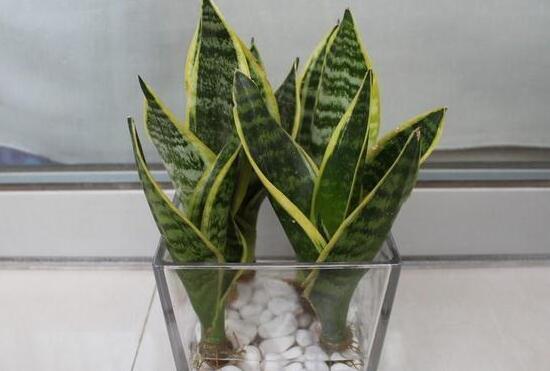
As a beginner grower, knowing the cultivation methods of the golden-edged snake plant is enough, but if you are an old hand, you should also master its propagation methods. This not only enriches yourself but also adds to the fun of growing plants. As for how to propagate a golden-edged snake plant, there are mainly two methods: division and cuttings. Next, we will focus on introducing the leaf-cutting method for the golden-edged snake plant.
II. The two propagation methods for the golden-edged snake plant
(1) How to take cuttings of a golden-edged snake plant
In indoor propagation, gardening enthusiasts commonly use cuttings; most plants use stem cuttings, while succulents use leaf cuttings. The golden-edged snake plant is an exception, however; although it is not a succulent, leaf cuttings are also commonly used for its propagation. Next, the editor will bring you the leaf-cutting method for the golden-edged snake plant.
Leaf cuttings for the golden-edged snake plant
1. Selecting cuttings
To do leaf cuttings, you naturally have to choose leaves. First, gardening enthusiasts should remove the golden-edged snake plant from its pot, clean off the soil, and then cut off the small outer leaves. Choose 2-3 leaves with a length of about 15 cm as cuttings.
Cuttings treatment: After the cuttings are selected, corresponding treatment must be done. Because the leaves of the golden-edged snake plant are rather thick, to prevent the plant from being infected by pathogens, gardening enthusiasts should apply plant ash or stove ash to the cut surfaces of the leaves.
2. Starting the leaf cuttings
Wipe the cuttings clean, then cut the top part flat, then invert the leaf and insert it downward into the soil of a newly prepared pot using the leaf sheath. The insertion depth is 3-5 cm, then control the room temperature between 18-22°C; after watering appropriately, place the plant in a cool, shady environment. After about half a year, the golden-edged snake plant will sprout and produce leaves, and all the leaves that grow out will retain their golden edges.
3. Points to note
In the leaf cuttings above, everyone must pay attention: the leaves must be inserted upside down, so that the newly sprouted snake plant has golden edges. Conversely, if inserted the right way up, the newly sprouted snake plant will not have golden edges, and this is also one of the reasons many gardening enthusiasts find the golden edges of their golden-edged snake plants disappearing.
(2) Division propagation of the golden-edged snake plant
Besides cuttings, the propagation method for the golden-edged snake plant can also use division, which is generally done together with repotting. The specific operation: when repotting the golden-edged snake plant, separate the new and old plants; plant the old roots and old plant in another pot or in the ground, and in this way you can easily get several pots of golden-edged snake plants.
Overall, propagating the golden-edged snake plant is not difficult; both cuttings and division can succeed, but when doing leaf cuttings, to prevent the golden edges from disappearing, everyone must be sure to insert the leaves upside down! Of course, methods are fixed but people are flexible, and everyone can choose a method to propagate according to the actual situation. That is all the editor has to introduce about the propagation methods of the golden-edged snake plant, and I hope it can be of help to everyone.
[Snake plant division] How to propagate snake plants by division
The snake plant, also called the mother-in-law's tongue, is a foliage plant with very strong vitality and is a root-propagating plant. The snake plant is not strict about environmental requirements and is very easy to grow, and its greatest feature is that it can purify the air, with an extremely strong ability to absorb formaldehyde. Placing a few pots of snake plants in a newly renovated home can absorb harmful indoor gases. Generally, you only need to plant a few, and after a year, you can harvest a full pot. So how do you propagate snake plants by division?
Snake plant division propagation methodCuttings and division are the most commonly used propagation methods for snake plants. Compared with leaf-cutting propagation, the greatest advantage of division propagation is that it can maintain the golden edges of the golden-edged snake plant, and it is generally done together with spring repotting.
Snake plant division operation method: Cut the overly dense leaf clusters into several clusters; each cluster, besides having leaves, must also have a section of rhizome and a sucker, and then they can be potted and planted separately. When planting, first place part of the soil at the bottom of the pot, then start planting from one side of the pot, planting evenly within the pot.Points to note for snake plant division: Take the plant out of the pot, use a sharp knife to separate the daughter plants from the mother plant, and try to avoid damaging the root system, letting the separated daughter plants carry as many roots as possible. After separation, place the daughter plants in a dark indoor place, protect them from rain, and control watering to avoid rot at the cut, and only after new leaves grow can they be moved to normal care.Tip: The snake plant is a root-propagating plant. Generally, you only need to plant a few, and after a year, you can harvest a full pot. When planting, first place part of the soil at the bottom of the pot, then start planting from one side of the pot, planting evenly within the pot. Generally speaking, the snake plant should be repotted once every two years, or propagated by division.
How to propagate snake plants by division, and points to note for snake plant division
The snake plant, also called the mother-in-law's tongue, is a foliage plant with very strong vitality and is a root-propagating plant. Generally, you only need to plant a few, and after a year, you can harvest a full pot. So how do you propagate snake plants by division? What points should be noted for snake plant division?
How to propagate snake plants by division
Cuttings and division are the most commonly used propagation methods for snake plants. Compared with leaf-cutting propagation, the greatest advantage of division propagation is that it can maintain the golden edges of the golden-edged snake plant, and it is generally done together with spring repotting.
Division operation method:
Cut the overly dense leaf clusters into several clusters; each cluster, besides having leaves, must also have a section of rhizome and a sucker, and then they can be potted and planted separately. When planting, first place part of the soil at the bottom of the pot, then start planting from one side of the pot, planting evenly within the pot.
Points to note for snake plant division
Take the plant out of the pot, use a sharp knife to separate the daughter plants from the mother plant, and try to avoid damaging the root system, letting the separated daughter plants carry as many roots as possible. After separation, place the daughter plants in a dark indoor place, protect them from rain, and control watering to avoid rot at the cut, and only after new leaves grow can they be moved to normal care.
The snake plant is not strict about environmental requirements and is very easy to grow, and its greatest feature is that it can purify the air, with an extremely strong ability to absorb formaldehyde. Placing a few pots of snake plants in a newly renovated home can absorb harmful indoor gases.