When to sow French marigold? Four-season sowing times and planting methods
Among the propagation methods for French marigold, sowing is a relatively common one. This method has been tested by countless people and still has a high survival rate, but there are also many points to note if you want the sown seeds to grow. When to sow French marigold? What are the planting methods for French marigold? Below, the editor will take you through them.
1. When to sow French marigold: it can be sown in all four seasons
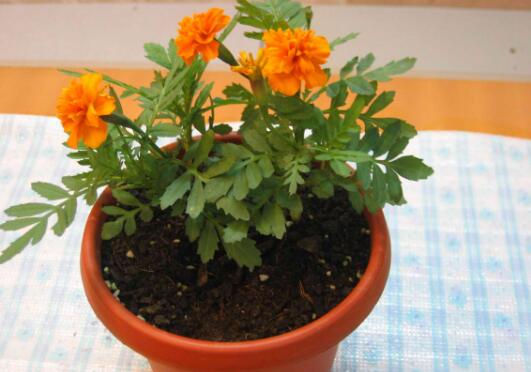
French marigold is a plant with strong environmental adaptability. In theory, it can be sown all year round, but in different regions, the best sowing time is also different. In the middle and lower reaches of the Yangtze River, autumn sowing is generally best, while in the south, sowing in all four seasons is very suitable, and in the north, spring sowing is popular.
2. How to improve the sowing germination rate of French marigold: temperature control / air permeability
If you want to know how to improve the sowing germination rate of French marigold, we need to pay attention to two aspects. First, the temperature is best kept above 18°C, because a suitable temperature can improve the germination rate. Second, for the soil, be sure to choose soil with good air permeability, so it can breathe better, and the process of growing French marigold will also be simpler.
3. Planting methods for French marigold
1. Substrate: air permeability should be good
This plant, French marigold, does not have very strict soil requirements, but growing it in different soils still has a certain effect on it. Generally, it is best to choose loose and fertile sandy soil as the substrate. This kind of soil has relatively good drainage and air permeability, allowing the plant to absorb nutrients better.
2. Disinfection: sun exposure or stirring in a pan
After choosing the substrate for French marigold, we also need to disinfect it to prevent pests and diseases from lurking inside. When disinfecting, we can break it up and put it under the sun to disinfect it, or put it in a pan and heat it, so that any pests and diseases can be killed by the heat.
3. Germination: soak in warm water
After disinfecting the substrate, we also need to promote germination of the seeds. We can put the French marigold seeds into warm water and soak them for 12-24 hours. When the seeds begin to absorb water and swell, take them out and sow them, and this can make the seeds germinate faster.
4. Sowing: water by the pot-soaking method
The planting method for French marigold is actually very simple. First, we can evenly scatter the seeds on the soil surface, then cover them with 1cm of soil and water them. When watering, it is best not to water directly with a watering can, because the French marigold seeds are relatively small and are easily washed away this way. When watering, we can put the flowerpot into water and let the water slowly soak up from below.
How to sow French marigold seeds: when to sow French marigold
At first hearing the name French marigold, one might think it is a herbaceous plant that looks like a peacock, but it is not. It is an annual herbaceous flower of the Asteraceae family. Its flower color is not as brilliantly colorful as other flowers, but is somewhat darker, which is also one of its characteristics. Below, let us see how it is planted.
How to sow French marigold seeds
1. First choose a box, pot, or other container, fill the container with sandy soil, and create a soft and comfortable germination environment for the seeds.
2. Then scatter the seeds on the soil layer, and cover them with a layer of straw, so that the seeds contact the soil as much as possible.
3. Next, use a spray bottle to sprinkle water on the straw used as cover, letting the water slowly drip through the straw and soak into the soil.
4. Finally, wait quietly for the seeds to germinate. Only after the seeds sprout and emerge can the straw be lifted off.
When to sow French marigold
There are many varieties of French marigold, and different French marigolds have different planting times. The spring-autumn sowing series of French marigold is roughly from September to February, and in southern regions it can be sown when the daytime temperature is above 15 degrees. The Jenny series is best sown in summer from March to August. There are also some other French marigolds whose sowing times differ somewhat. When buying seeds, everyone can ask the merchant.
Uses of French marigold
1. Garden ornamental value. French marigold has bright flower colors and many colors, including yellow, orange, red, and many other colors, as well as many forms such as double-petaled. Single-layer French marigold is elegant and pretty, while double-petaled French marigold appears more grand and beautiful. Because its flowers are attractive, it is often used as a decorative flower for flowerbeds, and French marigold is also often seen on lawns. Many people may not know what it is called, but you must have seen it in parks and beside roads! In addition, French marigold is also one of the commonly used types in flower arranging and bouquets.
2. Medicinal value
Both the flowers and leaves of French marigold can be used as medicine, and it has the effects of clearing heat and detoxifying, resolving phlegm, and nourishing the blood. It has relatively significant effects on treating common conditions such as colds, whooping cough, and bronchitis. In the wild, French marigold is suitable for mountainous areas at higher altitudes. Residents in the Caucasus Mountains region of Russia often eat French marigold, and it is said to have the effect of prolonging life.
Common diseases of French marigold and their control
1. Its common diseases are mainly brown spot, powdery mildew, and stem blight. Among them, stem blight is the most common, mainly harming the stems and leaves of French marigold. In the early stage of the disease, rash-like bumps appear on the plant stems, gray in color and spindle-shaped or round. In the later stage, the rash-like bumps crack open. Stem blight also occurs from time to time during the growing period of French marigold, and in severe cases can cause the plant to wither and die.
Control method: first, drain water promptly after rain to prevent moisture from lingering. Second, spray medicine in the early stage of the disease. You can choose specific prepared solutions of benomyl and cyclohexanone emulsifiable concentrate, chlorothalonil suspension concentrate, and Ludebao suspension concentrate. The spraying cycle is seven days, and spraying 2-3 times is enough.
2. Its common pests and their control. The common pest of French marigold is mainly red spider mite. Red spider mites pierce and suck the stem and leaf sap, reducing the moisture in the damaged parts, causing dense pale small spots on the leaf surface, curling and yellowing of the leaves, and in severe cases causing yellow leaves, curled leaves, scorched leaves, fallen leaves, and even death of the plant. Red spider mite is also a transmission vector of viral diseases.
Control method: strengthen cultivation management. In the early stage of pest occurrence, you can use 20 percent dicofol emulsifiable concentrate at 500-600 times dilution for control.
French marigold actually does not attract fans only by its flowers. In fact, its whole body is a treasure. It not only has a good ornamental effect, but even more advantageously, it has medicinal value and the effect of clearing heat and detoxifying. It is a favorite of traditional Chinese medicine doctors. We must take good care of such a precious plant and prevent pests from harming it.
When to sow French marigold: differences between French marigold and marigold
Many friends think French marigold and marigold are the same thing, and they also do not know when to sow French marigold. Below, let us look at the answer and the differences between French marigold and marigold.
When to sow French marigold:
There are many varieties of French marigold, and different French marigolds have different planting times. The spring-autumn sowing series of French marigold is roughly from September to February, and in southern regions it can be sown when the daytime temperature is above 15 degrees. The Jenny series is best sown in summer from March to August. There are also some other French marigolds whose sowing times differ somewhat. When buying seeds, everyone can ask the merchant.
Differences between French marigold and marigold:
1. Both French marigold and marigold have a special bad odor, and their smell is the same. This is also why everyone calls them "stinky hibiscus" or "stinky chrysanthemum."
2. Marigold flowers are relatively larger, with a diameter of 6-8 cm; French marigold flowers are relatively smaller, with a flower diameter of about 3-5 cm. The leaves of both are pinnately divided, but the difference in leaf size is: marigold leaves are 5-10 cm long and 4-8 cm wide; French marigold leaves are 2.5-5 cm long.
3. Both French marigold and marigold have relatively long flowering periods, but their flowering periods are the same, both blooming continuously from June to the end of October.
4. French marigold and marigold have neat plant shapes, and both are excellent materials for potted plants or flowerbed arrangements. Marigold has a smaller branching angle, and its plant shape is relatively upright and relatively taller, while French marigold has a relatively shorter and more rounded plant shape.
5. French marigold has fine leaves, small flower shapes, and each flower is sparse and open, but the color is more intense and often close to orange, while marigold is bright yellow.
6. French marigold "only opens as a half-circle," so its swollen and elongated green receptacle can be seen. From the side, it looks like a goblet or a cone-shaped ice cream. Marigold, wanting to cover the receptacle, once fully open rolls its outer petals backward and covers it densely, like a bubble skirt covering the knees or even the calves, appearing overall as a "round ball" or "hydrangea."
More information