The propagation methods for purple loosestrife include seeding, cuttings and division.
Purple loosestrife is a perennial herbaceous plant of the order Myrtales, with very high ornamental value, and it can be seen in many regions of our country. As more and more people grow purple loosestrife in various places, questions about its propagation have also drawn people's attention. How is purple loosestrife propagated? What are the propagation methods for purple loosestrife? Below, the editor will walk everyone through it.
1. How is purple loosestrife propagated: seeding/cuttings
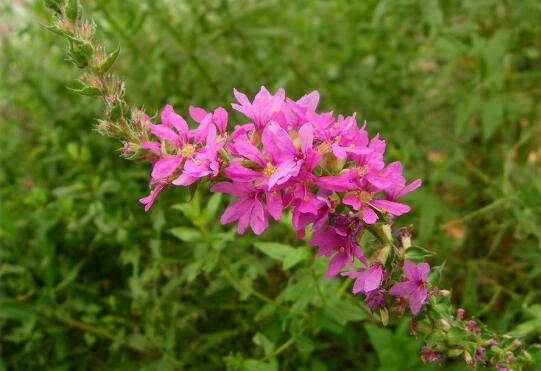
When it comes to how purple loosestrife is propagated, it is mainly divided into three methods: seeding, cuttings and division propagation. As long as we operate properly, the survival rate of all three propagation methods is very high, and besides mastering the specific operating methods, we also need to be careful in this process, because only with careful care can the plants grow better.
2. Propagation methods for purple loosestrife
Seeding propagation
Seed germination: before sowing purple loosestrife, we first need to germinate its seeds. We can soak its seeds in warm water for about 24 hours, and take them out when they begin to absorb water and swell, which allows the seeds to sprout more quickly.
Sowing method: when sowing purple loosestrife, we first need to apply an appropriate amount of base fertilizer to the substrate, then evenly scatter the seeds on the soil surface, and after that cover them with 1-2cm of soil before watering. When watering, we had best use the immersion method, because purple loosestrife seeds are small in size, and if watered directly they are easily washed away.
Cutting propagation
Cutting selection: before propagating purple loosestrife by cuttings, we first need to select cuttings. Generally it is best to choose branches that grow robustly and are free from pests and diseases as cuttings, as this gives a higher survival rate. If the branches we choose look rather weak, then it is basically very difficult to propagate successfully.
Cutting method: among the propagation methods for purple loosestrife, cutting propagation is relatively simple to perform. First, we can use chopsticks to make a hole in the soil the thickness of the cutting, then insert the cutting into it, and after that water thoroughly. This operation can prevent the cutting from being damaged when inserted, and is very practical.
Division propagation
When propagating purple loosestrife by division, we first need to dig the mother plant out of the pot soil, remove the soil on the roots, then separate the roots that are tangled together as much as possible, and cut it open into two or more plants with a sharp knife. Each divided plant must carry a considerable amount of roots, and its leaves should be properly trimmed, then they can be planted separately.
Purple loosestrife price and propagation methods
As living standards continue to rise, people's requirements for choosing green plants to eat are also constantly increasing. Therefore, many new types of vegetables have appeared in the plant and vegetable industry. These new types of vegetables bring great benefits to our lives, are rich in nutrients, and can even have medicinal effects. Among them, purple loosestrife is the most common green vegetable in our lives. It can be said that more and more people are buying purple loosestrife. So next, in this article, the editor will give you a comprehensive and simple introduction to purple loosestrife prices, so that you can purchase and choose purple loosestrife wisely.
Introduction to purple loosestrife
Purple loosestrife, Latin scientific name: Lythrum salicaria L. A perennial herb of the family Lythraceae and the genus Lythrum, with a thick rhizome lying horizontally underground; the stem is upright, much branched, the whole plant is green, slightly covered with coarse hairs or densely covered with down, and the branches usually have 4 angles. Leaves are opposite or in whorls of three, lanceolate or broadly lanceolate, with a blunt or shortly pointed apex, a rounded or heart-shaped base, sometimes slightly clasping the stem, entire, and sessile. The flowers form small cymes, clustered, and because the pedicels and peduncles are extremely short, the whole flowering branch resembles a large spike; bracts are broadly lanceolate to triangular-ovate, triangular; appendages are needle-like, upright, red-purple or pale purple, oblanceolate-oblong, with a wedge-shaped base, borne on the upper part of the calyx tube, with a short claw, slightly wrinkled; extending beyond the calyx tube; the ovary has 2 chambers, and the styles vary in length. The capsule is flattened and round.
Purple loosestrife price
One: Brand: Tianxin; price per plant: 0.15 yuan (RMB).
Two: Brand: Tianlai Yuanlin; price per plant: 0.18 yuan (RMB).
Three: Brand: Daheng Miaomu; price per plant: 0.80 yuan (RMB).
Four: Brand: Denghai Seed Industry; price per plant: 0.15 yuan (RMB).
Purple loosestrife propagation methods
1. Mainly division propagation, but also seeding or cutting propagation. Divide in early spring or autumn, sow in spring, and take softwood cuttings.
2. Seed propagation: sow in spring from March to April. Before sowing, mix the seeds evenly with fine soil, then scatter sow them on the bed, cover with 25px of soil, and finally cover with grass and water. Seedlings emerge 10-15 days after sowing; uncover the grass immediately. Transplant when the seedlings are about 250px tall. Open holes at a row spacing of 750px and a plant spacing of 500px, and plant 3 plants per hole.
3. Cutting propagation: for cuttings in spring, select robust branches, cut them into lengths of about 300px, remove the leaves, insert them diagonally into the soil to a depth of 1/2 of the cutting, press firmly, water to keep moist, and transplant after they take root and grow leaves. Division propagation: in spring from April to May, dig up the root clumps, cut them into clumps of several buds, and plant them in wet ground with sufficient base fertilizer.
The above is the relevant content shared by the editor about purple loosestrife prices. Purple loosestrife brings great benefits to our lives, and it can be prepared in almost every household; moreover, the preparation steps are also very simple. It is worth mentioning that although purple loosestrife is simple to prepare, it has many effects, is rich in nutrients, and can even have medicinal effects, which is of great help to people's health. The knowledge about purple loosestrife prices we shared above is also very detailed, and we hope our article can bring everyone more help.
Purple Loosestrife Spiked Loosestrlfe Purple Loosestrife Illustrated Guide: How to grow purple loosestrife / How to propagate purple loosestrife
Purple loosestrife profilePurple Loosestrife Spiked Loosestrlfe
Purple loosestrife growing methods and precautions, introduction to purple loosestrife
Purple loosestrife is also called water willow, water willow, and opposite-leaf lotus. Family Lythraceae, genus Lythrum. A perennial emergent herbaceous plant. The plant height is about 1 m, the stem is four-angled, upright and much branched, and the leaves are opposite or whorled, lanceolate. The long spike is terminal, with many small densely packed flowers, purplish red, blooming in summer and autumn. The natural species grows in swamps, beside ditches or on tidal flats. It likes a light-filled, moist, well-ventilated environment, is salt-alkali tolerant, and grows even better in fertile, loose soil. The whole plant can be used medicinally and can treat dysentery, enteritis and other conditions; it also has the effect of stopping bleeding from external injuries.
Morphological characteristics of purple loosestrife Morphological characteristics
Purple loosestrife is a perennial emergent herbaceous plant with overwintering roots. The plant height is 40-120 cm. Leaves are opposite or in whorls of 3, lanceolate or broadly lanceolate, with entire margins and no stalks. The underground rhizome is thick and woody. The aboveground stem is upright, much branched, and 4-angled. The long spike is terminal, the flowers are bisexual, and several flowers are clustered in the axils of leaf-like bracts; the calyx is tubular, 6-8 mm long, with 12 longitudinal ridges on the outside, 6 triangular lobes, and linear appendages longer than the calyx lobes, about 1.5-2 mm; petals are 6, purplish red, oblong, with a wedge-shaped base; stamens are 12, 6 long and 6 short; the ovary is sessile, 2-chambered, the style is cylindrical, and the stigma is head-shaped. The capsule is elliptical, fully enclosed within the calyx, and splits into 2 valves when mature; the flowers are rose-red or blue-purple, and the flowering period is from June to October. Seeds are numerous and very small. There are about 27 species in the same genus, and the commonly cultivated one is Lythrum virgatum, native to Japan and Korea. The whole plant is smooth, the stems are slender, and the flowers are purplish red. Large-flowered rose-pink purple loosestrife has large spikes and rose-pink flowers. Woolly-leaved purple loosestrife has large spikes, and the whole plant is covered with down.
Characters
Purple loosestrife is a perennial herb, with a thick rhizome lying horizontally underground; the stem is upright, much branched, 30-100 cm tall, the whole plant is green, slightly covered with coarse hairs or densely covered with down, and the branches usually have 4 angles. Leaves are opposite or in whorls of three, lanceolate or broadly lanceolate, 4-6(-10) cm long and 8-15 mm wide, with a blunt or shortly pointed apex, a rounded or heart-shaped base, sometimes slightly clasping the stem, entire, and sessile. The flowers form small cymes, clustered, and because the pedicels and peduncles are extremely short, the whole flowering branch resembles a large spike; bracts are broadly lanceolate to triangular-ovate, 5-12 mm long; the calyx tube is 5-8 mm long, has 12 longitudinal ridges, is slightly covered with coarse hairs, and has 6 triangular lobes; appendages are needle-like, upright, 1.5-2 mm long; petals are 6, red-purple or pale purple, oblanceolate-oblong, with a wedge-shaped base, 7-8 mm long, borne on the upper part of the calyx tube, with a short claw, slightly wrinkled; stamens are 12, 6 long and 6 short, extending beyond the calyx tube; the ovary has 2 chambers, and the styles vary in length. The capsule is flattened and round.
Character identification
The stem is square-columnar, gray-green to yellow-green, 1-2 mm in diameter, branched, hard and easy to break, with a fibrous edge in cross-section, hollow. The leaves are gray-green, brittle, mostly shrunken and broken; complete leaves are opposite or in whorls of 3, narrowly lanceolate, entire, and sessile. The top has a spike, the flowers are bisexual, and every 2-3 small flowers are borne within leaf-like bracts; the calyx is gray-green, tubular; the petals are purple. The capsule is elliptical, fully enclosed within the persistent calyx. Slightly odorous, slightly bitter in taste.
Many
Annual herb (herbaceous food), 30-100 cm tall, the whole plant covered with soft hairs, sometimes hairless. The stem is upright, much branched, and has four angles. Leaves are opposite or in whorls of 3, narrowly lanceolate, 4-6 cm long and 8-15 mm wide, with a slightly blunt or shortly pointed tip and a rounded or heart-shaped base, sometimes slightly clasping the stem. The raceme is terminal; the flowers are bisexual, and several are clustered in the axils of leaf-like bracts; the calyx is tubular, 6-8 mm long, with 12 longitudinal ridges on the outside, 6 triangular lobes, and linear appendages longer than the calyx lobes, about 1.5-2 mm; petals are 6, purplish red, oblong, with a wedge-shaped base; stamens are 12, 6 long and 6 short; the ovary is sessile, 2-chambered, the style is cylindrical, and the stigma is head-shaped. The capsule is elliptical, fully enclosed within the calyx, and splits into 2 valves when mature; seeds are numerous and very small. The flowering period is from July to August.
Ecological habits of purple loosestrife
Purple loosestrife is native to the warm temperate zones of Europe and Asia, so it likes a warm environment with sufficient light and good ventilation, and likes water and moisture. It grows wild throughout northern and southern China, mostly in swamps, wet places beside water, riversides and ditch edges. It is now widely cultivated in various places. It is relatively cold-tolerant and can overwinter outdoors throughout northern and southern China. It grows best when cultivated in shallow water, and can also be cultivated on dry land. It has no strict requirements for soil, and in fertile pond-mud substrate the flowers are vivid and the growth is robust.
Planting:It has no strict requirements for soil, and grows even better in fertile, loose soil.
Light:It likes an environment with sufficient light and good ventilation.
Temperature:Relatively cold-tolerant, and can overwinter outdoors in both the north and the south.
Water:It grows better in shallow water, and needs watering every day in winter.
Distribution area of purple loosestrife
Produced throughout the country, and also cultivated; grows on riverbanks, lakesides, beside streams and ditches, and in moist grasslands. Distributed in Asia, Europe, Algeria in Africa, North America and southeastern Australia.
This species is a flowering plant. In North China and East China it is often cultivated beside water or as a potted plant for ornament, and is also called water branch brocade, water zhi brocade or water willow. The whole herb is used medicinally to treat enteritis, dysentery and bloody stool; externally it is used for bleeding from external injuries.
Medicinal dietary or medicinal value of purple loosestrife
The medical information and healthy dietary information on Huahua Network is for reference only and cannot be used as a basis for diagnosis or medical treatment. Any health problem should be consulted with professional medical personnel, and the treatment of any disease should follow a doctor's advice.
Ultimate flower-protecting task: to love yourself, start from reality and strictly follow a doctor's advice. For illness, do not be careless, do not delay, do not give up hope, face it bravely, warm the silent world with love, and care for the flower field in your heart with care.
The medical content on Huahua Network is for reference only and cannot be regarded as professional advice. For any health problem, you should consult professional medical personnel.
Medicinal information (1)
Aliases: Verbena, Baidu Cao, Duijelian ("Guizhou Folk Medicines"), Duijia Cao, iron (iron food) water caltrop ("Hunan Materia Medica Records").
Source: the aboveground part of the Lythraceae plant purple loosestrife Lythrum salicaria L. Harvested in autumn.
Collection and processing: cut the aboveground part in August to September and dry it in the sun.
Functions and indications: clear heat, cool the blood. Clear heat toxin, astringe, break menstrual obstruction and remove blood stasis. Treat dysentery, uterine bleeding, and ulcers. Used for dysentery and blood-stasis amenorrhea.
① "Guizhou Folk Medicines": "Clear heat, stop uterine bleeding."
② "Chinese Medicinal Plant Illustrated Guide": "Stop diarrhea, treat bacillary dysentery."
Nature and flavor: bitter, cold.
① "Guizhou Folk Medicines": "Cold in nature, sweet in flavor."
② "Hunan Materia Medica Records": "Bitter, cold, non-toxic."
Usage and dosage: for internal use, decoct in water, 25-50 grams. For external use: grind into powder and apply.
Additional formulas:
① To treat dysentery: purple loosestrife 3 to 5 qian, decoct in water and take. ("Hunan Materia Medica Records")
② To treat ulcers: purple loosestrife leaves and sunflower disk, sun-dried, ground into powder. First apply honey (honey food) to the affected area, then apply the medicinal powder to the affected area. ("Hunan Materia Medica Records")
Medicinal value
The whole plant can be used medicinally and can treat dysentery, enteritis and other conditions; it also has the effect of stopping bleeding from external injuries.
[Pharmacological effects]
1. Antibacterial effect: the decoction of the crude drug (whole plant) can inhibit the growth of Staphylococcus and the Escherichia-Typhoid bacillus group; the dysentery bacillus is especially sensitive.
2. Effect on blood pressure: vitexin 0.05-10.0 mg/kg injected intravenously can temporarily raise blood pressure in anesthetized rats, while more than 10 mg/kg injected intravenously produces lasting hypotension; the hypotensive mechanism is due to ganglion-blocking action.
3. Anti-inflammatory: vitexin 20 mg/kg injected intraperitoneally has an anti-inflammatory effect on carrageenan-induced inflammation in rats.
4. Antispasmodic: vitexin 10-30 ?g/ml can inhibit the contraction of isolated guinea pig intestinal segments caused by acetylcholine and histamine. On isolated guinea pig intestinal segments, it initially has a strengthening effect, but later shows an antispasmodic effect, and can weaken the excitatory effect of acetylcholine and histamine on the intestinal segments.
5. Other effects: the hemostatic effect is due to the tannins contained. Its root decoction is used for diarrhea or chronic dysentery as an astringent or soothing agent; this effect may be caused by the salicarin, Fe2O3·XH2O and tannins contained therein, and is harmless to the kidneys, stomach and circulatory system. Its extract Salicairine can prevent diabetes caused by phlorizin in humans, but it itself does not produce hypoglycemia.
[Medicinal material collection] Cut the aboveground part in August to September and dry it in the sun.
[Chemical composition] Contains vitexin, orientin, isoorientin, chlorogenic acid, ellagic acid, gallic acid, choline, tannins, pigments, volatile oil, pectin, resin and alkaloids.
[Nature and flavor] Bitter, cold.
① "Guizhou Folk Medicines": "Cold in nature, sweet in flavor."
② ("Hunan Materia Medica Records"): "Bitter, cold, non-toxic."
[Functions and indications]
Clear heat, cool the blood. Astringe, break menstrual obstruction and remove blood stasis. Used for dysentery and blood-stasis amenorrhea.
① "Guizhou Folk Medicines": "Clear heat, stop uterine bleeding."
② "Chinese Medicinal Plant Illustrated Guide": "Stop diarrhea, treat bacillary dysentery."
[Usage and dosage]
For internal use, decoct in water, 0.5-1 liang. For external use: grind into powder and apply.
[Selected formulas]
1) To treat dysentery: purple loosestrife 3 to 5 qian, decoct in water and take. ("Hunan Materia Medica Records")
2) To treat ulcers: purple loosestrife leaves and sunflower disk, sun-dried, ground into powder. First apply honey to the affected area, then apply the medicinal powder to the affected area. ("Hunan Materia Medica Records")
3) To treat diarrhea, bloody stool, and uterine bleeding: decoct and take: 6-12 grams. ② To treat bleeding from external injuries, grind into powder and apply externally.
4) To treat enteritis and dysentery: purple loosestrife 15 grams, purslane 15 grams, decoct in water and take.
5) To treat bleeding from external injuries: mash fresh grass and squeeze the juice, use externally. Or grind dried grass into powder, spread it on the wound and bandage it.
6) To treat typhoid and paratyphoid: purple loosestrife 30 grams, decoct in water and take.
7) Vomiting blood, nosebleed, and bloody stool: purple loosestrife 15 grams, mosicai 15 grams, red dates 5, decoct in water and take (pregnant women should not take it).
[Textual research] From "Jiu Huang Ben Cao". Aliases Duijelian, Fandu Cao.
[Clinical application]
The decoction can inhibit Staphylococcus, Typhoid bacillus, etc. in vitro, and is especially sensitive to the dysentery bacillus. It has an antispasmodic effect on isolated intestinal segments.
The root decoction is used for chronic dysentery as an astringent or soothing agent.
[Medicinal material identification]
Character identification: the stem is square-columnar, gray-green to yellow-green, 1-2 mm in diameter, branched, hard and easy to break, with a fibrous edge in cross-section, hollow. The leaves are gray-green, brittle, mostly shrunken and broken; complete leaves are opposite or in whorls of 3, narrowly lanceolate, entire, and sessile. The top has a spike, the flowers are bisexual, and every 2-3 small flowers are borne within leaf-like bracts; the calyx is gray-green, tubular; the petals are purple. The capsule is elliptical, fully enclosed within the persistent calyx. Slightly odorous, slightly bitter in taste.
Chemical composition
The whole herb contains salicarin and tannins. In the ash, sodium is twice that of potassium, and it also contains a large amount of iron and 0.026% choline. The tannins are mainly gallic acid tannins, with contents as follows: root 8.5%, stem 10.5%, leaf 12%, flower 13.7%; the seeds also contain a large amount of tannins. The flowers contain flavonoids vitexin, orientin, malvin (Malvidin 3,5-diglucoside), cyanidin 3-monogalactoside, gallic acid, ellagic acid and a small amount of chlorogenic acid. Contains vitexin, orientin, isoorientin (homoorientin), chlorogenic acid, ellagic acid and gallic acid, and also contains choline, tannins and pigments. It is also reported to contain a small amount of volatile oil, pectin, resin and alkaloids.
Edible value
The cultivated leaves are edible.
Purple loosestrife and purslane congee: sweet and moist in taste, the congee is glutinous and soft, and refreshing. Its function is to clear heat and cool the blood, and to remove toxin and drain dampness. Used for enteritis, dysentery, bloody stool and other conditions.
Ingredients: purple loosestrife 30 grams, purslane 20 grams (double the amount if fresh), japonica rice 150 grams, an appropriate amount of honey or brown sugar.
Steps:
1. Rinse the japonica rice clean; take the purple loosestrife flowers and whole herb, remove old yellow leaves and impurities from the rhizome, wash clean, and cut into 2 cm sections; wash the purslane clean and cut it finely.
2. Put the japonica rice, purple loosestrife and purslane all into a pot, add an appropriate amount of clear water, bring to a boil over high heat, then turn to medium heat and cook until the rice is soft and cooked into congee. Eat once in the morning and once in the evening. Add honey or brown sugar for seasoning.
Landscape uses of purple loosestrife
Purple loosestrife has an elegant and neat posture and bright, eye-catching flower colors, and can be planted in patches in the shallow water at lakesides and riverbanks. If planted along regular stone banks, it can screen the monotonous and dull shoreline. Its flowering period is long and its colors are gorgeous; mass planting has a very strong coloring effect, and potted planting also works well. Combined with aquatic flowers such as lotus and water lily, it has a very good enhancing effect, and it is an excellent waterscape landscaping plant. It can also be potted and placed in a courtyard for viewing, and can also be used as a cut flower.
Purple loosestrife is mostly used for clump planting by the water and planting throughout ponds, and is also used as a flower border background in aquatic flower gardens. It can also be potted and placed in a courtyard for viewing.
It can be planted after being configured with other aquatic plants. It has the characteristics of low cost, good beautification effect and quick results, and has played a great role in urban ecological construction.
Propagation methods of purple loosestrife
Purple loosestrife can be propagated by seeding, cuttings, division and other methods. However, cuttings and division are the main methods.
Cuttings should be taken during the peak growth period from June to August. Cut softwood shoots 7-10 cm long, remove the leaves from the bottom third, and insert them into a pot with no drainage hole filled with fresh pond mud. They root in 6-10 days and are extremely easy to propagate. For division, do it in early spring or late autumn. Dig up the entire clump of the mother plant, shake off some of the soil, and use a sharp knife to cut several buds into a clump for replanting separately.
1. Division can be done in April. When the weather gradually warms up, dig up the old plant, shake off some of the soil, and use a sharp knife or a sharp spade to cut it into several blocks (clumps), each with 4-7 buds, and plant them separately.
2. Cuttings can be propagated in spring and summer. Cut softwood shoots 6-7 cm long, remove the leaves at the base, and keep only the leaves on the top 2 nodes. Insert 1/3-1/2 of the cutting into wet sand, either in pots or in outdoor beds. After inserting, cover with plastic film, spray water once every day at noon, and maintain a temperature of 20-25°C. Roots will form in about 30 days.
3. Sow seeds in pots in March-April. Put the potting soil into a suitable pot, water it thoroughly, and broadcast the seeds after the water has drained. Because the seeds are small and light, you can mix in some fine sand before sowing. After sowing, sift a layer of fine soil over the top, cover the pot opening with glass, and they will germinate in about 20 days.
Propagation and Management
Purple loosestrife (Lythrum salicaria) is a perennial herbaceous plant with a thick, woody rhizome underground. The stems are upright, four-angled, and about 50-100 cm tall. The leaves are simple, opposite or whorled, lanceolate. The spike inflorescence is terminal, with densely packed small purple-red flowers. It blooms in summer and autumn from July to September. It is commonly cultivated in garden waterscapes and is suitable for pot cultivation.
Purple loosestrife is native to the temperate regions of Europe and Asia. It grows wild in many provinces and cities in China. It prefers moist and shallow-water environments such as ditch banks and watersides. It requires a sunny environment with good ventilation. It is not demanding about soil and has strong cold resistance. It can overwinter outdoors in areas south of the Huai River.
Purple loosestrife has strong adaptability and vigorous growth. When planted in watered areas or moist watersides, it requires little management. Propagation by seed, cuttings, or division all root easily. After collecting mature seeds in autumn, sow them in April of the following year. They will germinate after one week. If transplanted in time, they can bloom that same year. Cuttings are best taken in June-July. Use current-year branches for cuttings, and they will root in about 20 days. Division is best done when new growth just begins in spring.
For pot cultivation, ordinary garden soil or pond mud will do. Adding a small amount of cake fertilizer or compound fertilizer is even better. After planting, place it in a sunny, well-ventilated spot. Keep the potting soil moist or maintain a shallow water layer 5-10 cm deep. Pay attention to replenishing water regularly. Generally, no fertilization is needed. If the leaves turn yellow, you may apply cake fertilizer water 2 times as appropriate. To control plant height, pinch the tips 1-2 times during the growing period. After flowering, cut off the spent flowers to encourage the next batch of blooms.
In winter, cut off all old branches, keep the potting soil moist, and place it in a sheltered, sunny spot to overwinter.
Cultivation Techniques and Management of Purple Loosestrife
Purple loosestrife has extremely strong vitality and is very easy to manage, but it should be planted in an environment with sufficient light and good ventilation. For pot cultivation, choose a pot with no drainage hole about 50 cm in diameter, fill it with fertile pond mud to two-thirds of the pot depth, and plant five plants per pot. If making a miniature potted plant, choose a pot about 20 cm in diameter, and keep pinching the tips during the growing period to encourage dwarfing and tillering. Keep water in the pot during the growing period. For open-field cultivation, follow the garden landscape design requirements and choose shallow-water areas and wetlands for planting, with a plant spacing of 30 x 30 cm. During the growing period, remove weeds promptly and keep the water surface clean. To improve ventilation, cut off some overly dense and weak branches, and promptly cut off spent flower spikes to encourage new flower spikes to sprout. In a well-ventilated, sunny environment, there are generally no pests or diseases. When planted too densely with poor ventilation, red spider mites may cause damage, which can be controlled with general insecticides. Before the winter freeze, potted purple loosestrife should have dead branches cut off, and the pot should be kept moist. Open-field plantings can overwinter naturally without protection. Generally, divide and replant once every 2-3 years.
Overwintering Management
In late October, the aboveground parts of purple loosestrife gradually wither. Use pruning shears to cut off the aboveground clumps and let them overwinter naturally. Potted plants must be moved into a low-temperature cold shed to overwinter. Throughout the winter, the potting soil must be kept moist, and the temperature should be controlled at 0-5°C to prevent early sprouting in winter.
Disease Control of Purple Loosestrife
The main pest and disease of purple loosestrife is leaf spot disease, which produces oval or irregular spots on the leaves. They are grayish-brown, without margins, and bear small black dots on their surface. Under dry weather and high-temperature conditions, this disease is prone to occur.
Lythraceae Plants of Purple Loosestrife
01. Ammannia Linn.
02. Rotala Linn.
03. Peplis Linn.
04. Lythrum Linn.
05. Cuphea Adans. ex P. Br.
06. Woodfordia Salisb.
07. Lafoensia Vand.
08. Pemphis Forst.
09. Heimia Link
10. Lagerstroemia Linn.
11. Lawsonia Linn.
Purple Loosestrife (Lythrum salicaria)
The Flower Language of Purple Loosestrife
Purple loosestrife grows in swamps or on riverbanks. The Irish gave it a strange name: the child lost by the lakeside. It is not a gregarious plant, but grows mixed among other plants, single plant by single plant. Its flower color is elegant and subtle. It is also the birthday flower for July 27, so its flower language is - loneliness.
The flower language is loneliness.
Purple Loosestrife Pictures