How to grow Dendrobium orchids? Master the potting method and temperature control key points
Among the propagation methods for Dendrobium orchids, there are mainly three: seed propagation, cutting propagation, and division propagation. Among them, seed propagation is a relatively commonly used one, and the survival rate is also very high. However, to succeed in growing them, there are also many points that need attention. How to grow Dendrobium orchids? What is the potting method for growing Dendrobium orchids? Below, the editor will take everyone through it.
1. How to grow Dendrobium orchids, be careful
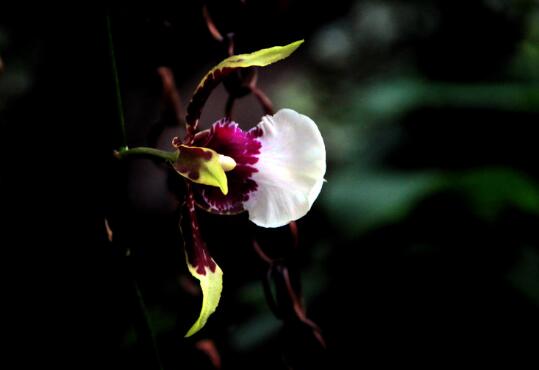
When it comes to how to grow Dendrobium orchids, there are many methods we need to pay attention to, such as the selection and disinfection of the substrate, and the germination of seeds, all of which are relatively important. Of course, the most important thing is to operate carefully. After all, this propagation method has been tested by countless people and has accumulated a lot of experience, so the survival rate is still quite high. As for the specific growing techniques, they are introduced below. Let's take a look.
2. Potting method for growing Dendrobium orchids
1. Substrate selection
Before planting Dendrobium orchids, we first need to choose a substrate. This is the step of laying a good foundation, so it is very important. Generally, it is best to choose chopped fern roots, sphagnum moss, charcoal crumbs, broken tile pieces, perlite, etc. with good drainage and strong air permeability. It is best to use chopped fern roots and sphagnum moss as the main materials, so the plants will grow better.
2. Substrate disinfection
After choosing the substrate, it is best not to plant immediately. The substrate should first be disinfected to avoid carrying pests and diseases that could infect the plants. When disinfecting, we can break it apart and spread it flat under the sun to expose it, or put it into an iron wok and stir-fry it over high heat. In this way, even if there are pests and diseases in it, they will be killed by the high temperature.
3. Seed germination
Before planting Dendrobium orchids, we also need to germinate their seeds. We can soak the Dendrobium orchid seeds in warm water for 1-2 days. When the seeds begin to absorb water and swell, take them out and sow them. This can increase the seed germination rate and also allow the seeds to germinate faster.
4. Planting method
When planting Dendrobium orchids, we first need to apply an appropriate amount of base fertilizer in the potting soil, then evenly scatter the seeds on the soil surface. After scattering, cover them with 2 cm of soil, and then water them. When watering, it is best to use the soaking pot method: place the flowerpot halfway into water and let the water slowly soak upward. Because Dendrobium orchid seeds are small in size, if watered directly, they are easily washed away.
5. Temperature management
After successfully planting Dendrobium orchids according to the above method, we need to carry out daily care. This plant has very strict requirements for environmental temperature during growth, so everyone should pay attention to this point. Its suitable growth temperature is between 18-30°C. During the growing period, 16-21°C is most suitable; during the dormant period, 16-18°C; the nighttime temperature is 10-13°C; the temperature difference is best kept at 10-15°C. A daytime temperature above 30°C has little effect on Dendrobium growth, and the winter temperature should not be lower than 10°C. Seedlings are prone to freezing below 10°C.
How to grow Dendrobium orchids. How to pot Dendrobium orchids
Dendrobium orchidAlso known as the hanging orchid flower, it is a perennial herbaceous flowering plant in the Orchidaceae family. Stems are clustered, upright, and many-noded. Leaves are alternate, single. The inflorescence is a raceme, with large, drooping flowers. Both the calyx and petals are white, with the tips pale red. It blooms during the leaf-drop period. Let's take a look at how to grow Dendrobium orchids.
How to grow Dendrobium orchids
Dendrobium orchids are native to tropical regions of Asia and the Pacific Islands. In the natural state, they mostly grow attached to tree trunks or rocks in forests. They like warmth and moisture, are not cold-tolerant, like semi-shade, and fear strong direct light.
Pot cultivation mostly uses soilless culture. The substrate is commonly made by mixing coarse peat, pine bark, crushed brick slag, coarse yellow sand, perlite, and charcoal blocks into a growing medium. The roots need especially good ventilation, while also being able to retain appropriate moisture.
1. Light: The native environment of Dendrobium officinale is generally under tree shade and in shaded places. The growing environment needs moderate shading.
2. Temperature: Dendrobium officinale stops growing and begins dormancy below 5°C. When the temperature is too low, attention should be paid to frost damage, and it is best to keep it above 0°C. When the temperature is too high, around 35°C, it will also stop growing. The most suitable growth temperature is about 25°C-30°C.
3. Substrate: For planting Dendrobium officinale, it is suitable to use a substrate with good air permeability and good water filtration as the growing material. A mixture of orchid stone + granular peat + bark is generally recommended. However, due to large-scale production, the cost is relatively high, so single bark can also be used as the substrate.
4. Humidity: Equip with a hygrometer. It is best to keep humidity above 60%. In rainy weather, when humidity is above 90%, ventilation should be strengthened to prevent bacteria from developing.
5. Watering method and water quality: Watering should involve frequent misting and less thorough drenching. Generally, wait until the substrate is dry before drenching thoroughly.
6. Ventilation: "Orchids value ventilation": Air circulation is very important for Dendrobium officinale and can also reduce the occurrence of diseases. Air circulation is equally important for the roots within the substrate, so we recommend choosing granular materials, and watering must be thorough to bring fresh air into the substrate.
7. Fertilization method: Use compound fertilizer containing trace elements. Apply light fertilizer frequently, and never use heavy fertilizer, otherwise it will cause fertilizer damage. When new shoots sprout each spring, slow-release fertilizer can also be applied as a base fertilizer.
Besides being ornamental, Dendrobium orchids are also a top-grade traditional Chinese medicine for protecting the throat and moistening it. Among medicinal Dendrobium, the Dendrobium produced in Huoshan County, Anhui Province (also known as Dendrobium officinale) is especially precious. However, because Dendrobium has a relatively special growing environment, its yield is extremely low. When choosing Dendrobium, one should check its color, observe its shape, smell its scent, and chew its gelatinous quality. Those with an iron-skin color are considered superior; those rolled tightly with many coils; and those with a strong Dendrobium fragrance and much gelatinous matter when chewed are considered superior. Among these, fragrance is the most important criterion for evaluating Dendrobium. In addition, the unit weight of Dendrobium can also indicate its quality. The heavier the unit weight of Dendrobium (that is, the heavier by weight), the better the quality. However, because the yield of Dendrobium officinale is limited and the price is expensive, the market is flooded with large amounts of fake Dendrobium officinale made from water plants, especially in pharmacies. For genuine Dendrobium officinale, only a few brands, such as Fulinnen Dendrobium officinale and Tongrentang (slightly higher in price, about 1.5 times the former), and other large brands can buy the real Dendrobium officinale.
How to pot Dendrobium orchids
Propagation methods
Division, cuttings, and tissue culture propagation are commonly used.
① Division propagation: carried out in spring together with repotting. Take the densely growing mother plant out of the pot, injuring the roots and leaves as little as possible, gently separate the orchid seedlings, and choose 3-4 plants to plant in a 15 cm pot, which is beneficial for shaping and flowering.
② Cutting propagation: choose pseudobulbs that have not flowered and are plump, cut them from the base, then cut them into sections of 2-3 nodes each, insert them directly into peat moss, or wrap the base of the cuttings with sphagnum moss, keep them moist, and maintain room temperature at 18-22°C. After insertion, they can take root in 30-40 days. Once the roots are 3-5 cm long, pot them.
③ Tissue culture propagation: shoot tips and leaf tips are often used as explants. On MS medium supplemented with 2,4-D 0.15-0.5 mg/L and 6-benzylaminopurine 0.5 mg/L, the differentiation rate can reach about 1:10. The differentiated young buds are transferred to MS medium containing activated carbon and coconut milk (supplemented with 2,4-D and 6-benzylaminopurine at 0.1 mg/L each), where they can grow normally and form rootless seedlings. The seedlings are then transferred to MS medium containing indolebutyric acid 0.2-0.4 mg/L, which can induce rooting and form complete small plantlets with roots, stems, and leaves.
Artificial cultivation
Breakthrough results have been achieved in the artificial cultivation of Dendrobium officinale. At present, artificial cultivation in China is mainly distributed in Pu'er and Dehong in Yunnan and Tiantai in Zhejiang. The South China Institute of Botany, Chinese Academy of Sciences, took the lead in exploring and researching artificial tissue-cultured seedlings as well as natural and semi-natural Dendrobium cultivation techniques, and established a cooperative research doctoral workstation with Kesai Shenlong Biotechnology Development Beijing Co., Ltd. as a representative enterprise exploring artificial tissue-cultured seedling technology and intensive cultivation technology for Dendrobium officinale.
Pest and disease control
Black spot disease and viral disease are common, and can be sprayed with 1000 times dilution of 10% antibacterial agent 401 acetic acid solution. For pest damage, there is scale insect damage, which can be killed by spraying with 2000 times dilution of 40% omethoate emulsifiable concentrate.
Dendrobium orchid leaf spot disease: The pathogen only harms the leaves of Dendrobium orchids. In simple greenhouse cultivation, symptoms of Dendrobium orchid plants appear in late August each year. In the early stage of infection, water-soaked spots appear on diseased leaves. After the lesions slowly expand, they form yellow spots with indistinct edges. The lesions are round to oval, 0.8-3.2 cm in diameter. Conidiophores emerge from the stomata on the underside of mature lesions. On the lower epidermis of diseased leaves with indistinct lesions (especially the leaf tip portion), gray-black conidial clusters can also be seen. After the lesions merge with each other, they cause leaf yellowing and leaf drop. In infected orchid gardens, leaf drop generally begins in November, and in severely affected areas, the leaves have completely fallen by March or April of the following year.
Dendrobium orchid flower meaning
Dendrobium orchids have rich flower meanings: "welcome, blessing, purity, auspiciousness, happiness." In addition to the above flower meanings, they also symbolize a father's fortitude, kindness, and dignity, and further express children's admiration for their father.
The above is what the editor introduced to youDendrobium orchidcultivation methods, hoping to help you. For more related information about Dendrobium orchids, please continue to follow.
How to pot Dendrobium orchids. How to grow Dendrobium orchids
Dendrobium orchid is a plant in the genus Dendrobium of the Orchidaceae family. It is one of the orchid family plants recorded earliest in ancient Chinese literature. Dendrobium orchid flowers are beautiful in shape and posture, colorful, numerous in variety, and long in flowering period, and are deeply loved and followed by people of various countries. So how to grow Dendrobium orchids? Let's take a look below at how to grow Dendrobium orchids better. I hope it can be helpful to flower lovers!
1. Introduction to Dendrobium orchids
Dendrobium orchid belongs to the Orchidaceae family. It mainly grows in tropical Asia, subtropical Asia, Australia, Pacific islands, and other regions, and is very common in southwestern China, southern China, Taiwan, China, and other areas. It has many varieties. The main varieties include Dendrobium nobile, Dendrobium chrysotoxum, Dendrobium densiflorum, and so on. With the development of the flower industry, it has also become a very good ornamental plant, and also has good medicinal value, with effects on the human body such as dispelling deficiency heat and tonifying essence and strengthening yin. In our lives, many people also grow Dendrobium orchids, generally using the potting method. Dendrobium orchids have a very strong character, and the flowers give people a peaceful and amiable temperament, and are called the flower of father.
2. How to grow Dendrobium orchids
1. Shading
Dendrobium orchids often grow attached to tree trunks or rocks in tropical rainforests in their place of origin, and therefore like a semi-shaded environment. During the vigorous growth period in spring and summer, shading should be carried out, with 60%-70% shading possible. However, during the winter dormant period, more sunlight is needed, generally 20%-30% shading, or no shading.
2. Heat preservation
Dendrobium orchids like high temperature and high humidity. For deciduous types, the overwintering temperature can be as low as about 10°C at night or lower. For evergreen types, it must not be lower than 15°C. At the same time, attention should be paid to maintaining a relatively large day-night temperature difference (10-15°C). If the temperature difference is too small, it will seriously affect the growth and flowering of Dendrobium orchids.
3. Proper watering
Dendrobium orchids like sufficient moisture but also avoid being too wet. When too wet, it will cause root rot, poor growth, and even death. Deciduous types can be appropriately drier in winter, with less watering, but the potting material should not be too dry, and air humidity should not be too low. For evergreen types, as long as the greenhouse temperature is high in winter, sufficient moisture still needs to be maintained.
4. Frequent misting
During sunny, dry, and hot growing seasons, water should often be sprayed around the potted plants to increase air humidity. In the rainy season, humidity is relatively high, so misting can be stopped, and attention should be paid to not letting water accumulate in the pot.
5. Reasonable fertilization
Dendrobium orchids like light fertilizer applied frequently. During the growing period, decomposed cake fertilizer water can be applied once every 7-10 days, or a 0.1% complete-element compound fertilizer can be applied as a foliar supplement. For deciduous types during dormancy and evergreen types when forced into dormancy by low temperatures, fertilization should be stopped.
3. How to pot Dendrobium orchids
1. Propagation methods
Division, cuttings, and tissue culture propagation are commonly used.
1. Division propagation is carried out in spring together with repotting. Take the densely growing mother plant out of the pot, injuring the roots and leaves as little as possible, gently separate the orchid seedlings, and choose 3-4 plants to plant in a 15 cm pot, which is beneficial for shaping and flowering.
2. Cutting propagation: choose pseudobulbs that have not flowered and are plump, cut them from the base, then cut them into sections of 2-3 nodes each, insert them directly into peat moss, or wrap the base of the cuttings with sphagnum moss, keep them moist, and maintain room temperature at 18-22°C. After insertion, they can take root in 30-40 days. Once the roots are 3-5 cm long, pot them.
3. Tissue culture propagation often uses shoot tips and leaf tips as explants. On MS medium supplemented with 2,4-D 0.15-0.5 mg/L and 6-benzylaminopurine 0.5 mg/L, the differentiation rate can reach about 1:10. The differentiated young buds are transferred to MS medium containing activated carbon and coconut milk (supplemented with 2,4-D and 6-benzylaminopurine at 0.1 mg/L each), where they can grow normally and form rootless seedlings. The seedlings are then transferred to MS medium containing indolebutyric acid 0.2-0.4 mg/L, which can induce rooting and form complete small plantlets with roots, stems, and leaves.
At present, commonly seen ornamental cultivated types include Dendrobium densiflorum, Dendrobium thyrsiflorum, Dendrobium phalaenopsis, Dendrobium nobile, Dendrobium primulinum, Dendrobium loddigesii, Dendrobium aromaticum, and so on. Dendrobium orchid flowers are beautiful in shape and posture, and are important cut flower and potted plant varieties.
The above is the relevant introduction in this article. I believe that after reading it, you also have a simple understanding of this. If needed, you can continue to follow Yihao Home Network to learn more information.