How to propagate Dendrobium orchids? Detailed explanation of sowing, cutting and division methods
Dendrobium orchid is one of the Orchidaceae plants, with very high ornamental value, and many people cultivate it all over our country. However, as more people cultivate it, questions about its propagation have also drawn relatively more attention. How to propagate Dendrobium orchids? What are the propagation methods for Dendrobium orchids? Below, the editor will take everyone through an introduction.
I. How to propagate Dendrobium orchids: sowing/cutting/division
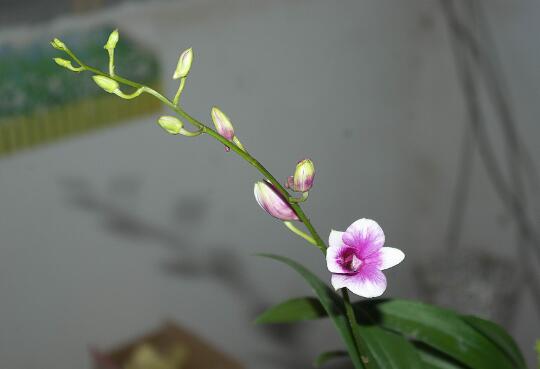
When it comes to how to propagate Dendrobium orchids, it is mainly divided into three methods: sowing propagation, cutting propagation and division propagation. As long as we operate properly, the survival rates of all three propagation methods are very high. The specific operation methods are introduced in detail below, and interested friends can take a look.
II. Propagation methods of Dendrobium orchids
Sowing propagation
Seed germination stimulation: Before sowing and propagating Dendrobium orchids, we first need to stimulate the seeds to germinate. We can soak the Dendrobium orchid seeds in warm water for 1-2 days, and when the seeds begin to absorb water and swell, take them out and sow them. This allows the seeds to germinate faster.
Sowing method: Before sowing Dendrobium orchids, we first need to apply an appropriate amount of base fertilizer in the potting soil, then evenly scatter the seeds on the soil surface. After scattering, cover with 1-2 cm of soil and then water. When watering, it is best to choose the immersion pot method, because direct watering can easily wash away the seeds. For the specific immersion pot watering method, everyone can refer to the article on how to water Dendrobium orchids, which has detailed teaching.
Cutting propagation
Selection of cuttings: Before cutting propagation of Dendrobium orchids, we first need to select cuttings. Generally, it is best to choose branches that grow relatively robustly and are free from pest and disease damage as cuttings, as this will result in a higher survival rate. If the branches we choose look very slender and weak, then it is basically very difficult to succeed in cutting.
Cutting method: Among the propagation methods of Dendrobium orchids, cutting propagation is a relatively commonly used method. Before cutting, it is best to first use chopsticks to poke a hole in the potting soil, then trim off the leaves at the bottom of the cutting and insert it into the hole, after which it can be inserted. This method can avoid damage to the cutting during insertion and is very practical. After that, once roots have formed, it can be transplanted.
Division propagation
We generally carry out division propagation of Dendrobium orchids after they bloom. First, we need to lift the overly dense mother plant out of the potting soil, then divide and cut it into several clumps, pot them separately, and plant them as they are divided. They survive extremely easily. Generally, after potting, it is a complete flowering plant, and after division we also need to maintain shade and moisture retention, which can improve its survival rate.
Dendrobium orchid Dendrobium nobile illustrated guide: how to grow Dendrobium orchids / how to propagate Dendrobium orchids
Dendrobium orchid profileDendrobium orchid Dendrobium nobile
Dendrobium orchid cultivation methods and precautions, introduction to Dendrobium orchids
Dendrobium, one of the Orchidaceae plants, is mainly distributed in tropical and subtropical Asia, Australia and Pacific islands. In our country, it is mostly distributed in the southwest, south China, Taiwan, China and other places. The main varieties of Dendrobium orchids include Dendrobium nobile, Dendrobium densiflorum, Dendrobium chrysotoxum and so on. It can be used as medicine, named Shihu, and has effects on the human body such as dispelling deficiency heat and strengthening essence and yin. With the rise of the flower industry, Dendrobium orchids have also become an ornamental plant. The cultivation method of Dendrobium orchids is generally potted cultivation. Because Dendrobium orchids have a strong, peaceful and approachable temperament, they are known as the flower of fathers. The plant of the Dendrobium orchid is composed of fleshy stems, as thick as a middle finger, with leaves like bamboo leaves. The flower scape emerges from the leaf axils, each scape has seven or eight flowers, each flower has 6 petals, spreading in all directions, the petal edges are all purple, and the center of the petals is white.
Dendrobium, one of the Orchidaceae plants, has effects on the human body such as dispelling deficiency heat and strengthening essence and yin. With the rise of the flower industry, people discovered that it has high ornamental value, so it was included in the category of Cymbidium orchids, gradually stepping from the herbal garden into the large garden, and becoming a very fashionable new flower today. The plant of the Dendrobium orchid is composed of fleshy stems, as thick as a middle finger, rod-shaped and clustered, with leaves like bamboo leaves, opposite on both sides of the stem nodes. The flower scape emerges from the leaf axils, each scape has seven or eight flowers, and some have more than 20, forming a raceme, each flower has 6 petals, spreading in all directions, and the middle lip is slightly round. The petal edges of many varieties are purple, and the center of the petals is white, while a few varieties are yellow or orange.
Dendrobium is the largest genus in Orchidaceae, including about 1100 species of plants, mainly distributed in tropical Asia and Pacific islands. There are about 63 species of Dendrobium plants in China, and 39 species of Dendrobium plants are used medicinally. Vertically, they are distributed at altitudes from 100 to 3000 m.
Dendrobium plants are epiphytes, with unique habitats and very strict requirements for microclimatic environments. They mostly grow on cool, humid, high-humidity shady slopes, semi-shady slopes and slightly acidic rocky cliffs, in clustered distribution, with forest trees providing lateral shade above and stream water sources below. In winter and spring they are slightly tolerant of drought, but when severely short of water, the leaves often all fall off, and the bare stems pass through the adverse environment, then sprout branches and leaves again in the warm season. They often grow mixed with lichens, bryophytes, and Lepisorus thunbergianus, Lemmaphyllum microphyllum, Selaginella, Bulbophyllum and so on.
Dendrobium attaches to stone walls and gravel with its dense fibrous roots to absorb water and nutrients from the rock layer, while the fibrous roots exposed in the air absorb water from fog and dew in the air, relying on their own chlorophyll for photosynthesis. Therefore, Dendrobium is strictly limited by moisture in the microclimatic environment, especially air humidity, and its distribution range is extremely narrow. Wild Dendrobium is a rare and endangered plant under national key second-class protection, and collection and sale are prohibited.
Dendrobium varieties include Huoshan Mishu, Jinchai Fengdou, Tiepi Fengdou, Tongpi Fengdou, Huangcao Shihu and so on. Huoshan Mishu is the only Dendrobium variety recorded in literature. Dendrobium nobile is one of the earliest recorded Orchidaceae plants in ancient Chinese literature. It was recorded in Shennong Bencao Jing more than 2000 years ago. For thousands of years it has been listed, along with Ganoderma, ginseng, Cordyceps and so on, as a top-grade traditional Chinese medicine. Its nature and flavor: sweet and bland, slightly salty. Its nature is clear and moistening, with tonification within clearing and clearing within tonification.
The character "hu" in Dendrobium orchid is pronounced "hu" in Mandarin and "ku, hu, hu" in Cantonese. It was formerly a measuring vessel, with five dou making one hu. The ancients used Dendrobium orchids as medicinal material. According to Bencao Beizhi, it has effects on the human body such as dispelling deficiency heat and strengthening essence and yin. For example, "Shihu Yeguang Wan" is made from "Dendrobium superbum" and so on, and has long been sold at home and abroad. With the rise of the flower industry, people discovered that it has high ornamental value.
The flower posture of the Dendrobium orchid is indeed very beautiful. The plant is composed of fleshy stems. At present, the new variety named after former French President "Pompidou" is the most precious. Its characteristics are larger flower shape, bright purple petals, with a texture like velvet, often making people mistake it for a fake flower, and it is very popular in the international flower market. Dendrobium orchids, together with Cattleya, Phalaenopsis and Vanda, are listed as the four major tropical ornamental orchid groups, and are one of the largest genera in Orchidaceae.
Morphological characteristics of Dendrobium orchids
Stem erect, fleshy and thickened, slightly flattened cylindrical, 10-60 cm long, up to 1.3 cm thick, upper part more or less recurved and curved, base obviously narrowed, unbranched, with many nodes, nodes sometimes slightly swollen; internodes more or less obconical, 2-4 cm long, golden yellow after drying. Leaves leathery, oblong, 6-11 cm long, 1-3 cm wide, apex obtuse and unequally 2-lobed, base with stem-clasping sheath. Raceme emerging from the middle or above of the old stem with leaves or after leaves have fallen, 2-4 cm long, with 1-4 flowers; peduncle 5-15 mm long, base covered with several tubular sheaths; floral bracts membranous, ovate-lanceolate, 6-13 mm long, apex acuminate; pedicel and ovary light purple, 3-6 mm long; flowers large, white with light purple apex, sometimes entirely light purplish red or white except for 1 purplish red patch on the lip disk; dorsal sepal oblong, 2.5-3.5 cm long, 1-1.4 cm wide, apex obtuse, both sides at base with purplish red stripes and narrowed into a short claw, below the middle embracing the column on both sides, margin with short eyelashes, both surfaces densely covered with short hairs, center of lip disk with 1 large purplish red patch; column green, 5 mm long, base slightly enlarged, with green column foot; anther cap purplish red, conical, densely covered with fine papillae, front margin with irregular sharp teeth. Flowering period April-May.
Stem
Dendrobium orchids are epiphytic on tree trunks or in tree holes. Flower colors are very diverse, but mainly white and red-purple. They have good cold resistance and are the most cold-tolerant Cymbidium orchids. Observing the stem of a Dendrobium orchid, you will find that its stem is somewhat "long rod-shaped", like a stick, and belongs to a pseudobulb. Stems have growth forms such as rhizome, erect, creeping or with pseudobulbs.
Leaves
There may be from one to many leaves.
Flowers
Flowers bright and beautiful, petals usually relatively narrow, lip entire or three-lobed, connected to the base of the column.
Fruit
Dendrobium orchid is a large group in Orchidaceae. It has more than a thousand native species, with various plant bodies and flower shapes. Distributed in most areas of Asia, it is an epiphytic orchid with strong vitality.
Characteristics
Stems have growth forms such as rhizome, erect, creeping or with pseudobulbs. There may be from one to many leaves. Flowers are bright and beautiful, petals are usually relatively narrow, and the lip is entire or three-lobed, connected to the base of the column. Pseudobulbs are cylindrical, clustered, up to 60-70 cm tall, fleshy and solid, base covered by gray basal sheaths, with obvious stem nodes on them, and several pairs of boat-shaped leaves at the stem nodes of the upper shoot, with leaves 10-20 cm long. Peduncles emerge from the axils of the top leaves, up to 60 cm long, and each peduncle can produce 4-18 flowers.
Other
Dendrobium orchids are usually divided into two major categories, spring and autumn. As the names suggest, spring Dendrobium blooms in spring, while autumn Dendrobium blooms in autumn; in addition, there are still quite a large number of native Dendrobium orchid species.
There are too many Dendrobium hybrids on the market to enumerate, and they are simple and easy to flower in cultivation. Overall, the cultivation material for Dendrobium orchids uses tree fern fiber plus some construction gravel, placed in a sunny place, avoiding the strong midday sun (shade for two hours before and after). From spring to autumn, water once a day or every other day. In winter when it is cold, watering about once every one or two weeks is enough. If you want to fertilize, you can buy granular chemical fertilizer and put in 5-10 granules, or buy liquid chemical fertilizer and spray at an average concentration of one-thousandth each month. Most Dendrobium orchids will drop their leaves in winter. In principle, orchids that have been grown for two years should have their medium changed in spring to avoid the medium becoming rotten and acidic over time; at the same time, repotting can also promote vigorous plant growth and better stimulate flowering.
Ecological habits of Dendrobium orchids
Often epiphytic on tree trunks or rocks in forests at altitudes of 480-1700 m. Likes warm, humid and semi-shady environments, and is not cold-tolerant. The suitable growth temperature is 18-30°C, with 16-21°C more suitable during the growth period, 16-18°C during the dormancy period, and a nighttime temperature of 10-13°C. Keeping the temperature difference at 10-15°C is best. Daytime temperatures above 30°C have little effect on Dendrobium growth, and winter temperatures should not be lower than 10°C. Seedlings are easily frozen below 10°C.
Dendrobium dislikes dryness and fears waterlogging, especially needing sufficient water from when new buds begin to sprout until new roots form. But if it is too humid, such as when encountering low temperatures, it can easily cause rot. When it is clear, dry and hot, in addition to watering, spray more water on the ground to maintain relatively high air humidity. Evergreen Dendrobium types can maintain sufficient water in winter, but deciduous Dendrobium types can be appropriately dried while maintaining relatively high air humidity.
Dendrobium grows wild in forests, but in cultivation it still relatively likes light. In summer and autumn, 50% shading is suitable, and in winter and spring, 30% shading is suitable. If the light is too strong, the stems will swell and turn yellow, and the leaves will be yellow-green. But with sufficient sunlight, autumn flowering is good and the number of flowers is large.
The soil should use well-drained, breathable crushed fern roots, sphagnum moss, charcoal chips, crushed tile pieces, perlite and so on, mainly crushed fern roots and sphagnum moss.
Dendrobium is the largest genus in Orchidaceae, including about 1500 species of plants, mainly distributed in tropical Asia and Pacific islands. There are about 63 species of Dendrobium plants in China, and 39 species of Dendrobium plants are used medicinally. Domestic Dendrobium is distributed south of the Qinling Mountains and Huaihe River. In terms of latitude, most species are concentrated between 15°30′ and 25°12′ north latitude, with species gradually decreasing northward, and the northernmost boundary not exceeding 34°24′ north latitude. Vertically, they are distributed at altitudes from 100 to 3000 m. Dendrobium plants are a group developing from the tropical Southeast Asian center toward subtropical climatic conditions. Yunnan, Guangxi, Guangdong, Guizhou and Taiwan, China are the distribution centers of this genus in China.
Dendrobium plants are epiphytes, with unique habitats and very strict requirements for microclimatic environments. They mostly grow on cool, humid, high-humidity shady slopes, semi-shady slopes and slightly acidic rocky cliffs, in clustered distribution, with forest trees providing lateral shade above and stream water sources below. In winter and spring they are slightly tolerant of drought, but when severely short of water, the leaves often all fall off, and the bare stems pass through the adverse environment, then sprout branches and leaves again in the warm season. They often grow mixed with lichens, bryophytes, and Lepisorus thunbergianus, Lemmaphyllum microphyllum, Selaginella, Bulbophyllum and so on. Dendrobium attaches to stone walls and gravel with its dense fibrous roots to absorb water and nutrients from the rock layer, while the fibrous roots exposed in the air absorb water from fog and dew in the air, relying on their own chlorophyll for photosynthesis. Therefore, Dendrobium is strictly limited by moisture in the microclimatic environment, especially air humidity, and its distribution range is extremely narrow.
Cultivation techniques of Dendrobium orchids: field shade-shed planting method
Choose a relatively cool and humid place, and build a rectangular raised bed 9 cm high with stones to prevent rainwater from washing away the bed soil. Fill the bed with humus, break up and level the soil, build a 2 m high shed on the bed, hang grass curtains on the south side of the shed to prevent scorching sun exposure, then plant the divided Dendrobium in the bed and cover with 2 cm of fine soil. Press firmly with small pebbles. To accelerate propagation, plant Dendrobium upright at row spacing of 15 cm × 20 cm, exposing only the tips above the soil surface. When new buds and white aerial roots sprout on the cut stems, dig them out and arrange them horizontally on the bed, press them onto the soil surface with small stones, cover with 0.5 cm of fine soil, and when the new plants grow to 5 cm high they can be divided and transplanted.
Rock planting method
Choose relatively shady and moist rocks with bryophytes growing on them, dig the bed surface 1.5 m wide and 18 cm deep, place the rocks properly, then place the divided Dendrobium in the recesses of the rocks or fix it in the stone cracks, and paste mud from the moss, cow dung and bean dregs on the roots to ensure that the Dendrobium has enough nutrients for growth.
Tree-attachment method
Attach and plant in early spring or autumn. Choose broadleaf trees with thick trunks and relatively more moisture, such as Catalpa, Nanmu, Chinese wingnut, Ginkgo, pear trees and so on for attachment planting. Choose robust Dendrobium clumps with many roots and blue-green stems, cut off dead stems, broken branches and old stems, cut overly long fibrous roots to 1.5 cm long, divide large Dendrobium plants, keeping 5 leafy young stems per clump, choose a flat or recessed place on the trunk, cut a shallow split with a knife, press the base of the Dendrobium clump tightly against the cut, and nail it firmly with bamboo nails. If attaching to a relatively protruding part of the trunk, first cut it flat with a knife and then nail it, and tie it firmly with bamboo strips or rope. Dead and rotten branches and bark areas cannot be used for attachment planting. After fixing, mix cow dung, bean dregs and other fertilizers into fertilized mud and apply it to the Dendrobium roots and the bark around the roots (never paste it on the base of the Dendrobium stems) to meet growth needs. The number of attached plants can be determined according to the size of the trunk and the number of branches. Each tree can have from several clumps to several hundred clumps.
Maintenance methods
Potted Dendrobium needs light, well-drained and breathable soil such as peat moss, fern roots, bark chunks and charcoal. At the same time, place more tile pieces or crushed brick crumbs at the bottom of the pot to facilitate root development.
Light requirements of Dendrobium
The cultivation site must have sufficient light and maintain ventilation. This is more favorable for Dendrobium growth and flowering.
Water requirements of Dendrobium
During the spring and summer growth period, water fully to speed up pseudobulb growth. After September, gradually reduce watering so that the pseudobulbs gradually mature, which can promote flowering. Dendrobium orchids have relatively high requirements for air humidity. In the pot, maintaining moisture is the best state. During the vigorous growth period, the pot must not have standing water, otherwise it is prone to rot. You can often spray water on the surrounding ground to increase air humidity.
Fertilizer requirements of Dendrobium
During the growth period, fertilize once every ten days, and reduce fertilization in autumn. When fertilizing Dendrobium orchids, be sure not to apply concentrated fertilizer. The ratio of nitrogen, phosphorus and potassium can be adjusted according to the conditions at the growth stage, and foliar spraying or root drenching can be carried out. Generally it is done once a week. From the pseudobulb maturation stage and winter dormancy period, fertilization is completely stopped.
Time for repotting Dendrobium
For Dendrobium cultivated for more than 2-3 years, the plants are crowded, the root system fills the pot, and the potting material has rotted, so it should be replaced in time. Whether evergreen or deciduous Dendrobium, repot after flowering. When repotting, damage the roots as little as possible, otherwise the leaves will turn yellow and fall off when encountering low temperatures.
Propagation method of Dendrobium orchids: division method
Carry out after flowering. Pour the mother plant out of the pot. Generally one pot can be divided into 2-3 clumps, and each clump should have 3-4 old branches. This is favorable for flowering. After washing the roots, dry them slightly in the shade, and plant them in a wooden frame or a pot with holes in the four walls. The cultivation substrate should be made of breathable and well-drained fern roots, peat moss, pine bark, coarse river sand and so on, and a mixed soil with relatively high fertility and viscosity cannot be used. The bottom hole of the pot should be slightly larger, and some charcoal and ceramsite should be placed to facilitate drainage. After planting, spread white stones or Selaginella uncinata on the pot surface to retain moisture and keep it clean. After watering thoroughly, place it in a semi-shady place.
Cutting method
Use young branches for cuttings. The cutting time is best carried out during the plum rain season. The cutting medium uses loose and hygienic materials such as perlite or river sand. After cutting, pay attention to moisture retention and shading. Once roots have formed, it can be transplanted.
Aseptic sowing method
Through tissue culture methods, sow disinfected seeds on the culture medium, then place them in a culture room for cultivation until seedlings emerge and are transplanted.
Medicinal or dietary therapeutic value of Dendrobium orchids
The medical information and health dietary therapy information on Huhua.com is for reference only and cannot be used as a basis for diagnosis or medical treatment. Any health issues should be consulted with professional medical staff, and treatment of any disease should follow medical advice.
Ultimate flower protection task: love yourself, start from reality, and strictly follow medical advice. For illness, do not be careless, do not delay, do not give up hope, face it bravely, use love to warm the silent world, and use your heart to care for the flower field within.
Medicinal value
Name: Shihu
Category: tonic medicine
Pinyin: SHI HU
Latin: Herba Dendrobii
Aliases: Linlan, Jinsheng, Dulan, Jinchaihua, Qiannianrun, Huangcao, Diaolanhua
Medicinal part: stem
Medicinal material properties: Fresh Shihu: cylindrical or flattened cylindrical, about 30 cm long, 0.4-1.2 cm in diameter. Surface yellow-green, smooth or with longitudinal stripes, nodes obvious, darker in color, with membranous leaf sheaths on the nodes. Fleshy, juicy, easy to break. Slight odor, taste slightly bitter with a sweet aftertaste, sticky when chewed. Huanco Shihu: slender cylindrical, often curved or coiled into a ball, 15-35 cm long, 0.1-0.3 cm in diameter, internodes 1-2 cm long. Surface golden yellow, glossy, with fine longitudinal stripes. Texture soft, tough and solid, cross-section relatively flat. Odorless, taste bland.
Cultivation points:
Producing areas: Sichuan, Guizhou, Yunnan
Harvesting and processing: Can be harvested throughout the year. For fresh use, remove roots and sediment; for dry use, after harvesting, remove impurities, blanch briefly in boiling water or soften by baking, then rub while baking and drying until the leaf sheaths are rubbed clean, and dry.
After cutting off part of the fibrous roots of Dendrobium officinale, twist it into a spiral or spring shape while stir-frying, and dry it. It is commonly called "earring Shihu".
Authentic evolution: Nature, flavor and meridians: slightly cold; sweet; enters the stomach and kidney meridians
Functions and indications: Benefit the stomach and promote fluid production, nourish yin and clear heat. Used for yin damage and fluid depletion, dry mouth and polydipsia, poor appetite and dry vomiting, deficiency heat after illness, and blurred vision.
Usage and dosage: Oral administration: decoct in soup, 6-15 g (double the amount for fresh product), suitable for prolonged decoction; or make into paste; or include in pills and powders.
Contraindications: For those in the early stage of febrile disease whose yin has not been damaged, those with damp-warm disease that has not transformed into dryness, and those with deficiency cold of the spleen and stomach (referring to those with too little gastric acid secretion), all are prohibited from taking it.
Selected medicinal prescriptions
Deficiency heat in the stomach, insufficient body fluids, dry mouth and thirst, poor appetite: Use an appropriate amount of this product alone, decoct in water and drink as tea. It has the effects of promoting fluid production, nourishing the stomach and helping digestion.
Consumptive emaciation: Shihu, Ophiopogon, Achyranthes, Eucommia, Codonopsis, goji berries and white peony each 9 g, processed licorice and Schisandra each 6 g. Decoct in water and take. Long-term use has health-strengthening effects.
Elderly people with relatively high blood pressure, arteriosclerosis, blurred vision: Take 30 g of Shihu, and 9 g each of Sangjisheng and Luobuma. Decoct in water and take. It has preventive and therapeutic effects.
Gastric acid deficiency: Shihu and Xuanshen each 15 g, white peony 9 g, Ophiopogon and hawthorn each 12 g. Decoct in water and take, one dose per day. It has relatively good efficacy.
Yin deficiency with dim vision and blurred sight: Shihu 15 g, prepared rehmannia 15 g, Chinese yam 12 g, Cornus officinalis 9 g, goji berries 12 g, white chrysanthemum 6 g. Decoct in water and take, 1 dose per day. It has the effect of tonifying the kidney, benefiting the liver and improving vision. For elderly people with insufficient liver and kidney, dim eyes and blurred vision, long-term use is of great benefit.
Sparrow eye (night blindness), unable to see things at night: Shihu and Xianlingpi each 30 g, Atractylodes lancea 15 g. Grind together into fine powder, take 6 g each time, 3 times per day.
Treat warm heat with sweating, wind-heat transforming into fire, febrile disease damaging fluids, warm malaria with black tongue coating: fresh Shihu 3 qian, Forsythia (core removed) 3 qian, Trichosanthes root 2 qian, fresh Rehmannia 4 qian, Ophiopogon (core removed) 4 qian, ginseng leaf 8 fen. Decoct in water and take. (Qingre Baojin Fa from Shibing Lun)
Treat middle consumptive: fresh Shihu 5 qian, cooked gypsum 4 qian, Trichosanthes root 3 qian, Nan Shashen 4 qian, Ophiopogon 2 qian, Polygonatum odoratum 4 qian, Chinese yam 3 qian, Poria 3 qian, Guangdong tangerine peel 1 qian, Pinellia 1.5 qian. Sugarcane 3 liang, decoct in water as a substitute for water. (Qu Fan Yangwei Tang from Yichun Yiyi)
Treat eyes that see clearly in the daytime but are dim at night, unable to see objects, called sparrow eye: Shihu and Xianlingpi each 1 liang, Atractylodes lancea (soaked in rice washing water, cut, baked) half a liang. The above three ingredients, pound and sieve into powder, take 3 qian each time, mix with rice water and take on an empty stomach, twice a day. (Shihu San from Shengji Zonglu)
Treat divine water becoming wide and gradually scattering, dim as if walking in fog and dew, gradually seeing black flowers in the air, gradually seeing objects as two bodies, and after a long time the light not gathering, as well as internal obstruction with divine water pale green or pale white: Asparagus (baked), ginseng and Poria each 2 liang, Schisandra (stir-fried) half a liang, Cuscuta (soaked in wine) 7 qian, dried chrysanthemum 7 qian, Ophiopogon 1 liang, prepared rehmannia 1 liang, apricot kernel 7.5 qian, dried Chinese yam and goji each 7 qian, Achyranthes 7.5 qian, fresh Rehmannia 1 liang, Tribulus, Shihu, Cistanche, Ligusticum, processed licorice, Aurantium (bran-stir-fried), Celosia seed, Saposhnikovia, Coptis each 5 qian, Cassia seed 8 qian, black rhinoceros horn half a liang, antelope horn half a liang. Make into fine powder, refine with honey into pills, the size of parasol seeds. Take 30-50 pills each time, with warm wine or salt water as desired. (Shihu Yeguang Wan from Yuanji Qixue)
Shihu San from Shengji Zonglu: nourish yin and improve vision; night blindness. Shihu Yeguang Wan from Yuanji Qixue: blurred vision. Qu Fan Yangwei Tang from Yichun Yiyi: middle consumptive. Qingre Baojin Fa prescription from Shibing Lun: warm heat with sweating.
Medicinal effects
Shihu has a long history of medicinal use, with rich and balanced medicinal components, and can treat many diseases. In clinical practice it is mostly used for the treatment or adjuvant treatment of chronic pharyngitis, gastrointestinal diseases, eye diseases, thromboangiitis obliterans, diabetes, arthritis and cancer. Huoshan Shihu produced in Huoshan County, Anhui Province is the finest among Dendrobium officinale, with plump colloid, no residue after long chewing, heavy and solid size, and the best medicinal effect. However, Huoshan Shihu has harsh growing conditions and rare yield, and only a few old brands like Fulinmen Tiepi Shihu on the market can buy genuine Huoshan Shihu.
1. Anti-aging, improve immunity
Shihu can significantly increase the level of superoxide dismutase (SOD), reduce lipid peroxide (LPO), regulate the level of brain monoamine neurotransmitters, and inhibit monoamine oxidase (MAO)-like activity, thereby delaying aging. Dendrobium orchid polysaccharides, which have attracted much attention in recent years, also have significant immune-enhancing activity and multiple effects such as anti-aging and anti-radiation. Examples include Tiepi Fengdou Jing, Shihu San, Qingyan Ning, Yichang Tang, Shihu Lu, Shihu Jing, Yangyin oral liquid and Shihu tablets. "Fengdou" or "earring Shihu" processed from Dendrobium officinale is called "golden earrings" or "golden Fengdou" and sells well in Southeast Asia as well as Europe and America.
2. Activate blood and resolve stasis, improve cardiovascular and cerebrovascular function
Shihu contains ester components and has effects such as activating blood and resolving stasis, dilating blood vessels and resisting platelet aggregation, and treating thromboangiitis obliterans, cerebral thrombosis, arteriosclerotic occlusion and so on. Mailuoning injection, extracted and processed from Shihu, honeysuckle and other medicinal materials, has functions such as clearing heat and nourishing yin, and activating blood and resolving stasis.
3. Anti-tumor
Phenanthrenes and bibenzyls extracted from Shihu have effects against lung cancer, ovarian adenocarcinoma and promyelocytic leukemia. They can promote T cell growth and the production of inhibitory factors by lymphocytes, thereby enhancing immunity. The ethyl acetate extract of Dendrobium nobile has significant cytotoxic effects on human lung cancer cells, human ovarian adenocarcinoma cells and human promyelocytic leukemia. It has a particularly strong inhibitory effect on lung cancer cells, with an inhibition rate as high as 74.7%-97.2%. Two compounds, Lusianthridin and denbinobin, isolated and identified from the crude extract of Dendrobium orchids, have the same pharmacological effects as the crude extract, and the former also has an inhibitory effect on transplanted sarcoma S-180.
4. Treat digestive system diseases
Shihu has an excitatory effect on the intestinal tract and can increase the amplitude of contraction. Pharmacological tests show that oral Shihu decoction can promote gastric juice secretion and help digestion. Dendrobine has similar efficacy to physostigmine but weaker action. Shihu extract can stimulate contraction of small intestinal smooth muscle and promote gastrointestinal peristalsis. Shihu can achieve unique and satisfactory results for chronic atrophic gastritis.
5. Treat eye diseases
Shihu has obvious therapeutic effects on eye diseases. It not only inhibits galactose-induced cataract but also has a certain therapeutic effect, with a lens preservation rate of 36.8%. In the treatment of cataract, it has an inhibitory and corrective effect on abnormal changes in enzyme activity caused by galactose, and can also prevent or correct the imbalance in the ratio of total lipids to total cholesterol in the lens caused by galactose-induced cataract. The traditional Chinese medicine prescription "Qingjing Fen" is composed of Dendrobium orchid, Ophiopogon and so on, and has the effects of nourishing yin and dispersing heat, dispelling wind and clearing heat, dredging collaterals and dispersing masses, and removing opacity to improve vision. It is used in combination with pterygium excision and corneal transplantation, with relatively good results. "Shihu Yeguang Wan" is composed of 25 traditional Chinese medicinal materials including Dendrobium orchid and ginseng, and has relatively good efficacy in treating cataract, glaucoma, optic neuritis and so on.
6. Other effects
Shihu is a traditional precious Chinese medicine in China. Modern clinical medicine has confirmed that Dendrobium orchids can inhibit renal microsomal Na/K-ATPase activity and can nourish yin and clear heat. Diabetes has gradually become the number one killer affecting human health. Modern medical research believes that Dendrobium orchids can significantly reduce blood glucose and glucagon in diabetic model rats, increase the secretion of insulin and C-peptide, inhibit insulin degradation, improve the insulin sensitivity index, inhibit free fatty acid secretion, and significantly reduce tumor necrosis factor in obese diabetic model rats.
Modern research
[Chemical components]
Dendrobium nobile contains 0.3% alkaloids, mainly dendrobine, nobilonine, dendramine, dendroxine, 6-hydroxydendroxine, 4-hydroxydendroxine, nobilmethylene and so on.
[Pharmacological effects]
When the concentration of Dendrobium nobile is 2.5%, it has an excitatory effect on isolated guinea pig intestinal tract, while Huangcao Shihu shows obvious inhibitory effect; the extract has an excitatory effect on rabbit intestinal tract at small doses and an inhibitory effect at large doses.
Effects on the cardiovascular system: the liquid extract of Dendrobium nobile has an inhibitory effect on the isolated toad heart. Large doses of dendrobine can reduce myocardial contractility in rabbits and guinea pigs, lower blood pressure and inhibit respiration.
Effects on immune function: mice given 0.5 mg of Dendrobium nobile decoction each by gavage for 6 days showed a marked promoting effect on the function of peritoneal macrophages, but it could not improve the depressed macrophage function caused by large doses of hydrocortisone. In addition, it also has anti-aging, blood-sugar-raising and weak analgesic and antipyretic effects.
[Notes]
The botanical sources of commercial Shihu (Dendrobium) are very complex. Sometimes a single batch of commercial medicinal Shihu contains the stems of several plant species, and sometimes the same plant is processed into several different specifications and names of commercial products. Plants of the same genus such as Dendrobium hercoglossum, Dendrobium moniliforme D., and Dendrobium kwangtungense are often processed into Huancao, while in Guizhou they are processed into Huangcao; Dendrobium hercoglossum is also processed into Fengdou in Guangxi, and Dendrobium moniliforme in Zhejiang. Dendrobium lohohense is processed into Huangcao in Guizhou and Guangxi, and also into Mabian Shihu in Guangxi. Dendrobium aduncum is processed into Huangcao or Fengdou in Guangxi. Dendrobium denneanum is processed into Huangcao in Guangxi, Guangdong, Sichuan and Guizhou, and also into Mabian Shihu in Guangxi. The stems of commercial Shihu often retain leaf sheaths. Research has shown that the morphological characteristics of the upper and lower epidermis of the leaf sheaths and the shape and size of the calcium oxalate crystals they contain differ among species in 16 crude drugs including Dendrobium nobile, Dendrobium officinale, Dendrobium chrysanthum, Dendrobium fimbriatum and Dendrobium fimbriatum var. oculatum.
Dendrobium chrysotoxum contains chrysotoxene, erianin and chrysotobibenzyl, and has activity against mouse liver cancer and Ehrlich ascites carcinoma. Dendrobium primulinum and Dendrobium williamsonii both contain chrysotoxene and erianin.
Ephemerantha lonchophylla is called Yougua Shihu in Guizhou, Yunnan and other places. It contains ephemeranthol A and B, ephemeranthoquinone and ephemeranthoside, etc., as well as chrysotoxene and erianin.
Pholidota yunnanensis is also called Yougua Shihu in Guizhou, Yunnan and other places.
Dietary therapy value
The stems of various Dendrobium species such as the orchidaceous herb Dendrobium moniliforme and Dendrobium fimbriatum. Produced in southwest China and Guangdong, Guangxi, Anhui and other places. Mostly harvested in autumn, dried and cut into sections, or used fresh.
[Properties] Sweet in taste, slightly cold in nature. Can nourish yin and clear heat, benefit the stomach and promote fluid production.
[Reference] Contains alkaloids such as dendrobine, mucilage, starch, etc.
Has a certain antipyretic and analgesic effect; can promote gastric juice secretion and aid digestion; has effects such as enhancing metabolism and anti-aging.
[Uses] For damage to body fluids by heat, low fever, restlessness and thirst, red tongue with little coating; insufficiency of stomach yin, thirst, dry throat, vomiting and little food intake, dull epigastric pain, smooth tongue with little coating; insufficiency of kidney yin, blurred vision.
[Usage] 10-15 g per day, 30 g if fresh. Decoct in water, infuse as tea, or decoct into a paste.
[Supplementary formulas]
Shihu Maidong Tea: Dendrobium 10 g, Ophiopogon 10 g, rice sprout 10 g. Soak in boiling water and drink as tea.
In this formula, Dendrobium and Ophiopogon nourish yin and clear heat, benefit the stomach and promote fluid production, while rice sprout aids digestion and harmonises the middle. Used for yin deficiency with stomach heat, vomiting and little food intake, dry throat and thirst, and smooth tongue with little coating.
Shihu Sugarcane Juice Drink: Dendrobium 30 g, sugarcane 500 g. Decoct Dendrobium in water and take the juice; peel the sugarcane, chop it, pound it lightly and squeeze out the juice. Mix the two juices. Drink frequently.
In this formula, Dendrobium nourishes yin and clears heat, benefits the stomach and promotes fluid production, while sugarcane clears heat and relieves restlessness, promotes fluid production and quenches thirst. Used for damage to body fluids by heat, dysphoric fever and thirst, and red tongue with little coating.
Shihu Qiju Decoction: Dendrobium 15 g, goji berry 15 g, glossy privet fruit 15 g, chrysanthemum 10 g. Decoct in water and drink.
In this formula, Dendrobium and chrysanthemum nourish yin and clear heat and improve vision, while goji berry and glossy privet fruit tonify and nourish the liver and kidneys. Used for yin deficiency of the liver and kidneys, blurred vision and diminished eyesight.
Discussions by various authors
1. Ben Cao Xin Bian: Shihu is sweet in taste, slightly bitter, slightly cold in nature and non-toxic. Do not use bamboo Shihu or wood Shihu, for using them brings no effect. Shihu calms fright and settles the mind, boosts essence and strengthens yin, and is especially able to strengthen the legs and knees, is good at lifting impediment disease, and lowers the fire of yin deficiency, with great and extraordinary effects. Physicians in Wu below in the present age rather like to use it, yet people throughout the world still do not fully know its functions. Dendrobium nobile grows in the rock caves of Guangdong and Fujian; rock caves are places of extreme yin, while Guangdong and Fujian are regions of extreme yang, so it receives the qi of both yin and yang to grow, and therefore its cold is not cold, and it can also lower floating deficiency heat. Now deficiency fire is ministerial fire, and ministerial fire should be tonified rather than purged. Dendrobium nobile is wonderfully a cold herb yet also has tonifying properties, and its nature also moves downward rather than upward. As for ministerial fire, it tends to rise easily and does not easily descend; once it receives Shihu, it descends and no longer rises. In the summer months, those whose two feet lack strength gain strength after taking Shihu; is this not clear proof of descending while also tonifying extreme yin? Therefore, how can using Phellodendron and Anemarrhena to purge ministerial fire compare with using Dendrobium nobile? Phellodendron and Anemarrhena purge without tonifying, while Dendrobium nobile tonifies within purging. Someone asks: Dendrobium nobile lowers the fire of yin deficiency, and is thus a substance that purges yin; how then can it strengthen the legs and knees? The subtle meaning within has not yet been fully expounded.
Someone asks: you dislike using Phellodendron and Anemarrhena to purge fire, so why do you praise Dendrobium nobile? One does not realise that Dendrobium nobile cannot be compared with Anemarrhena and Phellodendron.
Anemarrhena and Phellodendron are greatly cold and enter directly into extreme yin, causing cold to enter into the bone marrow. Dendrobium nobile is only slightly cold; although it enters extreme yin, it causes cold to emerge outside the bone marrow. Each has its own distinction.
Someone doubts that Dendrobium nobile causes cold to emerge from the bone marrow, saying this truly reveals what previous people had not revealed, but that without evidence it is hard to believe. The reply: Shihu is slightly cold, so it naturally does not harm the bones; since the bones are not harmed, the heat within the bones resolves of itself, and once the heat in the bones resolves, it must disperse outward; this is so by the very nature of things, and one need not have evidence before believing it.
2. Ben Cao Meng Quan: Shihu is sweet in taste and balanced in qi. Non-toxic. Mostly produced in Lu'an (a prefecture name, belonging to Southern Zhili) and also grows in Liangguang (Guangdong and Guangxi). The stem is small and somewhat jointed, yellow in colour and resembling gold. People often refer to it as Jinchai Shihu, which is also taken from its appearance. There are two kinds, and on close inspection they differ slightly. The one growing on stream rocks is called Shihu, and when broken it seems to have flesh and is solid inside; the one growing on oak trees is called Mu Shihu, and when broken it is like a wheat stalk and hollow inside. Effective Shihu is hard to find, while ineffective Mu Shihu is easy to obtain. Sellers often gather the easy kind to pass off as the genuine article, so one must guard against this. It is antagonistic to niter and croton, and is incompatible with white muscardine silkworm and omphalia. Soaked in wine and steamed, it is then suitable for inclusion in formulas; it calms fright and settles the mind, boosts essence and strengthens yin. It strengthens tendons and bones, tonifies deficiency and emaciation, strengthens the legs and knees, and drives out cold impediment. External pathogenic heat of the skin can be expelled, and deficiency fire in the stomach can be removed. It thickens the intestines and stomach and lightens the body, grows flesh and lowers qi.
Shihu medicinal cuisine
An old saying goes, "Food is the first necessity of the people," so health preservation should be based mainly on diet. The Taoist classic Daozang from the Kaiyuan era of the Tang dynasty called Dendrobium officinale "the first of the nine immortal herbs." Dendrobium officinale best tonifies blood, essence and fluids, making a person's essence, qi and spirit abundant, and has significant effects in improving human immunity, anti-aging, lowering the three highs, and preventing and treating diabetes. Using Dendrobium officinale in cuisine can achieve health-preserving effects. [2]
Dendrobium officinale stewed wild water duck soup
[Ingredients]: 1 old duck, 10 g Shihu, 25 cordyceps, 50 g lean meat.
[Preparation]: Slaughter and wash the old duck; wash the medicinal materials; put the old duck into a clay pot, add the medicinal materials, ginger slices, scallion sections, cooking wine and an appropriate amount of clean water in turn, bring to a boil over high heat, then simmer over low heat for 2 hours, add salt and chicken essence to season and it is ready.
[Effects]: Promotes fluid production and stops cough, boosts qi and relieves summer heat; best taken in summer or when suffering from internal heat.
Shihu American ginseng black chicken soup
[Ingredients]: 1 black chicken, 15 g Dendrobium officinale Fengdou, 30 g American ginseng, 15 g hawthorn; ginger slices, scallion sections, cooking wine, and an appropriate amount of salt and chicken essence;
[Preparation]: Slaughter and wash the black chicken, cut into pieces; wash the medicinal materials; bring water to a boil in a pot, add the black chicken and cook for 5 minutes, then remove and wash and put into a clay pot, add ginger slices, scallion sections, cooking wine and an appropriate amount of clean water, bring to a boil over high heat, then simmer over low heat for 2 hours, add salt and chicken essence to season and it is ready.
[Effects]: Tonifies the middle and boosts qi, promotes fluid production, restores physical strength, and resists fatigue.
Dendrobium officinale eel soup
[Ingredients]: 500 g yellow eel, 12 g angelica and codonopsis, 15 g Dendrobium officinale Fengdou; 10 ml cooking wine, 12 g ginger, and appropriate amounts of garlic, vinegar, salt, soy sauce, scallion sections, monosodium glutamate and pepper.
[Preparation]: Cut the yellow eel into shreds and set aside; wash the Dendrobium officinale Fengdou, wash the ginger and cut into shreds, put the codonopsis and angelica into a gauze bag and tie it tightly and set aside; put the eel, Dendrobium officinale Fengdou, the Chinese medicine bag and the seasonings together into a clay pot and add an appropriate amount of clean water. First bring to a boil over high heat, skim off the foam, then simmer over low heat for one hour, remove the medicine bag, add salt and seasonings and it is ready.
[How to eat]: Eat the fish and drink the soup; it can be taken with meals, for 5-7 consecutive days.
[Effects]: For gastric cancer with deficiency of both qi and blood.
Wild American ginseng stewed with Shihu
[Ingredients]: 6 g wild American ginseng, 6 g Dendrobium officinale, four candied dates, and an appropriate amount of lean pork or skinless chicken.
[Preparation]: Put the above materials together into a pot, add five bowls of boiling water, and simmer over low heat for a full night, then it is ready to drink.
[Effects]: Tonifies qi and promotes fluid production, benefits the stomach and nourishes yin.
Pearl abalone
[Ingredients]: 300 g pearl abalone, 150 g small pork ribs, 5 g Dendrobium officinale, and an appropriate amount of salt.
[Preparation]: Remove the abalone from its shell, slaughter and wash clean, and remove the dark impurities; cut the small pork ribs into pieces, blanch in boiling water, wash, and spread at the bottom of a clay pot, with the abalone and Shihu placed on top; add salt, add an appropriate amount of boiling water, and stew for about 1 hour.
[Effects]: The colour and flavour are clean and light, fresh, sweet and tender. It can add essence and replenish marrow, and regulate the five viscera and six bowels; it is effective for conditions such as diabetes, and blurred vision, night blindness, and soreness and weakness of the waist and knees caused by insufficiency of kidney essence.
Dendrobium officinale peanut rice porridge
[Ingredients]: About 20 g fresh Dendrobium officinale, and an appropriate amount of peanuts.
[Effects]: Nourishes yin and moistens dryness, clears heat and promotes fluid production, [1] tonifies deficiency and supports the weak; suitable for deficiency of spleen and stomach yin, dry throat and scant fluids, tongue without coating, cough with little phlegm, nourishing the intestines and moistening dryness, constipation, and thin watery milk.
Dendrobium officinale white fungus soup
[Ingredients]: Pure Dendrobium officinale powder, 15 g white fungus, 150 g rock sugar, one egg, and a little lard.
[Preparation]: Soak the white fungus in warm water at 30-35°C for 30 minutes; after it has fully expanded, remove the base, wash clean, tear into petal-like pieces, put into a pot, add an appropriate amount of water, first dissolve the pure Dendrobium officinale powder in warm water and add it; first bring to a boil over high heat, then simmer over low heat for 3 hours; put the rock sugar into another pot, add water, and place over high heat to boil into a syrup; mix in the egg white, stir well, skim off the foam, slowly pour the sugar syrup into the white fungus pot, and add a little lard before removing from the heat to make it even more nourishing and tasty.
[Effects]: Patients with high blood pressure, arteriosclerosis, chronic cough due to lung deficiency, prolonged illness and weakness, neurasthenia, insomnia and other conditions who take it regularly will see marked effects.
[Usage and cautions]: Those with deficiency-cold of the spleen and stomach should eat less.
Precautions
While taking Shihu, pay attention to the following points:
Maintain good sleeping habits and try to avoid staying up late.
Eat less spicy or stimulating food.
Actively take part in outdoor exercise and relax your mood.
Do not put too much pressure on yourself, and learn to relieve stress sensibly.
Distribution area of Dendrobium
Suitable for cultivation throughout northern and southern Taiwan, China. Produced in Taiwan, China, Anhui (Huoshan County), southern Hubei (Yichang), Hong Kong, China, Hainan (Baisha), western to northeastern Guangxi (Baise, Pingnan, Xing'an, Jinxiu, Jingxi), southern Sichuan (Changning, Mount Emei, Leshan), southwestern to northern Guizhou (Chishui, Xishui, Luodian, Xingyi, Sandu), southeastern to northwestern Yunnan (Fumin, Shiping, Cangyuan, Mengla, Menghai, Simao, the Nujiang River valley, the Gongshan area), and southeastern Tibet (Motuo). Grows on tree trunks in mountain forests or on valley rocks at altitudes of 480-1700 m. Distributed in India, Nepal, Sikkim, Bhutan, Myanmar, Thailand, Laos and Vietnam. The type specimen was collected from Yunnan (northwestern part).
Functions and uses of Dendrobium
Cut flowers, potted plants, epiphytic cultivation, excellent ornamental plant
Variety classification of Dendrobium
There are numerous varieties, more than 1000 species, mainly distributed in China, Japan, Southeast Asia, northern Australia, the low-altitude tropical forests of New Guinea and the islands of the Pacific and other regions (Kamemoto et al., 1999).
High-quality Shihu is divided into: Huoshan Shihu, Jinchai Shihu, Tiepi Shihu and Zhipi Shihu.
Huoshan Shihu, Jinchai Shihu, Dendrobium densiflorum, Dendrobium chrysotoxum, Dendrobium phalaenopsis and a large number of excellent hybrids.
There are 1500 species worldwide. Except for a few species, all belong to the epiphytic orchids. Before 1980, only 57 species of Dendrobium plants had been discovered in China; later surveys discovered and named 19 species of Dendrobium plants, enriching China's Dendrobium germplasm resource bank, and there are now 76 species in total. China's Dendrobium species account for only about 5% of the world's total, but historically its medicinal development and utilisation has been at the forefront of the world, and it is an important commonly used Chinese medicinal material.
Globally, Dendrobium is mainly distributed in the tropical and subtropical regions between 15°31′ N and 25°12′ S. In China, however, it is mainly distributed in areas south of 30° N, with a small amount also distributed between 30 and 35° N. China has 76 species of Dendrobium distributed.
1、Common cultivated varieties
Huoshan Mishu (Mount Holyoke m Hu), flowers white.
K.B. No.1, flowers white.
Big Panda No.1, flowers red.
Pink Thamond, flowers pink.
Dynasty, flowers pink.
Thailand White, flowers white.
Sabin, flowers pink.
Sonia, flowers red.
White Tower, flowers white.
Madame Pompudoaur, flowers purplish red.
Ceasai, flowers bicolour.
The newest Dendrobium variety released by Zui Lan, Stardust Chiyoni, has yellow flowers, is multi-stemmed, and blooms in early spring.
2、Common ornamental species of the same genus
Dendrobium densiflorum, flowers golden yellow, lip orange-yellow.
Dendrobium nobile cv. Albiflorum, flowers white, centre of the lip dark brown.
Dendrobium superbum, flowers pale purplish red, lip purplish red.
Dendrobium secundum, flowers pale purplish red, lip orange-yellow.
Dendrobium thyrsiflorum, flowers white, lip golden yellow.
Dendrobium phalaenopsis, flowers rose red.
Compared with similar species such as Jinchai Shihu, Zhipi Shihu, Tongpi Shihu, Gangjie Shihu, Caopi Shihu, Shipi Shihu and Tiepi Shihu, Huoshan Shihu can be said to come from a distinguished and noble lineage, and its price is several dozen or even several hundred times higher. Because Huoshan Shihu is scarce and expensive, it is hard to buy on the market; its place of origin is Huoshan County, Anhui.
Flower language of Dendrobium
A strong and upright disposition, a peaceful and amiable temperament, human beauty, the flower of the father
Dendrobium pictures
How to grow Dendrobium, the cultivation method for potted Dendrobium / do a good job of temperature control
Among the propagation methods of Dendrobium, there are mainly three: seed propagation, cutting propagation and division propagation, among which seed propagation is a relatively commonly used one and the survival rate is also very high, but if you want to succeed in growing it, there are also many points to note. How to grow Dendrobium? What is the cultivation method for potted Dendrobium? Below, the editor will take everyone through it.
1. How to grow Dendrobium, be careful
When it comes to how to grow Dendrobium, there are many methods we need to pay attention to, such as the selection and disinfection of the substrate and the germination of seeds, all of which are relatively important. Of course, the most important thing is to be careful in the operation; after all, this propagation method has been tested by countless people and has accumulated a lot of experience, and the survival rate is still quite high. As for the specific cultivation techniques, they are introduced below, so let us take a look.
2. Cultivation method for potted Dendrobium
1. Substrate selection
Before planting Dendrobium, we first need to select a substrate; this is the step of laying a good foundation, so it is very important. Generally, it is best to choose well-drained, highly breathable crushed fern roots, sphagnum moss, charcoal chips, broken tile pieces, perlite, etc., and it is best to use crushed fern roots and sphagnum moss as the main materials, so that the plant will grow better.
2. Substrate disinfection
After choosing the substrate, it is best not to plant immediately; the substrate should first be disinfected to avoid carrying pests and diseases that could infect the plant. When disinfecting, we can break it up and spread it flat under the sun to expose it, or put it into an iron wok and stir-fry over high heat, so that even if there are pests and diseases in it, they will be killed by the high temperature.
3. Seed germination
Before planting Dendrobium, we also need to germinate its seeds. We can soak the Dendrobium seeds in warm water for 1-2 days, and when the seeds begin to absorb water and swell, take them out and sow them; this can increase the seed germination rate and also let the seeds sprout faster.
4. Planting method
When planting Dendrobium, we first need to apply an appropriate amount of base fertiliser in the potting soil, then evenly scatter the seeds on the soil surface; after scattering, cover with 2 cm of soil and then water. When watering, it is best to use the immersion method: put the flower pot half into water, and let the water slowly soak up, because Dendrobium seeds are small in size and are easily washed away if watered directly.
5. Temperature management
After successfully planting Dendrobium by the above methods, we need to carry out daily care for it. This plant has very strict requirements for environmental temperature during growth, so everyone should pay attention to this point. Its suitable growth temperature is between 18-30°C; during the growing period, 16-21°C is most suitable, during the dormant period 16-18°C, the nighttime temperature is 10-13°C, and a temperature difference of 10-15°C is best. Daytime temperatures above 30°C have little effect on Dendrobium growth, and the winter temperature should not be lower than 10°C. Seedlings are easily damaged by cold below 10°C.