How Does Water Hyacinth Reproduce? Seed Propagation and Rhizome Propagation Methods
Water hyacinth is a relatively common flowering plant in people's lives, with high ornamental value, and many people cultivate it in various places. As more people cultivate it, questions about its propagation have also drawn more attention. How does water hyacinth reproduce? What are the propagation methods for water hyacinth? Let's take a look below.
I. How Does Water Hyacinth Reproduce: Seed Propagation / Rhizome Propagation
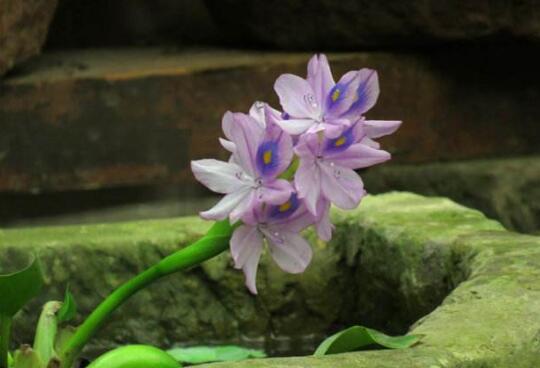
When it comes to how water hyacinth reproduces, it is mainly divided into two methods: seed propagation and rhizome propagation. As long as the operation is done properly during propagation, the survival rate of both propagation methods is very high. The specific operation methods are described in detail below, and interested friends can take a look.
II. Propagation Methods for Water Hyacinth
When propagating water hyacinth, choosing a suitable time is very important. Whether carrying out seed propagation or rhizome propagation, it is best to choose spring, because this is the season when all things revive, and the climate is relatively suitable, making it very suitable for its growth.
Seed Propagation
Seed collection: Water hyacinth seeds generally begin to mature in September-October each year. When the fruit generally appears pale yellow, it means it is mature. At this time, we can pick off the curved fruiting pedicel, then collect the seeds and spread them in a ventilated place to air-dry. After that, remove the fruit skin, take out the seeds inside, and soak them in water at about 25-30°C for 10 days before sowing.
Sowing method: Among the propagation methods for water hyacinth, sowing propagation is relatively simple. We sow the soaked seeds into water at about 30°C, and they can germinate after 1-2 weeks. When the seedlings grow to 5-6 leaves, we can transplant them into pots.
Rhizome Propagation
This plant, water hyacinth, has many axillary buds, and its stolons are also relatively long, tender and brittle, and easy to break. We generally wait until they break off, then remove them for rhizome propagation. The detached side branches have strong asexual reproduction ability, and the survival rate can be said to be quite high. Placed in water, they can quickly grow into new plants.
Follow-up Management
After successful propagation according to the above methods, we need to carry out follow-up management. The most important follow-up management is daily care. During care, there are also many points to note, such as watering, light, temperature, and so on. For these issues, everyone can refer to the article on water hyacinth cultivation methods, which contains detailed instructions.
Pontederia cordata Pickerelweed Illustrated Guide: How to Grow Pickerelweed / How to Propagate Pickerelweed
Pickerelweed ProfilePontederia cordata
Pickerelweed Cultivation Methods and Precautions, Introduction to Pickerelweed
Pickerelweed belongs to the order Commelinales, family Pontederiaceae, a perennial emergent or wetland herbaceous plant. In landscaping it is used for pond-side accent planting. It is native to North America and is distributed in China. The growth habit of pickerelweed is that it prefers warm and humid conditions and an environment with sufficient light. It is often planted in shallow ponds or beside ponds. The suitable temperature for growth and development is 18-35°C. Below 18°C growth is slow, below 10°C growth stops, and in winter overwintering treatment must be carried out. It is a perennial or annual aquatic herb; leaves floating or submerged, with a sheath at the base; flowers bisexual, zygomorphic, perianth petal-like, 6 pieces, separate or connate; fruit a membranous capsule.
Pontederiaceae, genus Pontederia, perennial emergent or wetland herbaceous plant. Petiole green, cylindrical. Leaf blade relatively large, up to 25 cm long and up to 15 cm wide, dark green, leaf shape variable. Most are obovate-lanceolate, leaf surface smooth. Inflorescence terminal, spicate, about 10-20 cm long, densely bearing several hundred small flowers. Flowers blue-purple, the upper two petals each with two yellow-green spots. Scape erect, usually higher than the leaves. Flowering period May-October.
Morphological Characteristics of Pickerelweed
Pickerelweed is a perennial emergent or wetland herbaceous plant. Petiole green, cylindrical. Leaf blade relatively large, up to 25 cm long and up to 15 cm wide, dark green, leaf shape variable. Most are obovate-lanceolate, about 10-20 cm long. The uppermost perianth lobe has 1 bifid yellow-green spot. Scape erect, usually higher than the leaves.
Rhizome is fibrous adventitious roots, 15-30 cm long, with many root hairs. Underground stem stout, yellow-brown, with bud eyes. Stems and leaves clustered, plant height 80-150 cm. Petiole green, cylindrical, cross-section with membranous material.
Leaf blade smooth, olive-colored, obovate-lanceolate. Leaf base broadly cordate, apex acuminate. Spike terminal, 5-20 cm long, with more than 200 densely arranged small flowers, blue-purple with yellow spots, about 10 mm in diameter, perianth lobes 6, nearly circular, lobe bases connected into a tube. Fruit green at first, brown after maturity; pericarp hard, seeds elliptical, 1-2 mm in diameter.
Ecological Habits of Pickerelweed
Perennial emergent or wetland herbaceous plant, likes warmth, sunlight, fertilizer, and moisture, fears wind and is not cold-tolerant. It can grow in still water and slow-flowing water areas. It is suitable for growing in shallow water below 20 cm, with an optimum temperature of 15°C to 30°C, and the overwintering temperature should not be lower than 5°C. Pickerelweed grows rapidly and has strong reproductive capacity. Under suitable conditions, it can cover large areas of water in a short time.
Cultivation Techniques for Pickerelweed
The growth habit of pickerelweed is that it prefers warm and humid conditions and an environment with sufficient light. It is often planted in shallow ponds or beside ponds. The suitable temperature for growth and development is 18-35°C. Below 18°C growth is slow, below 10°C growth stops, and in winter overwintering treatment must be carried out.
Its leaves are emerald green, its flowers are charming, and its flowering period is relatively long. It can be used for household pot cultivation and pond cultivation, and can also be widely used for garden beautification. It is planted on both sides of rivers, around ponds, and in constructed wetlands, interplanted with purple loosestrife, variegated giant reed, softstem bulrush, powdery alligator-flag, and so on. Whenever the flowering season arrives, strings of purple flowers set off by patches of green leaves create a distinctive charm.
In recent years, pickerelweed has been applied to a certain extent in water landscape gardens in China, and it is a relatively promising aquatic ornamental plant. The main applied varieties include white-centered pickerelweed and blue-flowered pickerelweed.
Propagation Methods of Pickerelweed
Distribution Areas and Cultivation Methods of Pickerelweed: In China, pickerelweed is mainly distributed in North China, Northeast China, East China, South China, Northwest China, Central China, and Southwest China. Pickerelweed can be propagated by division and seed propagation. Division can be carried out in spring and summer by cutting from the base of the plant, while seed propagation must be carried out in spring, and the seeds must be kept at around 25 degrees for it to be effective.
Using division and seed propagation. Division can be carried out in spring and summer, simply by cutting from the base of the plant. Seed propagation is generally carried out in spring, and the seed germination temperature must be kept at around 25°C.
Distribution Areas of Pickerelweed
Native to North America, distributed in China's North China, Northeast China, East China, South China, Northwest China, Central China, and Southwest China.
Variety Classification of Pickerelweed
Mainly distributed in tropical regions. China has 2 native genera with a total of 6 species, distributed in the south, and several varieties have now been introduced. Plants in this family are all perennial or annual aquatic herbs; leaves floating or submerged, with a sheath at the base; flowers bisexual, zygomorphic, perianth petal-like, 6 pieces, separate or connate; fruit a membranous capsule. Among them, the important species water hyacinth has become a harmful invasive species in many parts of the world.
Uses and Ornamental Value of Pickerelweed
Pickerelweed can be used for household pot cultivation and pond cultivation, and can also be widely used for garden beautification. It is planted on both sides of rivers, around ponds, and in constructed wetlands, interplanted with purple loosestrife, variegated giant reed, softstem bulrush, powdery alligator-flag, and so on, and has ornamental value.
Pickerelweed can be used for household pot cultivation and pond cultivation, and can also be widely used for garden beautification, for example: planted on both sides of rivers, around ponds, in constructed wetlands, and so on.
Landscape Uses of Pickerelweed
Pickerelweed has emerald green leaves, charming flowers, and a relatively long flowering period. It is widely used for garden beautification, planted on both sides of rivers, around ponds, and in constructed wetlands, interplanted with purple loosestrife, variegated giant reed, softstem bulrush, powdery alligator-flag, and so on. Whenever the flowering season arrives, strings of purple flowers set off by patches of green leaves create a distinctive charm.
Flower Language of Pickerelweed
The flower language of pickerelweed is freedom, representing being unconstrained and broad and boundless.
Pickerelweed Pictures
Sterculia nobilis Smith Noble Bottletree Illustrated Guide: How to Grow Noble Bottletree / How to Propagate Noble Bottletree
Noble Bottletree ProfileSterculia nobilis Smith
Cultivation Methods and Precautions for Noble Bottletree, Introduction to Noble Bottletree
Noble bottletree, an evergreen tree of the family Sterculiaceae, also known as "phoenix eye fruit." Leaves oblong-elliptical; flowers in early summer, without corolla, calyx pink, paniculate; fruit divided into four or five follicles, dark red outside and lacquer-black inside. Seeds are edible, and the taste of roasted seeds is like chestnuts. Native to China, India, Vietnam, Indonesia, and other places. South of Guangdong in China, it is often planted as a courtyard tree. The wood is light and tough and can be used to make utensils. In Guangdong customs, the fruit of the noble bottletree is an offering for the Seventh Sister's Birthday; if unavailable, the fruit of Sterculia lanceolata is used as a substitute. Because the annual yield of noble bottletree is small, and the sacrificial custom has declined, there are few orchards planting it in large quantities, only scattered planting.
Leaves oblong-elliptical; flowers in early summer, without corolla, calyx pink, paniculate; fruit divided into four or five follicles, dark red outside and lacquer-black inside. Seeds dark brown, elliptical-spherical.
In ancient times, noble bottletree was famous as "pinpo," originating from Sanskrit. The Foguang Buddhist Dictionary states that pinpo is a transliteration of Sanskrit and Pali bimba, originally meaning "shadow." It also says that India has the pinpo tree, a type of arbor, with bright red fruit, translated as "acacia tree." The Peiwen Yunfu quotes the Translation of Names Collection: "Pinpo, here called acacia fruit, red in color and glossy." Because pinpo fruit is red and glossy, Buddhist scriptures often use it as a metaphor for the beauty of lips, and it is also seen several times in the Dunhuang Bianwen Collection.
[Alternative names] Pinpo fruit (Lingwai Daida), Jiucengpi (Junzitang Rixun Shoujing), Luohuangzi (Gangmu), Pan'anguo (Shengcaoyaoxing Bei Yao), Qijieguo, Fuguizi (Guangzhou Zhiwu Zhi).
Morphological Characteristics of Noble Bottletree
Trunk straight, up to 20 m tall, bark brown. Leaves simple, alternate, obovate-elliptical; axillary panicles drooping, flowers polygamous, without petals, calyx slightly tinged with red, flowering period April-May, and a second flowering can occur in August-September. Follicles ovoid, red when mature in September-October.
Evergreen tree. Leaves oblong-elliptical; flowers in early summer, without corolla, calyx pink, paniculate; fruit divided into four or five follicles, dark red outside and lacquer-black inside. Seeds dark brown, elliptical-spherical.
Leaves
Papery, broadly oblong to oblong-elliptical, 8-25 cm long, 5-15 cm wide.
Flowers: Panicles loose, axillary, pendulous, many-flowered; pedicels thread-like, glabrous, flower buds spindle-shaped; staminate flower calyx bell-shaped, about 10 mm in diameter, gray-white tomentose outside, red inside, lobes linear, incurved, equal in length to the calyx tube; androecium weak, curved; pistillate flowers few, ovary hairy, stalked, 5-lobed, style curved. Follicles leathery, ovoid, 4-8 cm long, 2.5-3.5 cm wide, beaked, dark red when mature, covered with short tomentum. Flowering period: May.
Seeds
1-5 seeds, seed coat dark chestnut-colored, sticky, inner seed coat leathery, dark black.
Fruit
Follicle, fruit about 10 cm long, with fruit stalk, pericarp thick, leathery, mature fruit dark red, covered with short tomentum, oblong-ovoid, each fruit with 1-5 seeds, mostly 3. Unripe fruit surface green, gradually turning vermilion red at maturity, red skin and black seeds, splitting obliquely like a phoenix eye, hence called "phoenix eye fruit."
Tree, bark brown-black, young branchlets slightly stellate-hairy. Leaves thinly leathery, oblong or elliptical, 8-25 cm long, 5-15 cm wide, apex acute or obtuse, base rounded or obtuse, glabrous on both surfaces; petiole 2-3.5 cm long, stipules caducous. Panicles terminal or axillary, slender and spreading, up to 20 cm long, with short pubescence; pedicels much longer than flowers; calyx initially milky white, later turning pale red, bell-shaped, short pubescent outside, about 10 mm long, 5-lobed, lobes linear-lanceolate, apex acuminate and curved inward, adhering to each other at the tip, equal in length to the bell-shaped calyx tube; staminate flowers more numerous, androgynophore curved, glabrous, anthers yellow; pistillate flowers fewer, slightly larger, ovary spherical, with 5 grooves, densely hairy, style curved, stigma 5-lobed. Follicles bright red, thickly leathery, oblong-ovoid, about 5 cm long, about 2-3 cm wide, apex beaked, each fruit with 1-4 seeds; seeds elliptical or oblong, dark brown, about 1.5 cm in diameter. Flowering period April-May, but a second flowering is often seen in a few plants in October-November.
Ecological Habits of Noble Bottletree
Noble bottletree likes sunlight and prefers a warm and humid climate, and has no strict requirements for soil. The root system is developed, and it is fast-growing. Although it can grow well in barren and gravelly soils, well-drained sandy loam with deep soil layers is best. Sufficient sunlight is needed; it likes high temperature and humidity, and the suitable growth temperature is about 23-32°C. Propagation of noble bottletree seedlings can use sowing, cuttings, air layering, grafting, and other methods, and root suckers can also be used for propagation.
Cultivation Techniques for Noble Bottletree
In China's tropical and southern subtropical regions, the variety of dried fruit production is quite limited. For commercial production, there are only a handful of dried fruits such as macadamia nuts, cashews, and pistachios, and all are introduced exotic tree species with poor ecological adaptability. Moreover, there are many technical problems to be solved, such as cashews requiring high temperatures, and macadamia nuts fearing typhoons.
Noble bottletree, however, is a native tree species originating in China, and has advantages in planting and development such as strong ecological adaptability, resistance to pests and diseases, and abundant materials for propagation and genetic improvement. It is an economic forest tree with both ecological and economic benefits, and is also a unique southern staple food, making it a dried fruit tree species with great development potential.
Its characteristics of liking light, preferring a warm and humid climate, being able to grow in fertile, well-drained acidic, neutral, or calcareous soils, being relatively tolerant of barren conditions, having a developed root system, and being fast-growing also provide convenient conditions for its extensive development.
Propagation Methods of Noble Bottletree
Propagation of noble bottletree seedlings can use sowing, cuttings, air layering, grafting, and other methods, and root suckers can also be used for propagation.
Pinpo is easy to propagate. It can be propagated by stem cuttings into seedlings, and can also use its root pods for propagation. Seed seedling germination rate is very high. As long as the climate is suitable, it grows and develops rapidly and does not require special management. It can bloom and bear fruit 3 years after planting, and enters full fruiting period in 10-15 years, with a record high annual yield of 125 kg per plant. Fresh seeds dried in the sun are the commodity, without special processing.
In Yunnan, apart from being collected and eaten in small quantities as a wild fruit by people in producing areas, the economic value of pinpo is still little known, so this precious dried fruit has never been developed and utilized in Yunnan.
Trunk straight, up to 20 m tall, bark brown. Leaves simple, alternate, obovate-elliptical; axillary panicles drooping, flowers polygamous, without petals, calyx slightly tinged with red, flowering period April-May, and a second flowering can occur in August-September. Follicles ovoid, red when mature in September-October.
Adapted regions: produced in China's Guizhou, Yunnan, Hainan, Guangdong, Fujian, Taiwan, and other places.
Disease Control of Noble Bottletree
(1) Noble bottletree anthracnose
Noble bottletree frequently develops anthracnose in warm and rainy years, causing leaf blight and easy defoliation. For control, first attention should be paid to garden sanitation, collecting diseased fallen leaves and burning them centrally to reduce sources of infection. For nurseries or plants with severe disease, on the basis of cleaning the nursery, spray comprehensively with 1% Bordeaux mixture or 30% copper oxychloride suspension concentrate at 600 times dilution. Second, starting from the shoot expansion and leaf development stage or from the early stage of disease onset, alternately and continuously spray 4% sulfur-multiplex suspension concentrate at 600 times dilution.
(2) Noble bottletree psyllid
Noble bottletree psyllids harm the plant by adults and nymphs gathering to pierce and suck the sap of leaves and twigs, causing leaves to turn yellow and curl, flower buds to develop poorly, and affecting fruiting. The insects can cause flower drop and affect fruit set. They also secrete large amounts of white flocculent wax powder and excrete sticky "honeydew," and induce sooty mold, further worsening the damage. For control, first combine with garden cleaning, collect fallen insect-infested branches and leaves and burn them; during the young nymph stage, spray 20% fenvalerate emulsifiable concentrate at 3000 times dilution, or 95% diflubenzuron aqueous solution at 1000 times dilution, or 2%-5% deltamethrin emulsifiable concentrate at 1500 times dilution, or 25% buprofezin wettable powder at 1000-1500 times dilution, alternately spraying 3-4 times continuously, once every 7-15 days.
Distribution Areas of Noble Bottletree
Native to southern China, India, Vietnam, Sumatra in Indonesia, and other places.
Mainly distributed in China's Guizhou, Yunnan, Hainan, Guangdong, Fujian, Taiwan, and other places. This species is native to southern China, and is also cultivated in Japan and Sumatra. In Guangzhou it is very often planted as a courtyard ornamental tree. The survival rate of cuttings is high, and even large branches easily survive.
Produced in Guangdong, southern Guangxi, southeastern Fujian, southern Yunnan, and Taiwan. It is mostly cultivated near Guangzhou and in the Pearl River Delta. It likes to grow in well-drained fertile soil and is tolerant of shade. It is also distributed in India, Vietnam, and Indonesia, mostly under artificial cultivation.
Medicinal or Dietary Therapeutic Value of Noble Bottletree
The medical information and health dietary information on Hugarden are for reference only and cannot be used as a basis for diagnosis or medical treatment. Any health problems should be consulted with professional medical staff, and treatment of any disease should follow medical advice.
Ultimate flower-protecting mission: To love yourself, start from reality and strictly follow medical advice. For illness, do not be careless, do not delay, do not give up hope, face it bravely, warm the silent world with love, and care for the flower field in your heart with your heart.
Edible Value
Because the fruit flavor of its seeds is similar to chestnuts, it is also used in cooking.
July-August each year is the harvest period for noble bottletree. Fresh seeds, after being picked and shelled and then sun-dried, are the commodity and do not require special processing. The edible part of noble bottletree is its kernel. There are many ways to eat it: it can be steamed, boiled, and is suitable for roasting, candying, and braising, etc. After boiling in water, peel off the black outer seed coat of the noble bottletree kernel, then peel off the light brown semi-transparent middle seed coat, and eat the pale or milky white kernel. The peeled kernel is soft and white, like a small dark egg, delicate and beautiful, with a flavor similar to chestnuts. Its slightly sweet and fragrant taste, and its crisp, juicy texture, are even better than chestnuts. In Guangdong it is often used in the cooking of famous dishes, such as phoenix eye fruit braised chicken and phoenix eye fruit braised pork, and has been listed among "Lingnan Famous Dishes."
The seeds of noble bottletree are edible and taste like chestnuts after cooking, but unfortunately the fruit-setting rate is not high; if attention can be paid to selection and breeding to improve the fruit-setting rate, it is a woody food plant worth promoting.
Medicinal Value
[Nature and flavor] Sweet, warm. ① Yao Kecheng, Food Materia Medica: "Sweet, warm." ② Shengcaoyaoxing Bei Yao: "Sweet, neutral."
[Functions and indications] Warming the stomach, killing parasites. Treats parasitic abdominal pain, regurgitation and vomiting of food, and hernia pain.
① Yao Kecheng, Food Materia Medica: "Treats worms in the viscera and children eating soil, abdominal pain, and hard accumulations and masses. Nourishes the liver and gallbladder, improves eyesight and removes eye films, stops cough and reduces fever, resolves wind pathogens, and relieves restlessness and lowers fire."
② Shengcaoyaoxing Bei Yao: "For treating infantile tianpojiu (infantile head sores), calcine to preserve nature, open with oil and apply; clears heat, stew with meat and eat."
[Selected formulas] ① To treat roundworms in the abdomen attacking upward, with severe heart pain as if dying, and white spots on the face: Luohuangzi and Pharbitis nil seeds, seven pieces each. Decoct in water and take.
② To treat regurgitation and vomiting of food, with food coming back out as soon as swallowed; or vomiting in the evening what was eaten in the morning, and vomiting in the morning what was eaten in the evening: Luohuangzi seven pieces. Calcine to preserve nature, mix with wine daily and take one square-inch spoonful, until finished.
③ To treat hernia pain: Luohuangzi seven pieces. Decoct in wine and take. (Selected formulas from Yao Kecheng, Food Materia Medica)
[Contraindications] Prohibited for those with spleen deficiency and diarrhea.
[Zhuang medicine] Meiguonang, Meinan: root treats gastric ulcer; bark treats asthma (Guiyao Bian).
[Dai medicine] Wanhong (Xishuangbanna Dai): rhizome treats stomach pain, gastroenteritis, sha syndrome, traumatic injury, fractures, external bleeding, rheumatic waist and leg pain, and rheumatoid arthritis (Diansheng Zhi). Wanhong (Xishuangbanna Dai), Manhua (Dehong Dai): root treats traumatic injury, fractures, external bleeding, rheumatic waist and leg pain, rheumatoid arthritis, stomach pain, gastroenteritis, sha syndrome, diarrhea, and red dysentery (Dianyao Lu).
Seed (phoenix eye fruit): sweet, warm. Warms the stomach, kills parasites. Used for parasitic abdominal pain, regurgitation and vomiting of food, and hernia pain. Fruit pod (phoenix eye fruit shell): neutral, bland. Used for otitis media, bloody dysentery, and hernia; externally for hemorrhoids.
Uses and Functions of Noble Bottletree
South of Guangdong in China, it is often planted as a courtyard tree. The wood is light and tough and can be used to make utensils. Seeds are edible, and the taste of roasted seeds is like chestnuts.
In Guangdong customs, the fruit of the noble bottletree is an offering for the Seventh Sister's Birthday; if unavailable, the fruit of Sterculia lanceolata is used as a substitute. Because the annual yield of noble bottletree is small, and the sacrificial custom has declined, there are few orchards planting it in large quantities, only scattered planting.
The wood of pinpo can be used for furniture, boxes, and general building materials. The bark contains 36% fiber and can be used instead of hemp to make ropes or weave sacks, and is also a papermaking raw material. The pod shell, used as medicine and decocted with candied dates and dried tangerine peel, can treat blood diseases. The seeds are used as medicine and have effects such as warming the stomach, killing parasites, improving eyesight, and strengthening yang. The leaves are large and smooth on both sides. In Guangdong, people like to use its leaves to wrap zongzi and wrap ciba. The pinpo tree has a beautiful shape, a spherical crown, dense foliage, and remains evergreen through the four seasons, making it an excellent shade tree and street tree. It can flower and fruit twice each year. Although the flowers are small, the inflorescence is large and pink; the pods are arranged radially and are bright red when mature, with very good ornamental value. At present, pinpo products are in short supply and the price is relatively high. In the book Chinese Tropical and Subtropical Fruit Trees (1998), edited by the Office of South Subtropical Crop Development of the Ministry of Agriculture, pinpo was recommended as a "fruit tree with development prospects."
In China's tropical and southern subtropical regions, the variety of dried fruit production is quite limited. For commercial production, there are only a handful of dried fruits such as macadamia nuts, cashews, and pistachios, and all are introduced exotic tree species with poor ecological adaptability. Noble bottletree, however, is a native tree species originating in China, and has advantages in planting and development such as strong ecological adaptability, resistance to pests and diseases, and abundant materials for propagation and genetic improvement. It is an economic forest tree with both ecological and economic benefits, and is also a unique southern staple food, making it a dried fruit tree species with great development potential.
Landscape Uses and Landscape Value of Noble Bottletree
The crown is broad and dense. Follicles bright red, fruit edible. Suitable as a courtyard landscape tree and street tree. In Guangzhou it is very often planted as a courtyard ornamental tree. The survival rate of cuttings is high, and even large branches easily survive. Leaves can wrap zongzi. Seeds are edible, with a flavor similar to jackfruit seeds and chestnuts. In the Pearl River Delta, they are braised with meat as a dish and taste excellent. Pods decocted with candied dates and dried tangerine peel can treat bloody dysentery.
The crown is dense, the leaves are evergreen, the tree shape is beautiful, and it does not shed leaves easily, so it is also a very good street tree.
Flower Language of Noble Bottletree
The flower language of noble bottletree flowers: Let everything follow fate.
Noble bottletree flower, a flower species that blooms in early summer, without corolla, with pink calyx, is the flower of an evergreen tree. It is often planted as a garden environment plant and can also be planted as a medicinal plant.
Noble Bottletree Pictures