How to Propagate Ligustrum quihoui? A Detailed Guide to Three Methods: Sowing, Cutting, and Division
Ligustrum quihoui is a relatively common flowering plant in people's daily lives, with high ornamental value, and many people grow it in various places. However, as more people grow it, questions about its propagation have also become a concern. How to propagate Ligustrum quihoui? What are the propagation methods of Ligustrum quihoui? Below, the editor will walk you through it.
I. How to Propagate Ligustrum quihoui: Sowing / Cutting / Division
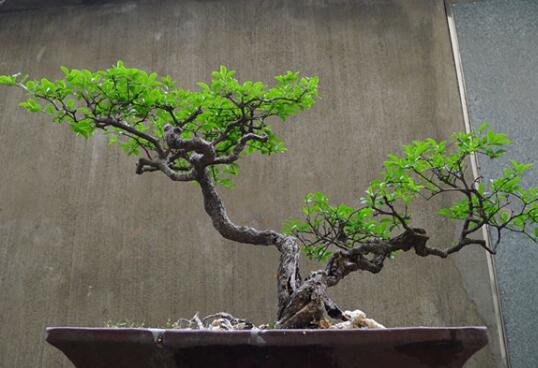
When it comes to how to propagate Ligustrum quihoui, it is mainly divided into three methods: propagation by sowing, propagation by cutting, and propagation by division. As long as the operations are done properly, the survival rates of all three propagation methods are very high. As for how exactly to carry out these three propagation methods, there is a detailed introduction below. Let's take a look.
II. Propagation Methods of Ligustrum quihoui
Substrate Selection
Whether carrying out propagation by sowing, propagation by cutting, or propagation by division, we first need to select a substrate. This is the step of laying a solid foundation and is very important. Generally, it is best to choose loose, fertile sandy soil. This kind of soil has good drainage and aeration, allowing the plant to better absorb nutrients and making waterlogging less likely.
Propagation by Sowing
Seed germination stimulation: Before propagating Ligustrum quihoui by sowing, it is best to first soak the seeds in warm water for 1-2 days. This can stimulate the seeds to germinate. Wait until the seeds begin to absorb water and swell, then take them out, rub them with both hands to remove the layer of purplish-black skin on the outside, and they are ready for sowing.
Sowing method: Before sowing, we first need to apply an appropriate amount of base fertilizer into the soil, then evenly scatter the seeds on the soil surface. After scattering, cover them with 1-2 cm of soil and then water. Because the seeds of Ligustrum quihoui are relatively small, it is best to use the immersion method for watering to avoid the seeds being washed away. Place the flower pot about halfway into water and let the water slowly soak upward.
Propagation by Cutting
Selection of cuttings: When selecting cuttings, it is generally best to choose branches that are relatively robust and free of pests and diseases as cuttings, as this will give a high survival rate. If you choose branches that already look very thin and weak, then the cutting can basically be declared a failure, and the survival rate will not be high.
Cutting method: Among the propagation methods of Ligustrum quihoui, propagation by cutting is a relatively simple one. Before cutting, we can first use a chopstick to poke a hole in the pot soil, then insert the cutting into it. This operation can prevent the cutting from being damaged and is very practical. Afterward, place it in a shady place for about a week before moving it outdoors for growing.
Propagation by Division
When propagating Ligustrum quihoui by division, we can do it together with repotting, and the time can be chosen in spring and autumn. When dividing, we need to lift the overly dense mother plant out of the pot soil, then cut it into several clumps and pot them separately. Plant them as soon as they are divided, and they will readily survive. Generally, after potting, it is already a complete flowering plant.
Propagation Methods and Key Cultivation Management Points for Ligustrum quihoui
Recently, many nursery growers and flower growers have asked about the sowing method of Ligustrum quihoui and the control methods for Ligustrum quihoui diseases. Below, the editor of Huinong Network has summarized all these questions for everyone.
I. Propagation Methods
Propagation is often carried out by sowing, cutting, and division.
(1) Propagation by Sowing
Propagation of Ligustrum quihoui by sowing is divided into steps such as seed collection and treatment, nursery land preparation, and sowing.
1. Seed collection and treatment
① Seed collection. Use pruning shears to cut off the fruit clusters and pile them in a cool place. After they rot, remove the fruit flesh to obtain clean seeds.
② Seed treatment. After the obtained clean seeds are air-dried, put them into cloth bags for dry storage, or directly carry out low-temperature stratification to promote germination. Low-temperature stratification method: spread a layer of 10 cm thick wet river sand on the indoor floor (the humidity of the river sand should be such that it forms a ball when squeezed in the hand and disperses when released), then layer the seeds and river sand at a ratio of 1:2 in layers, with a height not exceeding 30 cm. On the top layer, spread another 10 cm thick layer of river sand to seal the top, and insert several perforated bamboo tubes for ventilation; check the seeds frequently. When the river sand is too wet, replace the sand; when too dry, spray water appropriately.
2. Nursery land preparation
Choose a plot of slightly acidic soil that is fertile and convenient for transportation and water sources as the nursery land.
① Nursery land preparation. In late autumn and early winter, deep-plow the nursery land 1 time to a depth of 35 cm, without harrowing. Through winter freezing of the soil clods, the physical and chemical properties of the soil can be improved, soil weathering can be promoted, and pests and diseases can be reduced. In winter, taking advantage of rural winter slack and abundant labor, dig drainage ditches around the nursery land (perimeter ditches), with a standard width of 40 cm and depth of 35 cm. In mid-to-late February, apply 2000 kg of fully decomposed barnyard manure per mu, or 200 kg of decomposed cake fertilizer, or 80 kg of potassium sulfate compound fertilizer (15-15-15). Any of the above 3 fertilizers can be applied together with 75-100 kg of superphosphate to promote good seedling growth. After fertilizing, use a harrow machine to harrow continuously 3-4 times so as to level the nursery land, break up the soil, and evenly mix the fertilizer into the soil.
② Ditching and bed making. Mark lines according to a width of 1.5 m to make beds, of which the bed surface width is 1.2 m, the bed ditch width is 0.3 m, and the ditch depth is 0.25 m. To avoid sunlight scorching the seedlings, the seedbeds are mostly oriented north-south, and the length is controlled within 20 m. If too long, a waist (middle) ditch must be opened so that the perimeter ditch, waist (middle) ditch, and bed ditch, the "three ditches," are connected, facilitating drainage, irrigation, and personnel operations. Evenly spread the soil from the ditches onto the bed surface to increase the fertile soil layer.
③ Sterilization and insect killing. To prevent sudden outbreaks of pests and diseases in the nursery land, sterilization and insect killing should be carried out once before sowing. Per mu, 1-1.5 kg of 70% fenaminosulf wettable powder can be mixed with 10 kg of fine soil and spread to prevent diseases, and 3-5 kg of 3% carbofuran granules per mu can be directly spread to prevent insect pests.
3. Sowing
In early March, take out the dry-stored seeds, and sieve out the seeds subjected to low-temperature stratification. Both need to be carefully selected to remove moldy seeds and obtain clean seeds. Dry-stored seeds: first soak in warm water for 24 hours, changing the clean water once every 12 hours, then soak the seeds in 0.1% potassium permanganate solution for 30 minutes for sterilization. After rinsing and draining, they can be sown. Seeds subjected to low-temperature stratification: sow directly after rinsing and draining.
First open sowing furrows, with a row spacing of 30 cm and a furrow depth of 2 cm. Dry-stored seeds and seeds subjected to low-temperature stratification need to be sown separately in furrows. When sowing, evenly sow the seeds in the furrows at a spacing of 0.5 cm. After sowing, cover with 2 cm thick fine soil, water thoroughly with a watering can, then cover with pine needles, straw, sawdust, etc., to preserve moisture and allow aeration. After the Ligustrum quihoui seedlings emerge, remove the pine needles, straw, and other coverings in batches, and spray with 1000 times dilution of 50% carbendazim wettable powder for sterilization and 2500 times dilution of 2.5% deltamethrin emulsifiable concentrate for insect killing, so as to achieve control.
Through experiments, Ligustrum quihoui seeds subjected to low-temperature stratification emerged earlier and more uniformly, superior to dry-stored seeds.
(2) Propagation by Cutting
Ligustrum quihoui cuttings can be divided into hardwood cuttings and softwood cuttings.
1. Hardwood cuttings
Hardwood cuttings refer to cuttings made in February-March using one- to two-year-old lignified branches, including nursery land preparation, cutting collection and insertion, and post-insertion management.
① Nursery land preparation. a. Land preparation. The same as the land preparation method for the nursery land in the propagation-by-sowing method.
b. Ditching and bed making. The cutting nursery land has a bed surface width of 1 m, a bed ditch width of 0.3 m and depth of 0.25 m, and the length is controlled within 20 m. Further rake the soil on the seedbed fine and break it up, making it slightly higher in the middle and slightly lower around the edges in a turtle-back shape to prevent water accumulation. In spring, set up shade sheds according to the cutting area, and cover the shade shed cloth with 50% shade netting. The shade netting must be connected with sturdy ropes or wire, and the surroundings of the net should be level with the ground to prevent direct sunlight from shining onto the seedbed. The shade shed must be sturdy and able to withstand strong winds.
c. Sterilization and disinfection. 24 hours before cutting, water the seedbed thoroughly with 0.1% potassium permanganate solution.
② Collecting cuttings and inserting them. This can be combined with spring shaping and pruning. Cut one- to two-year-old lignified peripheral branches of Ligustrum quihoui and place them in a sheltered, cool place. Collect cuttings, shorten them, and insert them at the same time. In principle, branches collected on the same day should be fully inserted on the same day. Shorten the branches into 12-15 cm pieces with 2-3 buds or leaves, remove the lower leaves, and keep the upper leaves; cut the top flat and the lower end obliquely; tie 50 pieces into 1 bundle. Quickly dip the base in 0.2% IBA (indolebutyric acid) solution for 5-10 seconds, allow to drain slightly, and then insert. The insertion depth should be more than 2/3 of the length of the cutting.
③ Post-insertion management. After finishing inserting one bed, water thoroughly quickly, then spray with 1000 times dilution of 50% thiophanate-methyl. Afterward, maintain suitable soil moisture according to weather conditions, and rooting and healing can occur in about 30 days. During this period, pest and disease management needs to be strengthened. About every 10 days, pull out rotted cuttings and burn or bury them, and spray the whole field with 1000 times dilution of 50% carbendazim wettable powder for sterilization. Two weeks after complete rooting, the shade netting can be removed.
2. Softwood cuttings
Softwood cuttings refer to cuttings made in May-July or September using current-year semi-lignified branches. Softwood branches have the characteristics of abundant vitality, vigorous cell division, and easy rooting.
① Nursery land preparation. Same as the nursery land preparation for hardwood cuttings. Because sunlight is strong and temperatures are high in summer and autumn, about 90% shade netting must be used; summer has many violent storms, so the shade shed must be built firmly, wooden stakes driven around it, and the shade netting fixed with wire.
② Nutrient management of the cutting collection garden. Usually, nutrient management of the cutting collection garden needs to be strengthened. 10 days before collecting cuttings, spray the leaves once with 0.2%-0.3% potassium dihydrogen phosphate + 1200 times dilution of 68.75% oxadixyl-manganese zinc, and spray once more after 5 days. If drought weather occurs, irrigate heavily once. The Ligustrum quihoui cutting collection garden cultivated in this way will have branches with sufficient vitality, strong vitality, and few pests and diseases.
③ Collecting cuttings and inserting them. Cuttings should be collected before sunrise. Place the collected branches indoors and spray water frequently to maintain moisture and prevent dehydration. Indoors, shorten the branches into 8-10 cm lengths. When shortening, remove the tender tip portion, keep 2 leaves, and make 1 bundle of 50 pieces. Quickly dip the lower part in 1000 times dilution of ABT rooting powder or IBA (indolebutyric acid), and after it dries slightly, insert it. Before inserting, use a wooden stick of the same thickness as the cutting to poke holes in the cutting bed, place the cutting into the hole, and press firmly with the hand. After finishing inserting one bed, water thoroughly quickly, and spray with 1000 times dilution of 50% carbendazim wettable powder. At both ends of the cutting bed, set up a "cross" frame, and in the middle use 2 m long, 2 cm wide bamboo strips to build a small arch shed, fully cover with 2 m wide medium film, press the surroundings firmly with stones, and cover another layer of 50% shade netting closely against the film.
④ Post-insertion management. This is mainly management of temperature and humidity inside the small arch shed. Within 30 days after cutting, the relative air humidity inside the small arch shed should be kept above 90%, the soil water content at about 60% of saturated water content, and the temperature controlled below 38°C. To reduce transpiration, leaf spraying can be used to increase relative air humidity. After Ligustrum quihoui begins to root, ventilation can be appropriately increased and soil water content reduced. When Ligustrum quihoui has completely rooted and 50% have begun to sprout leaves, hardening off is needed: first uncover one end of the small arch shed, then uncover the other end after 3-5 days; after another 3-5 days remove the film and the 50% shade netting on the small arch shed, and after two weeks remove the 90% shade netting on the shade shed. During this period, every 10 days pull out rotted and dead cuttings and burn or bury them, and spray the whole field with 1000 times dilution of 50% thiophanate-methyl wettable powder for sterilization. In winter or spring, transplant the cutting seedlings to the field.
(3) Propagation by Division
In spring, choose Ligustrum quihoui plants with vigorous growth and many root suckers, cut them apart from the roots for separate planting, water after planting, and they can develop into independent plants.
II. Seedling Stage Management
1. Thinning and filling in seedlings
Thinning of sown seedlings can be carried out twice: the first time when the seedlings are 5-10 cm tall, combined with thinning to fill in gaps. Use a small pointed shovel to gently lift dense seedlings with native soil and immediately replant them in sparse areas (or find another field for planting). Both the original seedling field and the transplanted field should be watered and firmed. The second time is final thinning, about 15 days after the first thinning. Thinning should follow the principle of "thin out small ones and keep large ones, thin out dense ones and keep sparse ones, thin out inferior ones and keep superior ones, and maintain equal spacing."
2. Loosening soil and weeding
Loosening soil and weeding should be carried out when operations are possible after irrigation or rain. The depth of soil loosening should be shallower than the thickness of the covering soil. For sown seedling beds, perimeter ditches, waist ditches, and bed ditches, a hoe or shovel can be used to directly loosen and remove soil, making the soil loose and aerated; for weeds in cutting seedling fields, use a small pointed shovel to pick them out little by little, and water and firm the loosened seedlings. From May to July, weed once every half month, and from August to September, weed once a month, reducing competition between weeds and seedlings for light, water, and fertilizer, and promoting robust seedling growth.
3. Water and fertilizer management
Reasonable irrigation is the prerequisite for promoting normal growth and development of seedlings. Around the emergence of spring-sown seedlings, according to weather conditions, irrigation should be done in small amounts and multiple times, alternating dry and wet; during the plum rain season, attention should be paid to clearing ditches and draining silt; in summer drought, the number of irrigations should be increased, watering enough and thoroughly; in autumn, water less; in winter, do not water. From June to August, topdressing can be carried out together with watering: for sown seedlings, scatter 5-10 kg of urea per mu, watering while scattering to dissolve and wash it away, so as to avoid burning seedlings and causing fertilizer damage; for cutting seedlings, spray leaves with 0.2%-0.3% potassium dihydrogen phosphate aqueous solution; both topdressing methods should be done once every 15 days, continuously 2-3 times, which can effectively promote seedling growth. After August 15, stop topdressing urea, and a small amount of phosphorus and potassium fertilizer can be applied to promote lignification of seedlings and safe overwintering.
4. Pest and disease control
The main diseases of Ligustrum quihoui include anthracnose, leaf spot, and powdery mildew, which can be sprayed with 800 times dilution of 65% zineb wettable powder. Pests include aphids and cutworms, which can be sprayed with 1000 times dilution of 90% trichlorfon crystal or 2500 times dilution of 2.5% deltamethrin emulsifiable concentrate for insect killing.
III. Cultivation Management
Transplanting of Ligustrum quihoui is carried out in late winter and early spring. In addition to routine water and fertilizer management and intertillage tending, the main thing is to adopt different management measures according to different cultivation purposes: for example, if cultivating seedlings for hedges, general extensive management is sufficient; if mainly cultivating ball shapes, transplant after seedling raising, pay attention to pruning the upper part at ordinary times, cultivate horizontally, and prune into a full ball shape; if cultivating a wave shape, prune according to different height positions to form an overall wave shape.
The propagation methods for planting Ligustrum quihoui are very important. If you want to learn more about planting techniques related to Ligustrum quihoui, please continue to follow this site, Huinong Network!
A Detailed Explanation of Ligustrum quihoui Planting Techniques
Ligustrum quihoui belongs to the small shrubs and is very common in people's daily lives. Those oval-shaped shrubs are the form of Ligustrum quihoui. In the cities where people live, beside small rivers, and within residential communities, Ligustrum quihoui can be seen. They make a contribution to urban tourism that cannot be ignored. But how many people understand Ligustrum quihoui planting techniques? It does not matter if you do not understand. Today the editor will give everyone a detailed explanation of Ligustrum quihoui planting techniques.
Ligustrum quihoui is a small shrub of the Oleaceae family and the genus Ligustrum. Its leaves are very thin and somewhat small, so people call it Ligustrum quihoui. The following explanation of Ligustrum quihoui planting techniques today will mainly cover four aspects: growth habits, propagation methods, cultivation techniques, and pest and disease prevention. Everyone be sure to read carefully!
Growth Habits in Ligustrum quihoui Planting Techniques
Ligustrum quihoui likes light and is relatively cold-tolerant, which allows it to be cultivated in the open in North China, China, and it is also one of the few shrubs suitable for planting in North China, China. Ligustrum quihoui has strong sprouting ability, which gives it fast growth and strong pruning tolerance. In addition, Ligustrum quihoui has obvious resistance to toxic gases such as sulfur dioxide and chlorine dioxide.
Propagation Methods in Ligustrum quihoui Planting Techniques
The propagation methods of Ligustrum quihoui are the same as those of other shrubs, and can use three methods: sowing, cutting, and division; for propagation by sowing, pay attention to collecting the fruit of Ligustrum quihoui in October-November and sowing in May, so the timing is not easy to confuse. For propagation by cutting, spring is most suitable. Note that the cuttings should be branches that have grown for more than two years, and also note that they must be newly grown new branches. For the propagation method of division, it is relatively simple. Just in spring and autumn, separate multiple Ligustrum quihoui plants and plant them individually.
Cultivation Techniques in Ligustrum quihoui Planting Techniques
The cultivation techniques of Ligustrum quihoui are different from propagation techniques, mainly reflected in three aspects: clump division, transplanting, and pruning. Clump division refers to the division method used when Ligustrum quihoui grows too luxuriantly, in order to better promote its growth, separating overly luxuriant branches together with the roots and replanting them. Transplanting refers to moving Ligustrum quihoui from one place to another for cultivation and planting. Pruning is much simpler, and is just maintenance of Ligustrum quihoui.
Pest and Disease Prevention in Ligustrum quihoui Planting Techniques
Ligustrum quihoui does not have many natural enemy pests, and the main pest to watch for is the longhorn beetle. The simplest method is to bury 3-4 camphor balls where Ligustrum quihoui is planted. These camphor balls are a lethal weapon against longhorn beetles. If there are too many pests and diseases, you can also spray dichlorvos in spring at the insect holes of longhorn beetle larvae, which can effectively kill the insects.
In summary, the above is the detailed introduction to Ligustrum quihoui planting techniques that the editor has prepared for everyone today. Did everyone understand it? I hope that through the editor's introduction, everyone can have a certain understanding of Ligustrum quihoui.