How do you propagate a hibiscus? The main propagation method is cuttings
Hibiscus is a fairly common flowering plant in people's lives, with high ornamental value, and people in all regions of our country grow it. As more people grow it, questions about its propagation have also become a concern. How do you propagate a hibiscus? What are the propagation methods for hibiscus? Below, the editor will walk you through it.
1. How to propagate hibiscus: cuttings/grafting
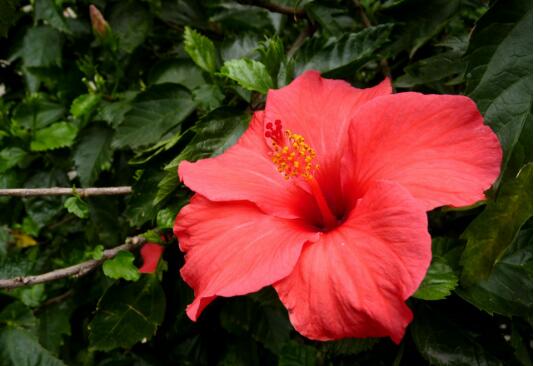
When it comes to how to propagate hibiscus, it is mainly divided into two methods: cutting propagation and grafting propagation, among which cutting propagation is the more commonly used one and also has a relatively high survival rate. Although grafting propagation is used relatively less, as long as it is done properly, the survival rate is just as high. Below are the specific details of the two propagation methods; friends who are interested can take a look.
2. Propagation methods for hibiscus
Cutting propagation
1. Substrate selection: good drainage is required
Before propagating hibiscus by cuttings, we first need to choose the soil. Generally, it is best to choose loose, fertile humus soil rich in organic matter. This kind of soil has high nutritional value and good drainage and aeration, which allows the plant to grow better.
2. Substrate disinfection: high-temperature disinfection
After choosing the substrate, we should not plant immediately. It is best to disinfect it first to prevent pests and diseases in it from infecting the plant. When disinfecting, we can break it up and spread it flat in the sun to bake, or put it in a pot over high heat and stir-fry it. In this way, even if there are pests and diseases, they will be killed by the high temperature.
3. Cutting selection: choose robust growing branches
After choosing the substrate, we also need to choose the cuttings. Generally, it is best to choose branches that are relatively robust and free from pest and disease infestation as cuttings, as this will give a higher survival rate. If we choose branches that already look frail, they will basically be very difficult to keep alive, so everyone should not be too casual when choosing.
4. Cutting method: roots in 20-25 days
Among the propagation methods for hibiscus, cutting propagation is relatively simple. First, we need to cut off the leaves on the lower part of the cutting and keep the top leaves, and use chopsticks to poke a hole in the substrate, then trim off the leaves at the bottom of the cutting, after that insert the cutting to 1/2. This operation can avoid damage to the cutting and is very practical. After that, water thoroughly and keep the room temperature between 18-21°C; roots will form in about 20-25 days.
Grafting propagation
When propagating hibiscus by grafting, it is best to do it in spring and autumn. This method is generally used for hibiscus varieties that are difficult to root by cuttings or root slowly, especially double-petaled varieties with a low cutting survival rate. Either branch grafting or bud grafting can be used, with single-petaled hibiscus as the rootstock. Grafted seedlings sprout branches and bloom in the same year.
How long is the hibiscus flowering period? Propagation methods for hibiscus
Hibiscus, also known as fusang, fojin, and Chinese rose, is called "big red flower" in the Lingnan area of China because most of its flowers are red. So how long is the hibiscus flowering period? Today, the wedding114 website editor brings you content related to the hibiscus flowering period and hibiscus propagation methods. Let's take a look.
Hibiscus pictures
1. Introduction to hibiscus
Hibiscus (scientific name: Hibiscus rosa-sinensis Linn.): also known as fusang, fojin, and Chinese rose. Because most of its flowers are red, it is commonly called "big red flower" in the Lingnan area of China. Evergreen shrub, about 1-3 m tall; branchlets cylindrical, sparsely covered with stellate soft hairs. Leaves broadly ovate or narrowly ovate, hairless on both sides except for a few sparse hairs along the veins on the back. Flowers solitary in the axils of upper leaves, often drooping; corolla funnel-shaped, 6-10 cm in diameter, rose-red or light red, light yellow, etc., petals obovate, apex rounded, sparsely covered with soft hairs on the outside. Capsule ovate, about 2.5 cm long, smooth and hairless, with a beak. Flowering period all year round.
Hibiscus was already a popular ornamental plant in ancient times, and its place of origin is China. Records of hibiscus already appeared in a work from the Western Jin period, "Nan Fang Cao Mu Zhuang." The flowers are large and brightly colored, blooming all year round, mainly used for garden viewing. It is planted in many places around the world, especially in tropical and subtropical regions.
Hibiscus pictures
2. Hibiscus flowering period
Flowering period all year round.
Hibiscus is an evergreen shrub, about 1-3 m tall; branchlets cylindrical, sparsely covered with stellate soft hairs. Leaves broadly ovate or narrowly ovate, 4-9 cm long, 2-5 cm wide, apex acuminate, base rounded or wedge-shaped, margins coarsely toothed or lobed, hairless on both sides except for a few sparse hairs along the veins on the back; petiole 5-20 mm long, covered with long soft hairs on the upper side; stipules linear, 5-12 mm long, hairy.
Flowers solitary in the axils of upper leaves, often drooping, pedicel 3-7 cm long, sparsely covered with stellate soft hairs or nearly smooth and hairless, with a joint near the end; bracteoles 6-7, linear, 8-15 mm long, sparsely covered with stellate soft hairs, connate at the base; calyx bell-shaped, about 2 cm long, covered with stellate soft hairs, lobes 5, ovate to lanceolate; corolla funnel-shaped, 6-10 cm in diameter, rose-red or light red, light yellow, etc., petals obovate, apex rounded, sparsely covered with soft hairs on the outside; staminal column 4-8 cm long, smooth and hairless; style branches 5.
Capsule ovate, about 2.5 cm long, smooth and hairless, with a beak. Flowering period all year round.
Hibiscus pictures
3. Hibiscus propagation methods
Cuttings
Carried out from May to October, or in winter in a greenhouse, but the survival rate is higher during the plum rain season. The best cuttings are one-year-old semi-lignified ones, 10 cm long; cut off the lower leaves, keep the top leaves, make the cut smooth, insert into a sand bed, maintain relatively high air humidity, keep the room temperature at 18-21°C, and roots will form 20-25 days after insertion. Treating the base of the cuttings with 0.3%-0.4% indolebutyric acid for 1-2 seconds can shorten the rooting period. When the roots are 3-4 cm long, transplant into pots.
Grafting
Carried out in spring and autumn. Mostly used for fusang varieties that are difficult to root by cuttings or root slowly, especially double-petaled varieties with a low cutting survival rate. Either branch grafting or bud grafting can be used, with single-petaled fusang as the rootstock. Grafted seedlings sprout branches and bloom in the same year.
Hibiscus pictures
4. Main value of hibiscus
Hibiscus is a beautiful ornamental flowering tree, with large and brightly colored flowers and a long flowering period. Besides red, there are also different varieties such as pink, orange-yellow, yellow, pink-edged with red center, and white; besides single-petaled, there are also double-petaled varieties. Potted hibiscus is one of the best flowering trees for decorating holiday parks, flower beds, hotels, meeting venues, and homes.
The roots, leaves, and flowers can all be used as medicine, with the effects of clearing heat and promoting diuresis, and detoxifying and reducing swelling. In the south, hibiscus is mostly planted beside ponds, in front of pavilions, along roads, and by walls, with big red flowers blooming continuously all year round, exceptionally lively. In the Yangtze River basin and the north, it is often used as a potted plant to decorate balconies or small courtyards, and under sufficient light conditions, the ornamental period is especially long. It is also one of the main flowering potted plants placed in public places in summer and autumn.
How do you propagate a Rosa multiflora? Propagation methods for Rosa multiflora/mainly cutting propagation
Rosa multiflora is a fairly common ornamental flowering plant in people's lives, and many people grow it in all regions of our country. As more people grow it, questions about its propagation have also become a concern. How do you propagate a Rosa multiflora? What are the propagation methods for Rosa multiflora? Below, the editor will walk you through it.
1. How to propagate Rosa multiflora: cuttings/layering
When it comes to how to propagate Rosa multiflora, it is mainly divided into two methods: cutting propagation and layering propagation, among which cutting propagation is the more commonly used one. Although layering propagation is used relatively less, its survival rate is not low at all. Below are the specific operation methods of the two propagation methods. Let's take a look.
2. Propagation methods for Rosa multiflora
Cutting propagation
1. Substrate selection: humus soil
Before propagating Rosa multiflora, we first need to choose the substrate. This is the step of laying a good foundation, so we must choose the most suitable one. Generally, it is best to choose loose, fertile humus soil as the substrate. This kind of soil has good drainage and aeration, allows the plant to absorb nutrients better, and is not prone to water accumulation.
2. Substrate disinfection: high-temperature disinfection
After choosing the substrate, we also need to disinfect it to prevent bacteria in it from infecting the Rosa multiflora. There are two disinfection methods. One is that we can break it up and spread it flat under strong sunlight to bake, and we can also put it in a pot over high heat and stir-fry it. In this way, even if there are pests and diseases, they will be killed by the high temperature.
3. Cutting selection: choose robust growing branches
After choosing the substrate, we also need to choose the cuttings. Generally, it is best to choose branches that are relatively robust and free from pest and disease infestation as cuttings, as this will give a higher survival rate. If we choose branches that already look frail, they will basically be very difficult to keep alive, so everyone should not be too casual when choosing.
4. Cutting method: cut off the bottom leaves
Among the propagation methods for Rosa multiflora, cutting propagation is a relatively simple one. Before cutting, we can use chopsticks to poke a hole in the substrate, then trim off the leaves at the bottom of the cutting, after that insert the cutting to 1/2. This operation can avoid damage to the cutting and is very practical. After that, water thoroughly and place in a cool place for one week, then it can be grown in sunlight continuously.
Layering propagation
When layering Rosa multiflora, we need to choose robust growing long branches, then bend them and bury them in the soil, or use serpentine layering, and after they root, separate them from the mother plant. This method is generally best carried out in spring and autumn, because the climate is more suitable for its growth, so the survival rate will be somewhat higher.