How to propagate the tiger's tail spruce? A spring cutting method that roots in half a month
Everyone is surely familiar with the tiger's tail spruce; it often appears in water-grown form in living rooms, offices and other places, with excellent ornamental value. But is one pot of tiger's tail spruce too monotonous? It's time to get a few more, but rather than buying them, it's better to propagate them yourself. So how do you propagate the tiger's tail spruce? Below is the cutting propagation method for the tiger's tail spruce, let's take a look together!
I. How to propagate the tiger's tail spruce: cuttings / sowing
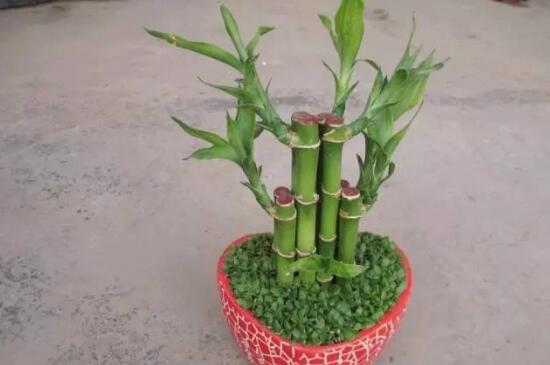
When it comes to propagating the tiger's tail spruce, there are generally two methods: cuttings and sowing. Among them, cuttings are suitable for indoor gardening enthusiasts, that is, cut off a section of branch and insert it into the soil to wait for rooting; sowing is suitable for mass propagation, take tiger's tail spruce seeds and scatter them onto the soil, and once the seedlings grow to a certain height, transplant them.
II. The two propagation methods for the tiger's tail spruce
(1) Cutting propagation method for the tiger's tail spruce
1. Cutting time
For cutting the tiger's tail spruce, generally choose spring or autumn, when the plant's vitality is at its best and the rooting rate after cutting is higher.
2. Selection of cuttings
In the cutting propagation method for the tiger's tail spruce, the selection of cuttings is especially important; once it is chosen well, the whole propagation process is basically half successful. Method for taking cuttings: from a healthy potted tiger's tail spruce, cut off robustly growing branches as cuttings, each branch section about 10 cm long; if there are leaves on it, it is best to cut off more than half of them, or cutting them all off is fine too.
3. Cutting medium
According to the growth habits of the tiger's tail spruce, the cutting medium prepared for it is best fairly clean coarse river sand, which has good permeability and is more conducive to rooting after cutting.
4. Starting the cutting
Insert the treated cuttings into the medium and water thoroughly. After that, cover the whole flower pot with a plastic bag, which can keep the soil moist, then place it indoors in a spot with good light. After doing this, roots usually form in 15-25 days, and afterwards just care for it according to the cultivation methods for the tiger's tail spruce.
(2) Seed propagation method for the tiger's tail spruce
Seeds can be obtained after the tiger's tail spruce blooms, so besides cuttings, the propagation method for the tiger's tail spruce can also be sowing. Mix 1 part plant nutrient soil, 1 part leaf mold and 1 part river sand as the sowing bed, then in spring or summer scatter the tiger's tail spruce seeds on top, keep the room temperature at 20-25°C, and they will soon sprout; once the seedlings have grown to a certain size, transplant them.
Overall, when propagating the tiger's tail spruce, whether by cuttings or sowing, both can succeed, but the one most suitable for indoor gardening enthusiasts to carry out is still cuttings. Of course, methods are fixed while people are flexible, so everyone can choose according to the actual situation. That's all for the introduction to the propagation methods of the tiger's tail spruce; I hope it can be of help to everyone.
The complete collection of cutting methods for the tiger's tail spruce, rooting in half a month!
The complete collection of cutting methods for the tiger's tail spruce, rooting in half a month!
1. The specific cutting method is: in spring, first cut off a piece of stem, generally about 5 to 10 cm long; it is best if there are no leaves on it, or those whose base tip tends to dry out easily can also be cut off for use. Take branches that have grown for a long time in a rather dark indoor spot and have produced some stem tips, insert them into fairly clean coarse river sand, and water thoroughly.
2. Then we need to cover the whole plant with a plastic bag, which can keep the soil moist, then place it indoors in a spot with good light; generally after 25 days roots will have grown. Alternatively, the branch cut off earlier can also be inserted into water; if in a 25°C environment, roots will grow in 15 days.
3. The tiger's tail spruce is a plant that prefers a warm and humid environment, and is fairly suited to growing at temperatures of 20 to 27°C; even in winter, it is best to keep it above 10°C. If the air is too dry, it may cause the leaves to turn yellow and wither. Also, it fairly likes sunlight and is not suited to too shady places; slight shading is best. As for water, it is fairly drought-tolerant and can also tolerate moisture, so the requirements are not that strict. For the medium, it likes sandy loam with good drainage, moist soil and fertility.
How to propagate the tiger's tail spruce: propagation methods for the tiger's tail spruce
The tiger's tail spruce, also known as the short-leaved dragon tree, is an evergreen shrub or small tree of the genus Dracaena in the family Agavaceae (Asparagaceae). It is a high-grade foliage plant, widely cultivated in our country and fairly popular in South China. So how do you propagate the tiger's tail spruce? Below is an introduction to the propagation methods for the tiger's tail spruce.
The growing environment of the tiger's tail spruce
The tiger's tail spruce likes high temperatures and humidity; the suitable growth temperature is 20°C-28°C. It is drought-tolerant and also moisture-tolerant; when the temperature is high it grows vigorously, and in winter, dry cold easily causes the leaf tips to dry out. It prefers semi-shade and avoids strong direct sunlight; overwintering requires above 12°C, and it is not strict about soil and fertilizer. For potting soil, use garden soil : peat soil : chicken manure = 6:4:1, mix and compost for half a year before use.
Propagation methods for the tiger's tail spruce
Cutting propagation
Cutting propagation can be carried out from March to May. Take robust, mature branches of the current year and cut them into 8-10 cm lengths; for hard stems keep 3-4 buds, and for tender branches keep 3-4 leaves. For the bed soil, choose well-drained, sterilized, loose sandy loam or peat soil. After inserting, cover with an 80% shade net and water thoroughly. Afterwards, spray water 1-2 times a day, 3-5 minutes each time, and roots will form in about 30-35 days. If you use a 400-fold dilution of "Root Sun" rooting agent mixed with yellow mud into a slurry, dip the cut end of the cutting into a bit of the slurry; after treatment, wait for the slurry to dry, then insert into the nursery bed. When inserting into the nursery bed, first make holes with a stick and then insert the seedlings, to prevent the yellow mud slurry from detaching from the cutting and affecting rooting. After inserting, roots will form in about 20-25 days.
Seed propagation
Seed propagation is suitable in spring or summer. Before sowing, the soil and seeds must undergo strict disinfection treatment to prevent pests and diseases during the growth period. The soil should be disinfected with 70% thiophanate-methyl, and at the same time 90% trichlorfon should be used to kill soil insects. Seeds are sown as soon as collected, or they can be stored until spring or summer for sowing. To increase the seed germination rate and reduce the trouble of storing seeds, the seeds can be sown directly after drying in the shade.
Before sowing, soak the seeds in a 0.5% potassium permanganate solution for disinfection for 30 minutes; after the seeds absorb water and swell, take them out and place them in a bamboo basket to dry, and once the seeds are dry they can be sown. After sowing, strengthen nursery field management, keep the soil moist, at a temperature of 20°C-25°C, and seedlings emerge about 25-30 days after sowing. When the seedlings grow to 3-5 cm, promptly remove weeds and combine thinning with fertilization. Every 7-10 days apply 1 time of 3%-5% dilute human and animal manure and 1%-2% decomposed cake fertilizer.
Afterwards, use 0.5%-0.8% compound fertilizer to water around the seedling roots; try not to let the solution get on the leaves. After fertilizing, sprinkle water on the leaf surface to avoid burning the leaves. When the seedling root system has grown to 3-5 cm, they can be transplanted into pots.
Potting management
When the tiger's tail spruce seedlings' root system has grown to 3-5 cm, they can be transplanted into pots. If potted too late, the young seedlings' growth will weaken, affecting later growth and development. The tiger's tail spruce is a semi-shade flower, so when planting, choose a semi-shade environment and moist, fertile, well-drained soil, to meet the requirements for environmental conditions during growth and development.
When transplanting, the plant should be kept with a soil ball; during the growing season it can also be transplanted with a soil ball, but before transplanting remove all the new shoot branches and leaves of the current year and keep the soil moist. The tiger's tail spruce is not strict about environmental requirements, but likes semi-shade and hot, dry climates, and is fairly sensitive to water and fertilizer, so in cultivation and management, technical work such as watering, fertilizing, pinching and pruning, light, temperature and humidity should be done well according to its growth characteristics.
Watering: The tiger's tail spruce tolerates water fairly well; mild drought or waterlogging will not cause much harm, but in management it is best to water thoroughly after the surface layer of the potting soil dries, which is good for its growth. Alternating watering between dry and wet can make the branches and leaves dense and the nodes compact, with high ornamental value.
Fertilizing: 10-15 days after transplanting, apply a root-setting fertilizer, which can be watered on with a 10% urea solution. At the seedling stage and shoot-sprouting stage, mainly apply nitrogen fertilizer; during the vigorous growth period, apply nitrogen, phosphorus and potassium compound fertilizer or organic fertilizer liquid. Fertilization should follow the principle of applying thin fertilizer frequently. In addition, stop fertilizing in high-temperature seasons or in winter; when repotting and changing soil every spring, a certain amount of decomposed organic fertilizer can be added as base fertilizer to ensure good growth.
Pinching and pruning: After potting, when the seedlings grow to 8-10 cm, they can be pinched; the second pinching is carried out when the new shoots are 4-6 cm tall, and this is repeated several times until they are full. The tiger's tail spruce has a certain perennial-root nature and can grow new branches from the roots, so the plant shape grows well. The tiger's tail spruce is fairly tolerant of pruning; it is best to appropriately strengthen fertilizer and water management before and after pruning, to favor better growth of the new branches and leaves. Pruning is mainly for shaping, and can also be combined with cutting propagation.
Light: The tiger's tail spruce likes light but also avoids direct scorching sun in summer. For home care, it can be placed under a south window or on a balcony, only avoiding direct light in summer; in other seasons it is best to give it a certain amount of light, otherwise the golden-yellow stripes in the middle of the leaves will become dim and disappear, seriously reducing its ornamental value.
Temperature: The tiger's tail spruce likes a warm and humid growing environment and can also grow in high-temperature environments. The most suitable growth temperature is 20°C-30°C; the overwintering temperature is best kept above 10°C, and below 5°C it will suffer cold damage.
Humidity: The most suitable growing humidity for the tiger's tail spruce is 75%-85%. During growth it needs a certain amount of air humidity, otherwise the leaf color becomes dim and the glossiness decreases. During the growing season, frequently spray the plant with clean water; if conditions permit, it is best to increase the moisture and humidity in the environment.