How do you propagate orchids? Among four methods, cuttings and division are the most practical
Orchids, that is, orchids, are a traditional famous flower of China, and together with plum, bamboo, and chrysanthemum they are known as the Four Gentlemen, and they are loved by a great many flower enthusiasts. In daily life, many people keep orchids at home, but is one pot too monotonous? It is time to propagate a few pots, so how do you propagate orchids? The following are four propagation methods for orchids; follow along with the editor to learn about them.
1. Cuttings / division / sowing / tissue culture
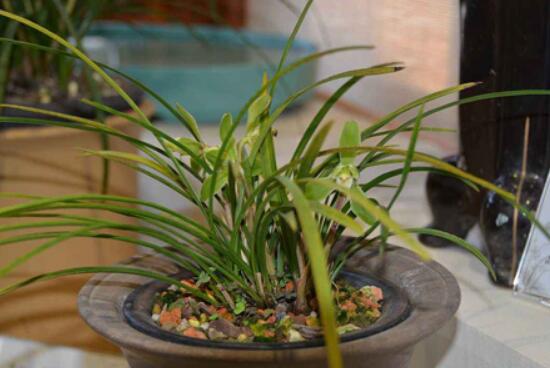
If you ask how to propagate orchids, there are mainly 4 methods: cuttings, division, sowing, and tissue culture. Among them, cuttings means cutting off a part with nodes from a potted orchid and inserting it into soil; division means selecting thick stems and planting them in separate pots; sowing means scattering orchid seeds into potting soil; tissue culture means placing orchid buds into a culture nutrient solution for rapid propagation.
2. The four propagation methods for orchids
(1) Cutting propagation of orchids
How do you propagate orchids? As a common indoor potted plant, it can naturally be propagated by cuttings. Method: On a potted orchid, select healthy-growing stems, cut them off at the joints with scissors as cuttings (they must have nodes), then insert them into soil; before long they will grow roots, and afterward you can care for them according to orchid cultivation methods.
(2) Division propagation of orchids
When it comes to propagating orchids, the method most suitable for indoor flower enthusiasts is division, and for division it is best to use the unpotted division method. Specific method: Before division, water moderately, then remove from the pot, select thick stems (at least 5 connected pseudobulbs), and plant them in separate pots.
Notes: The divided pots should first be lined with broken tiles, then filled above with soil that orchids like, preferably loose sandy soil, so as to ensure soil permeability. After division is complete, water thoroughly, then keep the soil slightly moist; they will survive in half a month, and a new pot of orchids has appeared.
(3) Seed propagation of orchids
After orchids bloom, seeds can be obtained, so seed sowing can also be chosen as an orchid propagation method. However, because orchid seeds contain only one incompletely developed embryo inside, the survival rate is relatively low, and in addition orchid seed coats do not easily absorb water, so when using sowing to propagate orchids, the germination rate is extremely low. Therefore, the editor does not recommend this propagation method.
(4) Tissue culture propagation of orchids
How do you propagate orchids? You can also use the tissue culture method, which has the characteristics of a high survival rate and low propagation cost, but this method is generally used in large-scale production, so it is enough to know about it. Method: Place orchid shoots into a culture nutrient solution; after one week, when roots have grown, they can be transplanted into water for cultivation.
Overall, when propagating orchids, whether by cuttings, division, sowing, or tissue culture, all can succeed, but the ones most suitable for indoor flower enthusiasts to carry out are still cuttings and division. Of course, methods are fixed while people are flexible, and everyone can choose according to actual circumstances. That is all the editor has to introduce about orchid propagation methods, and I hope it can help everyone.
Propagation methods for courtyard flowers in March
Propagation methods for courtyard flowers in March
March coincides with Awakening of Insects and Spring Equinox. This month's highest temperature is 27.6°C, the lowest is -4 to -5°C, and the average is 6.4°C, right at the time when cold and warmth alternate.
Propagation of courtyard flowers
1. Sowing
Courtyard flower species that can be sown in March include: crape myrtle, redbud, wintersweet, summer wintersweet, red maple, and Chinese tulip tree. For the latter five, before sowing the seeds must be soaked in cold water for 24 to 36 hours, and sown after they have absorbed water thoroughly. Flower and tree species that can be sown and raised as seedlings after sand storage to promote germination include: sago palm, ginkgo, Buddhist pine, podocarpus, Chinese fan palm, purple magnolia, Michelia species, osmanthus, horse chestnut, heavenly bamboo, holly species, pomegranate, and Chinese snowball. Herbaceous flowers that can be sown include: garden balsam, marigold, globe amaranth, zinnia, scarlet sage, cockscomb, ornamental pepper, winter cherry, fairy primrose, mallow species, four o'clock flower, bird of paradise, clivia, and asparagus fern. Some cold-intolerant species should be sown inside plastic hoop houses.
Propagation methods for courtyard flowers in March
2. Cuttings
Flower and tree species that can be propagated by cuttings in March include: Chinese hibiscus, geranium, epiphyllum, night-blooming cereus, portulacaria, graptopetalum, echeveria, hydrangea, heavenly bamboo, japonica, silver willow, Hypericum, podocarpus, pomegranate, fig, Japanese aralia, gardenia, forsythia, winter jasmine, Chinese incense cedar, winter daphne, and firethorn. Cold-sensitive flowers should be cut indoors or inside a shed.
3. Grafting
Flower and tree species that can be propagated by grafting in March include: using 1- to 2-year-old black pine seedlings as rootstock, side-grafting five-needle pine, Osaka pine, and tapestry pine; using 1- to 2-year-old white magnolia and purple magnolia seedlings as rootstock, cut-grafting Michelia and Yulan magnolia; using 1-year-old peach and apricot seedlings as rootstock, cut-grafting plum blossom, longevity peach, ornamental peach, and red-leaf peach; using finger-thick seedling wintersweet as rootstock, and when its leaf buds grow to wheat-grain size, selecting superior-variety wintersweet scion wood, performing cut grafting and bagging to retain moisture, for a relatively high survival rate; using three-angled cactus as rootstock, grafting crab claw orchid and various cactus balls, preferably carried out in a greenhouse. In addition, camellia, cherry blossom, osmanthus, and red maple can also be grafted in March.
Propagation methods for courtyard flowers in March
4. Layering
Flower and tree species that can be propagated by layering in March include: camellia, camellia sasanqua, plum blossom, wintersweet, red maple, podocarpus, Chinese incense cedar, upright cypress, Michelia, japonica, snowball, gardenia, osmanthus, and purple magnolia.
5. Division
Flower species that can be propagated by division in March include: orchids, bleeding heart, aspidistra, asparagus fern, sago palm, heavenly bamboo, mahonia, japonica, snake plant, purple triangular oxalis, large-flowered canna, shell ginger, dahlia, and bird of paradise.
Flowers suitable for sowing and propagation in May; May flower growing is not too late
May is about to arrive, and many flower enthusiasts think they have already missed the best time for sowing flowers, so you who gave up sowing and growing flowers, actually this is unnecessary. Now a succulent nursery has summarized May flower planting for everyone.
The climate characteristics of May are that temperatures continue to rise, rainfall gradually increases from south to north in our country, and after each rainfall the temperature rises noticeably; there is much continuous spring rain, and after the spring rain ends at Grain Buds, the weather turns muggy, marking that summer will soon begin.
Therefore, May, at the turn of spring and summer, is a key period for growing flowers, and it plays an important role in laying the foundation for the summer and autumn growth of potted flowers.
Types of flowers and trees suitable for courtyard display
Entering May, at the turn of spring and summer, temperatures across the country rise greatly, and sunlight gradually becomes stronger. The types of potted ornamental plants that can be displayed in courtyards increase, such as Chinese rose, Norfolk Island pine, hall crabapple, Canary Island date palm, rubber tree, five-needle pine, podocarpus, heavenly bamboo, amaryllis, jasmine, bamboo palm, sago palm, king palm, areca palm, spotted dracaena, windmill palm, bottle palm, cinnamon, beautiful phoenix palm, European primrose, lily, dwarfed potted plants, pomegranate, Chinese peony, Michelia, red maple, Aglaia, four-season osmanthus, and bitter orange.
Propagation of courtyard flowers:
1. Sowing
Herbaceous flower types suitable for sowing in May include: fairy primrose, garden balsam, and globe amaranth.
Woody flowers include loquat, Japanese aralia, leatherleaf mahonia, areca palm, bottle palm, and osmanthus. Among them, the seeds of the first 5 flowers can be washed clean and sown immediately after collection; only for osmanthus, the ripe fruit that has turned black, softened, and been covered with white powder should have the peel and pulp washed off, then be stored in clean damp sand until February of the following year, and sown again when the seed grains crack open and show white.
For seeds sown immediately after collection, the following points should be noted during sowing: first, keep the seedbed moist, but not waterlogged; second, cover with grass to prevent the seeds from "sprouting back"; third, after the seeds emerge, remove the covering grass in 2 to 3 rounds, and promptly build a shade to prevent the sun from scorching the seedlings.
In addition, although loquat has large seeds, its young sprouts have weak soil-penetrating ability and tend to bend, and sowing too deep will affect the emergence rate and seedling survival rate, so shallow sowing is preferable; generally a ditch depth of 2 to 3 cm and covering with soil until the ditch is full is sufficient.
At this time, planting gladiolus corms in the ground can bloom in August. Planting tuberose in the ground can bloom from August to September.
2. Cuttings
Herbaceous ornamental plants suitable for cuttings in May include: scarlet sage, pansy, chrysanthemum, spiderwort, snapdragon, wax begonia, begonia, monstera, friendship plant, arrowhead plant, anthurium, white net-veined plant, globe amaranth, marigold, coleus, pepper elder, geranium, and coral flower;
Succulent ornamental plants include: epiphyllum, night-blooming cereus, cactus used as rootstock, three-angled cactus used as rootstock, echeveria, and graptopetalum;
Woody ornamental plants include: azalea, pearl orchid, jasmine, crown of thorns, Chinese rose, fuchsia, Chinese hibiscus, clerodendrum, heavenly bamboo, red-backed excoecaria, mahonia, rubber tree, dragon tree, red mulberry, hydrangea, pomegranate, rose of Sharon, lantana, cordyline, bougainvillea, schefflera, firethorn, purple magnolia, and butterfly bush.
3. Grafting
In May, wild rose and others can be used as rootstock to bud-graft Chinese rose;
Using 1- to 2-year-old purple magnolia seedlings or cutting seedlings as rootstock, approach-graft white orchid;
Using 2- to 3-year-old single-trunk rubber trees as rootstock, branch-graft variegated weeping fig;
Using green maple seedlings as rootstock, tender-shoot graft red maple;
Using finger-thick wintersweet seedlings as rootstock, approach-graft superior-variety wintersweet;
Using osmanthus seedlings or small-leaf privet as rootstock, approach-graft superior-variety osmanthus;
Using red-flowered camellia or single-petaled camellia seedlings as rootstock, tender-branch graft camellia;
Using vigorously growing Rhododendron mucronatum as rootstock, cleft-graft Western azalea;
Using yellow wormwood as rootstock, graft variety chrysanthemums;
In early May, use cactus and three-angled cactus as rootstock to graft crab claw orchid;
Using three-angled cactus as rootstock, graft ruby ball and others.
4. Division
Flower species that can be propagated by division in May include: hosta, purple hosta, iris, aspidistra, zephyr lily, silver-variegated lilyturf, Haworthia, Guangdong evergreen, orchids, jasmine, pearl orchid, black-eyed Susan, purple loosestrife, wax begonia, and sword fern.
5. Layering
Flower species that can be propagated by layering in May include: Michelia, pearl orchid, plum blossom, winter jasmine, Chinese rose, hall crabapple, cherry blossom, white orchid, rubber tree, Belgian azalea, osmanthus, purple magnolia, croton, podocarpus, Chinese incense cedar, true cypress, gardenia, wisteria, Chinese trumpet creeper, and Aglaia.