How to propagate the Brazilian iron tree? Two cutting methods for easy survival
As an introduced foliage plant from abroad, the Brazilian iron tree (Dracaena fragrans) has become very popular among plant lovers in recent years. It not only looks beautiful, but also has amazing effects on purifying air and beautifying the home, so it is widely propagated. Different plants have different propagation methods, so how do you propagate the Brazilian iron tree? Let's take a look at the illustrated guide to Brazilian iron tree propagation methods.
I. How to propagate the Brazilian iron tree: mainly by cuttings
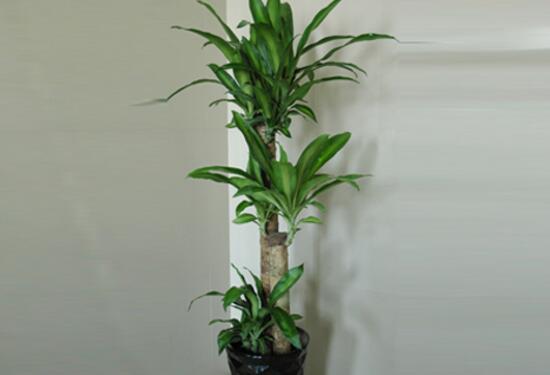
When it comes to propagating the Brazilian iron tree, there are generally three methods: cuttings, layering and sowing. Among them, cuttings means selecting a trunk or branch from the Brazilian iron tree as a cutting and inserting it into soil; layering is complicated to carry out and has a low survival rate, so it is not considered; as for sowing, because it is difficult to obtain mature seeds after the Brazilian iron tree blooms, it is also not commonly used. Next, I will introduce Brazilian iron tree cutting propagation in detail.
II. Brazilian iron tree cutting propagation
If you want to know how to propagate the Brazilian iron tree, as a common foliage plant, the propagation method for the Brazilian iron tree is generally the cutting method. According to my research, Brazilian iron tree cutting propagation can also be divided into two types: trunk cuttings and thin branch cuttings. The specific operations are as follows:
(1) Brazilian iron tree trunk cuttings
1. Cutting selection
For Brazilian iron tree cuttings, the most important step is selecting the cutting. You can select a thick trunk with a diameter of 6-10 cm from a potted Brazilian iron tree as the cutting; of course, trunks over 10 cm are also acceptable, but the trunk must be kept fresh, and the color of the bark should preferably be light yellow.
2. Cutting substrate
According to the growth habits of the Brazilian iron tree, the cutting substrate can be river sand, vermiculite or moss. The substrate depth should be about 30 cm. Remember to disinfect it before cutting, which can prevent pests and diseases in the Brazilian iron tree.
3. Starting the cuttings
After completing the preparations above, Brazilian iron tree cuttings can officially begin: insert the cutting into the prepared substrate to a depth of about 10-25 cm. Of course, the depth is mainly related to stability. If the cutting height reaches more than 1 m, for stability of the cutting, other methods can be used to secure it.
4. Care after cutting
Because the Brazilian iron tree likes a moist environment, after cutting is completed, water it promptly to keep the soil moist. At the same time, the cutting pot should avoid sunlight around midday, and in about one month new buds can be seen emerging. When the new buds grow to 5 cm to 10 cm high, they can be planted in place, and afterward they can be cared for according to the Brazilian iron tree cultivation method.
(2) Brazilian iron tree thin branch cuttings
In addition to trunk cuttings, the cuttings for Brazilian iron tree propagation can also use healthy, pest-free thin branches. When cutting, you can choose horizontal insertion or vertical insertion, keep the room temperature at 25-30°C, and in about one month new roots can grow. Note that before cutting, various soils, containers and tools should also be disinfected.
Overall, for propagating the Brazilian iron tree, the most suitable method for home propagation is cuttings. If one pot of Brazilian iron tree is a bit monotonous, you might as well try cuttings yourself. This not only increases the fun of growing plants, but once the cuttings survive, the sense of success is also very satisfying. That is all for the Brazilian iron tree propagation methods. I hope it can help everyone.
What are the cultivation methods and precautions for the Brazilian iron tree?
Content summary: The Brazilian iron tree, recorded under the Agavaceae family, is mostly used for landscaping, and the plant is usually maintained mainly as a potted plant. It is also known as the fragrant dracaena, dragon tree, striped dracaena, etc. This article introduces the cultivation methods and precautions for the Brazilian iron tree.
[Cultivation methods for the Brazilian iron tree]
Propagation method
The Brazilian iron tree plant has relatively poor viability, and the propagation method can directly focus on cuttings, with the best time being May-June.
In early spring, you can cut off the robust stems of a mature iron tree that is sprouting, with a length of about 5-10 cm. At the same time, prepare a sand bed, and insert the cut stems vertically or flatly into it.
During propagation, ensure the indoor temperature is above 25°C and below 30°C. You can directly choose greenhouse cultivation, which makes it convenient to control temperature, humidity, etc. After about one month, the plant will take root. At this time, the plant can be directly potted for maintenance.
Second, you can also directly choose the water culture method: insert the cut stem directly into clean water, and coat the upper end with oil wax to achieve moisture retention, while the lower end's water-immersed part should be about 3 cm. Keep the indoor temperature above 25°C, and after about one month it can be transplanted into a pot.
Cultivation method
① Pot selection: The growth of the Brazilian iron tree is considered as a large plant, but because the plant mainly grows upward, you can choose a round flower pot, with no excessive requirements for material, color, etc.;
② Adding soil: For the Brazilian iron tree's soil selection, sandy soil is mainly used. Second, you can also add a measured mix of leaf mold and nutrient soil, or directly mix the potting soil of an adult Brazilian iron tree with fresh soil, which is more conducive to improving the survival rate;
③ Potting: Hold the root and stem part of the Brazilian iron tree with one hand, pause at about 3 cm from the bottom of the pot, and at the same time sprinkle in the prepared soil. After the soil covers the bottom of the pot, take your hand out, continue adding soil until the root area of the plant is covered, and then press the loose sandy soil firmly with both hands.
④ Watering: After successful potting and transplantation, water thoroughly to settle the roots, and at the same time spray with liquid nitrogen fertilizer, and move it to a sunny place. It is mostly maintained outdoors.
[Precautions for growing the Brazilian iron tree]
Temperature and light
The optimal temperature for the growth of the Brazilian iron tree is 20-30°C. When the temperature is below 13°C, the plant enters dormancy. When it is below 5°C, the plant will suffer frost damage. Yellow-brown spots will first grow at the leaf tips, and in severe cases, the roots will directly rot.
When the temperature is too low, you can wrap the top of the plant in a plastic bag to achieve temperature control, but when the daytime temperature recovers, the plastic bag should be removed promptly to facilitate light absorption. When the temperature exceeds 40°C, shading treatment is needed to avoid sunburn.
Placement location
For the placement of the Brazilian iron tree, the southeast direction is best, which can ensure the plant fully enjoys light throughout the four seasons. Once late October arrives, the plant needs to be moved indoors to avoid early frost.
Fertilizer and water management
The Brazilian iron tree is a fertilizer-loving plant and does not need professional nutrient solution for maintenance. You only need to find fertilizer for the plant. It can be fertilized once a month, and watering should be done once every 3-5 days. When the summer climate is hot, spray clean water on the leaves every day to cool it down and provide shade.
Illustrated guide to Brazilian wood propagation methods_Complete collection of Brazilian wood pictures
Brazilian wood is a very popular large indoor potted flowering and foliage plant. It is often grown by people in living rooms, studies, bedrooms and other living spaces, giving an elegant style, along with a somewhat rustic feeling, and also a touch of southern tropical charm. The plant shape of Brazilian wood is very graceful and very neatly arranged, and it is a very famous indoor foliage plant in the world. How much do we know about Brazilian wood? Below let's learn about the illustrated guide to Brazilian wood propagation methods, as well as a complete collection of Brazilian wood pictures.
[Complete collection of Brazilian wood pictures—Introduction]
Brazilian wood is also called the Brazilian iron tree, fragrant dracaena, Brazilian millennium tree, etc. It is an evergreen arbor plant of the Liliaceae family. The height of Brazilian wood is generally above 6 m, and the height of potted plants is generally 50-60 cm. It can branch during growth. Its leaf clusters grow at the top of the stem, with a length usually of 40-90 cm and a width of 6 cm-10 cm, curved in a bow shape. The leaf color is bright green and very glossy. It blooms, but the flowers are very small and have a faint fragrance. It is a very famous foliage plant. Brazilian wood is native to western Africa, and is also distributed in Yunnan, Hainan, Guangxi in China, Thailand, Indonesia, the Americas and other countries. The Brazilian wood plant is very graceful and very neatly arranged, and has a certain shade tolerance.
[Complete collection of Brazilian wood pictures—Growth habits]
Brazilian wood likes to grow in a high-temperature and high-humidity environment. It has a very strong adaptability to light and likes to grow in an environment with sufficient sunlight and slight shade. In spring, autumn and winter, it can carry out more photosynthesis, and in summer it should be placed in a shaded and ventilated place for cultivation; shading is more conducive to the growth of Brazilian wood. Brazilian wood has very strong vitality. As long as it is given enough sunlight, air and a little moisture, it can survive relying on its own potential energy, and it also grows very luxuriantly. Brazilian wood is drought-tolerant but not waterlogging-tolerant, and sufficient water should be given during the growing period. Brazilian wood is afraid of cold and freezing. In winter, it should be placed in an environment with sufficient sunlight. In winter, its most suitable temperature is 5-10°C. Do not let it go below this temperature, otherwise it will affect its growth and reduce its ornamental value.
[Complete collection of Brazilian wood pictures—Illustrated guide to Brazilian wood propagation methods]
Brazilian wood propagation methods can use the cutting method and the water culture method. It is best to use these two methods from May to August. You can use a wooden bucket or a slightly larger flower pot, then fill it with prepared coarse sand or vermiculite to make a very simple cutting bed, and then insert one third of the Brazilian wood cutting into it. During propagation, it needs to be sprayed with water frequently to maintain the humidity of the Brazilian wood cutting bed. Its temperature should generally be kept at 21-24°C, which is more conducive to the Brazilian wood cutting taking root and sprouting. The top part of the Brazilian wood leaf takes root relatively quickly, generally taking root in about one month.
If the stem section grows roots relatively slowly, it takes 2-3 months. When it is found that there is a mother plant on the stem, it can be cut off, which is conducive to the emergence of buds or new branches. When the height of the new buds is above 15 cm, they can be cut off for cuttings. After rooting, they can be potted after 2-3 weeks. Then corresponding management of the potted Brazilian wood is needed, which is more conducive to luxuriant plant growth.
Summary: Brazilian wood is a foliage plant very favored by people, and it is very easy to grow, so it does not require us to spend too much time. During cultivation, we only need to carry out some simple maintenance. The above is the illustrated guide to Brazilian wood propagation methods introduced by the editor, as well as a simple appreciation of the complete collection of Brazilian wood pictures. I hope the editor's introduction will be of greater help to everyone when growing Brazilian wood. If you still want to learn about Brazilian wood care methods, please check on the editor's website. The methods and steps are very detailed. Thank you everyone for reading.
More related information: The effects of Alocasia macrorrhizos The cultivation method of Hibiscus rosa-sinensis Is Mimosa pudica toxic Datura pictures Cymbidium pictures