How to propagate Lilium longiflorum (Easter lily)? Three methods: sowing, bulb division, and scale propagation
Lilium longiflorum (Easter lily) is a flowering plant with high ornamental value, and many people grow it in various regions of China. As more and more people grow it, questions about its propagation have drawn attention. How to propagate Lilium longiflorum? What are the propagation methods for Lilium longiflorum? Let's take a look below.
1. How to propagate Lilium longiflorum: sowing / bulb division / scales
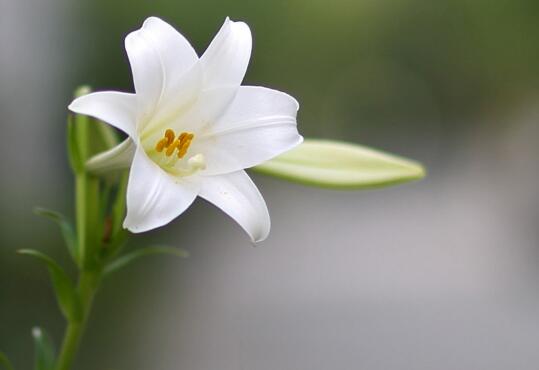
When it comes to how to propagate Lilium longiflorum, the methods can mainly be divided into sowing propagation, bulb division propagation, and scale propagation. Among these, sowing propagation is the more commonly used method, but although the other two are used relatively less, as long as they are done properly, the survival rate is just as high. Detailed explanations of the three propagation methods are given below. Let's take a look.
2. Propagation methods for Lilium longiflorum
1. Substrate selection: well-drained
First, no matter which propagation method we use, we need to select a substrate. Generally, it is best to choose loose, fertile, slightly acidic humus soil as the substrate. This kind of soil has good drainage and is rich in nutrients, allowing the plant to grow more vigorously. It is best not to choose calcareous or alkaline soil, as it will grow poorly in such soil.
2. Substrate disinfection: sun exposure or stirring and heating
After choosing the substrate for Lilium longiflorum, we also need to disinfect it to prevent pests and diseases in it from infecting the plant. When disinfecting, we can break it up and spread it flat in the sun for exposure, or put it in a pot and turn on high heat to stir and heat it. This way, even if there are pests and diseases in it, they will be killed by the high temperature.
Sowing propagation
Seed pre-germination: After disinfecting the substrate, we also need to pre-germinate the seeds. We can soak the seeds of Lilium longiflorum in warm water for 12-24 hours. When the seeds begin to absorb water and swell, take them out and sow them. This allows the seeds to germinate more quickly.
Sowing method: Before sowing propagation of Lilium longiflorum, first apply an appropriate amount of base fertilizer in the potting soil, then evenly scatter the seeds on the soil surface. After scattering, cover with 1-2 cm of soil and then water. When watering, it is best not to water directly with a watering can, because the seeds of Lilium longiflorum are small and are easily washed away this way. When watering, we can place the flowerpot in water and let the water slowly soak up from below.
Bulb division propagation
During the growth of the bulbs of Lilium longiflorum, new bulbs gradually form on the stem axis. Generally, after one year of cultivation, each bulb can produce 1-3 or more small bulbs. We can harvest the small bulbs in autumn, store them in sand until the following spring for planting, or plant them in deep soil in the same autumn.
Scale propagation
When carrying out scale propagation of Lilium longiflorum, first dry mature and robust bulbs in the shade, peel off the scales from the base, and then carry out cuttings in April. The insertion depth should be such that the tip is slightly exposed. Generally, after 2-4 months of spring cuttings, most scales will take root and produce leaves, and small bulbs will grow from the base of the scales. At this point, they can be transplanted. Propagation by scales until flowering generally requires 3-4 years of cultivation.
Cultivation methods for Lilium longiflorum: How does Lilium longiflorum propagate?
In Europe and America, Lilium longiflorum is mainly used as cut flowers and as potted flowers for Easter, and has almost become an indispensable flower for Easter. Therefore, it is widely cultivated in various European and American countries, and the cultivation level is also very high. Its plant form is upright, the flower color is pure white, and the shape is graceful, giving people a sense of whiteness and elegance, and also implying the auspicious meaning of a harmonious union lasting a hundred years. Therefore, it is a cut flower with great development prospects.
Lilium longiflorum is elegant and refined, with a refreshing fragrance. It is an important cut flower and can be used to arrange flower beds, flower borders, garden ornaments, or for potted viewing.
Lilium longiflorum likes warmth and is not cold-resistant. It requires strong light conditions; if the light is weak, flowering will be reduced. It prefers slightly acidic, humus-rich, well-drained clay soil, and grows poorly in dry calcareous soil. Lilium longiflorum is an autumn-planted bulbous plant. After autumn planting, it first takes root, then sprouts new shoots but does not emerge from the soil. In early spring of the following year, it breaks through the soil and emerges. After emergence, flower bud differentiation begins, and at this time about one month of low temperature is needed.
Morphological characteristics of Lilium longiflorum
Stem
The bulb of Lilium longiflorum is spherical or nearly spherical, 2.5-5 cm high; the scales are white. The stem is 45-90 cm high, green, with the base being pale red.
Leaves
The leaves of Lilium longiflorum are scattered, lanceolate or oblong-lanceolate, 8-15 cm long and 1-1.8 cm wide, with acuminate tips, entire margins, and hairless on both sides.
Flowers
The flowers of Lilium longiflorum are solitary or 2-3 in number; the pedicel is 3 cm long; the bracts are lanceolate to ovate-lanceolate, about 8 cm long and 1-1.4 cm wide; the flower is trumpet-shaped, white, with a slightly greenish tint outside the tube, up to 19 cm long; the upper part of the outer tepals is 2.5-4 cm wide; the inner tepals are slightly wider than the outer ones, and there are nopapillae on both sides of the nectary. The filaments are 15 cm long, hairless; the ovary is cylindrical, 4 cm long, and the stigma is 3-lobed.
Fruit
The capsule of Lilium longiflorum is oblong, 5-7 cm long.
The flowering period of Lilium longiflorum is June-July, and the fruiting period is August-September.
Ecological habits of Lilium longiflorum
Lilium longiflorum likes warmth and is not cold-resistant. It requires strong light conditions; if the light is weak, flowering will be reduced. It prefers slightly acidic, humus-rich, well-drained clay soil, and grows poorly in dry calcareous soil. Lilium longiflorum is an autumn-planted bulbous plant. After autumn planting, it first takes root, then sprouts new shoots but does not emerge from the soil. In early spring of the following year, it breaks through the soil and emerges. After emergence, flower bud differentiation begins, and at this time about one month of low temperature is needed.
In winter and spring, the light inside a double-layer plastic greenhouse is sufficient for the plant to grow normally and robustly. If the light is too weak, the plant grows weakly, thereby affecting flower bud differentiation. The length of daylight has a great influence on plant growth and flowering. Lilium longiflorum is a long-day plant, but it can also flower under short-day conditions. Under long-day conditions it flowers quickly; for example, an 18-hour long-day treatment causes flowering 38 days earlier than an 8-hour short-day treatment. However, under long-day conditions, the plant produces fewer leaves. During winter cultivation, in order to promote flowering, treating with low-intensity light at night for 4 hours (from 20:00 to 0:00) is much more effective than extending light in the evening for 6-8 hours. When bulbs are treated with long days, the effect is the same as low-temperature treatment, but both easily cause degeneration under temperature conditions above 20°C. During the growth period, the soil must be kept moist. If water is insufficient during the peak period of flower development, it easily leads to shortened internodes and affects cut flower yield. Flowering regulation of Lilium longiflorum mainly uses heated cultivation in glass greenhouses, or in warm regions uses plastic greenhouses with heating or unheated cultivation.
Lilium longiflorum requires humus-rich, well-drained, slightly acidic soil, and grows poorly in calcareous and alkaline soil. It prefers a cool and humid summer climate. At 5°C, plant growth is stagnant; above 10°C, the plant can grow normally; when it exceeds 25°C, growth stagnates again, and flower bud differentiation of the plant is severely affected, resulting in blind flowers. 15°C-20°C is most suitable for flower bud differentiation and flowering. For bulbs that have already undergone low-temperature vernalization, the higher the temperature, the earlier the flower bud differentiation, but the number of leaves and flowers is smaller and the stem is shorter; while cultivation at low temperature can cause disadvantages such as shortened internodes and delayed flowering. Therefore, 10°C-20°C is the suitable cultivation temperature. Lilium longiflorum has a certain shade tolerance, and cultivation in an open woodland environment is best.
Cultivation methods for Lilium longiflorum
Soil
Well-drained and water-retentive clay soil is best; light clay and loess are also acceptable. Use nitrogen, phosphorus, and potassium as base fertilizers. Determine the amount of fertilizer according to variety and soil; generally apply 0.4 kg-0.8 kg per 100 sq m. The soil pH is about 6.5.
Planting
It is best to plant when the bulb sprouts reach 3 cm-6 cm. When they reach more than 7 cm, the stem above ground is thin, and the roots are exposed and prone to lodging. After planting, provide shade and water thoroughly; after 4-5 days the sprouts grow out, continue covering, but keep ventilation good.
Sunlight
Except from November to February of the following year, shade 25%-30% of sunlight during the rest of the time. However, during short-day periods, supplemental lighting is needed.
Watering
If it is too dry, stem growth is weak; if there is too much water, plus poor ventilation and insufficient sunlight, the stems and leaves become weak and slender. Watering should be done on sunny mornings, and the pathways should also be sprinkled with water to increase indoor humidity.
Propagation methods of Lilium longiflorum
Bulb division propagation
During the growth process of the bulb (mother bulb), new bulbs gradually form on the stem axis. Generally, after one year of cultivation, each bulb can produce 1-3 or more small bulbs. The small bulbs can be harvested in autumn, stored in sand until the following spring for planting, or planted in deep soil in the same autumn.
Scale propagation
Dry mature and robust bulbs in the shade, peel off the scales from the base, and carry out cuttings in April. The insertion depth should be such that the tip is slightly exposed. Generally, after 2-4 months of spring cuttings, most scales will take root and produce leaves, and small bulbs will grow from the base of the scales. At this point, they can be transplanted. Propagation by scales until flowering generally requires 3-4 years of cultivation.
Sowing propagation
After the capsule matures, take out the seeds and sow them immediately. Seedlings can flower after 2-3 years.
After reading the above introduction to the cultivation and propagation methods of Lilium longiflorum, do you have a better understanding of its cultivation and propagation? If you want to know more about Lilium longiflorum, please keep following.
How does Lilium longiflorum propagate? Introduction to propagation methods and cultivation methods
Lilium longiflorum is elegant and refined, with a refreshing fragrance. It is an important cut flower and can be used to arrange flower beds, flower borders, garden ornaments, or for potted viewing. So do you know how Lilium longiflorum propagates? Below, I will bring you an introduction to the propagation methods and cultivation methods of Lilium longiflorum. Let's take a look.
Introduction to Lilium longiflorum
In Europe and America, Lilium longiflorum is mainly used as cut flowers and as potted flowers for Easter, and has almost become an indispensable flower for Easter. Therefore, it is widely cultivated in various European and American countries, and the cultivation level is also very high. Its plant form is upright, the flower color is pure white, and the shape is graceful, giving people a sense of whiteness and elegance, and also implying the auspicious meaning of a harmonious union lasting a hundred years. Therefore, it is a cut flower with great development prospects.
Lilium longiflorum is elegant and refined, with a refreshing fragrance. It is an important cut flower and can be used to arrange flower beds, flower borders, garden ornaments, or for potted viewing.
Lilium longiflorum likes warmth and is not cold-resistant. It requires strong light conditions; if the light is weak, flowering will be reduced. It prefers slightly acidic, humus-rich, well-drained clay soil, and grows poorly in dry calcareous soil. Lilium longiflorum is an autumn-planted bulbous plant. After autumn planting, it first takes root, then sprouts new shoots but does not emerge from the soil. In early spring of the following year, it breaks through the soil and emerges. After emergence, flower bud differentiation begins, and at this time about one month of low temperature is needed.
Propagation methods of Lilium longiflorum
1. Bulb division propagation
During the growth process of the bulb (mother bulb), new bulbs gradually form on the stem axis. Generally, after one year of cultivation, each bulb can produce 1-3 or more small bulbs. The small bulbs can be harvested in autumn, stored in sand until the following spring for planting, or planted in deep soil in the same autumn.
2. Scale propagation
Dry mature and robust bulbs in the shade, peel off the scales from the base, and carry out cuttings in April. The insertion depth should be such that the tip is slightly exposed. Generally, after 2-4 months of spring cuttings, most scales will take root and produce leaves, and small bulbs will grow from the base of the scales. At this point, they can be transplanted. Propagation by scales until flowering generally requires 3-4 years of cultivation.
3. Sowing propagation
After the capsule matures, take out the seeds and sow them immediately. Seedlings can flower after 2-3 years.
Cultivation methods for Lilium longiflorum
1. Soil
Well-drained and water-retentive clay soil is best; light clay and loess are also acceptable. Use nitrogen, phosphorus, and potassium as base fertilizers. Determine the amount of fertilizer according to variety and soil; generally apply 0.4 kg-0.8 kg per 100 sq m. The soil pH is about 6.5.
2. Planting
It is best to plant when the bulb sprouts reach 3 cm-6 cm. When they reach more than 7 cm, the stem above ground is thin, and the roots are exposed and prone to lodging. After planting, provide shade and water thoroughly; after 4-5 days the sprouts grow out, continue covering, but keep ventilation good.
3. Sunlight
Except from November to February of the following year, shade 25%-30% of sunlight during the rest of the time. However, during short-day periods, supplemental lighting is needed.
4. Watering
If it is too dry, stem growth is weak; if there is too much water, plus poor ventilation and insufficient sunlight, the stems and leaves become weak and slender. Watering should be done on sunny mornings, and the pathways should also be sprinkled with water to increase indoor humidity.
Disease control of Lilium longiflorum
1. The main physiological diseases during the cultivation of Lilium longiflorum include blind flowers and flower splitting. Their causes and prevention measures are as follows:
(1) Blind flowers: the normal development of the affected flower buds is blocked, and the buds wither and dry up. In most cases, this is due to close planting and insufficient indoor light, or short sunshine hours, and other reasons. In particular, low temperatures below 5°C, a sharp drop in air temperature, a large temperature difference between day and night, and soil that is too dry or too warm. To prevent the occurrence of blind flowers, we must try to avoid the above situations.
(2) Flower splitting is mainly manifested as petals separating and splitting, and mostly occurs when the temperature changes abruptly and when dry and wet conditions differ greatly. To prevent flower splitting, try to avoid sharp rises and drops in temperature, and pay attention to timely and appropriate watering.
2. Soft rot mainly harms leaves, flowers, and bulbs. When petals are affected, oval lesions appear; when leaves are affected, oval, light yellow lesions with slightly sunken dark brown edges appear; in rainy weather, small black spots appear on stems and leaves, and finally all leaves fall off, causing plant death. Control method: When a small number of affected plants are found, immediately cut them off or pull them out, and burn or bury them deeply. In addition, pay attention to ventilation and light transmission to increase the plant's disease resistance.
3. Rot disease and leaf spot disease are caused by pathogens invading the bulb and leaves. Control method: If disease occurs, spray once every 10-15 days with 50% TuojunTe 600-1000 times solution or 40% Mieshingdan 500 times solution. The main preventive measure is not to carry out continuous cropping on the plot where Lilium longiflorum is planted.
4. Rhizoglyphus mites: adult mites are milky white and pear-shaped. These mites harm bulbs underground, generally first damaging the base of the bulb and gradually spreading upward. The affected parts turn black and rot, and in severe cases cause the death of the whole plant. Control method: Pay attention to ventilation and dryness during bulb storage. For affected bulbs, after harvest and before storage, soak them in 40% dicofol 1000 times solution for 2 minutes, which can have a control effect.
5. White grubs often bite off the roots of Lilium longiflorum, causing the plant to wilt and even die. Control method: Use black light lamps to trap and kill adults, or pour 50% phoxim emulsion 1000 times solution at the flower roots to kill them.