How to propagate African violets? Of the two propagation methods, leaf cuttings have the highest survival rate
The African violet is a beautiful ornamental flower with many varieties and rich, vivid colors. Grown as a potted plant indoors, it purifies the air and beautifies the home. With a plant like this, the more the better, of course, and that requires us to master the propagation methods of the African violet. So how do you propagate an African violet? Today the editor will give you a detailed introduction.
I. How to propagate African violets: leaf cuttings / sowing
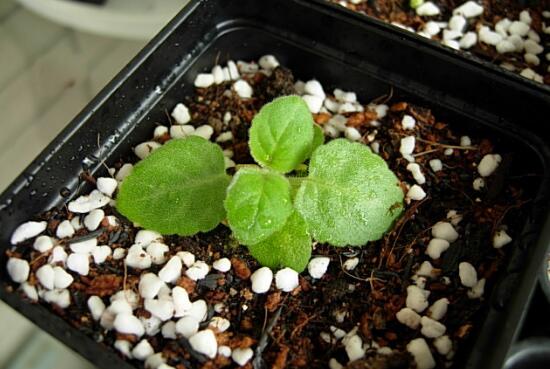
When it comes to propagating African violets, there are two common methods: leaf cuttings and sowing. Leaf cuttings are the most practical: you use an African violet leaf as the cutting, insert it into a growing medium, and once it roots, move it into a pot. Sowing means scattering African violet seeds onto the soil and moving the seedlings once they sprout. Sounds easy, right? Next, let's look at the specific steps.
II. The two propagation methods for African violets
(1) African violet leaf-cutting propagation method
1. Cutting time
Leaf cuttings are the most commonly used method for propagating African violets indoors. Choose the right time and handle it properly, and the survival rate is extremely high. As for when to take African violet cuttings, it is best to do it in spring or autumn, because in an environment of 18-24°C the rooting rate is higher.
2. Choosing the cutting
When taking African violet cuttings, the most important thing is naturally choosing the cutting. Choose it well and the whole propagation is basically half successful. As for how to choose the cutting, you can wait until the African violet's flowering period is over, then pick a healthy, plump leaf and cut it off 2 cm from the potting soil to use as the cutting.
3. Cutting medium
Because this is a leaf cutting of an African violet, it has no roots and cannot absorb water, so its cutting medium should not contain too much moisture. It is best to use a medium with good aeration, such as perlite and vermiculite.
4. Cutting care
Let the cutting dry slightly, then insert it into the prepared medium, and afterward spray water to maintain relatively high air humidity. Generally, it will root 3 weeks after insertion, and in 2-3 months it will produce young plants. At that point, move them into 6 cm pots and care for them according to African violet growing methods.
(2) African violet sowing propagation method
Besides cuttings, African violets can also be propagated by sowing. The African violet's fruit ripens in October, and that is when you can collect the seeds. Sowing them right after collection gives a higher germination rate, so African violets should be sown in October. Specific steps: scatter the African violet seeds onto the potting soil; after sowing, do not cover with soil, just press flat. They generally germinate in 15-20 days, and after 2-3 months you can move the seedlings.
Overall, whether by leaf cuttings or sowing, African violets can survive, but the method most suited to indoor propagation is still leaf cuttings. Of course, methods are fixed but people are flexible, so you can choose a method to propagate according to your actual situation. That is all the editor has to share about African violet propagation methods, and I hope it helps you.
What propagation methods are there for African violets
Sowing propagation of African violets
Sowing time: either spring or autumn will do; for greenhouse cultivation, autumn sowing in September-October gives a higher germination rate.
Soil: African violet seeds are very small, so the potting soil for sowing should also be fine. After sowing, there is no need to cover with soil, just press flat.
Temperature: the suitable growing temperature for African violets is about 18-26°C, and they germinate about 15-20 days after sowing.
Humidity: during the seedling stage, it should not be too dry or too wet; it is best to keep the potting soil constantly moist.
Cutting propagation of African violets: mainly leaf cuttings.
1. After flowering, choose healthy leaves, cut them off leaving a 2 cm long petiole, let them sit for a few minutes, and once the cut surface is fully dried, insert them into a sand bed.
2. They root 3 weeks after insertion, and in 2-3 months will produce young plants; move them into 6 cm pots.
3. During the cutting process, you can water with a liquid in which vitamin B has been dissolved to promote rooting.
PS: African violets generally need 4-6 months from cutting to flowering, but if you use offshoot cuttings, the results are also good and it does not take long.
When propagating African violets by cuttings, cuttings taken in June or July generally bloom in October-November, and cuttings taken in September or October bloom in March-April of the following year.
Tissue culture propagation of African violets
1. Take healthy African violet leaves and use MS medium plus 1 mg/L 6-benzylaminopurine and 1 mg/L naphthaleneacetic acid.
2. Four weeks after inoculation, adventitious buds grow out, and after 3 months the rooted plantlets can be transplanted.
3. Transplanting them into a substrate of half leaf mold and half peat moss gives a higher survival rate.
Key cultivation points for African violets:
1. Repotting: when seedlings have 3-4 leaves, transplant them into 6 cm pots; when they have 7-8 leaves, plant them permanently in 10 cm pots.
2. Watering: in spring, autumn and winter, when temperatures are low, water less; in summer, when it is hot and dry, water more.
3. Light: African violets are semi-shade plants, and about 8 hours of light per day is suitable. Do not leave them in direct sun in summer.
4. Fertilizing: during the growing period, fertilize once every half month; during the flowering period, add phosphorus and potassium fertilizer 2 times.
A complete guide to the main African violet varieties and African violet care methods
Flower and Bonsai Network introduction: Today the Flower and Bonsai Network editor shares with you an article about the main African violet varieties and African violet care methods. Let's take a look.
The African violet, also known as the African violet (Saintpaulia), involves nearly 2000 horticultural cultivars. Common varieties include large-flowered, single, semi-double, double and variegated-leaf types, and the flower colors include purple-red, white, blue, pink and bicolor.
African violet, Latin scientific name: (Saintpaulia ionantha Wendl), also known as African violet, is a perennial herbaceous plant.
Stemless, the whole plant covered with hairs. Leaves ovate, petioles thick and fleshy. Flowers one or several together, light purple. There are many cultivars, including large-flowered, single, semi-double, double and variegated-leaf types, and the flower colors include purple-red, white, blue, pink and bicolor.
Classification of African violets
Divided by growth form, African violets can be classified as rosette type and trailing type.
Rosette type
Rosette-type African violets have a single, relatively short main stem, very short internodes, and leaves that grow in a spiral from the central growing point, unfolding layer upon layer. According to differences in plant size, they can further be divided into giant, standard, semi-miniature, miniature and super-miniature types.
Trailing type
Trailing-type African violets have a longer main stem than the rosette type, longer internodes, and longer petioles, and more growing points develop in the leaf axils. The leaves grow and unfold in a spiral around the growing points, continuously spreading sideways and extending downward to form a trailing appearance.
Common African violet varieties
Common African violet varieties include large-flowered, single, semi-double, double and variegated-leaf types, and the flower colors include purple-red, white, blue, pink and bicolor. Common cultivars include the single-flowered Snow Prince
Pink Miracle, Pink Miracle (PinkMiracle), flowers pink, with rose-red edges.
Ruffled Queen, Ruffled Queen (RuffledQueen), flowers purple-red, with ruffled edges.
Pocone
Pocone (Pocone), a large-flowered type, flower diameter 5 cm, flowers light purple-red.
Diana
Diana (Diana), flowers dark blue.
Fuchsia Red (FuchsiaRed), flowers purple-red.
Fuchsia Red
The double-flowered cultivar Corinne (Corinne), flowers white.
Blue Peak
Blue Peak (BluePeak), flowers blue, with white edges.
Blue Caprice
Blue Caprice (BlueCaprice), flowers light blue.
Blushing Bride
Blushing Bride (BlushingBride), flowers pink.
Blue Boy in the Snow
Blue Boy in the Snow (BlueBoyintheSnow), flowers blue, leaves with white striped patches.
The large-flowered cultivar Pocone, flowers light purple-red.
The single-flowered cultivar Snow Prince, flowers white.
The semi-double cultivar Fuchsia Red, flowers purple-red.
The double cultivar Corinne, flowers white.
Blue Boy in the Snow, flowers light purple, leaves with white striped patches.
The foliage cultivar Ruffled Queen, flowers blue with ruffled edges, leaf surface with yellow-white markings.
Blushing Bride, flowers pink.
Ornamental species in the same genus as African violets
Ornamental species in the same genus as African violets include the white-flowered African violet and the large-flowered African violet.
White-flowered African violet
Large-flowered African violet
Common cultivated varieties of African violets
Frosted Fruit
Midnight
Rainbow Tail
Bright Sky
Varieties of African violets
Varieties of the African violet include the large-flowered type, white-flowered type and variegated-leaf type.
Large-flowered type: flowers relatively large.
White-flowered type: flowers pure white.
Variegated-leaf type: leaf edges with yellow-white markings.
African violet care methods
Cultivation techniques
Propagation methods
Commonly propagated by sowing, cuttings and tissue culture.
Sowing propagation: can be done in spring or autumn. For greenhouse cultivation, autumn sowing in September-October is better, with a high germination rate, robust seedling growth, and large plants with many flowers the following spring. Sowing in February gives flowers in August, but with slightly weaker growth and fewer flowers. African violet seeds are tiny, so the sowing soil should be fine; after sowing, do not cover with soil, just press flat. The suitable germination temperature is 18-24°C; they germinate 15-20 days after sowing, and seedlings are moved after 2-3 months. During the seedling stage, be careful not to let the potting soil get too wet. Generally, it takes 6-8 months from sowing to flowering. Cutting propagation: mainly leaf cuttings. After flowering, choose robust, plump leaves, cut them off leaving a 2 cm long petiole, let them dry slightly, insert them into a sand bed, and maintain relatively high air humidity at a room temperature of 18-24°C. They root 3 weeks after insertion, and in 2-3 months will produce young plants; move them into 6 cm pots. During the cutting process, treating with vitamin B benefits rooting and subsequent seedling growth of African violets, and treating the petioles with 25 mg/L kinetin for 24 hours favors the formation of adventitious buds. It takes 4-6 months from cutting to flowering. If large offshoots are used for cuttings, the results are also good; generally, cuttings taken in June-July bloom in October-November, and if taken in September-October, they bloom in March-April of the following year.
Tissue culture propagation: African violets are quite commonly propagated by tissue culture. Leaf blades, petioles and epidermal tissue are used as explants. Use MS medium plus 1 mg/L 6-benzylaminopurine and 1 mg/L naphthaleneacetic acid. Four weeks after inoculation, adventitious buds grow out, and after 3 months the rooted plantlets can be planted. Plantlets transplanted into a substrate of half leaf mold and half peat moss have a 100% survival rate. The United States, the Netherlands, Israel and other countries all have tube seedling production of African violets.
Cultivation techniques
The ideal growing medium must have good aeration, retain water and nutrients, have a pH suitable for plant growth, and have good cation exchange capacity.
African violets have different requirements for the physical and chemical properties of the medium at different growth stages. For example: vegetative growth stage - moisture-retaining medium (that is, peat moss) can make up 50-60%; cutting propagation stage - at this stage there is no root tissue and no ability to absorb water, so the medium should not contain too much moisture; therefore a medium with good aeration is mainly used, and perlite and vermiculite can make up 60-80%.
Position
Do not place it where the sun reaches; it can grow as long as there is scattered light indoors. The African violet is a very shade-tolerant indoor plant and is actually not suited to outdoor planting. The best position is by a windowsill.
Soil
Loose, well-drained soil is best; you can use peat moss mixed with vermiculite and perlite as the medium.
Sunlight
It can grow in any bright indoor spot, and a windowsill's sunlight is just right. If placed on a desk, you can add a plant light to supplement the light, which can extend the flowering period and keep it blooming continuously.
Temperature
The suitable growing temperature is 15-25°C. In summer, pay attention to ventilation. If placed in an office, because of air conditioning the temperature will not be too high or too low, so it should grow well, but be sure to pay attention to replenishing water.
Fertilizer
It needs relatively more fertilizer; it is best to add liquid fertilizer about once every 10-20 days, fertilizing little but often. When entering the flowering period, supplement with phosphorus and potassium fertilizer; if there is too much nitrogen fertilizer, it will instead promote lush leaves without flowering.
Care
Most African violets bought from flower markets are 3-4 inch finished potted flowers, and they are already flowering or have buds. After bringing them home, you can place them by a windowsill or in a spot with scattered light. For watering, replenish according to how dry the soil is; if there is a water tray, just replenish the water after it dries. Management is not difficult.
Pest and disease control
Pest and disease control: under high temperature and high humidity conditions, fusarium wilt, powdery mildew and leaf rot are prone to occur. You can spray or pour into the potting soil a 1000-fold dilution of 10% fungicide 401 acetic acid solution. Scale insects and red spider mites often harm African violets during the growing period, and can be killed by spraying with a 1000-fold dilution of 40% omethoate emulsifiable concentrate.
Therefore, to avoid the occurrence of infectious diseases, you should prevent outside diseased plants from infecting existing plants - foreign plants should first be isolated for at least 1 month, and if they do not develop disease, then move them to the cultivation area for planting. Once a diseased plant is found, be sure to isolate it immediately and either spray pesticide or directly discard the diseased plant. At the same time, to prevent pathogen-carrying plants from causing disease again and spreading, it is best to spray pesticide over the whole area; tools, medium and so on that have come into contact with diseased plants must be sterilized or discarded.
[Cultivation methods and care points]
Both flowering and propagation are carried out indoors. The suitable propagation temperature is 18-25°C, and in winter it should be kept at least above 10°C, so it is best managed indoors. It likes sunlight, but direct sunlight should be avoided; it is best to let the potted plant bathe in the soft sunlight coming through a curtain.