What to do when the leaves of the Tabernaemontana divaricata turn yellow? Just control the temperature, apply light fertilizer, replenish water and light.
Tabernaemontana divaricata is a flowering plant with very high ornamental value, and it can be seen in every province and region in southern China. However, no matter how ornamental a plant is, if its leaves turn yellow, it will also affect its overall beauty. So what should be done when the leaves of Tabernaemontana divaricata turn yellow? Below, the editor will walk everyone through it.
1. What to do when the leaves of Tabernaemontana divaricata turn yellow: find the cause
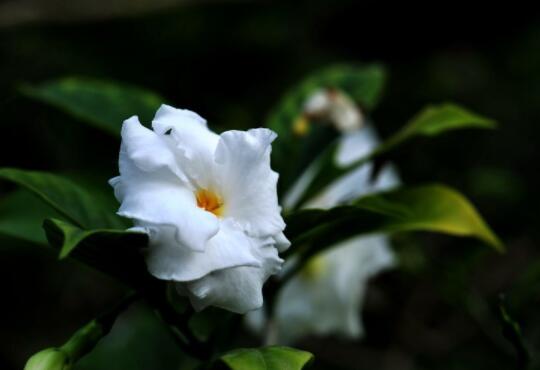
If you want to know what to do when the leaves of Tabernaemontana divaricata turn yellow, first we need to know what causes this phenomenon. Only after knowing the cause can we solve the problem accordingly. Things like insufficient light and improper watering are both causes of this phenomenon. As for exactly how to solve it, there is a detailed introduction below. Let us take a look.
2. Causes of yellowing leaves in Tabernaemontana divaricata (with solutions)
1. Temperature too low
During the growth process of Tabernaemontana divaricata, its requirements for environmental temperature are very high. This plant is relatively intolerant of cold. If we do not do a good job of controlling the temperature during cultivation, causing the environmental temperature to be too low, it is very easy to cause the leaves of Tabernaemontana divaricata to turn yellow. Moreover, if the temperature is too low, it is also easy to freeze and even kill the plant.
Solution: During the growth process of Tabernaemontana divaricata, it is very important to let it grow at a comfortable environmental temperature. Its suitable temperature is above 10°C. If it is below this temperature, the leaves of Tabernaemontana divaricata will turn yellow. If it is below 0°C, the branches will suffer frost damage. Therefore, when cultivating it, we must do a good job of controlling the temperature.
2. Improper fertilizing
Fertilizer is one of the main nutrients during the growth process of Tabernaemontana divaricata. If we apply too little fertilizer or the fertilizer concentration is too high, it will cause the leaves of Tabernaemontana divaricata to turn yellow. If too little fertilizer is applied, it will wither and turn yellow due to insufficient nutrients. If the fertilizer concentration is too high, it will burn the plant and cause yellowing.
Solution: During the growth process of Tabernaemontana divaricata, its demand for fertilizer is very high. Especially after entering the growth period, its demand for water is very high. Basically, it needs to be fertilized once every 7-10 days, so that its leaves can grow large. However, when fertilizing, the fertilizer concentration must not be too high. Before application, it must first be diluted with water. If the concentration is too high, it is very easy to burn the plant.
3. Insufficient water
During the process of cultivating Tabernaemontana divaricata, especially after it enters the growth period, its demand for water is very high. Especially in summer, if it is not watered for one day, its leaves will wilt and turn yellow. If there is long-term water shortage, it can also cause the plant to wither and die.
Solution: Tabernaemontana divaricata likes to grow in a warm and humid environment, so during our daily care of it, we should keep the soil moist and not wait until the potting soil is completely dry before watering. In summer, when the weather is relatively hot, we basically need to water every day, and we should also frequently spray water around it to increase air humidity.
4. Insufficient light
Tabernaemontana divaricata is a light-loving plant. If the light is not sufficient enough, its leaves will gradually become dull and lose their green color, thus gradually showing yellowing. Therefore, for it, light is very important.
Solution: If the yellowing leaves of Tabernaemontana divaricata are caused by insufficient light, we had better not immediately move it outdoors for direct sun exposure. Instead, place it in a spot with scattered sunlight for care. After it recovers, let it receive sufficient light.
5. Pests and diseases
During the process of cultivating Tabernaemontana divaricata, if cultivation is improper, problems such as pests and diseases are very likely to appear. Such problems are extremely harmful to the plant. They will not only cause the leaves of Tabernaemontana divaricata to turn yellow, but in severe cases will also cause the plant to wither and die.
Solution: If problems such as pests and diseases appear on Tabernaemontana divaricata, we must deal with them in time. The specific treatment methods have been introduced in detail by the editor in the article on pest and disease control for Tabernaemontana divaricata, so I will not repeat them here.
How to grow Tabernaemontana divaricata: cultivation methods and precautions for Tabernaemontana divaricata / the temperature must not be too low
Tabernaemontana divaricata is a flowering plant in the Apocynaceae family, with very high ornamental value, and it can be seen in many regions of China. However, it is not easy to grow it well, and there are many points that need attention. Regarding how to grow Tabernaemontana divaricata, and what the cultivation methods and precautions are, the editor will walk everyone through it below.
1. How to grow Tabernaemontana divaricata: pay attention to temperature control
If everyone wants to know how to grow Tabernaemontana divaricata, first we need to understand its growth habits. This plant relatively likes a warm and humid environment and is relatively intolerant of cold, so during cultivation we cannot let the temperature be too low. If it grows under a low temperature of 5-6°C for a long time, the plant is very easy to suffer frost damage, so everyone should pay attention to this point.
2. Cultivation methods and precautions for Tabernaemontana divaricata
1. Soil: humus soil
Before cultivating Tabernaemontana divaricata, we first need to choose the soil. This is the step of laying a good foundation and is very important. Generally, it is best to choose loose, fertile, slightly acidic humus soil. This kind of soil is rich in nutrients and has relatively good drainage and air permeability, allowing the plant to grow better.
2. Fertilizing: once every 7-10 days
Fertilizer is one of the main nutrients during the growth process of Tabernaemontana divaricata. Especially after entering its growth period, its demand for fertilizer is very high. Basically, we need to fertilize once every 7-10 days, so that the plant can have enough nutrients to grow vigorously. In terms of fertilizer, we can use diluted compound fertilizer and manure water.
3. Temperature: above 10°C
When caring for Tabernaemontana divaricata, controlling the environmental temperature is also a point that needs attention. Its suitable growth temperature is above 10°C. If it is below this temperature, the leaves of Tabernaemontana divaricata will turn yellow. If it is below 0°C, the branches will suffer frost damage. Therefore, when cultivating it, we must do a good job of controlling the temperature.
4. Water: keep the soil moist
Tabernaemontana divaricata likes to grow in a warm and humid environment, so during our daily care of it, we should keep the soil moist and not wait until the potting soil is completely dry before watering. In summer, when the weather is relatively hot, we basically need to water every day, and we should also frequently spray water around it to increase air humidity.
5. Light: sunlight must be sufficient
Tabernaemontana divaricata relatively likes light, so when cultivating it we should let it maintain sufficient light. Only in this way can it grow better. If the growing environment is too shady, it will cause the plant's leaves to turn yellow and even fall off, so everyone should pay special attention to this point.
6. Pests and diseases: prevent and control in time
During the process of cultivating Tabernaemontana divaricata, if we are not careful enough, it is very easy for pests and diseases to take advantage of the opportunity and invade. Such problems are extremely harmful to the plant, so when we discover them we must prevent and control them in time. For specific methods, everyone can refer to the article on pest and disease control for Tabernaemontana divaricata, which has a detailed introduction.
The flower language of Tabernaemontana divaricata
The flower language of Tabernaemontana divaricata carries the meanings of "pure" and "kind". Although its appearance is ordinary and its name is vulgar and plain, it cannot conceal its inner fragrance. Therefore, we should not judge everything only by appearance. Tabernaemontana divaricata is just such a flower that seems plain and unremarkable, yet it has a fragrant scent and also medicinal value. It is a medicinal flower. The name of Tabernaemontana divaricata is very common, but its flower language is beautiful, and it can be given to the person you love most. It is said that the name of Tabernaemontana divaricata comes from the fact that its leaves can be used as medicine to treat bites from rabid dogs, hence the name.
The petals of Tabernaemontana divaricata have a ring of edging, and that edging looks like a ring of tooth marks left by a dog bite. This is also the origin of its name! Although this name is not so elegant, it is still quite cute. Both its flowers and leaves can be enjoyed, and it gives off a faint floral fragrance, appearing especially elegant. It is a very good ornamental plant!
Many friends worry about whether Tabernaemontana divaricata is poisonous. Let us learn about it together!