What to Do When Podocarpus macrophyllus Leaves Turn Yellow? Adjust Light and Temperature, and Spray to Prevent Pests and Diseases
Everyone is surely familiar with Podocarpus macrophyllus; it is a very beautiful foliage plant, often grown indoors as a bonsai. Its branches and leaves are fresh green and its plant shape is elegant, so when its leaves turn yellow, its ornamental value drops greatly, and it is also bad for healthy growth. So what should you do when Podocarpus macrophyllus leaves turn yellow? Today the editor will solve this problem for you.
I. What to Do When Podocarpus macrophyllus Leaves Turn Yellow
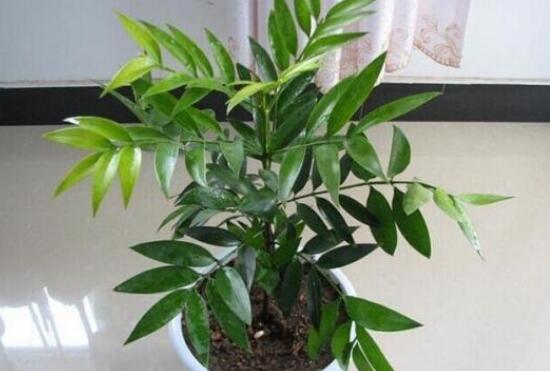
To talk about the causes of yellowing leaves in Podocarpus macrophyllus, there are 6 in total: if it is caused by an unsuitable environment, just grow it in the environment most suitable for its growth; if it is caused by insufficient light, supplement light while avoiding strong light; when water and fertilizer are insufficient, water and fertilize moderately; when the temperature is unsuitable, adjust the temperature in time; if it is pests and diseases, spray with a medicinal solution for prevention and control.
II. Causes of Yellowing Leaves in Podocarpus macrophyllus and Solutions
1. Unsuitable environment
To talk about the causes of yellowing leaves in Podocarpus macrophyllus, the first thing everyone should think of is environmental problems. Nowadays, many of the potted plants of flower lovers are bought online, which easily leads to large regional differences and big environmental changes, and the plant cannot adapt for a while and develops yellow leaves.
Solution: When the leaves of a newly bought potted plant turn yellow, you should provide the environment most suitable for its growth according to the growth habits of Podocarpus macrophyllus, and before long the plant will recover its health.
2. Insufficient light
Podocarpus macrophyllus is very shade-tolerant and suitable for care in semi-shade, but even a shade-tolerant plant still needs light. Once it is in a shaded place for a long time, the leaves of Podocarpus macrophyllus will turn yellow and whitish, and the branches will also become slender and lose all ornamental value.
Solution: If the yellowing leaves of Podocarpus macrophyllus are caused by insufficient light, you only need to supplement light, and it is best to give it 1-2 hours of diffused light every day.
3. Insufficient watering
Podocarpus macrophyllus likes a moist environment. During its growing season, we should water frequently to keep the potting soil moist. Once watering is insufficient, the old leaves of Podocarpus macrophyllus will wither and yellow from the bottom up and fall off.
Solution: Replenish water in time and keep the soil moist. But Podocarpus macrophyllus hates waterlogging, so you must not water too much; it is best to water thoroughly when the surface soil is slightly dry.
4. Insufficient fertilization
Although Podocarpus macrophyllus does not have high fertilizer requirements, timely fertilization can keep the leaf color dark green; if it is not fertilized for a long time, the leaf tips tend to turn yellow.
Solution: If the yellowing leaves of Podocarpus macrophyllus are caused by insufficient fertilization, apply some acidic fertilizer in time, and watering with a liquid fertilizer is best, applying little but often.
5. Unsuitable temperature
① Temperature too high: Podocarpus macrophyllus likes a warm environment and is not tolerant of high temperatures. Once the growth temperature exceeds 35°C, its leaf surface or leaf tips will turn yellow, dry up, or develop spots. Solution: Move Podocarpus macrophyllus to a cool place for care in time, and after it recovers, water it moderately.
② Temperature too low: Podocarpus macrophyllus is not cold-tolerant. When the winter temperature is below 10°C, it enters dormancy. And when the temperature is below 2°C, Podocarpus macrophyllus is prone to frost damage, resulting in yellow leaves. Solution: Move Podocarpus macrophyllus indoors to a warmer place, adjust the temperature to above 10°C, and before long the plant will recover its health.
6. Pests and diseases
When growing Podocarpus macrophyllus indoors, due to poor environment, improper care and other reasons, the plant's leaves are prone to pests and diseases such as red spider mites, scale insects, anthracnose, and leaf spot, all of which cause localized scorched yellowing of the leaves.
Solution: You only need to determine the specific pest or disease, and then spray the corresponding pesticide. As for what pesticide to spray, you can refer to the pest and disease control for Podocarpus macrophyllus.
Overall, the cultivation method of Podocarpus macrophyllus is not difficult, but not difficult does not mean it can be grown casually. To keep its leaves evergreen and not yellowing, you must pay attention to light, water and fertilizer, and temperature. Of course, do not panic when you find yellow leaves; just solve it according to the methods above. That is all the editor has to introduce about yellowing leaves of Podocarpus macrophyllus, hoping it can help everyone.
What to Do When Podocarpus macrophyllus Leaves Turn Yellow
Causes of Yellowing Leaves in Podocarpus macrophyllus and How to Handle Them
Cause one: Podocarpus macrophyllus is short of water for a long time
The specific manifestation is that the leaf tips or edges of Podocarpus macrophyllus wither and dry, while the old leaves wither and yellow from the bottom up and fall off.
Solution: Water in time and keep the soil moist, but avoid waterlogging; it is best to water thoroughly when the surface soil is slightly dry.
Cause two: Insufficient light for Podocarpus macrophyllus
If light is lacking for a long time, the leaves will turn yellow-white, and the branches will be slender and unlikely to bloom.
Solution: After gently rinsing the leaves clean, give the plant as much light as possible within the range from diffused light to relatively good light.
Cause three: Too high a temperature causes yellowing leaves in Podocarpus macrophyllus
When the temperature exceeds 35°C, the leaf surface or leaf tips of Podocarpus macrophyllus will turn yellow, dry up, or develop spots.
Solution: Move Podocarpus macrophyllus to a cool place for care and avoid direct strong light.
Cause four: Low temperature causes yellowing leaves in Podocarpus macrophyllus
When the temperature is about 10°C, Podocarpus macrophyllus enters dormancy, and if the temperature is below 2°C, Podocarpus macrophyllus is very easily frostbitten or frozen to death.
Solution: Move Podocarpus macrophyllus indoors to a warmer place to prevent cold wind from attacking it.
Cause five: Podocarpus macrophyllus is short of fertilizer for a long time
If the water and fertilizer needed by Podocarpus macrophyllus are not met, it is not easy to keep its leaf color dark green, and the leaf tips tend to turn yellow.
Solution: Apply some acidic fertilizer in time, and watering with a liquid fertilizer is best, applying little but often.
Cause six: The occurrence of pests and diseases in Podocarpus macrophyllus
Red spider mites appearing on the leaves of Podocarpus macrophyllus, or anthracnose, leaf spot, and scale insects, will all cause localized scorched yellowing of the leaves.
Solution: For red spider mites, you can spray dicofol, nissorun, etc. to kill them; for scale insects, you can spray chlorpyrifos, methidathion, etc. for control; for anthracnose and leaf spot, you can spray carbendazim, thiophanate-methyl, etc. for control.
What to Do When Podocarpus macrophyllus Leaves Turn Yellow: Teaching You Six Solutions
Podocarpus macrophyllus is a common ornamental plant for us; it belongs to the evergreen trees. So, what should you do when Podocarpus macrophyllus leaves turn yellow? Let's take a look below!
I. What to Do When Podocarpus macrophyllus Leaves Turn Yellow?
1. Long-term water shortage causes yellowing leaves in Podocarpus macrophyllus (drought yellowing): The leaf tips or edges of Podocarpus macrophyllus wither and dry, and the old leaves wither, yellow from the bottom up, and fall off;
Solution: Water in time and keep it moist, but it must not be too waterlogged; it is best to water thoroughly when the surface soil is slightly dry.
2. Insufficient sunlight causes yellowing leaves in Podocarpus macrophyllus (light-deficiency yellowing): When grown in an environment with no light or too much darkness, the leaves become yellow-white, the branches are slender, and it will not bloom
Solution: Rinse the leaves clean and keep them as much as possible within the range from diffused light to relatively good light.
3. Too high a temperature causes yellowing leaves in Podocarpus macrophyllus: Above 35°C, the leaf surface or leaf tips of Podocarpus macrophyllus will turn yellow, develop spots, or dry up;
Solution: Place Podocarpus macrophyllus in a cool place and avoid direct strong light.
4. Too low a temperature causes yellowing leaves in Podocarpus macrophyllus: Podocarpus macrophyllus enters dormancy at about 10°C, and below 2°C it may be frostbitten or frozen to death;
Solution: Place Podocarpus macrophyllus in a relatively enclosed room and prohibit cold wind from attacking it.
5. Long-term lack of fertilizer causes yellowing leaves in Podocarpus macrophyllus (fertilizer-deficiency yellowing): If water and fertilizer are insufficient, the leaf surface of Podocarpus macrophyllus will not be clear green, and the leaf tips will turn yellow;
Solution: Apply acidic fertilizer, and watering with a liquid fertilizer is best; apply little but often.
6. Pests and diseases cause yellowing leaves in Podocarpus macrophyllus: Red spider mites appear on the leaves, or localized scorched yellowing appears on the leaves, which indicates anthracnose, as well as scale insects and leaf spot;
Solution: To control red spider mites, you need to spray dicofol, nissorun, etc.; to kill scale insects, spray chlorpyrifos, methidathion, etc.; to treat anthracnose and leaf spot, you need to spray carbendazim, thiophanate-methyl, Aimiao, etc.
II. Cultivation Methods of Podocarpus macrophyllus
1. Potting: When potting small seedlings or repotting large plants that have been grown for several years, first place a 2-3 cm thick layer of coarse-grained substrate at the bottom of the pot as a drainage layer, sprinkle a layer of fully decomposed organic fertilizer on top as base fertilizer, about 1-2 cm thick, then cover with a thin layer of substrate, about 1-2 cm thick, and then place the plant in, so as to separate the fertilizer from the root system and avoid burning the roots.
2. Pruning: In winter, when the plant enters dormancy or semi-dormancy, cut off thin and weak, diseased and pest-infested, dead, and overly dense branches. You can also tidy up the branches in combination with cuttings.
3. Repotting: As long as it is cared for properly, it will grow very fast. When it grows to a certain size, you should consider giving it a larger pot so that it can continue to grow vigorously.
4. Removing from the pot: Place the flower to be repotted on the ground, first gently pat the sides of the pot with your palm so that the root system is shaken and separates from the pot wall, then turn the flower pot upside down and place it on your left hand, gently pinch the plant between the index finger and middle finger of your left hand, with your wrist and fingertips against the rim of the pot, pat the bottom of the pot with your right hand, and then use your thumb to push the root soil downward from the bottom hole, letting the plant come out. After it comes out, gently pat the potting soil with both palms to let the excess soil fall off.
III. Precautions for Podocarpus macrophyllus
1. When Podocarpus macrophyllus has just emerged from the soil, it is curved, first growing the stem and then the leaves. The emerged roots and stems are easily infected by fungi, so spray alternately with thiophanate-methyl and carbendazim. During the bud and seedling stage, weed frequently. The buds and seedlings of Podocarpus macrophyllus are tender, so water and fertilizer management should be strengthened, and it should be watered once at regular intervals.
2. Podocarpus macrophyllus grows slowly. First plant it in a nutrient pot, and after one year, when the bud seedling has one leaf and two hearts, it can be transplanted into the field. Podocarpus macrophyllus belongs to plants with a taproot system, and the main root is especially developed, so cutting off the main root is beneficial to the growth of lateral roots.