What to Do When African Violets Won't Bloom? Sufficient Light Is Needed for More Flowers
As a common ornamental flower, the beauty of the African violet is beyond doubt. Its leaves are emerald green, and its flowers are rich and vivid in color, making it extremely pleasing to the eye when grown indoors. But as people care for them, many flower lovers find that their plants simply won't bloom. So what should you do when African violets won't bloom? Only with more flowers is their ornamental value higher, so how do you get African violets to bloom more? Today the editor will solve this problem for you.
I. What to Do When African Violets Won't Bloom
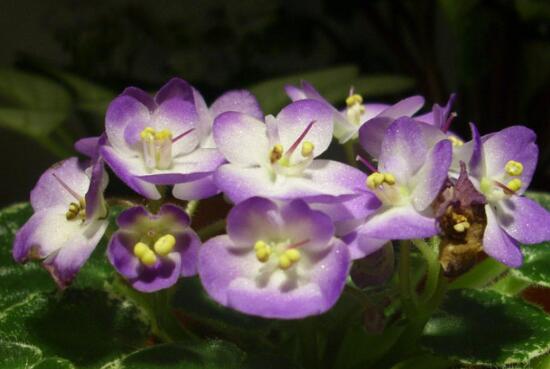
If you care for them strictly according to African violet cultivation methods, they will bloom. If they don't bloom, there are generally two reasons: light and fertilizer. If it is caused by insufficient light, just supplement the light; if too much nitrogen fertilizer has been applied, you should water to dilute it, and in severe cases you also need to change the potting soil.
II. Causes of African Violets Not Blooming and Solutions
1. Insufficient light
When it comes to the causes of African violets not blooming, light should be considered first. It is understood that African violets need sufficient light to bloom; once the light is insufficient, they find it hard to bloom.
Solution: Very simple, just supplement the light. Except in summer, at other times you can place it in a bright spot indoors and let it receive sufficient light.
2. Too much nitrogen fertilizer
Besides insufficient light, improper fertilization is also a cause of African violets not blooming. During the growing season, we need to give African violets sufficient nutrients so that they will bloom. But if too much nitrogen fertilizer is applied at this time, it will cause the branches and leaves to grow luxuriantly while making blooming very difficult.
Solution: If discovered in time, just water to dilute it; if not discovered in time and root rot occurs, you also need to take the plant out of the pot, then cut off the rotten roots, replace with new soil and replant.
III. How to Make African Violets Bloom More
1. Control light
To make African violets bloom more, controlling light is very important, because only with reasonable light can they bloom better. First, in winter, in order to meet their light needs, you should place the plant on a windowsill or nearby where it can receive sunlight, with bright indirect light being best; second, in summer, because the light is very strong, you need to provide shade, because it does not need overly strong light.
2. Fertilize appropriately
For African violets to bloom, they need to consume a large amount of nutrients, so during cultivation, appropriate fertilization is very important. Generally, fertilization should use a compound fertilizer with relatively balanced elements such as nitrogen, phosphorus and potassium; be careful not to apply too much nitrogen fertilizer. In addition, it is best to follow the principle of light but frequent applications, so that they bloom more.
3. Regulate temperature
How do you make African violets bloom more? Temperature is also extremely crucial. It is understood that if the ambient temperature can be kept at around 20°C, African violets can bloom in all four seasons.
4. Water reasonably
Of course, for African violets to bloom more, watering is also a point that needs attention. They relatively prefer moisture but dislike waterlogging, so during cultivation you need to follow the principle of "don't water until dry, and water thoroughly when you do." For the specific amount and interval of watering, you can refer to African violet watering methods.
How to make African violets bloom more?
[Common question] How to make African violets bloom more?
[Expert answer] The African violet, also called African violet (Saintpaulia), is a perennial herbaceous flower and also a common indoor potted flower variety. African violet flowers are small and delicate, with rich and vivid colors, and high ornamental value. So how do you make African violets bloom more?
Image: African violet
●Choose a good flowerpot.
African violet plants are short and small, and their root systems are not widely spread. A flowerpot that is too large hinders viewing, while one that is too small affects growth and development, so choose a flowerpot proportional to the size of the plant.
●Fertilizer should be light and dilute.
During the growth and development period, apply a dilute, thoroughly decomposed liquid fertilizer combining nitrogen and phosphorus about once every 10 days, with a nitrogen-phosphorus-potassium ratio of 1:1:1 being best. After flower buds appear, adding 1 to 2 applications of 0.5% superphosphate will make the flowers larger and more vividly colored.
●Pay attention to humidification methods.
The leaf surface of African violets is densely covered with fine hairs, so when watering and applying liquid fertilizer, do not splash water droplets or fertilizer solution onto the leaf surface. Otherwise it will cause the leaf surface to rot. Especially in hot summer weather, do not use spraying to mist water into the air or onto the leaf surface.
●Light requirements.
African violets most dislike direct sunlight. If the sunlight is too strong, sunburned spots will appear on the leaves and the plant will stop growing. So in summer, provide 50%-80% shade; while in winter, place it on a windowsill facing the sun so it can absorb sufficient sunlight.
●Thin the leaves appropriately.
In the vigorous growing season, when the leaves are too luxuriant, you may remove some overly dense leaves at evenly distributed positions to appropriately improve ventilation and light penetration. And insert the removed leaves into plain sandy soil for leaf-cutting propagation; this can encourage the plant to produce more flowers.
[Editor's summary]
The African violet has the beautiful title of "queen of indoor plants" and is a world-famous small indoor flower. African violets have a long flowering period; as long as they are cared for properly, they can bloom in all four seasons. The First Farm Economics editor has introduced to you in this article five tips on how to make African violets bloom more, and hopes they are helpful to you.
How to Care for African Violets in Winter, Winter Management Methods for African Violets / More Light and Raising Temperature
When growing plants indoors, the thing people fear most is winter, and African violets are no exception in this regard. Once the ambient temperature is too low, they will be frostbitten or even frozen to death. So how do you care for African violets in winter? In order for African violets to overwinter safely, below are the winter management methods for African violets carefully compiled by the editor. Let's take a look together!
I. How to Care for African Violets in Winter
African violets like a warm, semi-shady environment, and the nighttime temperature in winter cannot be lower than 12°C, so how do you care for African violets in winter? First, move the African violet to a spot indoors with good light, then keep the room temperature no lower than 12°C, and afterward water and fertilize appropriately. After doing this, your African violet will basically be able to overwinter safely.
II. Winter Management of African Violets
1. Temperature
In winter, the thing that needs the most attention when caring for African violets is temperature. It is understood that African violets like warmth, and when the temperature drops below 16°C, growth will also stop. Although they can endure short periods of low temperature of 7-10°C, if it lasts too long, they are also prone to dying. So for how to care for African violets in winter, the room temperature cannot be lower than 12°C.
2. Light
African violets are shade-tolerant plants, but they need sufficient light. Once they are in too shady a place for a long time, the phenomenon of few flowers and leaf growth without blooming will appear. So in winter, in order for African violets to receive sufficient light, they should be placed in a spot with good light, such as a sunny windowsill.
3. Watering
In winter, although the growth of African violets slows, they are still growing, so watering should also continue. However, in winter, the amount of watering should be reduced, and the watering interval should preferably be controlled to once every 7-10 days. In addition, when watering, do not let water touch the leaves. Of course, it is best to master African violet watering methods, so that mistakes are less likely.
4. Humidity
African violets like a moist environment, and their demand for moisture is also very high; in a relatively dry air environment, growth is not favorable. And winter is precisely the time when it is very dry, so how do you care for African violets in winter? We should appropriately increase air humidity. Generally speaking, keeping air humidity between 40%-70% is best.
5. Fertilizer
When it comes to winter management of African violets, there is one point everyone needs to note, and that is fertilization: do not continue it! Although African violets have high fertilizer requirements, this is also related to light to some extent. If it is winter, the light will not be very strong, and fertilizing at this time will not have much effect. So it seems everyone can consider applying only base fertilizer and not applying additional fertilizer.