What to do when African violet leaves turn yellow? Supplement light, stop watering, and change the potting soil
The African violet (Saintpaulia ionantha) is one of the flowers most loved by gardening enthusiasts. Its blooms are small and dainty, and its flower colors are rich and varied, looking incomparably beautiful set off against a mass of emerald-green leaves. So when yellow leaves appear, all of this beauty is spoiled, and gardeners must be very anxious! So what should you do when African violet leaves turn yellow? Today the editor will solve this problem for you.
I. What to do when African violet leaves turn yellow
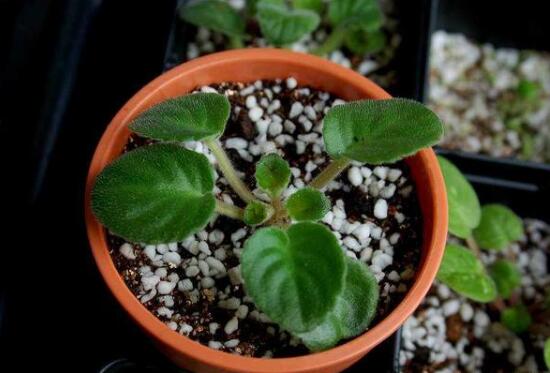
When it comes to the causes of African violet leaves turning yellow, there are generally 4: if it is caused by an unsuitable environment, simply grow it in the environment most suitable for its growth; if it is caused by insufficient light, supplement the light while avoiding strong light; when overwatered, loosen the soil and let the soil dry out, and in severe cases trim off the rotten roots and change the potting soil; when over-fertilized, flush with water to dilute it, and if there are rotten roots, cut them off and change the potting soil.
II. Causes of African violet leaves turning yellow and solutions
1. Unsuitable environment
When it comes to the causes of African violet leaves turning yellow, the first thing everyone should think of is environmental problems. In a hot, dry environment, or one with poor air circulation, its leaves easily turn yellow; besides this, potted plants bought online, because of the large regional span and great environmental change, may also develop yellow leaves when the plant cannot adapt for a while.
Solution: Grow the African violet in a ventilated, semi-shaded spot; when a newly bought potted plant has yellow leaves, you should, according to the African violet's growth habits, provide the environment most suited to its growth, and before long the plant will return to health.
2. Insufficient light
Although the African violet dislikes strong light and is fairly shade-tolerant, light is still indispensable for its growth. Once the African violet is kept in a dark indoor spot for a long time, over time the plant will develop yellow leaves due to lack of photosynthesis.
Solution: Except when summer light is especially strong, the African violet can receive ample light in the other seasons. After doing this, the leaves will not only return to emerald green, but it will also be more conducive to the African violet blooming.
3. Overwatering
The African violet likes a moist environment, and during its growing season we should keep the potting soil slightly moist. But for beginners, the amount of water is hard to judge, and overwatering and watering too frequently often occur, resulting in water accumulating in the pot. When the roots are soaked in water for a long time, their breathing becomes impeded, the leaves cannot absorb nutrients, and they naturally turn yellow.
Solution: When you find you have overwatered, loosen the soil more and move the potted plant to a ventilated, sunny spot so the water evaporates quickly; if you do not notice in time and the roots have already rotted, you should take the plant out of the pot, cut off the rotten roots, and then replant it in fresh soil.
4. Improper fertilizing
① Insufficient fertilizing
The African violet likes fertilizer, and ample nutrients can make it bloom more beautifully. Once fertilizing is insufficient, it not only affects its blooming but its leaves also turn yellow due to lack of nutrients.
Solution: Very simple, we just need to replenish the fertilizer in time and it will slowly recover.
② Over-fertilizing
When fertilizing the African violet, everyone should apply thin fertilizer frequently, otherwise once too much or too concentrated fertilizer is applied, it easily burns the plant's roots.
Solution: If discovered in time, flush with water to dilute the fertilizer and let it flow out from the bottom of the pot; if not discovered in time and the roots are burned and rotten, you need to cut off the rotten roots and change the potting soil to replant.
Overall, the cultivation method for the African violet is not difficult, but not difficult does not mean it can be grown casually. To keep its leaves ever green and not turning yellow, you must pay attention to light, water and fertilizer. Of course, do not panic when you find yellow leaves; just solve it according to the methods above. That is all the editor has to introduce about African violet leaves turning yellow, hoping it can help everyone.
What to do when African violet leaves have yellow spots
In daily care of the African violet, if it is not cared for well, yellow spots may appear on the leaves. So what causes yellow spots to appear on African violet leaves? Below is a summary of the two causes of yellow spots and the solutions.
What to do when African violet leaves have yellow spots 1. Too much lightIf the African violet is exposed to overly strong light, or to direct sunlight in summer, it will cause the leaves to wither and yellow, and in severe cases they may even be scorched to death.
How to solve itIf the leaves wither and yellow due to light, it is recommended to first move the African violet indoors to grow, avoiding strong light; if the yellowing of the leaves is very severe, it is recommended to remove them.
2. Improper watering positionWhen watering the African violet normally, you must pay attention to the watering position. If water is poured onto the leaf surface, the water remaining on the leaves will also cause African violet leaves to turn yellow and rot, or develop unsightly spots.
How to solve itWhen watering, gardeners should not pour water directly onto the leaf surface; it is recommended to water slowly from the base of the stem, and for leaves found to be yellowed and rotten due to watering, it is recommended to remove them in time.
African violet Saintpaulia ionantha African violet illustrated guide: how to grow the African violet / how to propagate the African violet
African violet profileAfrican violet Saintpaulia ionantha
Cultivation methods and precautions for the African violet Introduction to the African violet
The African violet, also known as the dwarf violet, originates from Africa. It was discovered in 1892. In just ninety years, it has been planted all over the world, with varieties increasing to more than two thousand. In Tanganyika there was a province named Usambara. The local district commissioner was Baron Walton Von Saint. Influenced by his father from childhood, he was very interested in plants. Once, in the woods at a distance from the town of Tanga, he discovered a low-growing herbaceous plant growing in the humus soil within cracks of limestone. This plant bears single blue flowers with a very beautiful flower shape; this was the originally discovered (African violet).
The genus Saintpaulia (scientific name: Saintpaulia), also called African Violet, is a genus under the Gesneriaceae family, widely used in cultivation and horticulture. The African Violet is a dicotyledonous plant, meaning the seed has two cotyledons; the number of petals is four, five, or a multiple thereof.
Morphological characteristics of the African violet
The African violet is a perennial herb. It has no stem and the whole plant is covered with hairs. The leaves are ovate, and the petioles are thick and fleshy. The flowers are borne one or several together, light purple. The whole plant is hairy; the leaves are clustered at the base, somewhat fleshy, with round or ovate leaf blades, purple on the back, and long stalks. The plant is small, hairy, herbaceous, usually stemless. The leaves are densely clustered and have long stalks. The flowers are borne 1 to 6 together in clusters on long-stalked cymes; the flowers have a short tube, a 2-lipped corolla, unequal lobes, and varied flower colors, including white, purple, light purple or pink. The flowers are bilaterally symmetrical, purple-red, white or pink. It blooms for most of the year. The fruit is a capsule and the seeds are extremely small. In recent years, cultivated varieties have been numerous, including large-flowered, single, semi-double, double, and variegated-leaf types, with flower colors including purple-red, white, blue, pink and bicolor, etc. Ornamental species in the same genus include the white-flowered African violet and the large-flowered African violet.
Flower color: There are more than 9000 registered named varieties of African violets; from the original 24 kinds of blue flowers, in the 100 years after discovery, variants of various colors such as yellow, orange and white began to appear. Moreover, more than 200 new varieties appear every year. Flowering period: spring to autumn; in winter it will also bloom if there is ample light.
Ecological habits of the African violet
The African violet is native to the tropical regions of eastern Africa. It likes a warm, moist and semi-shaded environment. In summer it fears strong light and high temperatures. The suitable growth temperature is 16-24°C, from April to October it is 18-24°C, and from October to the following April it is 12-16°C. The daytime temperature should not exceed 30°C; high temperatures are unfavorable to the growth of the African violet. The winter nighttime temperature should not be lower than 10°C, otherwise it is prone to cold damage. A relative humidity of 40%-70% is more suitable; if the pot is too moist, the roots easily rot. When the air is dry, the leaves lack luster. The African violet needs shading in summer for its leaves to be fresh and emerald green; in winter it needs ample sunlight to bloom continuously; adding supplementary light on rainy and snowy days is very beneficial to the growth and blooming of the African violet. It prefers fertile, loose and well-drained leaf mold or peat soil.
The African violet (scientific name: Saintpaulia ionantha), also known as the African violet, is a perennial herbaceous plant of the genus Saintpaulia in the Gesneriaceae family. It has no stem and the whole plant is covered with hairs. The leaves are ovate, and the petioles are thick and fleshy. The flowers are borne one or several together, light purple. There are many cultivated varieties, including large-flowered, single, semi-double, double, and variegated-leaf types, with flower colors including purple-red, white, blue, pink and bicolor, etc. It likes a warm climate, dislikes high temperatures, is fairly shade-tolerant, and is suited to growing in diffused light. It prefers fertile, loose neutral or slightly acidic soil. Native to the tropical regions of East Africa, the plant is small and exquisite, with colorful flowers and blooming in all four seasons, making it an excellent indoor flower. It is an internationally famous potted flower, especially popular in Europe and America.
Variety classification of the African violet Common varieties
Common varieties include large-flowered, single, semi-double, double, and variegated-leaf types, with flower colors including purple-red, white, blue, pink and bicolor, etc. Common cultivated varieties include the single-flowered Snow Prince, with white flowers; Pink Miracle, with pink flowers and rose-red edges; Ruffled Queen, with purple-red flowers and ruffled edges; Pocone, a large-flowered variety with a flower diameter of 5 cm and light purple-red flowers; Diana, with dark blue flowers. Semi-double varieties include Fuchsia Red, with purple-red flowers. Double varieties include Corinne, with white flowers; Flash, with red flowers; Blue Peak, with blue flowers and white edges; Double Delight, with blue flowers; Blue Caprice, with light blue flowers; Blushing Bride, with pink flowers. Foliage varieties include Show Queen, with blue flowers, ruffled edges, and yellow-white markings on the leaf surface; Blue Boy in the Snow, with light purple flowers and white striped markings on the leaves. Ornamental species in the same genus include the white-flowered African violet and the large-flowered African violet.
Cultivated varieties
Common varieties include Razzberry Frost, Midnight, Rainbow's End, Sheer Heaven, etc. In addition, there are varieties such as the white-flowered African violet (var. albescens), the large-flowered African violet (var. grandiflora) and the variegated-leaf African violet (var. variegata), etc.
Distribution area of the African violet
Native to the high-altitude regions of tropical East Africa. Place of origin: the coastal mountain area of Tanzania in East Africa. In 1892 the German baron Paul from the German colony in Africa discovered the native species and sent the seeds back to Germany, for his father, who likewise loved gardening, to plant in Germany. Because the flower shape resembles a violet, the African violet is also called the African violet (saintpaulia ionantha). When it first appeared at a German flower show in 1893, it was praised as the most interesting plant.
The role, uses and value of the African violet
The African violet is a precious gift from nature to modern humans. Because there are many varieties and great variation between species, its leaf tissue, besides green varieties, also includes creamy-white, pink and other variegated-leaf varieties, and the flowers are even more endlessly varied and colorful. Placing plants indoors can also purify indoor air. The African violet is easy to propagate and is a flowering plant suited to growing in indoor environments; in the process of propagation one looks forward to growth and blooming, and by providing care, one gains a sense of achievement and self-confidence and many other pleasures and advantages. Therefore, for elderly people with impaired mobility, people with physical and mental disabilities, or the seriously ill and those with behavioral problems, etc., the activity of growing African violets can provide suitable compensation or improvement, and this is precisely why the African violet is the most ideal material for horticultural therapy.
Application value
The African violet plant is short, can bloom all year round, has leaves as thick as velvet, a graceful and elegant flower shape, and rich, brilliant and colorful flowers, making it an excellent indoor ornamental plant.
Because the appearance of the native species' flower is similar to the pansy, with five petals, three large and two small, it is so named. Placed indoors it can purify indoor air, improve indoor air quality, beautify the environment, harmonize the mood and relieve stress, and it is also an ideal material for horticultural therapy. The African violet is thus able to be close to humans, bringing endless pleasure and contributions, and is therefore a "green pet" worth cherishing.
Landscape uses of the African violet
The plant is short, blooms in all four seasons, has a pretty and elegant flower shape, and brilliant and colorful flowers. Because its flowering period is long, it is fairly shade-tolerant, and its plant shape is small and attractive, potted plants can be placed on windowsills, in living rooms, and on desks as good decorative accents, making it an excellent indoor flower. Those cultivated are all hybrids, with very many horticultural varieties, numbering in the thousands. There are single and double forms, with flower colors including white, pink, red and blue, etc.
Post-production handling:The African violet is a small potted ornamental plant, especially suitable for cultivation by middle-aged and elderly people. Its flowering period is long, it is convenient to move, and it is easy to propagate. A potted flower adorning a desk, writing table or windowsill is very elegant and beautiful, and giving it to relatives and friends is also classy enough.
Post-production application:The African violet is small and exquisite, with colorful flowers, including single and double forms, and flower colors including purple-red, white, pink, light blue, deep purple and bicolor, etc. Its flowering period is quite long, and it is especially suitable for potted ornamental display, making it an ideal material for adorning indoor desks, windowsills and balconies.
What is most fascinating about the African violet is the plant's own way of living that is close to human nature. The African violet likes the same environment as people: "The place most suitable for human growth is the place most suitable for the African violet to grow." It is suited to being placed in a cool, ventilated spot. As a semi-shade plant, the African violet fears heat and must not be exposed to direct sunlight, as it easily gets sunburned; in summer it is best placed in an air-conditioned office, keeping it ventilated. A spot by the window is the best position. There are originally not many indoor plants that bloom; if cared for properly, the African violet can bloom several times a year. When watering, try to avoid getting water on the leaves.
What makes it fascinating
1. Indoor flowering plant - Generally, flowering plants have high light requirements and cannot grow normally indoors, so indoor plants are mostly foliage plants. However, the African violet has low light requirements; as long as it is placed in a brighter spot indoors by a window or under a fluorescent light source, it can grow normally and bloom, making it one of the few rare indoor flowering (flower-viewing) plants.
2. It can bloom in all four seasons - The flowering period of some flowering plants is affected by the length of daylight or the temperature, and they can only bloom in a specific season or have only one flowering period each year. The African violet's flowering period, however, often lasts as long as 1-2 months; as long as there is proper care and a suitable growing environment, it can bloom once every 3-4 months. In addition, if there is a sufficient number of plants, one can enjoy blooming flowers in all four seasons of the year.
3. The flowers are endlessly varied - There are more than 10,000 varieties worldwide, with flower colors covering different color ranges such as blue, pink, red, purple, green, white and yellow, and with variations such as edging, speckling, striped coloring, bicolor or tricolor blends; the petals are also divided by the number of whorls into three types: single (one whorl, five petals), double (two or more whorls) and semi-double (between one and two whorls); petal shapes include round, violet-shaped, trumpet-shaped and wasp-wing-shaped, etc.
4. The plant is small and does not take up space - The diameter of the plant is mostly between 5-40 cm. Such a plant is smaller than many indoor plants, so growing it indoors does not take up too much space; and one can, according to personal preference or to match the indoor decor, choose varieties of different sizes to grow.
5. Easy to propagate - It can be propagated by leaf cuttings, so ordinary enthusiasts can easily do it at home or in the office, and thereby enjoy the pleasure of creating life.
6. New varieties are easily produced - Because of its own genetically unstable characteristics, mutant new varieties can appear during cultivation, and this often brings growers unexpected surprises and rewards.
Propagation methods of the African violet
It can be propagated by sowing, cuttings and division. For sowing, mainly sow indoors in pots in September and October; the suitable germination temperature is 20-25°C, germination occurs 20-25 days after sowing, and generally it takes 180-200 days from sowing to flowering. For cuttings, mainly leaf cuttings are used; after flowering, choose robust leaves, cut them off leaving 2 cm of petiole, insert them into a sand bed at a temperature of 18-24°C; roots form 20-22 days after insertion, and seedlings grow out after 60 days. From cutting to flowering takes 120-150 days. For division, carry it out when repotting in spring.
Sowing propagation: It can be done in both spring and autumn. For greenhouse cultivation, autumn sowing in September-October is better, with a high germination rate and robust seedling growth, and the plants bloom in the following spring with large plants and many flowers. Sowing in February, it blooms in August, but the growth vigor is somewhat poorer and there are fewer flowers. African violet seeds are small, so the sowing soil should be fine; after sowing do not cover with soil, just press flat. The suitable germination temperature is 18-24°C; germination occurs 15-20 days after sowing, and seedlings are transplanted after 2-3 months. During the seedling stage, note that the potting soil should not be too moist. Generally it takes 6-8 months from sowing to flowering.
Cutting propagation: Mainly use leaf cuttings. After flowering, choose robust, plump leaves, cut them off leaving the petiole 2 cm long, let them dry slightly, insert them into a sand bed, maintain relatively high air humidity, keep the room temperature at 18-24°C; roots form 3 weeks after insertion, and after 2-3 months seedlings will be produced, which are then moved into 6 cm pots. During the cutting process, treating with vitamin B is beneficial to the growth of seedlings after the African violet roots; treating the petioles with 25 mg/L kinetin for 24 hours is conducive to the formation of adventitious buds. From cutting to flowering takes 4-6 months. If large tiller shoots are used for cuttings, the effect is also good; generally cutting in June-July results in flowering in October-November, and cutting in September-October results in flowering in March-April of the following year.
Tissue culture propagation: The African violet is relatively commonly propagated by tissue culture. Leaf blades, petioles and epidermal tissue are used as explants. Use MS medium plus 1 mg/L 6-benzylaminopurine and 1 mg/L naphthaleneacetic acid. Four weeks after inoculation adventitious buds grow out, and after 3 months rooted plantlets can be planted. The plantlets are transplanted into a substrate of half leaf mold and half peat moss soil, with a survival rate of 100%. Countries such as the United States, the Netherlands and Israel all have African violet test-tube plantlet production.
It is divided into five methods: leaf cuttings, axillary buds, flower bud cuttings, seeds, and tissue culture. For home growing, African violet leaf cuttings are the simplest and most widespread propagation method. The steps are as follows:
1. Selection of leaves - The more aged the leaf, the poorer its differentiation ability, so the leaves used for propagation are best chosen to be young, healthy and disease-free. For a mature plant, the leaves in the 3rd and 4th rings counting from the center are the most ideal propagation material; as long as they are healthy, not yellowed, and free of pest or disease infection, even the outermost ones or ones accidentally dropped can all be used.
2. Removing the leaf - You can use your thumb and index finger to pinch the petiole, then shake it left and right several times to detach the petiole from the plant at the base, or use a blade to cut it off from the base of the petiole.
3. Handling the leaf - With the leaf facing up, use a blade to cut at a spot 1.5-2 cm from the leaf base, at an oblique angle of about 45o.
4. Cutting in a solid medium - Insert the prepared leaf, starting from the cut end, about 0.5-1 cm into a moistened propagation medium (some media are water-repellent when too dry and are not easily moistened, so they must be moistened first before use), on the principle that the leaf can be fixed in place (if buried too deep, new shoots will not easily grow out later); then leave it to culture in an environment with a light intensity of about 200-250 foot-candles, 8-12 hours of light, and a temperature range of about 18-25°C.
5. Rooting and sprouting - The time for the leaf to root is affected by variety, environment, season, leaf age, health condition and care, and is generally between 1 week and 2 months. After roots grow, apply a high-nitrogen fertilizer diluted 2,500-3,000 times every 7-10 days. New shoots grow out about 1 month after rooting.
6. Division - About 2-3 months after the new shoots grow, when the small seedlings have 4-6 leaves, take the mother leaf together with the seedlings out of the propagation container, remove part of the medium, and then use a small blade to separate the seedlings. Seedlings that are poorly developed or too small (with fewer than 4 leaves) can be discarded to ensure the quality of the plants; then use a cultivation medium to plant the plants in small pots and water thoroughly.
7. Care of the seedlings - Generally the seedlings have poorer tolerance for lack of water, and once they lack water it may affect their later growth and development, so water shortage should be avoided. After 2-3 months they can be planted out into larger pots. Green-leaf varieties take about 8-12 months from leaf cutting to flowering, while variegated-leaf varieties, because they grow more slowly, often need to grow for more than 12 months before their first flowering.
Environmental factors
Light source
The light intensity required by the African violet is about 200-800 foot-candles, with an illumination time of about 8-12 hours; if you want to promote flowering, you can gradually extend the light time to 16 hours. Outdoor direct light intensity is often greater than 8,000 foot-candles, which easily causes sunburn to the plant's leaves and is not suitable for African violet growth. However, the indoor light provided is also often insufficient, causing the plant to grow slowly, not bloom, or become leggy. The light level generally suitable for reading is only about 100-200 foot-candles, so it can be seen that indoor spots below the light level suitable for reading are not suitable for growing African violets. The appropriate indoor display spot is by a window with bright, non-direct sunlight; if the indoor light is too low, artificial light must be added for growing.
Temperature
The suitable growth temperature for the African violet is similar to that for humans, about 18-26°C, so an environment that humans find comfortable, such as an air-conditioned office or home environment, is most suitable for African violet growth.
Humidity
The native environment of the African violet is beside streams in rainforest areas, on moist cliffs or in swampy zones, where the humidity during the rainy season is usually 90-95%, so the African violet loves a high-humidity environment, and the suitable humidity for the growth of most varieties is 50-70%. The average annual humidity in Taiwan, China is about 60%, and even indoors it can mostly be maintained above 50%, so the humidity of the home environment in Taiwan, China is suitable for African violet growth, except that when grown in an air-conditioned environment, the plant must be protected from being blown directly by the cold air.
Air
The African violet grows better in an air-conditioned or well-ventilated environment. The main purpose is that circulating air helps lower the temperature around the plant, so as to avoid a high-temperature, high-humidity environment that is unfavorable to African violet growth.
Cultivation techniques of the African violet Cultivation management Watering
When cultivating the African violet, watering is very important. In early spring when the temperature is low, watering should not be too much, otherwise the stems and leaves easily rot, affecting flowering. In summer with high temperature and dryness, water more and spray water to increase air humidity, otherwise the flower stalks droop and the flowering period shortens. But when spraying, if too much water splashes onto the leaves, it will also cause the leaves to rot. In autumn and winter, as the temperature drops, watering should be appropriately reduced. The African violet is a semi-shade plant, and 8 hours of light per day is most suitable. If there is insufficient light on rainy and snowy days, artificial light should be added. If the light is insufficient, the petioles elongate, flowering is delayed, and the flower colors become dull. In midsummer when the light is too strong, it will scorch or whiten the young tender leaves, so shade protection is needed. It requires the nighttime temperature to be higher than the daytime temperature; at night 24°C and in the daytime 16°C, the stems and leaves grow luxuriantly, and the flowers are large and numerous. During growth, fertile, loose leaf mold is most ideal. Fertilize once every half month; if the fertilizer is insufficient, flowering decreases and the flowers become smaller. After flowering, remove the spent flowers at any time to prevent the spent flowers from molding and rotting.
Fertilizing
Generally, when the light source is sufficient, only a small amount of additional fertilizer is needed to maintain the plant's normal growth, and over-fertilizing will instead cause growth disorders; but in an environment with insufficient light, even if ample fertilizer is provided, the plant will still grow poorly, or even die. Therefore, in general, fertilizer should be applied under conditions where light is not a concern for its effectiveness to be shown. As long as the light source is ample, the environment is appropriate and management is correct, merely mixing base fertilizer into the medium or the fertility stored in the medium is enough for the plant to grow normally and bloom even if no fertilizer is added during the growing period. However, if you want the plant's growth vigor and flower quality, you must use suitable fertilizers according to the different growth stages.
For the African violet, the fertilizers required at different growth stages and the fertilizing essentials are as follows:
1. Rooting stage - such as propagation, transplanting, and repotting. Just after handling, because there are no roots or the roots are injured, the absorption function is poor, so it is not suitable to apply fertilizer immediately; you should wait 2-4 weeks before fertilizing. Use fertilizers with higher nitrogen and potassium content, such as fertilizers with N-P-K ratios of 7-6-19, 14-12-14, etc.
2. Vegetative growth stage - such as from seedling growth to before flowering and after the flowering period. Use fertilizers with higher nitrogen content, such as fertilizers with N-P-K ratios of 30-10-10, 25-5-20, 5-1-1, etc.
3. Flowering stage - Begin applying about 2 months before the expected flowering. Use fertilizers with higher phosphorus content, such as fertilizers with N-P-K ratios of 10-30-20, 15-30-15, 12-36-14, 0-10-10, etc.
Repotting
Aged plants, seedlings being moved to new pots, plants with diseased roots, pots with salt deposits on the rim and outer wall, and plants that have lost their shape or look unattractive should be repotted promptly. Plants in different conditions have their suitable repotting methods and essentials. Taking a healthy plant (small or medium seedling) being moved from a small pot to a larger pot and an aged plant as examples, the order and essentials are as follows:
1. Tidying the plant and inspecting the health of the roots - First remove the lowest, smaller or poorly growing leaves, and inspect the roots: if they are white, they are healthy; if they are brown or dark brown, they are unhealthy or even rotten. Unhealthy root tissue must be removed with a blade or scissors, along with about 1/3-1/2 of the medium; generally, the more severe the browning, the greater the proportion of medium to be removed. For a healthy plant, no treatment of the roots is needed, and try to avoid injuring the root tissue.
2. Putting it into a new pot - When moving a plant from a small pot to a large pot, first put a little new medium at the bottom of the larger pot to be used, place the plant with its medium into the large pot, and fill the gaps with new medium.
3. Handling after repotting - Water thoroughly and then place it in a suitable environment for cultivation. After repotting, plants are usually weaker or have injured roots, and the root absorption capacity is reduced, so avoid fertilizing within 2 weeks after repotting.
It is best to choose a season with a suitable environment and climate for repotting, so that the plant can recover smoothly. Generally, when repotting, it is appropriate to maintain the temperature between 18-26°C. In Taiwan, China, spring and autumn are more suitable, but if it is grown in an air-conditioned environment where the temperature can be maintained at around 25°C, repotting can be done in all four seasons.
Cultivation techniques Cultivation medium
An ideal cultivation medium must have good aeration, retain water and fertilizer, have a pH value suitable for plant growth, and have good cation exchange capacity. There are three commonly used cultivation media: peat moss - a brown sediment of decomposed plant matter from swampy areas, with good water and fertilizer retention; perlite - white granular material formed after limestone is treated at high temperature, which does not absorb water and has poor fertilizer retention but excellent aeration; vermiculite - fragments formed when mica expands and splits upon heating, with good aeration and poor water and fertilizer retention. The African violet has different requirements for the physical and chemical properties of the medium at different growth stages, such as: vegetative growth stage - the moisture-retaining medium (that is, peat moss) can be between 50-60%; cutting propagation stage - at this stage there is no root tissue and water cannot be absorbed, so the medium should not contain too much water; therefore, a medium with good aeration is mainly used, and perlite and vermiculite can be between 60-80%.
Water management
Generally, the watering temperature should be as close as possible to that of the plant, and try to avoid watering at midsummer noon (above 35°C) or on winter evenings (below 15°C). The timing and amount of watering are mainly determined by the water content of the medium. There are several methods for testing the water content of the medium:
1. Touching the medium with a finger - When the surface soil is dry, it should be watered.
2. Weighing - The higher the water content of the medium, the heavier the plant; conversely, the lighter the plant. Generally, when the weight of the plant together with the pot is about 1/3-1/2 of that at maximum water content, it needs watering.
3. Leaf appearance - The African violet has a higher tolerance for lack of water than many indoor plants, so when the leaves are slightly wilted, it indicates that the plant lacks water and water should be replenished in time.
4. Visual inspection of the medium surface - When the surface soil is dry, its color is whiter than when moist, and this can be used to judge the timing of watering.
Each watering should be done on the principle of thoroughly wetting the medium and having excess water flow out from the bottom of the pot. For a general indoor environment, the watering cycle for the African violet is about 3-7 days, but it must vary according to the current environment. The watering methods are:
5. Spraying - Water with a spray bottle, which can also clean dust and deposited salts from the plant, but avoid using water with too great a temperature difference, which would cause water damage.
6. Irrigation - Irrigate with a long-spouted pot, which can avoid water contacting the plant or flowers, so it will not cause water-damage markings, and it is also suitable during the flowering period.
7. Bottom-tray absorption - Pour water into the bottom water storage tray, let the medium use capillary action to absorb water into the medium, and after a few minutes when the medium is saturated with water, pour off the remaining water.
Cultivation points
When the seedlings have 3-4 leaves, transplant them into 6 cm pots; when they have 7-8 leaves, plant them out into 10 cm pots: in early spring when the temperature is low, water less; in summer with high temperature and dryness, water more and spray water to increase air humidity. In autumn and winter, as the temperature gradually drops, reduce watering appropriately: the African violet is a semi-shade plant, and 8 hours of light per day is suitable; if there is insufficient light on rainy and snowy days, artificial light should be added. In midsummer when the light is too strong, shade protection is needed: fertilize once every half month during the growing period, and apply phosphorus and potassium fertilizer 2 additional times during the flowering period. Plants kept for seed production need artificial pollination. The seed-setting rate is high and the seeds are plump.
African violets prefer semi-shade and a warm, humid environment. The optimum growing temperature is 20-22°C, and the suitable light intensity is between 10000-12000lx. In summer, avoid strong light and high temperatures; spray shade agents on the growing structures or use shade netting to block out the stronger light, and spray water to cool down and increase humidity, but make sure there is good ventilation. During cultivation, maintain relatively high air humidity and water appropriately, but do not let the soil become too wet, to avoid rotting of stems and leaves. The difference between water temperature and air temperature should be less than 5°C, otherwise large numbers of yellow spots will appear on the leaves. If light is insufficient, the plant will bloom less and with paler colors, or even only grow leaves without flowering; if light is too strong, it will cause the leaves to turn yellow and scorch. It can be grown in a bright spot without direct sunlight. The optimum growing temperature is 16°C to 24°C, and in winter it must not go below 10°C. During cultivation, avoid sudden rises and drops in temperature, otherwise the plant can easily die. In summer, grow it in a cool, ventilated spot, avoiding stuffy, humid conditions and blazing sun. Normally, do not water too much; wait until the potting soil is slightly dry before watering. Waterlogged potting soil is often the main cause of plant rot. During the growing season, apply a fully decomposed dilute liquid fertilizer or compound fertilizer once every 7 to 10 days. The nitrogen content in the fertilizer must not be too high, otherwise the leaves will grow very lushly but there will be very few flowers.
Care essentials
Position: Do not place it where the sun tends to reach; it can grow as long as there is scattered light indoors. African violets are very shade-tolerant indoor plants and are actually not suitable for outdoor growing. The best position is by a windowsill.
Soil: Loose, well-drained soil is best. Peat moss mixed with vermiculite and perlite can be used as the medium.
Water: Note that violet leaves are fuzzy and the flowers are small, so when watering it is best not to let water accumulate on the buds or leaves. A narrow-spouted watering can may be used to add water carefully. For potted flowers placed on a table, a water tray can be placed underneath to prevent water from leaking out. Water can also be added directly from the bottom tray, letting the roots absorb the water. Especially during the peak flowering period, when the leaves and flowers take up the whole size of the pot, the bottom-watering method can avoid damaging the leaves.
Sunlight: It can grow anywhere bright indoors; windowsill sunlight is just right. If placed on a desk, a grow light can be added to supplement the light, which can extend the flowering period and keep it blooming continuously.
Temperature: The optimum growing temperature is 15-25°C. In summer, pay attention to ventilation. If placed in an office, because of air conditioning the temperature will not be too high or too low, so it should grow well, but attention must be paid to replenishing water.
Fertilizer: It needs relatively more fertilizer. It is best to supplement with liquid fertilizer about once every 10-20 days, applying small amounts more frequently. When entering the flowering period, supplement with phosphorus and potassium fertilizer. If there is too much nitrogen fertilizer, it will instead promote lush leaves without flowering.
Care: Most African violets bought from flower markets are 3-4 inch potted finished plants, and they have already bloomed or have flower buds. After taking them home, they can be placed by a windowsill or in a spot with scattered light. Water according to how dry the soil is. If there is a water tray, simply replenish the water after it dries up. Care is not difficult.
Disease control of African violets
Pest and disease control: Under high-temperature and high-humidity conditions, wilt disease, powdery mildew and leaf rot are prone to occur. A 1000-fold dilution of 10% antiseptic 401 acetic acid solution can be sprayed or poured into the potting soil. Scale insects and red spider mites often harm African violets during the growing season and can be killed by spraying with a 1000-fold dilution of 40% omethoate emulsifiable concentrate.
A sick African violet shows different symptoms in different parts. For example, the flowers may fail to bloom, be deformed, die young, have dull colors, decrease in number, or rot. Leaf tissues may become deformed, curled, yellowed, discolored, form brown spots, or rot. Stems may become leggy (internodes lengthen), turn brown, rot, or be parasitized by insects or fungi. Roots may turn brown and change color, rot, or be parasitized by insects or fungi. If African violet diseases are classified by the factors that cause them (pathogens), they can be divided into two categories:
(1) Physiological diseases - Factors causing physiological diseases include: environmental factors such as temperature too low or too high, humidity too low or too high, unsuitable light source and air pollution, etc.; cultivation techniques such as improper watering control, improper repotting, poor physical and chemical properties of the medium, and improper use of pesticides, growth regulators and fertilizers, etc.
The key to preventing and treating physiological diseases is to learn correct environmental management and cultivation techniques; recognize various symptoms and make correct disease diagnoses; and improve environmental factors or cultivation techniques based on the disease diagnosis. Physiological diseases are not contagious, and as long as environmental factors are adjusted in the early stages of occurrence, most plants can still recover.
(2) Infectious diseases - These can be divided into pests - common ones include red spider mites, aphids, scale insects, root mealybugs and thrips, etc. Although these pathogens are tiny, most are visible to the naked eye; and diseases - pathogenic bacteria include viruses, viroids, bacteria, fungi and nematodes, etc. Diseases caused by plant pathogens are contagious, so as long as one plant in a group is sick, it may cause all plants in the entire growing area to become infected.
Therefore, to avoid the occurrence of infectious diseases, prevent outside diseased plants from infecting existing plants - foreign plants should first be isolated for at least more than 1 month, and if they do not develop disease, they can then be moved to the growing area for planting; once a diseased plant is found, it must be isolated immediately, and pesticides should be sprayed or the diseased plant should be discarded directly. At the same time, to prevent pathogen-carrying plants from developing disease again and spreading, it is best to spray pesticides over the whole area; tools, media, etc. that have come into contact with diseased plants must be sterilized or discarded.
Common damage from wilt disease, powdery mildew and leaf rot can be treated by spraying with a 600-fold dilution of 65% zineb wettable powder; pests include red spider mites and mealybugs, which can be killed by spraying with a 2000-fold dilution of 40% dimethoate emulsifiable concentrate.
Cultural background and development status of African violets
African violets are small and exquisite, with colorful flowers and great poetic charm. They are a world-famous potted flower and are especially popular in Europe and America. After the French discovered African violets in Africa in 1893, it was not until the early 20th century that it was discovered that they can bloom continuously all year round in suitable environments and can adapt to air-conditioned environments. In the 1930s, African violets were already very popular in the United States, and by the 1940s many bicolor and double-flowered varieties had been bred. To this day, African violets have become a major potted flower produced in the United States, and cultivation in homes is very common. Moreover, many new varieties are created by amateur enthusiasts.
In Europe, the Netherlands, Denmark, Germany and France all have mass production. In 1995, the Netherlands ranked seventh in potted flower production, with an output value reaching 21.4 million USD. African violets have become a windowsill plant in Europe and America and can be bought at any time in supermarkets.
The history of cultivating African violets in China is not long. It was only from the 1980s that test-tube plantlets were introduced from the United States and the Netherlands. Only a few Chinese-foreign joint venture horticultural companies have small-scale production, and cultivation is not yet widespread, but the development prospects are still very good.
The flower language of African violets
Eternal love. But at the same time it also represents her fragility and vulnerability, and her longing for an ideal place to belong.
Warm and lush, forever beautiful.
A tiny love.
African violet pictures