How to grow Coreopsis and what to pay attention to: it needs plenty of sunlight
Coreopsis is a perennial herbaceous plant in the Asteraceae family, and it can be seen in many parts of China. However, to grow it well, there are many things we need to pay attention to. How do you grow coreopsis? What are the growing methods and precautions for coreopsis? Let's take a look below.
1. How to grow coreopsis: understand its habits
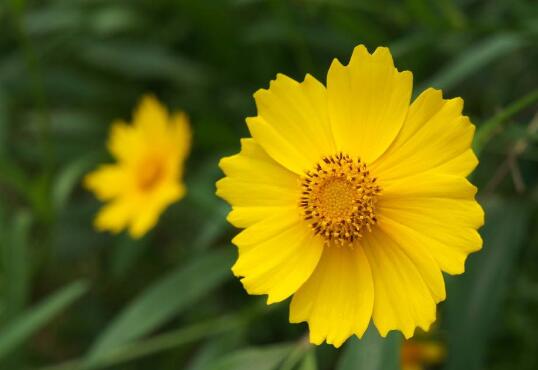
To know how to grow coreopsis, we first need to understand its growing habits. This plant is quite light-loving and also tolerates partial shade. It also has a certain resistance to cold and drought, so overall this plant is not too difficult to keep alive. However, even with easy-to-grow plants, we still need to care for them carefully; if the cultivation is not careful enough, the plant will gradually die.
2. Growing methods and precautions for coreopsis
1. Soil: sandy loam
When growing coreopsis, we first need to choose the soil. Only when it grows in suitable soil can it grow better. This plant prefers loose, fertile sandy loam. This kind of soil has good drainage and a certain air permeability, allowing the plant to breathe better.
2. Fertilizing: apply base fertilizer before planting
When planting coreopsis, we first need to apply an appropriate amount of leaf mold to the soil as a base fertilizer. When it transitions from the growing period to the flowering period, we need to stop fertilizing, and after it grows flower buds, apply one top dressing. Is there one thing we need to pay attention to when fertilizing? Yes, the fertilizer must be diluted first; if the concentration is too high, it will burn the plant.
3. Water: avoid waterlogging
Water is one of the main nutrients in the growth process of coreopsis. During its growth, we should water frequently to keep the soil somewhat moist so that it can grow vigorously. However, when watering, we need to pay attention to the amount. Be sure not to water too much. If too much water causes waterlogging, it can easily lead to root rot.
4. Light: provide shade in summer
Coreopsis likes to grow in an environment with plenty of sunlight, so it can carry out photosynthesis better, and the flowers will bloom more beautifully and fully. However, when the sunlight is relatively strong in summer, we still need to shade it appropriately, because long-term exposure to strong sun can cause the plant to dry out and turn yellow.
5. Pruning: pinching
During the growth of coreopsis, we also need to prune it regularly. When it grows to 6 cm tall, we need to pinch it once. When the branches reach 10 cm, pinch it a second time. In addition, we should also prune the leggy branches, which can keep the plant shape attractive and also increase the plant's light penetration.
6. Pests and diseases: deal with them promptly
In the process of growing coreopsis, if we are not careful enough, pests and diseases can easily take advantage of the situation. Such problems are very harmful to the plant. They not only affect its ornamental value, but in severe cases can also cause the plant to wither and die. So when we find them, we must deal with them promptly. For specific treatment methods, you can refer to the article on pest and disease control for coreopsis, which has detailed instructions.
Growing methods for coreopsis: the growing habits of coreopsis
Coreopsis is also known as little cosmos, money daisy, peacock daisy, and so on. It is a perennial herbaceous plant in the genus Coreopsis of the Asteraceae family, native to the southern United States. It is one of the early invasive species and once broke out on a small scale in some areas such as Henan. It works extremely well as a covering material in roof greening and can also be used as a flower border material. Let's take a look below at the growing methods for coreopsis!
The growing habits of coreopsis
Coreopsis is native to the southern United States and likes warm, humid, and sunny environments. It is relatively cold-tolerant, strongly drought-tolerant, and not demanding about soil. It has strong adaptability and also has strong resistance to sulfur dioxide. The suitable germination temperature is 15-20 degrees Celsius. It is easy to cultivate and often reproduces on its own. In production, sowing or division propagation is mostly used, and cuttings can also be taken in summer.
Sowing methods for coreopsis
1. Seedbed preparation: Coreopsis is usually sown indoors in pots in early spring. Usually, a sowing pot or wooden box with a diameter of 30 cm and a depth of 5 cm is selected. Cover the drainage hole with broken tiles, then add coarse gravel 1/3, coarse culture soil 1/3, and sowing soil 1/3 in order. Then, use a wooden stick to firm and level the soil surface, and make the soil 1 cm below the pot rim. After soaking the pot soil thoroughly using the "pot immersion method," take the pot out, wait until the water has fully seeped in, and then sow.
2. Sowing method: When sowing coreopsis, open the seed bag and directly scatter the seeds evenly into the pot, or mix the seeds with fine sand and then scatter them evenly into the pot. After sowing, cover with a thin layer of fine soil, then cover the surface with glass, and then cover the glass with newspaper to reduce water evaporation.
3. Seedling management: Before coreopsis seeds sprout, keep the soil moist. Do not let the seedbed alternate between dry and wet, or become too dry or too wet. In the morning and evening, it is best to lift the glass for a few minutes to ventilate, and keep it covered during the day. After the seeds germinate and emerge, remove the covering promptly and gradually expose them to light. When 1-2 true leaves have grown, transplant them.
Growing methods for coreopsis
1. Soil: For planting coreopsis, it is best to use loose, well-aerated soil rich in humus. Before planting coreopsis, loosen the soil. Loosening the soil after rain helps the roots of coreopsis breathe. During the rainy season, weed once a week.
2. Watering: Coreopsis is easy to cultivate. After planting, water thoroughly once, and afterward control watering to prevent the plant from becoming leggy.
3. Light: Coreopsis likes direct sunlight, and in overly shady environments it tends to become leggy. It is a short-day plant in recent indoor settings, and short-day conditions can ensure that coreopsis blooms brightly.
4. Fertilizing: Before planting coreopsis, leaf mold can be used in the soil as a base fertilizer (1 kg per sq m). When coreopsis transitions from the growing period to the flowering period, stop fertilizing, and apply top dressing after 4 flower buds have grown.
5. Pruning: When coreopsis grows to 6 cm tall, pinch it once. When the branches reach 10 cm, pinch it a second time, and promptly remove willow buds.
6. Diseases: Common diseases of coreopsis include powdery mildew and black spot, caused by rain and miscellaneous bacteria in the soil. Chlorothalonil and thiophanate can be used alternately, once every 10 days.
7. Pests: Common pests of coreopsis include aphids, cutworms, and white grubs. Omethoate and fenvalerate can be used alternately, once every 10 days.
Growing methods for coreopsis
Coreopsis is also known as little cosmos, money daisy, peacock daisy, and so on. It is a perennial herbaceous plant in the genus Coreopsis of the Asteraceae family, native to the southern United States. It is one of the early invasive species and once broke out on a small scale in some areas such as Henan. It works extremely well as a covering material in roof greening and can also be used as a flower border material. Let's take a look below at the growing methods for coreopsis!
The growing habits of coreopsis
Coreopsis is native to the southern United States and likes warm, humid, and sunny environments. It is relatively cold-tolerant, strongly drought-tolerant, and not demanding about soil. It has strong adaptability and also has strong resistance to sulfur dioxide. The suitable germination temperature is 15-20 degrees Celsius. It is easy to cultivate and often reproduces on its own. In production, sowing or division propagation is mostly used, and cuttings can also be taken in summer.
Sowing methods for coreopsis
1. Seedbed preparation: Coreopsis is usually sown indoors in pots in early spring. Usually, a sowing pot or wooden box with a diameter of 30 cm and a depth of 5 cm is selected. Cover the drainage hole with broken tiles, then add coarse gravel 1/3, coarse culture soil 1/3, and sowing soil 1/3 in order. Then, use a wooden stick to firm and level the soil surface, and make the soil 1 cm below the pot rim. After soaking the pot soil thoroughly using the “pot immersion method,” take the pot out, wait until the water has fully seeped in, and then sow.
2. Sowing method: When sowing coreopsis, open the seed bag and directly scatter the seeds evenly into the pot, or mix the seeds with fine sand and then scatter them evenly into the pot. After sowing, cover with a thin layer of fine soil, then cover the surface with glass, and then cover the glass with newspaper to reduce water evaporation.
3. Seedling management: Before coreopsis seeds sprout, keep the soil moist. Do not let the seedbed alternate between dry and wet, or become too dry or too wet. In the morning and evening, it is best to lift the glass for a few minutes to ventilate, and keep it covered during the day. After the seeds germinate and emerge, remove the covering promptly and gradually expose them to light. When 1-2 true leaves have grown, transplant them.
Growing methods for coreopsis
1. Soil: For planting coreopsis, it is best to use loose, well-aerated soil rich in humus. Before planting coreopsis, loosen the soil. Loosening the soil after rain helps the roots of coreopsis breathe. During the rainy season, weed once a week.
2. Watering: Coreopsis is easy to cultivate. After planting, water thoroughly once, and afterward control watering to prevent the plant from becoming leggy.
3. Light: Coreopsis likes direct sunlight, and in overly shady environments it tends to become leggy. It is a short-day plant in recent indoor settings, and short-day conditions can ensure that coreopsis blooms brightly.
4. Fertilizing: Before planting coreopsis, leaf mold can be used in the soil as a base fertilizer (1 kg per sq m). When coreopsis transitions from the growing period to the flowering period, stop fertilizing, and apply top dressing after 4 flower buds have grown.
5. Pruning: When coreopsis grows to 6 cm tall, pinch it once. When the branches reach 10 cm, pinch it a second time, and promptly remove willow buds.
6. Diseases: Common diseases of coreopsis include powdery mildew and black spot, caused by rain and miscellaneous bacteria in the soil. Chlorothalonil and thiophanate can be used alternately, once every 10 days.
7. Pests: Common pests of coreopsis include aphids, cutworms, and white grubs. Omethoate and fenvalerate can be used alternately, once every 10 days.