How to care for African violets in winter? Give them more sun and raise the temperature
When growing plants indoors, the thing to fear most is winter, and African violets are no exception. Once the ambient temperature is too low, they will suffer frost damage or even freeze to death. So how do you care for African violets in winter? In order for African violets to overwinter safely, below are the African violet winter care methods carefully compiled by the editor. Let's take a look together!
I. How to care for African violets in winter
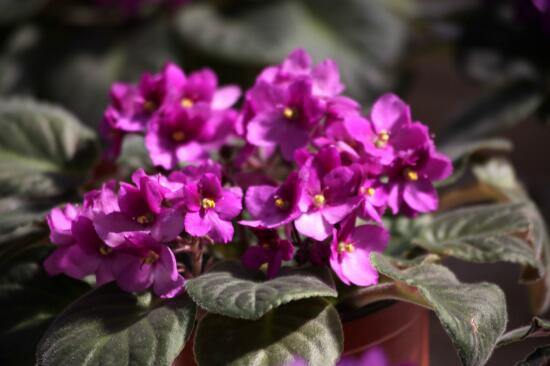
African violets (Saintpaulia) like a warm, semi-shaded environment, and the nighttime temperature in winter must not fall below 12°C. So how do you care for African violets in winter? First, move the African violet to a spot indoors with good light, then keep the room temperature no lower than 12°C, and afterward water and fertilize moderately. After doing this, your African violet should basically be able to overwinter safely.
II. African violet winter care
1. Temperature
In winter, the thing that needs the most attention when caring for African violets is temperature. It is understood that African violets like warmth, and when the temperature drops below 16°C, growth will stop. Although they can tolerate short periods of low temperatures of 7-10°C, if it lasts too long, they are also prone to dying. So for how to care for African violets in winter, the room temperature must not be lower than 12°C.
2. Light
African violets are shade-tolerant plants, but they need sufficient light. Once they are kept in too shady a place for a long time, they will show few flowers, or grow leaves without blooming. So in winter, in order for African violets to receive sufficient light, they should be placed in a spot with good light, such as a sunny windowsill.
3. Watering
In winter, although African violets grow more slowly, they are still growing, so watering should also continue. However, in winter, the amount of water should be reduced, and the watering interval should preferably be controlled to once every 7-10 days. In addition, when watering, do not let water touch the leaves. Of course, it is best to master the African violet watering method, so that mistakes are less likely.
4. Humidity
African violets like a moist environment, and their demand for moisture is also very high. In a relatively dry air environment, growth is not favorable. And winter is exactly when it is very dry, so how do you care for African violets in winter? We should appropriately increase the air humidity. Generally speaking, it is best to keep the air humidity between 40%-70%.
5. Fertilizer
When it comes to African violet winter care, there is one point everyone needs to note, and that is fertilizing: do not continue! Although African violets have high fertilizer requirements, this is also somewhat related to light. If it is winter, the light will not be very strong, and fertilizing at this time will not have much effect. So, it seems everyone can consider applying only a base fertilizer and not applying a top dressing.
How do African violets overwinter? African violet winter care methods / raising the temperature and supplementing light / reasonable water and fertilizer
When it comes to African violets, I believe flower lovers are all familiar with them. They are also called African violets and are a very beautiful flower, often grown indoors in pots. And when growing plants indoors, the thing to fear most is winter, and African violets are no exception. So how do African violets overwinter? Below are African violet winter care methods. Follow the editor and let's learn together!
I. How do African violets overwinter?
According to the growth habits of African violets, they like a warm environment and diffused light, and the nighttime temperature must not be lower than 12°C. So how do African violets overwinter? First, move the African violet to a spot indoors with good light, and keep the ambient temperature above 12°C, then water and fertilize moderately. After doing this, I believe your African violet will be able to overwinter safely.
II. African violet winter care methods
1. Adjust the temperature
How do African violets overwinter? First move them indoors and adjust the temperature to above 12°C. It is understood that the most suitable growth temperature for African violets is 16-24°C. Once the temperature is below 16°C, they will stop growing. Although African violets can tolerate short periods of low temperatures of 7-10°C, if it lasts too long, they are also prone to dying.
2. Supplement light
For African violets to overwinter safely, besides raising the temperature, they should also be placed in a spot with good light, such as a sunny windowsill.. Although African violets are shade-tolerant plants, they need sufficient light. Once they are kept in too shady a place for a long time, they will show few flowers, or grow leaves without blooming.
3. Continue watering
With the temperature raised and light provided, African violets will continue growing in winter, so watering should also continue. However, in winter, the amount of water should be reduced, and the watering interval should preferably be controlled to once every 7-10 days. In addition, when watering, do not let water touch the leaves. Of course, it is best to master the African violet watering method, so that mistakes are less likely.
4. Stop fertilizing
When it comes to African violet winter care, there is one point everyone needs to note, and that is do not fertilize! Although African violets have high fertilizer requirements, this is also somewhat related to light. And in winter, the light will not be very strong, and fertilizing at this time will not have much effect. So at this time do not fertilize, otherwise fertilizer damage will occur, thereby affecting plant growth.
5. Increase humidity
How do African violets overwinter? Besides doing the above points well, there is one more thing everyone needs to do, and that is increase air humidity. The reason is that African violets like a moist environment, and in winter the weather is very dry, which is not favorable for plant growth. So in winter, we should appropriately increase the air humidity. Generally speaking, it is best to keep the air humidity between 40%-70%.
How to water flowers, watering methods
Flower cultivation must involve reasonable watering. Flower cultivation techniques: reasonable watering for garden-planted flower cultivation. Watering for garden-planted flower cultivation is relatively simple. In rainy areas, attention should be paid to drainage in production, especially timely drainage after rain. If there is a long drought without rain, appropriate watering is also needed. Flower cultivation techniques: keep the soil moist, and do not let the soil surface crack, so as not to tear the root system. Flower cultivation techniques: for garden planting, absolutely avoid flood irrigation. Where conditions permit, gardens can use sprinkler irrigation and drip irrigation.The amount and frequency of watering when planting flowers and trees vary according to the main flower cultivation variety, flower cultivation techniques, growth period, weather, and soil. Based on soil moisture conditions, the following points should be noted in specific operations:
According to flower breeding irrigation during the annual growing season, summer temperatures are high, evaporation is high, so water; in winter plants generally stop growing, and under low temperature conditions, there is little water, so do not fill. For one day, irrigation is generally in the morning, but in summer, water evaporates quickly, so reperfusion1 must be done around the afternoon; in winter when the temperature is low, irrigation may be unfavorable, so it is best to irrigate at 10~11 in the morning. Irrigate according to plant type and growth period. Moisture-loving broadleaf plants should be irrigated, and deciduous trees, conifers, and cacti should be irrigated less. Flower cultivation techniques: seedlings should be irrigated less; when entering the growth period and flowering period (or ornamental fruit), they should be irrigated more; when seeds are mature, they should not be irrigated; during dormancy, irrigation should be controlled. In addition, gloxinia (Sinningia), African violet leaves, and African gerbera buds rot easily after water, and these special situations need attention.
Determine the amount and frequency of watering according to the soil. Sand, with pores, has water storage capacity, is easy and not prone to waterlogging, so irrigate appropriately. "Confused sticky soil is wet, when dry it is like a knife" - pay attention to both flooding and prevention, loosen the soil in time, appropriately reduce the number of waterings, and increase the amount of water each time. Soil rich in humus, loose in texture, with large water storage, is not easy to dry out and not easy to waterlog; under the same conditions, the amount and frequency of watering can therefore be reduced. Flower cultivation techniques: reasonable watering for potted flower varieties. Watering potted flowers and planting flower varieties have points in common. Regarding water quality and water temperature, and also according to the temperature preferences and growth stages of various plants, as well as changes in time, appearance, and weather, "look at the sky and look at the irrigation, irrigate", choose an appropriate watering time and appropriate watering amount. The root growth of potted flower varieties is in a limited space, so watering is complex. Potted flower varieties also require special attention to "pot watering".
In spring, as the temperature rises, flowers, grass, and trees awaken and sprout from dormant buds, quickly, and some flower buds begin to grow, and the demand for water begins to increase, especially with the spring wind in the north. The first water after the flower room should drench the spring. Afterward, as the temperature gradually rises, the plant nutrient organs expand, transpiration and evaporation strengthen, that is, gradually increase the number of waterings and shorten the 2 watering intervals, usually from a spring interval of 2to3days of watering1 time, increasing to 1~2 days of watering1 time. Every spring, flowers, grass, and trees, so at the seedling stage they are small, growth is relatively slow, and the amount of water consumed is small, so watering is usually reduced, and the pot soil temperature affects seedling growth.
In hot summer, the weather is clear and the sun is strong. This is the season when most flower breeding and growth is most vigorous. Leaf transpiration and soil evaporation increase rapidly. Only by further increasing the number of waterings and the amount of water can the water needs of flower cultivation be met, at least watering once on a clear day. In even hotter weather, and even often in clearly hot and dry weather, the pot surface evaporates strongly and the pot soil moisture drops rapidly. This is the season with the most pot watering and the largest water amount in the year. Flower cultivation techniques: potted plants face a serious threat from summer drought. A slight carelessness can cause drought and withering to death. Therefore, when the sun is out sooner or later, water once, and in special cases when the pot soil is slightly dry, supplement in time as well. However, for flowers in summer dormancy or semi-dormancy, such as cyclamen, the number of waterings and the amount of water should be reduced. Try to keep it moderately dry, but not too dry; dryness is a disadvantage for plants dormant in summer.
Flower cultivation must involve reasonable watering. Flower cultivation techniques: autumn is the transitional period after summer. Sunlight weakens, temperature gradually drops, and flowers, trees, and bonsai enter a slow growth period. Leaf transpiration and soil evaporation decrease significantly correspondingly compared with summer, generally watering once every 2~3days. Flower cultivation must involve reasonable irrigation. Flower cultivation techniques: winter is the season with the lowest temperature of the whole year, and most potted flower varieties are moved indoors to overwinter. The leaves of deciduous trees wither and the buds go dormant at this time