How does the corn poppy reproduce? Sowing propagation has a high survival rate
The corn poppy is a plant with high ornamental value, and people all over China cultivate it. As more people grow it in various places, questions about its propagation have also drawn more attention. How does the corn poppy reproduce? What are the propagation methods of the corn poppy? Let us take you through them below.
1. How does the corn poppy reproduce? Sowing propagation
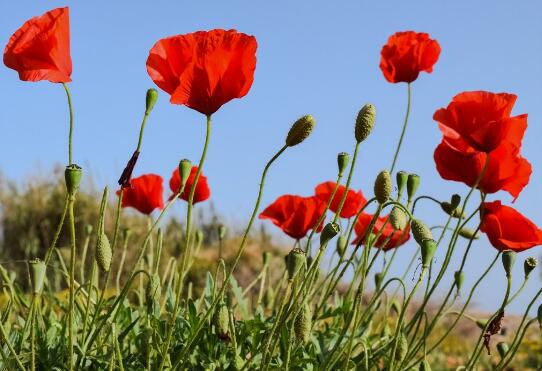
2. Propagation methods of the corn poppy
1. Substrate selection, well-drained
Before sowing the corn poppy, we first need to choose a substrate; this is the step that lays the foundation and is very important. Generally, it is best to choose loose, fertile sandy loam as the substrate. This kind of soil has good drainage and aeration, allows the plant to absorb nutrients better, and is not prone to waterlogging.
2. Substrate disinfection, sun exposure or stirring in a pan
After choosing the substrate for the corn poppy, we also need to disinfect it to avoid pests and diseases in it infecting the plant. When disinfecting, we can break it up and spread it flat in the sun to bake, or put it in an iron pan and stir it over high heat, so that even if there are pests or diseases in it, they will be killed by the high temperature.
3. Seed germination, soaking in warm water
Before sowing and propagating the corn poppy, there is another pre-treatment to do, which is to germinate its seeds. When germinating, we can soak the seeds in warm water, generally for about 1-2 days. When you see the seeds beginning to absorb water and swell, we can take them out and plant them. Seeds that have been germinated will have a higher germination rate.
4. Sowing method, cover with 1cm of soil
The sowing method for the corn poppy is relatively simple. First, we need to apply an appropriate amount of base fertilizer to the soil, then evenly scatter the seeds on the soil surface. After scattering, cover them with about 1cm of soil and then water. When watering, it is best to use the pot-soaking method: place the flower pot about one-half into water, let the water slowly soak up from the bottom, and take the pot out once the soil has a certain moisture level.
5. Follow-up management, pay attention to daily care
After successful propagation by the above method, once it sprouts we need to carry out daily care for the corn poppy. There are many points to pay attention to during care, such as watering and fertilizing, all of which require particular attention. If you do not know how to grow it, you can refer to the article on corn poppy cultivation methods, which has detailed instructions.
Iceland poppy planting, is the Iceland poppy toxic, Iceland poppy price, Iceland poppy flower language
Iceland poppy
The Iceland poppy, also known as the Iceland poppy (scientific name: Papaver nudicaule), is native to the Arctic. It belongs to the same family as the opium poppy, but its morphological characteristics and chemical composition are different. It is an ornamental garden plant, unlike the opium poppy used to extract drugs. It is a perennial herb, about 30 cm tall, growing in clumps and nearly stemless, with basal leaves 15 cm long, stalked, and leaf blades pinnately lobed or half-lobed. Flowers are solitary on leafless scapes, white, orange, or pale red, 7.6 cm in diameter, with stiff hairs throughout. It is distributed in the Arctic regions of both hemispheres as well as Central Asia and North America. It is cultivated in various places in China.Iceland poppy planting
The Iceland poppy is cold-tolerant and suited to ample spring light and a cool climate environment; it is not tolerant of severe heat and humidity. It is usually sown in drills in flowerbed plots in early winter. It has low soil requirements, but loose, fertile sandy loam is best, with a row spacing of 20 cm. After sowing, cover with plastic film, or sow in early spring when the surface just thaws. Seedlings emerge after two weeks, and the film is gradually removed when there is diffused light and no wind. The corn poppy is a taproot flower; its roots are fine and deep, with few lateral roots, and at the seedling stage the root length often exceeds the plant height by about 1 times, so it cannot be transplanted. If transplanted reluctantly, the survival rate is also very low. When drill-sown seedlings are too dense, thin them two or three times at intervals, maintaining a plant spacing of 10 to 15 cm. The corn poppy has low requirements for water and fertilizer, but do not use heavy water and heavy fertilizer or allow soil waterlogging.
The commonly used planting method for the Iceland poppy is sowing, and open-field sowing is suitable. Iceland poppy sowing is generally carried out in early September for autumn sowing. When sowing the Iceland poppy, keep the spacing of spring-sown seedlings at about 25 cm and autumn-sown seedlings at about 30 cm. After sowing, the suitable temperature for the Iceland poppy is 15-20°C. One week after sowing, the seedbed needs to be covered with straw to keep the soil moist. Once the Iceland poppy seedlings emerge, the straw can be removed. Because the seeds of the Iceland poppy scatter, after one year of sowing the environment can be left unsown, and countless small Iceland poppy seedlings will grow on their own in the same place.
Is the Iceland poppy toxic
The Iceland poppy is not toxic.
Annual herb, the whole plant covered with spreading bristles, rarely hairless. Stems erect, 25-90 cm tall, branched. Leaf blade outline lanceolate or narrowly ovate, pinnately parted, lobes lanceolate. Flowers solitary at the top of the stem and branches; buds oblong-obovate, nodding; sepals 2, broadly elliptic; petals 4, circular, transversely broadly elliptic, or broadly obovate, 2.5-4.5 cm long, entire, rarely crenate or emarginate at the apex, purple-red, usually with dark purple spots at the base. Capsule broadly obovate, 1-2.2 cm long, hairless, with inconspicuous ribs. Seeds numerous, kidney-shaped oblong, about 1 mm long. Flowering and fruiting period March-August.
Iceland poppy price
Iceland poppy perennial corn poppy corn poppy seeds four-season flower seeds special offer
Type: seeds | Category: engineering flower seeds | Variety: corn poppy | Class: Chinese herbal medicine, festival, combination, ornamental fruit, ornamental flower | Application scenarios: greening projects, home decoration, home gardening, flower nursery and seedling production
Category: garden plants seedlings, seeds, bulbs
1.00
Iceland poppy flower seeds indoor potted plants flowers and grass flower seeds easy to grow on the balcony
Type: seeds | Category: home gardening flower seeds | Variety: corn poppy | Class: ornamental flower | Application scenarios: balcony vegetable garden, home gardening, flower nursery and seedling production
Category: garden plants seedlings, seeds, bulbs
1.80
Iceland poppy flower language
The corn poppy has a graceful, lush posture, slender and lovely, dancing in the wind like a colorful butterfly spreading its wings, and it is quite thought-provoking. The corn poppy combines both plain elegance and rich, gorgeous beauty, and the two are harmoniously unified in one body. Its appearance and posture greatly carry the charm of a beauty in classical Chinese art, and it can be called an exquisite among flowers and plants.
The flower language of the Iceland poppy: parting of life and death
Related encyclopedia
Pocket scale non-woven bag lamp rush crab claw red rice note 3 ykk zipper ybs zipper large mountain cherry creeping plum wild senna winter plum green pine wristwatch Omega Longines famous watch children's building blocks flint cuckoo orchid curling iron soursop
How to plant the corn poppy How to grow it
Corn poppy planting methods
The corn poppy is suitable for planting outdoors, and its uses are mostly in gardens. It is rarely planted indoors, probably because it needs more sunlight. The flowers can bloom for about 1 week, and water when the soil is dry. Because it is an annual herbaceous flower, it will wither after blooming and will not grow again the next year, but its fruit will contain many seeds. The fruit is similar to the opium poppy fruit. The seeds are hidden inside the seed pod.
If indoors, it must be able to see sunlight. The flowering period of each flower is not long, about 10 days. When the potting soil is dry, water it promptly, and water thoroughly each time. You can harvest after the seeds mature and plant in autumn, but the corn poppy is a taproot plant and is not tolerant of transplanting. After sowing, you can thin appropriately; it grows easily.
The corn poppy is native to Asia and Europe, and is also distributed in North America. It is cold-tolerant. The corn poppy is suited to ample spring light and a cool climate environment, and is not tolerant of severe heat and humidity. It is usually sown in drills in flowerbed plots in early winter. The cultivation of the corn poppy has low soil requirements, but loose, fertile sandy loam is best, with a row spacing of 20 cm. After sowing, cover with plastic film, or sow in early spring when the surface just thaws, and gradually remove the film after seedlings emerge. The corn poppy is a taproot flower; its roots are fine and deep, with few lateral roots, and at the seedling stage the root length often exceeds the plant height by about 1 times, so it cannot be transplanted. If transplanted reluctantly, the survival rate is also very low. When drill-sown seedlings are too dense, thin them two or three times at intervals, maintaining a plant spacing of 10 to 15 cm. The corn poppy has low requirements for water and fertilizer, but avoid heavy water and heavy fertilizer and soil waterlogging.
How to plant the corn poppy
Propagation: sowing propagation. Sow in September-October in a pre-prepared seedbed. The suitable germination temperature is 20°C. Because the seeds are very small, the seedbed soil must be finely prepared. After sowing, do not cover with soil; cover with straw to keep moist, and remove the cover after seedlings emerge.
Management: After seedlings emerge, thin them. The planting spacing for final plants is about 30 cm. When they grow to 5-6 leaves, choose a cloudy day, water thoroughly first, and then transplant; when transplanting, be careful not to damage the roots, and keep soil around them, pressing the soil firm when planting. Usually do not water too much; just keep it moist often. During the growing period, apply once every 2-3 weeks with decomposed urine diluted 5 times with water. For plants not kept for seed, promptly cut off withered flowers during the flowering period so the remaining flowers bloom better. Capsules mature unevenly, so harvest in batches to keep seeds.
When to plant the corn poppy
Sow every year in September-October in a pre-prepared seedbed. The germination temperature is about 20°C. Because the seeds of the corn poppy are very small, there is no need to cover with soil after sowing; just keep them moist.