How does Buddleja officinalis propagate? Seed propagation has a high survival rate
Buddleja officinalis is a relatively common flowering plant in people's lives, and it can be seen in many regions of China. As more people grow it in various places, questions about its propagation have also drawn considerable attention. How does Buddleja officinalis propagate? What are the propagation methods for Buddleja officinalis? Below, the editor will walk everyone through it.
1. How does Buddleja officinalis propagate? Seed propagation
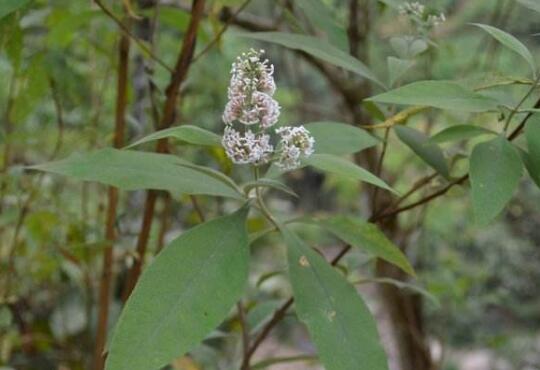
When it comes to how Buddleja officinalis propagates, it is mainly done through seed propagation. After countless trials by people, this propagation method still has a very high survival rate. Of course, the premise is that we must master the operating method and also be careful throughout the process. The specific details of seed propagation are given below, and interested friends can take a look.
2. Propagation methods of Buddleja officinalis
1. Substrate selection
Before propagating Buddleja officinalis, we first need to choose the soil, which is the step of laying a solid foundation and is very important. Generally, it is best to choose loose, fertile humus soil as the substrate. This kind of soil is rich in nutrients and has relatively good drainage and aeration, allowing the plant to absorb nutrients better.
2. Substrate disinfection
After choosing the substrate for Buddleja officinalis, we also need to disinfect it to avoid carrying pests and diseases that could infect the plant. When disinfecting, we can break it up and spread it flat under the sun to bake, or put it into an iron wok and stir-fry it over high heat. In this way, even if there are pests and diseases in it, they will be killed by the high temperature.
3. Seed germination promotion
In addition to substrate selection and disinfection, there is another pre-treatment we need to do before sowing, which is to promote germination of the Buddleja officinalis seeds. We can soak the seeds in warm water at 30-40°C for about 12 hours. Once the seeds begin to absorb water and swell, take them out and sow them. This can make the seeds germinate faster.
4. Sowing method
Before propagating Buddleja officinalis by sowing, we first need to apply an appropriate amount of base fertilizer into the substrate, then evenly scatter the germinated seeds on the soil surface. After scattering them, cover with 1-2 cm of soil and then water. When watering, it is best to use the immersion pot method, because Buddleja officinalis seeds are relatively small, and if watered directly, they are easily washed away.
5. Follow-up management
After everyone has successfully propagated it according to the above method, we can carry out follow-up care. There are also many points to pay attention to when caring for Buddleja officinalis, such as watering and fertilizing, all of which require particular care. If you do not know how to grow it, you can refer to the article on how to grow Buddleja officinalis, which contains detailed care instructions.
Propagation methods of Buddleja officinalis
Seed propagation of Buddleja officinalis
Generally, sowing propagation is carried out in autumn. Scatter the Buddleja officinalis seeds collected that year evenly on a prepared seedbed, rake it level, and cover with about 2-3 cm of soil, or sow in furrow rows with a row spacing of about 35 cm and a furrow depth of about 3 cm, using 1 kg of seed per mu. After mixing the seeds with plant ash, scatter them evenly into the furrows, cover with soil about 0.5 cm deep, and finally cover with grass, keeping the seedbed moist at all times. After sprouting, the grass cover can be removed. Grow the seedlings for 1-2 years, and after the seedlings reach about 1 m in height, transplant them. After digging out the young seedlings, properly prune the root system, and open holes for transplanting at a row spacing of 2 cm and a plant spacing of 2 cm. Plant one seedling per hole, cover with soil and press firmly, water with rooting water, and apply sufficient base fertilizer.
Division propagation of Buddleja officinalis
The roots of Buddleja officinalis have very strong sprouting ability. When transplanting, one plant can be divided into 2-3 plants for transplanting. Control a reasonable distance, generally with a plant spacing of 1 m and a row spacing of 2 m.
Buddleja officinalis Buddleja Officinalis Maxim. Buddleja officinalis illustrated guide: How to grow Buddleja officinalis / How to propagate Buddleja officinalis
Buddleja officinalis profileBuddleja officinalis Buddleja Officinalis Maxim.
How to grow Buddleja officinalis and precautions Introduction to Buddleja officinalis
Buddleja officinalis is 1-4 m tall. The branchlets are slightly four-angled and grayish brown; the branchlets, underside of leaves, petioles, and inflorescences are all densely covered with grayish white stellate short tomentum. It is the dried flower or flower bud of Buddleja officinalis, a plant in the Loganiaceae family. Buddleja officinalis has the effects of dispelling wind, cooling blood, nourishing the liver, and improving eyesight. It can treat red, swollen, and painful eyes, excessive tearing and photophobia, blue blindness and eye opacities, and wind-string ulcerated eyes. It grows at an altitude of 200-2800 m in sunny hillsides, riversides, shrub thickets by villages, or forest margins. Distribution: China, Bhutan, Myanmar, Vietnam.
Buddleja officinalis is a deciduous shrub, 1-3 m tall, and can reach more than 6 m at maximum. The branchlets are slightly four-angled, densely covered with grayish white tomentum, which gradually falls off later. Leaves are opposite, petioles 6-10 mm long, covered with grayish white tomentum; stipules are reduced to a transverse line between the bases of the two petioles; leaf blades are oblong-lanceolate, broadly lanceolate, or linear-lanceolate, 5-12 cm long and 1-4.5 cm wide, apex acuminate, base cuneate or broadly cuneate, margin entire or with indistinct sparse small serrations, papery, dark green above, covered with fine stellate hairs, veins sunken, densely covered with grayish white or yellow stellate tomentum below, veins raised.
Other names of Buddleja officinalis: dye-rice flower, Jiulixiang, small brocade flower, Meng flower, yellow-rice flower, geda-pi tree flower, chicken-bone flower, Meng flower, Meng flower pearl, glutinous-rice flower, small brocade flower, water-brocade flower, lao Meng sheng, sheep's ear, rice-soup flower, dye-rice flower, wine-medicine flower, yellow-rice flower, chicken-bone flower, geda-pi tree flower, sheep's ear tip.
Morphological characteristics of Buddleja officinalis
Buddleja officinalis is a shrub, 1-4 m tall. The branchlets are slightly four-angled and grayish brown; the branchlets, underside of leaves, petioles, and inflorescences are all densely covered with grayish white stellate short tomentum.
Leaves are opposite, leaf blades papery, narrowly elliptic, long ovate, ovate-lanceolate, or oblong-lanceolate, 4-19 cm long and 2-8 cm wide, apex acuminate, acute, or obtuse, base cuneate or broadly cuneate, sometimes decurrent to the petiole base, usually entire, rarely sparsely serrate, dark green above, covered with stellate hairs, light green below; lateral veins 8-14 on each side, flat above, sunken after drying, raised below, reticulate veins obvious; petioles 2-20 mm long; stipules constricted into a transverse line between the bases of the two petioles.
Flowers are numerous and dense, forming terminal cymose panicles, inflorescences 5-15 (-30) cm long and 2-10 cm wide; pedicels very short; bracteoles lanceolate, covered with short tomentum; calyx campanulate, 2.5-4.5 mm long, outside, like the outside of the corolla, densely covered with stellate short tomentum and some glandular hairs, calyx lobes triangular or broadly triangular, 0.6-1.2 mm long and wide, apex acute or obtuse; corolla violet, later turning white or pale yellowish white, throat orange-yellow, 1-1.3 cm long, open diameter 2-3 mm, corolla tube cylindrical, 8-11 mm long, 1.5-2.2 mm in diameter, yellow inside, sparsely pubescent, corolla lobes ovate, 1.5-3 mm long and 1.5-2.8 mm wide, glabrous inside; stamens inserted at the middle of the inner wall of the corolla tube, filaments very short, anthers oblong, yellow, base auriculate, introrse, 2-celled; pistil 3.5-5 mm long, ovary ovoid, 1.5-2.2 mm long and 1.2-1.8 mm wide, covered with stellate short tomentum from above the middle to the base of the style, style 1-1.5 mm long, stigma club-shaped, 1-1.5 mm long.
The capsule of Buddleja officinalis is elliptic, 4-8 mm long and 2-3 mm wide, dehiscing into 2 valves, exocarp covered with stellate hairs, base with persistent perianth; seeds numerous, narrowly elliptic, 1-1.2 mm long and 0.3-0.5 mm wide, winged at both ends.
The flowering period of Buddleja officinalis is March-April, and the fruiting period is May-August.
Ecological habits of Buddleja officinalis
Buddleja officinalis grows at an altitude of 200-2800 m in sunny hillsides, riversides, shrub thickets by villages, or forest margins. It has strong adaptability and can also grow in limestone mountainous areas.
Buddleja officinalis grows on hillsides, in mixed woodlands, by rivers, and in hilly areas, usually as a semi-shade plant.
Cultivation techniques of Buddleja officinalis: site selection and land preparation
Choose hillside land or riverside flat land with deep soil layers and fertile soil for planting. After selecting the land, deep plow 30-40 cm, rake finely and level, remove weeds, and make seedbeds 120-130 cm wide. Apply sufficient base fertilizer in the field, 1500-2000 kg per mu.
Field management
During the seedling stage, Buddleja officinalis should be loosened and weeded in time to keep the soil moist. A certain amount of nitrogen fertilizer or human and livestock manure water can also be applied to promote seedling growth. In the field, before the stand closes, loosen the soil and apply topdressing 2-3 times each year. After the stand closes, loosen the soil and apply topdressing once each year around November. It is advisable to apply decomposed human manure or urine, or apply 1500-2000 kg of barnyard manure per mu, to promote more flowers and buds. If drought occurs, water in time.
Harvesting and processing
Buddleja officinalis can bloom after 2-3 years of transplanting. Generally, in spring, harvest unopened flower buds and inflorescences, remove impurities, and sun-dry them. Store in a dry, ventilated place.
Propagation methods of Buddleja officinalis
Buddleja officinalis commonly uses seed propagation and division propagation.
Seed propagation
In spring and autumn, use seeds collected that year and scatter them on a prepared seedbed, rake level, and allow the seeds to enter the soil 2-3 cm, or sow in furrow rows with a row spacing of 30 cm, furrow depth of 3 cm, and sowing width of 10 cm, using 1 kg of seed per mu. When sowing, mix the seeds with plant ash, then evenly scatter them into the furrows, cover with a layer of plant ash, and keep the soil moist, building a shade frame or covering with grass. If drought occurs, spray water and soak the soil thoroughly. When the seedlings are about 10 cm tall, remove the shade frame and thin the seedlings, generally with a plant spacing of 15 cm. When the seedlings are 100 cm tall, transplant them to the field, digging holes at a plant spacing of 1 m and a row spacing of 2 m, with holes 30 cm deep, one plant per hole, cover with soil and press firmly, water, and apply sufficient base fertilizer.
Division propagation
Because the roots of Buddleja officinalis have very strong sprouting ability, plants generally grow in clumps. When transplanting, one plant can be divided into 2-3 plants for transplanting. Plant at a plant spacing of 1 m and a row spacing of 2 m.
Disease and pest control of Buddleja officinalis
Buddleja officinalis has very few diseases and pests, mainly red spider mites: they damage tender leaves and young buds. Control method: spray with 20% fenbutatin oxide wettable powder at 700-800 times dilution, or use a decoction of Sophora flavescens stems and leaves, add lime, and spray.
Variety classification of Buddleja officinalis and related species
Glandular-crowned butterfly bush Buddleja adenantha Diels
Winged-branch butterfly bush Buddleja alata Rehder & E. H. Wilson
Badong butterfly bush Buddleja albiflora Hemsl.
White-backed maple Buddleja asiatica Lour.
Short-spike butterfly bush Buddleja brachystachya Diels
Dense-fragrant butterfly bush Buddleja candida Dunn
Caryopteris-leaved butterfly bush Buddleja caryopteridifolia W. W. Sm.
Caryopteris-leaved butterfly bush (original variety) Buddleja caryopteridifolia W. W. Sm. var. caryopteridifolia
Clustered-flower butterfly bush (variety) Buddleja caryopteridifolia W. W. Sm. var. eremophila (W. W. Sm.) C. Marquand
Large-flowered butterfly bush Buddleja colvilei Hook.f.
Wrinkled-leaved butterfly bush Buddleja crispa Benth.
Large-leaved butterfly bush Buddleja davidii Franch.
Glandular-leaved butterfly bush Buddleja delavayi Gagnep.
Purple-flowered butterfly bush Buddleja fallowiana Balf.f. & W. W. Sm.
Yunnan-Sichuan butterfly bush Buddleja forrestii Diels
Halberd-leaved butterfly bush Buddleja hastata Prain ex Marquand
Entire-leaved butterfly bush Buddleja heliophila W. W. Sm.
Flat-veined butterfly bush Buddleja limitanea W. W. Sm.
Large-spike butterfly bush Buddleja macrostachya Benth.
Distribution area of Buddleja officinalis
Buddleja officinalis is often distributed in Bhutan, Myanmar, Vietnam, etc., and the type specimen was collected in southern Shaanxi.
Buddleja officinalis is produced in Shanxi, Shaanxi, Gansu, Jiangsu, Anhui, Fujian, Henan, Hubei, Hunan, Guangdong, Guangxi, Sichuan, Guizhou, Yunnan, and Tibet, China, and other provinces and regions.
Medicinal dietary or medicinal value of Buddleja officinalis
The medical information and health dietary information on Huahua Net are for reference only and cannot be used as a basis for diagnosis or medical treatment. Any health problem should be consulted with professional medical staff, and the treatment of any disease should follow medical advice.
Ultimate flower-protecting mission: love yourself, start from reality, and strictly follow medical advice. For illness, do not be careless, do not delay, do not give up hope, face it bravely, use love to warm the silent world, and use your heart to care for the flower field within.
Edible value
Recipes: yellow-dyed glutinous rice, flower tea, etc.
Medicinal value
Collection and processing: the roots, leaves, and flowers are used medicinally. Flowers are harvested in spring and summer; roots and leaves can be collected in all four seasons. Sun-dry for later use, or use fresh.
"Leigong Paozhi Lun": Whenever using Buddleja officinalis, first pick it clean, soak it in wine for one night, strain it out and wait until dry, then mix with honey to make it moist, steam it, take it out from mao to you [5 a.m. to 7 p.m.], dry it in the sun; mix and steam in this way three times, then dry it in the sun for use. For each one liang processed, soak with eight liang of wine, wait until the color changes, and steam with half a liang of honey as the standard.
Properties: flowers, sweet and bland, slightly cold; leaves, roots, slightly bitter, slightly cold. Clears heat and drains fire, removes eye opacities, used for red, swollen, and painful eyes, excessive tearing and photophobia, clearing the liver and improving eyesight, eye opacities, dim vision due to liver deficiency, blurred vision, relieving cough and calming panting, and beautifying the face.
"Bencao Jingshu": Buddleja officinalis, judging from what the "Ben Jing" treats, is nothing more than caused by liver deficiency with heat. The liver opens into the eyes, and the eyes can see when they obtain blood. If liver blood is deficient, then there is blue blindness and eye opacities; if liver heat is severe, then there is red swelling, tears, red veins, as well as residual toxin from smallpox in children and gan qi attacking the eyes. This medicine is sweet to supplement blood and cold to remove heat. When liver blood is sufficient, all syndromes will be cured.
Usage and dosage: 3-9 grams.
Classic selected formulas
① To treat wind qi attacking and pouring in, dimness of both eyes, eye discharge and tears with photophobia, wind millet on the eyelids, hidden roughness and difficulty opening, either itching or painful, gradually developing eye opacities, unclear vision, and long-standing migraine pulling both eyes, gradually feeling smaller, dim and rough with hidden pain, as well as sudden red swelling and pain, all are treated: Buddleja officinalis (clean), abalone shell (boiled with salt and east-flowing water for one fu shi, strained out and ground into powder), horsetail, Tribulus terrestris (stir-fried and removed of tips), Notopterygium (removed of reed), chrysanthemum, each in equal parts. Grind the above into fine powder. Take one qian per dose, adjusted with clear preserved tea, after meals, twice daily. ("Jufang" Buddleja officinalis Powder)
② To treat eye opacities: Buddleja officinalis and Phellodendron root (washed and filed) one liang each. Grind the above two ingredients into powder, mix with refined honey and form into pills, the size of parasol tree seeds. Take 10 to 15 pills per dose, after meals. Take with cooked water before sleeping, or decoct with malt sugar water. ("Shengji Zonglu" Buddleja officinalis Pill)
③ To treat photophobia, deficiency and damage of liver and gallbladder, and unclear pupil: Buddleja officinalis, Notopterygium, chrysanthemum, Vitex fruit, Celosia seed, horsetail, abalone shell, Tribulus terrestris, goji berry. Grind the above in equal parts into powder. Take three qian per dose, taken with clear tea after meals. ("Yinhai Jingwei" Buddleja officinalis Powder)
Pharmacological effects
Acacetin is similar to quercetin and has vitamin P-like effects. Oral administration to mice at 25-100 mg/kg can reduce formaldehyde-induced inflammation; 50-100 mg/kg can also reduce the permeability and fragility of skin and small intestinal blood vessels. Acacetin also has some antispasmodic effect on increased tension in isolated rat small intestine caused by barium chloride, histamine, acetylcholine, etc. If injected into rat small intestine (40 mg/kg) or given intravenously to rabbits (10-25 mg/kg), it can cause a brief, mild increase in bile secretion and has a relaxing effect on bile duct smooth muscle. Intravenous injection of 25 mg/kg in rabbits can slightly increase urine volume within 25-30 minutes (75%). In normal rats, it does not affect sleep time caused by cyclobarbital, but in rats with carbon tetrachloride hepatitis, it can shorten sleep time. Acacetin has low toxicity, with an LD50 of 933 mg/kg in mice. In isolated mouse small intestine specimens, with acetylcholine-induced spasm, the antispasmodic potency of acacetin is 75% of that of papaverine.
Main producing areas
Hubei, Sichuan, Henan, Shaanxi, Yunnan, and other places. Wild.
Functions and indications
Dispels wind, cools blood, nourishes the liver, and improves eyesight. Treats red, swollen, and painful eyes, excessive tearing and photophobia, blue blindness and eye opacities, and wind-string ulcerated eyes.
Clears the liver and improves eyesight: this product is a specialized ophthalmic medicine, used for eye diseases due to blood deficiency and liver heat, often combined with goji berry and dodder seed. To treat eye diseases due to excess heat in the liver channel, it is often combined with Celosia seed, chrysanthemum, etc.
Indications: treats red, swollen, and painful eyes, excessive tearing and photophobia, blue blindness and eye opacities, and wind-string ulcerated eyes.
Usage and dosage: decoct in soup, 1-3 qian; or make into pills or powder.
Medicinal source: the dried flower or flower bud of Buddleja officinalis, a plant in the Loganiaceae family.
Ecological environment: grows on hillsides, in mixed woodlands, by rivers, and in hilly areas, usually as a semi-shade plant.
Resource distribution: Shaanxi, Gansu, Hubei, Hunan, Guangdong, Guangxi, Sichuan, Guizhou, Yunnan, and other provinces and regions.
Chemical composition: the flower spikes contain various flavonoids such as buddleoside and acacetin.
Harvesting and storage: from February to March, before the flowers open, pick the clustered flower buds, remove impurities such as branches and stems, and sun-dry.
Processing: pick out impurities and sift clean of dust. "Leigong Paozhi Lun": "Whenever using Buddleja officinalis, first pick it clean, soak it in wine for one night, strain it out and wait until dry, then mix with honey to make it moist, steam it, take it out from mao to you [5 a.m. to 7 p.m.], dry it in the sun; mix and steam in this way three times, then dry it in the sun for use. For each one liang processed, soak with eight liang of wine, wait until the color changes, and steam with half a liang of honey as the standard."
Contraindications: use with caution in eye diseases belonging to yang deficiency and internal cold.
Compatibility applications
Buddleja officinalis combined with goji berry: Buddleja officinalis clears the liver and nourishes blood, improves eyesight and removes opacities; goji berry tonifies the liver and kidneys and improves eyesight. When the two are used together, both clearing and tonifying are applied, with the effects of clearing the liver, tonifying the liver, and improving eyesight, used to treat dim vision and blurred vision caused by liver blood deficiency with heat.
Buddleja officinalis combined with chrysanthemum and abalone shell: Buddleja officinalis clears the liver and improves eyesight and removes opacities; chrysanthemum disperses wind and dissipates heat; abalone shell clears the liver and improves eyesight. When combined with Buddleja officinalis, its power to clear the liver and improve eyesight is stronger. When the three are used together, they have the effects of dispersing wind, clearing the liver, improving eyesight, and removing opacities, used to treat red, swollen, and painful eyes and eye opacities due to liver heat.
The whole plant is used medicinally, especially the densely born inflorescences and the flower buds that are grayish yellow in color, have short tomentum, and are soft in texture as the best quality. The flowers (including inflorescences) have the effects of clearing heat and draining dampness, improving eyesight, and removing opacities. The roots can clear heat and detoxify. Veterinarians use the branches and leaves to treat red and white dysentery in cattle and horses. In Hubei, Sichuan, Guangxi, and other places, the flower buds of Edgeworthia chrysantha Lindl., a plant in the Thymelaeaceae family, are also used as a substitute for Buddleja officinalis. The flowers contain buddleo-glucoside, which upon hydrolysis yields acacetin, rhamnose, glucose, etc., and can be used medicinally.
Modern research
1. Chemical composition: this product contains acaciin, Buddleja saponins A and B, p-methoxycinnamoyl catalpol, catalposide, catalpol, and acaciin hydrolyzes to yield acacetin, etc.
2. Pharmacological effects: the acacetin contained in this product has vitamin P-like effects, can reduce formaldehyde-induced inflammation, can reduce the permeability and fragility of skin and small intestinal blood vessels, and has antispasmodic and mild cholagogic and diuretic effects.
3. Clinical research: using Buddleja officinalis, horsetail, abalone shell, and chrysanthemum, grind into powder, decoct in water, and take, effective in treating conjunctivitis, corneal opacities, cataracts, and other eye diseases (Shaanxi Ningqing Chinese Herbal Medicine Selection, 1971).
Abstracts from ancient texts
1. "Kaibao Bencao": "Treats blue blindness and eye opacities, red roughness and excessive eye discharge and tears, eliminates red veins in the eyes, and treats bran-like smallpox in children and gan qi attacking the eyes."
2. "Bencao Jingshu": "Buddleja officinalis is the proper medicine for the Jueyin liver system, and what it treats is nothing more than caused by liver deficiency with heat. The liver opens into the eyes, and the eyes can see when they obtain blood. If liver blood is deficient, then there is blue blindness and eye opacities; if liver heat is severe, then there is red swelling, eye discharge and tears, red veins, as well as residual toxin from smallpox in children and gan qi attacking the eyes. This medicine is sweet to supplement blood and cold to remove heat. When liver blood is sufficient, all syndromes will be cured."
Effects and uses of Buddleja officinalis: ornamental value
The flowers of Buddleja officinalis are fragrant and beautiful, and it is a relatively good garden ornamental plant in the south.
Economic value
Buddleja officinalis can extract aromatic oil and can also be used as a yellow food dye. The stem bark fibers are tough and can be used as a papermaking raw material.
Cultural Background and Folk Customs of Buddleja officinalis
In Xishuangbanna, Yunnan, when the dye-rice flowers bloom, the village women and children always go into the mountains in groups, singing mountain songs, pick clusters of dye-rice flowers and put them into bamboo-woven back baskets to bring home, either using the fresh flowers directly to cook rice or tying them in bundles with palm leaves and hanging them on fences or walls. Whenever there is a festive holiday or friends and relatives come to visit, people will take down the air-dried but still fragrant dye-rice flowers, boil them in water and cook rice. Whether dried or fresh, the dye-rice flowers turn yellow immediately after being boiled in clear spring water. The villagers filter the boiled dye-rice flower water and then steam glutinous rice with it; the steamed glutinous rice is golden yellow and carries a rich floral fragrance. In their hometown, the villagers also pound this golden yellow glutinous rice into baba that has color, aroma and taste all at once, either for their own consumption or as gifts for relatives and friends. Some villagers also use dye-rice flower water to dye yellow paper and make paper money, which they burn for the souls of the dead below the nine springs, expressing respect and remembrance for their ancestors.
Related Legends
Regarding the custom of the Dai people in Xishuangbanna liking to use Buddleja officinalis to make yellow "hao leng", there is also a legend that has been passed down. A long time ago, a family had a Buddleja officinalis tree two zhang tall growing in their courtyard. On this family's balcony, on one side she washed rice and vegetables. One day when the Buddleja officinalis was in full bloom, she placed the earthen basin holding soaked glutinous rice on the balcony under the tree. At night, a strong wind blew, and many Buddleja officinalis branches and flowers were blown down by the wind, and one branch of Buddleja officinalis happened to fall into the earthen basin. In the early morning of the next day, when the hostess washed the rice, she picked out the flower branch from the basin, but quite a few Buddleja officinalis flowers still remained among the rice. She put the rice into a wooden steamer and steamed it. After the rice was steamed, gusts of a special fragrance drifted out. When the hostess lifted the lid of the wooden steamer and looked, she was stunned, discovering that the usual white rice had become yellow rice, and its smell was also much more delicate than usual. The whole family was overjoyed, and after eating it, everyone praised it without end. From then on, this family used Buddleja officinalis to soak rice and steam glutinous rice. After this matter spread from one to ten and from ten to a hundred, the local people all knew that Buddleja officinalis could be used as a dye for glutinous rice. Dye-rice flower is also a symbol used by Dai sons and daughters to express loyal and unchanging love.
Documentary Discussion
For Buddleja officinalis, in Hubei, Sichuan, Guangxi and other places, the flower buds of Edgeworthia chrysantha, a plant in the Thymelaeaceae family, are still used as Buddleja officinalis. In commerce it is customarily called "xin menghua" or "menghua zhu", and in Sichuan herbal medicine it is named "menghua".
1. "Buddleja officinalis, judging from what the Ben Jing treats, is nothing more than what is caused by liver deficiency with heat. The liver opens into the eyes, and the eyes can see when they obtain blood. If liver blood is deficient, then there is blue blindness and skin opacity; if liver heat is severe, then there is redness and swelling, eye discharge, tears and red vessels, as well as the residual toxin of smallpox in children, and gan qi attacking the eyes. This medicine is sweet to tonify blood and cold to remove heat; when liver blood is sufficient, all these syndromes will be cured without exception." (Bencao Jingshu)
2. "Buddleja officinalis, sweet and slightly cold... enters the liver meridian, removes heat and nourishes the nutritive. The liver opens into the eyes, and the eyes can see when they obtain blood. When deficient, there is blue blindness and skin opacity; when hot, there is redness, swelling, eye discharge and tears. Red vessels in the eyes and the residual toxin of smallpox in children, with gan qi attacking the eyes, obtain this medicine: sweet can tonify, cold can remove heat, and when liver blood is sufficient, all these syndromes will be cured without exception. However, its flavor is weaker than its qi; when assisted by blood-nourishing medicines, it is even more powerful." (Bencao Qiuzhen)
3. Buddleja officinalis: "Buddleja officinalis, sweet and slightly cold, moistens liver dryness, treats red vessels in the eyes, blue blindness and clouded opacity, redness, swelling and eye discharge, and gan qi attacking the eyes in children." (Bencao Haili)
4. "Buddleja officinalis is the correct medicine for the jueyin liver system, and what it treats is nothing more than what is caused by liver deficiency with heat. This medicine is sweet to tonify blood and cold to remove heat; when liver blood is sufficient, all these syndromes will be cured without exception." (Bencao Jingshu)
The Flower Language of Buddleja officinalis
The flower language of Buddleja officinalis: please let happiness arrive.
Pictures of Buddleja officinalis