Can Butterfly Bush Be Propagated by Cuttings? Master the Cutting Method Easily with 5 Points to Note
Butterfly bush (Buddleja) is a flowering plant with high ornamental value, and it can be seen in many provinces in China such as Jiangsu, Anhui, and Zhejiang. As more people grow it, questions about its propagation have drawn considerable attention, and the one asked most often is whether butterfly bush can be propagated by cuttings. The answer to this question is yes, so what needs to be noted in the cutting method for butterfly bush? Below, the editor will walk you through it.
1. Can Butterfly Bush Be Propagated by Cuttings? Yes
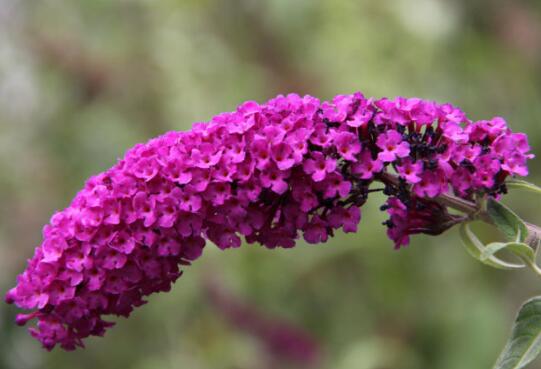
2. The Cutting Method for Butterfly Bush
1. Substrate Selection
Before propagating butterfly bush by cuttings, we first need to choose a substrate, which is the step that lays the foundation and is very important. Generally, it is best to choose a loose, fertile sandy loam as the substrate. This kind of soil has relatively good drainage and aeration, allows the plant to absorb nutrients better, and is less prone to waterlogging.
2. Substrate Disinfection
After choosing the substrate for butterfly bush, we also need to disinfect it to prevent pests and diseases in it from being transmitted to the plant. There are two disinfection methods: one is to break it up and spread it flat under the blazing sun for solar disinfection, and the other is to put it in a pot and stir-fry it for disinfection, which can effectively eliminate pests and diseases.
3. Cutting Selection
The choice of cuttings also has a great impact on the survival rate of butterfly bush cuttings. Generally, it is best to choose relatively robust branches free of pests and diseases as cuttings. If the branch we choose looks very thin and slender, then it can basically be judged that the cutting will fail, so choosing the cutting is a very important step.
4. Cutting Method
Among the propagation methods for butterfly bush, cutting propagation is a relatively simple one. First, we can use a chopstick to poke a hole in the soil, then insert the cutting into the soil up to two-thirds of its length before watering. When watering, be sure to water thoroughly at one time, and remember not to cause waterlogging.
5. Follow-up Management
After you have successfully rooted the cuttings according to the above method, we can carry out follow-up care. There are also many points to note when caring for butterfly bush, such as watering and fertilizing, which all have their own particular requirements. If you do not know how to grow it, you can refer to the article on butterfly bush cultivation methods, which contains detailed care instructions.
Can Butterfly Bush Be Propagated by Cuttings?
Can Butterfly Bush Be Propagated by Cuttings?
Butterfly bush can be propagated by cuttings. The cutting method is as follows:
Cuttings of butterfly bush are generally taken in May and June each year, when the survival rate is high and propagation is rapid. Before cutting, build a shade shed, disinfect the river sand in the cutting bed, and select well-growing semi-lignified branches. Cut a 10 cm segment, remove all the lower leaves, cut off two-thirds of the upper leaves, make a flat cut at the top and a slanted cut at the bottom. Draw a furrow about 5 cm deep in the river sand, place the cuttings neatly, then cover with sand, pat firm, and spray a little water. The leaves of the cuttings should not touch each other and should be evenly distributed. After all are inserted, spray water again, thoroughly, then cover with plastic film and seal the edges all around.
Cutting Care for Butterfly Bush
Butterfly bush likes to grow in a warm and humid environment and prefers fertile, deep soil. It has relatively strong vitality and adaptability, but it is not tolerant of waterlogging. It generally grows by roadsides or in riverside thickets in mountainous areas at an altitude of 200-2700 m. According to these growth habits, to grow a beautiful butterfly bush, it needs proper care after cutting.
Post-cutting care is mainly about cooling and maintaining moisture. You can spray water twice a day and keep the temperature inside the shed at around 28°C. In May and June, rooting takes about 20 days; in July and August, rooting begins in about 2 weeks. After rooting, pay attention to ventilation and control moisture. After one week of hardening off, it can be transplanted.
Butterfly bush can be propagated by cuttings, but be sure to do it the right way!
How to Grow Butterfly Bush: The Cutting Propagation Method for Butterfly Bush
Butterfly bush, when crushed and put into a river, can stupefy live fish and make them easier to catch, hence the name "fish-intoxicating grass" (butterfly bush). How do you grow butterfly bush? In this article, the editor will share with you the cutting propagation method for butterfly bush.
Propagation Method
Softwood cuttings taken during the growing season in May and June are preferable. They have a high survival rate, grow fast, and propagate quickly.
Before cutting, first build a shade shed. Disinfect the river sand in the cutting bed with potassium permanganate or carbendazim. Use semi-lignified branches cut into 10 cm segments, remove all the lower leaves, and cut off two-thirds of the upper 2-3 leaves. Make a flat cut at the top about 1 cm from the bud, and make a slanted cut on the back side of the bud at the bottom into a horseshoe shape.
Use a wooden strip to draw a furrow 5 cm deep in the river sand. After dipping the cuttings in rooting hormone, place them neatly, cover with sand, pat firm, and spray water. The cutting density should be such that the leaves do not touch each other and are evenly distributed. After the whole bed is fully planted, spray water thoroughly once more, then build an arched shed and cover it with plastic film, sealing all around.
Before rooting, spray water twice a day to cool and maintain moisture, keeping the temperature inside the shed at around 28°C and the relative humidity above 90%. In May and June, rooting takes about 20 days; in July and August, rooting begins in 2 weeks. After rooting, control moisture, pay attention to ventilation, and remove the arched shed according to rooting conditions. After one week of hardening off, transplant.
Field Planting Management
Use the rooted shoots after cutting for bare-root transplanting, and the nursery land must be carefully plowed and harrowed. To prevent pests and diseases, apply 3 kg to 4 kg of phoxim granules and 50 kg of ferrous sulfate per mu when preparing the nursery land. When transplanting, follow the principle of "fast": transport quickly and plant quickly, and irrigate promptly after finishing a bed. Because butterfly bush grows fast, the row spacing should not be too small; 35 cm x 50 cm is appropriate. After transplanting, directly cover the seedlings with a shade net for 2-3 days. After 3 days, remove the shade net in the afternoon and water thoroughly once more. When the surface is slightly dry, shallowly hoe once to preserve soil moisture. After 7-10 days, the transplanted seedlings can survive, and after 2 months a scene of brilliant colors will appear before your eyes.
How to Grow Butterfly Bush: The Cutting Propagation Method for Butterfly Bush has been shared with you here. Butterfly bush has both tall varieties and dwarf varieties. Tall varieties are tall and dense, so a suitable site should be chosen when planting.