How to grow Pentas lanceolata? Detailed planting methods for spring and autumn
Among the propagation methods for Pentas lanceolata, there are mainly two: seed propagation and cutting propagation. Seed propagation is the more commonly used one, and its survival rate is also very high. However, to succeed in growing it, there are many points to pay attention to. How do you grow Pentas lanceolata? What are the planting methods for Pentas lanceolata? Let's take a look below.
I. How to grow Pentas lanceolata
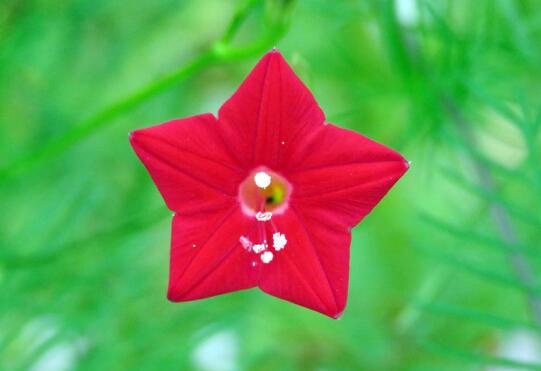
When it comes to how to grow Pentas lanceolata, there are many methods we need to pay attention to, such as the selection and disinfection of the substrate, and the germination of seeds, all of which are quite important. Of course, the most important thing is to operate carefully. After all, this propagation method has been tested by countless people and has accumulated a great deal of experience, so the survival rate is still quite high. As for the specific planting techniques, they are introduced below. Let's take a look.
II. Planting methods for Pentas lanceolata
1. Planting time: spring and autumn
When planting Pentas lanceolata, choosing a suitable time is very important. As for when it is most suitable to sow Pentas lanceolata, we can choose spring and autumn. The climate in these two seasons is more suitable for its growth, so the survival rate of sowing is relatively higher.
2. Substrate selection: good drainage is required
Before planting Pentas lanceolata, we first need to choose a substrate. Generally, it is best to choose peat soil that contains a little fertilizer and has good drainage as the substrate, with a pH value of 6.5-6.8 being optimal, as this can avoid iron toxicity and magnesium deficiency. If the pH value is below 6.0, iron toxicity will cause severe leaf edge scorching, causing the plant to stop growing.
3. Substrate disinfection: sun exposure or pan-frying
After choosing the substrate, we cannot immediately sow Pentas lanceolata seeds; we also need to disinfect the substrate to prevent pests and diseases in it from infecting Pentas lanceolata. When disinfecting, we can choose to break it up and spread it flat under the scorching sun for disinfection, or put it in a pan over fire and stir-fry it, so that if there are pests in the soil, they will also be killed.
4. Seed germination: soak for 12-24 hours
Before planting Pentas lanceolata, there is another pre-treatment to do, which is to germinate its seeds. We can soak its seeds in warm water for 12-24 hours, and when the seeds begin to absorb water and swell, take them out and plant them. This can greatly improve the survival rate and also allow the seeds to sprout more quickly.
5. Planting method: germination in 10-14 days
Before planting, we should first flatten the selected pot soil, then evenly scatter the seeds on the soil surface. When scattering, the row spacing should be slightly larger. After sowing, cover with about 1-2 cm of soil and then water. When watering, we can choose a spray bottle, so that watering will be more even. Generally, water until the soil is moist. After everything is done, germination will generally occur in about 10-14 days.
How to propagate Pentas lanceolata: propagation methods / seed propagation / cutting propagation
Pentas lanceolata is a relatively common flowering plant in people's lives, with high ornamental value, and it can be seen in many regions of China. As more and more people grow it in various places, questions about its propagation have also attracted people's attention. How do you propagate Pentas lanceolata? What are the propagation methods for Pentas lanceolata? Let's take a look below.
I. How to propagate Pentas lanceolata: seed propagation / cutting propagation
When it comes to how to propagate Pentas lanceolata, it is mainly divided into two methods: seed propagation and cutting propagation. As long as the operation is proper and the process is careful, the survival rate of both methods is very high. Below are the specific operating details of the two propagation methods. Friends who are interested can take a look.
II. Propagation methods for Pentas lanceolata
Seed propagation
Sowing time: When carrying out seed propagation of Pentas lanceolata, choosing a suitable time is very important. As for when it is most suitable to sow Pentas lanceolata, we can choose spring and autumn. The climate in these two seasons is more suitable for its growth, so the survival rate of sowing is relatively higher.
Seed germination: Before planting Pentas lanceolata, there is another pre-treatment to do, which is to germinate its seeds. We can soak its seeds in warm water for 12-24 hours, and when the seeds begin to absorb water and swell, take them out and plant them. This can greatly improve the survival rate and also allow the seeds to sprout more quickly.
Sowing method: Before sowing, we should first flatten the selected pot soil, then evenly scatter the seeds on the soil surface. When scattering, the row spacing should be slightly larger. After sowing, cover with about 1-2 cm of soil and then water. When watering, we can choose a spray bottle, so that watering will be more even. Generally, water until the soil is moist. After everything is done, germination will generally occur in about 10-14 days.
Cutting propagation
Selection of cuttings: Before carrying out cutting propagation of Pentas lanceolata, we first need to select cuttings. Generally, it is best to choose branches that are relatively robust and free of pests and diseases as cuttings. If the branches we choose look very slender, then it can basically be judged that the cutting will fail, so choosing cuttings is a very important step.
Cutting method: Among the propagation methods for Pentas lanceolata, cutting propagation is a relatively simple method. First, we can use chopsticks to poke a hole in the soil, then insert the cutting, because the branches of Pentas lanceolata are relatively easily damaged, and direct insertion can easily damage the roots. After inserting the cutting, we can water it. After watering, roots will generally form in about four to five weeks.
Camellia Camellia japonica Camellia illustrated guide: how to grow camellia / how to propagate camellia
Camellia profileCamellia Camellia japonica
Camellia cultivation methods and precautions, introduction to camellia
Camellia, also known as mountain camellia and winter-hardy flower, is a plant of the family Theaceae in the order Ericales. It originated in southwestern China and is now widely cultivated around the world. Camellia is a traditional famous flower of China and one of the world's famous flowers. It is the provincial flower of Yunnan Province, the city flower of Chongqing, Ningbo in Zhejiang, and other cities, and the prefectural flower of Dali Bai Autonomous Prefecture in Yunnan Province. The petals are bowl-shaped, single or double, with many precious cultivars such as Shibaxueshi and Liujiaodahong, and it can be propagated by cuttings and approach grafting. Health tonic tea made from camellia has therapeutic effects on coughing blood and coughs. Because of its graceful plant form, dense and glossy dark green leaves, and brilliantly colorful flowers, camellia is treasured by the world horticultural community, and its flower language is lovable, modest, and cautious.
Camellia originated in southwestern China, in southern provinces such as Chongqing, Sichuan, Yunnan, and Guangdong. Camellia is a traditional famous flower of China and one of the world's famous flowers. It is also the city flower of Chongqing, the provincial flower of Yunnan Province, the city flower of Ningbo, Jinhua, and Wenzhou in Zhejiang and Jingdezhen in Jiangxi, and the prefectural flower of Dali Bai Autonomous Prefecture in Yunnan Province. Because of its graceful plant form, dense and glossy dark green leaves, and brilliantly colorful flowers, it is treasured by the world horticultural community.
The cultivation of camellia in China had already entered the imperial palace and the courtyards of common people as early as the Sui and Tang dynasties. By the Song dynasty, the trend of cultivating camellia grew daily. The Southern Song poet Fan Chengda once used the verse "At the gate and lanes people cheer at the temple ten li away; before the twelfth month the scenery already tells of spring" to describe the grand spectacle of camellia at Hailiu Temple in Chengdu at that time.
Li Shizhen's Compendium of Materia Medica of the Ming dynasty, Wang Xiangjin's Qunfangpu, and Pu Jingzi's Chahua Pu of the Qing dynasty all contain detailed records of camellia. By the seventh century, camellia was first introduced to Japan, and from the eighteenth century onward, camellia was introduced to Europe and America many times.
Morphological characteristics of camellia
Evergreen shrub, 1-3 m tall; young branches and young leaves have fine soft hairs. Leaves simple, alternate; petiole 3-7 mm long; leaf blade thinly leathery, elliptic or obovate-elliptic, 5-12 cm long, 1.8-4.5 cm wide, apex shortly pointed or obtusely pointed, base cuneate, margin serrate, abaxially hairless or slightly hairy, lateral veins about 8 pairs, distinct.
Flowers bisexual, white, fragrant, usually solitary or 2 born in leaf axils; pedicel 6-10 mm long, curved downward; sepals 5-6, rounded, slightly hairy, margin membranous, ciliate, persistent; petals 5-8, broadly obovate; stamens numerous, outer whorl filaments connate into a short tube; ovary superior, tomentose, 3-locular, style 1, apex 3-lobed. Capsule nearly spherical or flattened, pericarp leathery, relatively thin. Seeds usually 1 or 2-3, nearly spherical or slightly angular. Flowering period October-November, fruiting period October-November of the following year.
Ecological habits of camellia
The suitable growth temperature for camellia is between 20-25 °C. It stops growing above 29 °C, and leaves will show scorching at 35 °C. It requires a certain temperature difference. Environmental humidity above 60%; most cultivars can tolerate a low temperature of -8 °C (natural overwintering; Yunnan camellia is slightly less cold-tolerant), and in areas south of the Huai River it can generally overwinter naturally. It prefers acidic soil and requires good air permeability.
To facilitate root hair development, peat, rotted sawdust, red soil, humus soil, or a mixed substrate of the above can usually be used for cultivation. Camellia does not need shading in spring, autumn, and winter, and 50% shading treatment can be used in summer. Camellia has a relatively long flowering period, generally beginning to flower in October and ending in May of the following year, with the peak flowering period from January to March.
Cultivar classification of camellia
There are about 2,000 camellia cultivars, which can be divided into 3 major categories and 12 flower forms. The Compendium of Materia Medica says: "Camellia its leaves resemble tea, and can also be made into a drink, hence the name." By 2013, China had more than 306 camellia cultivars. Batch production has begun in Zhejiang, Fujian, Jiangsu, and other places.
Huajing records nineteen camellia cultivars: Manao tea, Heding red, Baozhu tea, Banana calyx white baozhu, Yangfei tea, Zhenggong pink, Pomegranate tea, Yinian red, Zhaodian red, Late mountain tea, Southern mountain tea, etc. Camellia has many flower forms, including single, semi-double, double, curved petal, five-star petal, hexagonal, pine-shell type, etc. Flowers come in red, yellow, white, pink, and even white petals with red spots:
Single category: petals in 1-2 whorls, 5-7 pieces, connate at the base, mostly tubular, fertile. Under it there is only 1 form, namely the single form.
Semi-double category: petals in 3-5 whorls, about 20 pieces, up to nearly 50 in many. It is divided into 4 forms, namely semi-double form, five-star form, lotus form, and pinecone form.
Double category: most stamens become petaloid, petals naturally increase, with more than 50 petals. It is divided into 7 forms, namely tuogui form, chrysanthemum form, hibiscus form, crown form, hydrangea form, radiate form, and rose form.
Common cultivars
Shibaxueshi, Liujiaodahong, Chidan, Zhuangyuanhong, Huangguan, Feizhua Furong, Camellia sasanqua, Huaheling, Fenxia, Hongluzhen, Azalea red camellia, Golden camellia, Bella Grand Rose, Hongye Bella, Yunban Grand Marshal, Black Magic, New Katie, Thug, Tianjiao, Elsie, Hua Foding, Sai Mudan, Elizabeth, Hua Nao, Xin Songhua, Dating, Da Zhusha, Xiang Taiyang (fragrant type), Jinbian Kena, Kramer's Supreme (fragrant type), Peacock Camellia, Da Kete, Xiao Songzi, Da Songzi, American Red, Hua Mudan, Qiu Mudan, Hua Xianzi, Fire Waterfall, Da Hailun, Xue Ta, Fuse Da Hailun, Aili Mudan, Mr. Parks, Gold Award Mudan, Valentine's Day, Masterpiece, Granat, Hongye Bella, Lali Peter, Waxy Leaf, Curly Leaf Wonder, Royal Velvet, Yuwai Tea, Concave-veined Golden Tea, Yuanyang Fengguan, Glory of the Empire, Da Feilisi, Kena, Kelai Di, Magic City, Speckled Valentine's Day, Red Pearl
Famous precious camellia cultivars of Yunnan
Hentiangao, Tongzimian, Zhusha Zipao, Da Zipao, Xuejiao
Cultivation techniques of camellia: artificial cultivation
There are many propagation methods for camellia; both sexual reproduction and asexual reproduction can be used, among which cutting and approach grafting are the most commonly used.
1.Cutting method
This method is the simplest. The most suitable time for cutting is September, and spring is also acceptable. Choose well-grown, semi-lignified branches, remove the basal leaves, retain the upper 3 leaves, cut obliquely with a sharp knife, immediately immerse the cut end in 200-500 ppm indolebutyric acid for 5-15 minutes, dry in the sun, then insert into a sand pot or vermiculite pot. After insertion and watering, the wound heals in about 40 days and roots form in about 60 days. Cutting after hormone treatment produces roots 2-3 months earlier than without hormone treatment. Using vermiculite as the cutting bed also produces roots much faster than a sand bed.
2.Approach grafting method
Select a suitable cultivar such as Chazhong tea or oil tea as the rootstock, and approach graft a precious camellia. The time for approach grafting is generally between Qingming Festival and Mid-Autumn Festival. First plant the rootstock in a flowerpot, use a knife to cut off about half at the parts to be joined respectively, with smooth cuts, then make the cut surfaces of both sides fit closely together, wrap with plastic film, water the rootstock twice a day, and after 60 days it can heal. At that time, it can be cut off and planted, and placed under tree shade to avoid direct sunlight. In February of the following year, use a knife to cut off the tail of the rootstock, and then plant it in its final position.
3.Leaf cutting method
For leaf cutting method, camellia propagation generally uses branch cuttings, but some precious cultivars, due to limited sources of branches, or because taking material would affect their tree shape, also use the leaf cutting method. Use mountain soil as the cutting substrate, which can be mixed with 1/3 river sand to facilitate aeration and drainage. Put the substrate in an earthen pot, then carry out pot insertion. Leaf cutting is best carried out in the rainy season. Take one-year-old leaves as leaf cutting material; too old ones do not easily root, and too tender ones easily rot. Insert about 2 cm into the soil, press the soil firmly after insertion, water thoroughly, then place in a cool and ventilated place. Generally, roots can develop in 3 months, and in the spring of the following year it can sprout and send out shoots.
4.High insertion method
The greatest feature of the aerial layering method is that it can give new life to all the weak small branches on the camellia that should have been pruned off. Moreover, this method has a high survival rate, quick rejuvenation, and early flowering. The method is: on the thin and weak branches that need to be pruned off, carry out ring-barking at an appropriate position (generally the upper part can retain a 15-25 cm branch), the ring-barking length can be between 5-8 mm, tie an appropriately sized plastic film, add sterilized and disinfected peat soil or leaf mold into the film, and after 7-10 days, ring-bark another 5-8 mm at the lower part of the plastic film. This is called the double ring-barking high insertion method.
Tree grafting of camellia
Camellia is a plant that is relatively difficult to keep alive. There are many propagation methods for camellia, among which grafting is the most commonly used. Grafting propagation of camellia has many advantages: it can maintain the excellent traits of the cultivar; it can accelerate plant growth, enable it to take shape quickly, and allow large-scale production; it saves scions, especially for rare cultivars with few sources of scions, which is particularly important;
The technique of grafting camellia onto oil tea trees is as follows:
Grafting time
The grafting time is preferably between June and July. At this time, the leaves of the new shoots of camellia scions have already unfolded, and the temperature is relatively high, so the grafting wound heals quickly and the survival rate is high.
Grafting method
Use the cut grafting method among branch grafting methods. Because the grafting position is relatively high, we often call it "high grafting to replace the head."
1. Treatment of rootstock: There are two methods for treating the rootstock. First, graft between June and July. On the oil tea tree, select 3-5 evenly distributed main branches with a diameter of 2-5 cm as grafting branches. After cutting the grafting branches with a hand saw, use a sharp grafting knife to smooth the saw cut before grafting. Thicker branches can be grafted with several scions along the circumference. Second, in the previous winter, select 3-5 evenly distributed main branches on the oil tea tree and cut them back to promote adventitious branches, then select and retain 3-5 adventitious branches on each branch and carefully maintain them. After the adventitious branches become semi-lignified between June and July, carry out grafting. This is also called green branch grafting or softwood grafting.
2. Selection of scions: On the mother tree of the selected ornamental camellia cultivar, select one-year-old branches from the upper outer part of the crown that are robust, free of pests and diseases, and have plump buds as scions.
3. Grafting tools and auxiliary materials: Prepare packing rope, plastic film strips, white plastic cover bags, cut grafting knife, pruning shears, hand saw, etc.
4. Specific operation steps of cut grafting: Cut the scion into 5-6 cm small sections, each section ensuring 2-3 lateral buds. To reduce evaporation, the leaves can be cut off by half. At 1 cm below the scion bud, cut a long slant face, about 2-3 cm long, and on the opposite side of the long face cut a short face, within 1 cm in length. Smooth the cut end of the rootstock, choose a smooth place at the edge of the xylem of the rootstock cross-section and cut straight down with one knife. The length and width of the rootstock cut should correspond to the long face of the scion, then insert the long slant face of the scion toward the rootstock, align the cambium on one side, and wrap the cortex of the rootstock cut around the outside of the scion.
If the rootstock is thick, several scions can be grafted along the circumference, and tied together after grafting. Use plastic film strips about 1 cm wide (which should have a certain elasticity) for tying, and the film strips must be pulled tight when tying. After tying the rootstock is completed, cover it with a white transparent plastic cover bag, and tie the mouth of the cover bag with packing rope, which can play a moisture-retaining role. In places with too strong sunlight, the grafted plant should be shaded and maintained. During the maintenance period, the sprouts on the rootstock should be wiped off at any time to reduce nutrient consumption.
Cultivation key points
1. Planting: Spring planting is better north of the Yangtze River, and autumn planting is better south of the Yangtze River. For ground planting, choose sandy loam with good drainage, strong water retention, and rich in humus. For potted planting, use leaf mold, sand, and barnyard manure soil in a 1/3 ratio each, or a mixed culture soil of 4 parts leaf mold, 5 parts peat soil, and 1 part coarse sand. pH value 5-6.5. The planting site should be chosen where water does not accumulate and the scorching sun does not reach. Potted camellia should be brought indoors in winter and placed in a ventilated and light-transmitting place, and in summer moved out of the room and placed under a shade shed or other place where it can be shaded. Camellia taboo frequent moving of position, otherwise it is unfavorable to its growth.
2. Light and temperature: Camellia is a long-day plant. It can form flower buds only in an environment with a day length of 12 hours. The most suitable growth temperature is 18-25 °C, the most suitable flowering temperature is 10-20 °C, and above 35 °C leaves will be scorched. It is not cold-tolerant, and should be brought indoors in winter, with the temperature maintained at 3-5 °C. It can also endure a short period of -10 °C low temperature, but cannot exceed 16 °C for a long time, otherwise it will promote germination and cause leaf drop. During the growing period, it should be placed in a semi-shady environment and should not receive overly strong direct sunlight. Especially in summer and autumn, shading should be carried out, or it should be placed in a place with dappled shade under trees.
3. Watering and fertilizing: Camellia has relatively high requirements for fertilizer and water, and neutral and alkaline loam are both unfavorable to its growth. In the north, special attention should be paid to acidifying alkaline water before it can be used to water flowers. The specific method is to store tap water for 2 days to let the chlorine in the water volatilize, then add an appropriate amount of ferrous sulfate (about 0.5% of the water). The amount of watering must not be too large, otherwise it is easy to rot roots. The pot soil also must not be dry, otherwise the roots are likely to shrink due to water loss. It is appropriate to keep the pot soil and surrounding environment moist. Do not spray water during the flowering period. For fertilizing, thin alum fertilizer water is better, and concentrated fertilizer should be avoided. Generally, after budding in spring, apply thin fertilizer water once every 17 days; in summer apply phosphorus and potassium fertilizer; in early autumn fertilizer can be stopped for about 1 month; before flowering apply alum fertilizer water again; and when flowering apply quick-acting phosphorus and potassium fertilizer, so that the flowers are large and colorful and the flowering period is long.
4. Shaping and pruning: For ground-planted camellia, mainly cut off dead branches, diseased and weak branches, crossing branches, overly dense branches, branches that obviously affect the tree shape, and thin out excess flower buds. For potted camellia, in addition to the above work, shaping and pruning should also be carried out according to personal preference, but heavy pruning is not suitable because its growth vigor is not strong.
5. Flowering period control: Because camellia is not cold-tolerant, delaying the flowering period is not very commonly used. Generally, methods such as selecting cultivars, temperature control, and hormone treatment are used to control the flowering period. If you want camellia to bloom on "National Day," in mid-July or early August use a writing brush dipped in 0.1% gibberellin and dot it on the flower buds, applying once every 3 days, with normal fertilizer and water management. In September, look at the growth of the flower buds to decide whether to apply to the flower buds. If it is estimated that flowering on "National Day" is not assured, the number of applications to the buds can be increased and the amount of fertilizer and water increased to promote rapid growth of the flower buds, so that flowers can be seen on "National Day."
Camellia is a traditional famous flower of China and one of the world's famous flowers. It is the city flower of Jinhua in Zhejiang Province and also the provincial flower of Yunnan Province in China. Because of its graceful plant form, dense and glossy dark green leaves, and brilliantly colorful flowers, it is treasured by the horticultural community worldwide. In Jinhua, there is a dedicated camellia park preserving many camellias.
Daily care
1.Light
Camellia is a semi-shade flower, and in summer it needs a shed for shading. After the Beginning of Autumn, the temperature drops and camellia enters the flower bud differentiation stage, so the whole plant should gradually receive sufficient light. In winter it should be placed in a place with sufficient indoor sunlight. If the indoor light is too weak, camellia will grow poorly and is prone to pests and diseases.
2.Temperature
Camellia likes warmth and fears cold. Indoor temperature cannot be lower than 5 °C. In a room with a temperature of 10-15 °C, with other measures proper, it can bloom at Spring Festival, and the flowering period can last until March. Humidity. Generally, indoor conditions in winter are relatively dry, so water should often be sprayed on the leaf surface of camellia to form a moist microclimate. But do not spray water on cloudy and rainy days.
3.Watering
Watering in winter depends on indoor temperature, generally about once every 3 days, keeping the pot soil moist, and avoiding water accumulation or half-watering. Tap water should first be stored in a bucket for one or two days to let the chlorine volatilize. It is best to add 1% ferrous sulfate to the water to help improve water quality.
4.Fertilizing
Camellia likes fertilizer. Generally, when potting or repotting, apply sufficient base fertilizer at the bottom of the pot. In autumn and winter, because flower buds develop quickly, apply a diluted decomposed liquid fertilizer once a week, and additionally apply phosphorus and potassium fertilizer 1-2 times. Too much nitrogen fertilizer easily causes flower buds to scorch and wither. After flowering, less or no fertilizer can be applied.
Disease control of camellia
The main diseases of camellia include ring spot disease, anthracnose, shoot blight, leaf spot disease, sooty mold, etc. The main control agents are: Tuzet 800 times; carbendazim 500 times; chlorothalonil 800 times; prochloraz 800 times for regular control. Before flowering, attention should be paid to the control of gray mold and flower blight.
The main pests of camellia are red spider mites, aphids, scale insects, leaf rollers, and inchworms. The main control agents are cypermethrin 15 mL + isocarbophos 20 mL or monocrotophos 25 mL mixed with 30 jin of water for spraying.
Medicinal dietary or medicinal value of camellia
The medical information and healthy dietary information on Huhua Network are for reference only and cannot be used as a basis for diagnosis or medical treatment. Any health problems should be consulted with professional medical personnel, and the treatment of any disease should follow doctor's advice.
Ultimate flower-protecting task: To love yourself, start from reality and follow doctor's advice. For illness, do not be careless, do not delay, do not give up hope, face it bravely, warm the silent world with love, and care for the flower field in your heart with your heart.
Internal use method of camellia
Materials: 4-6 camellia flowers, 3 qian of Agrimonia pilosa, 1 liang of lotus root, 1 liang of imperata rhizome.
Method: Decoct 6 bowls of water into 2 bowls, and take it in three divided doses.
Uses: Effective for nosebleeds, coughing blood, and coughs.
External application method
Materials: 4-6 each of camellia flowers, hibiscus flowers, and gardenia flowers.
Method: Grind all of them, then add tea liquid (tea water with residue removed).
Uses: Treat burns and scalds, and mosquito and insect bites.
Flower language of camellia
Camellia: lovable, modest, ideal love, extraordinary charm
Camellia (white): pure and innocent, how can you belittle my love
Camellia (red): naturally beautiful
Camellia (Camellia)
Flower language: charm
Flower divination: You do not have exaggerated or affected expressions, and you consider yourself just a tiny member of this universe, and will not show off in front of others. In fact, in the eyes of the opposite sex, you are a very charming person. Perhaps because of your modest virtue, you can give people an even better impression.
Flower motto: Complete awakening is what makes the wisest person.
White camellia (Camellia)
Flower language: reserved
Flower divination: You are a gentle and emotional person, and you also have a strong willpower. Your heart hides passion and longs for love. Even so, you will not take an aggressive attitude to confess to the other person. After identifying the target, you will pursue the other person step by step, and then your inner passion will slowly be drawn out.
Flower motto: Never rush into marriage; wait until love is mature.
Red camellia (Camellia)
Flower language: rationality
Flower divination: You are an impatient person. In all things you only want to know the result, and instead pay little attention to the intermediate process. Therefore, compared with others, you always have to pay double the price to obtain the same harvest. You hope to have passionate love, and have long since made up your mind without leaving a way out, until you find true love.
Flower motto: Never act on impulse; throwing a stone to ask the way is a method of self-protection.
The Cultural Background of Camellias
Legend has it that there was a woman named Dabu. She was very hardworking and kind, but she had always been alone, working from dawn till dusk. She had food to eat and clothes to wear, and she lived a comfortable life.
Her greatest passion was her love of flowers and plants. Inside and outside her courtyard, she planted quite a few flowers and plants. Whenever she had a spare moment, she would water the flowers, pull the weeds, and catch the insects. Red, white, yellow, purple, there was nothing she did not have; spring, summer, autumn, winter, there were always flowers in bloom. They vied in splendor and beauty, a riot of color, with a delicate fragrance that refreshed the heart. But there was not one she especially loved. She always wanted to find the one flower she loved most and plant it in the center of her courtyard. She searched everywhere, looking over all the mountains and ridges, yet the flower she loved most was still nowhere to be found.
One day, Dabu went to the Kuige Dragon Pool to fetch water for her flowers. When she reached the edge of the Dragon Pool, she saw a flower with nine stamens and eighteen petals reflected on the surface of the water, its colors extraordinarily vivid, and she was transfixed. After gazing for a while, she looked up and around, but she did not find any flower like the one on the water's surface, so she filled her container with water and carried it home on her back. She thought of that flower when she went out, and thought of it again when she came in; she thought of it when she opened her eyes, and thought of it when she closed them too! Thinking and thinking, within a few days she fell ill. She would not eat or drink, and lay in bed all day. What illness had she contracted? She did not know either. Many doctors came to treat her, but none could cure her illness. Her illness grew worse by the day! After being ill for several days, Dabu was close to death. At this critical moment, a beautiful young woman stepped over the threshold, came to Dabu's bedside, called her "Ama" sweetly, and said she had come to cure her illness. When Dabu opened her eyes and looked, she saw that the flowers in the young woman's hair and the flower pinned to her breast were exactly the same as the one she had seen on the water's surface. Without taking a single pill, she was cured! Dabu suddenly threw off the covers, sprang out of bed with a thud, and stared at the young woman without blinking. The young woman's smiling face was just like the flower she had seen. Dabu asked the young woman what flower she was wearing, and she said it was a camellia; when Dabu asked whether she had a seedling, she gave Dabu one.
After the young woman left, Dabu took up a hoe and planted the camellia in the center of her courtyard. Every day Dabu watered the camellia, every month she fertilized it, every season she pulled the weeds around it, tending it as carefully and thoroughly as if she were raising a nursing infant. Within a few years, the camellia tree had grown tall and bloomed. That camellia tree had a vigorous and graceful form, and its green leaves did not wither through all four seasons; each and every flower was as large as a peony and as brilliant as rosy clouds, graceful and elegant, dazzling and radiant! Even more strange was this: when that camellia was in full bloom, the people of the surrounding villages, drawing water with golden basins, could see the camellia's reflection; and when they went to the edge of the Dragon Pool to fetch water, they could also see the camellia's lovely image on the water's surface.
No one knows how many years passed, but Dabu died. It is said that the young woman who gave the camellia to Dabu was the Camellia Fairy from heaven! To commemorate the Camellia Fairy, and also to commemorate Dabu, a temple was built on the spot where the camellia was planted, named the Camellia Temple. During the late Qing Dynasty, the Camellia Temple was destroyed, but the legend of the camellia is still told to this day!
Camellia pictures