How to propagate Weigela florida: propagation methods for Weigela florida / sowing / cuttings / division / layering
Weigela florida is a flowering plant with high ornamental value, and it can be seen in many regions of our country. As more and more people grow it in various places, questions about its propagation have also drawn people's attention. How to propagate Weigela florida? What are the propagation methods for Weigela florida? Below, the editor will guide everyone through it.
I. How to propagate Weigela florida: sowing / cuttings / division / layering
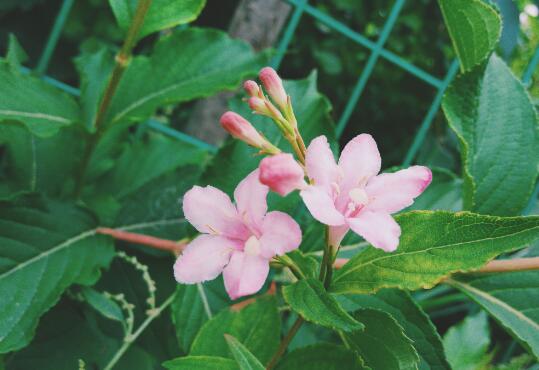
When it comes to how to propagate Weigela florida, it is mainly divided into four methods: sowing propagation, cutting propagation, division propagation, and layering propagation. As long as we operate properly, all four propagation methods have a high survival rate. As for the specific details of the four propagation methods, they are introduced below. Let's take a look.
II. Propagation methods for Weigela florida
Sowing propagation
Seed germination: Before sowing and propagating Weigela florida, there is a pretreatment we need to do. We need to germinate its seeds. Generally, the seeds can be soaked in warm water for about 24 hours, and when the seeds begin to absorb water and swell, take them out and plant them. This can make the seeds germinate more easily and also germinate faster.
Sowing method: When sowing Weigela florida, first apply an appropriate amount of base fertilizer in the potting soil, then evenly scatter the seeds on the soil surface. After scattering, cover with 1-2 cm of soil, and then water. When watering, it is best to choose the soaking pot method: place the flowerpot halfway into water and let the water slowly soak up. Because Weigela florida seeds are small in size, direct watering can easily wash them away.
Cutting propagation
Selection of cuttings: The selection of cuttings also has a great impact on the survival rate of Weigela florida cuttings. Generally, it is best to choose branches that are relatively robust and free of pests and diseases as cuttings. If the branches we choose look very slender, then it can basically be judged that the cutting has failed, so choosing cuttings is a very important step.
Cutting method: When carrying out cutting propagation of yesterday-today-and-tomorrow, first use chopsticks to poke a hole in the potting soil, then insert the cutting into it. This operation can avoid damage to the cutting and is very practical. After inserting, we can water, and be careful to water thoroughly at one time.
Division propagation
For division propagation of Weigela florida, we can generally carry it out together with repotting. When dividing, we can lift the overly dense mother plant out of the potting soil, then cut it into several clumps, and pot them separately. Plant them as they are divided, and they are extremely easy to survive. Generally, after potting, it becomes a complete foliage ornamental flower.
Layering propagation
Among the propagation methods for Weigela florida, layering propagation is one that is used relatively less. When carrying out layering propagation, we first need to bury branches close to the soil into the soil, then when they grow roots and shoots, we can cut off this branch, and then care for the new roots. In fact, it is a relatively simple propagation method.
Differences between Weigela florida and Weigela florida var. and cultivation methods for Weigela florida
Weigela florida is also known as the color-changing flower. Its flowers change with light, like colorful pearls, dazzling and brilliant. So what are the differences between Weigela florida and Weigela florida var.? How to cultivate them? Next, let's look at the differences between Weigela florida and Weigela florida var. and the cultivation methods for Weigela florida.
I. Differences between Weigela florida and Weigela florida var.
Both are ornamental flowering shrubs in the genus Weigela of the honeysuckle family, and the overall plant shape of Weigela florida and Weigela florida var. is similar. How to distinguish them? In landscape dendrology, there is a simple saying to distinguish these two plants: "Weigela florida var. joins halfway, Weigela florida splits to the bottom," referring to the fact that the calyx lobes of Weigela florida var. are united below the middle, while the calyx lobes of Weigela florida split to the bottom. This can quickly identify the two plants during the flowering period. In addition, Weigela florida seeds have wings, while Weigela florida var. seeds are almost wingless, which can also be regarded as an identification point for the two plants.
Weigela florida picture
Weigela florida var. picture
II. Cultivation methods for Weigela florida
1. Growth habits: Weigela florida is a temperate tree species. It is now cultivated in various places. It grows quickly and has strong sprouting ability. It likes light, is cold-resistant, and is slightly shade-tolerant. It is not strict about soil requirements and can tolerate poor soil. It grows better in deep, fertile, and moist places, and is afraid of waterlogging.
2. Propagation methods
Weigela florida can be propagated by cuttings, sowing, layering, and division.
① Cuttings: For Weigela florida, from May to September, select semi-lignified new branches for cuttings, cut them to 15-20 cm as cuttings, water thoroughly after insertion, and shade. In the same year, they can reach 40-50 cm in height. Leafy cuttings with automatic misting are even easier to survive. In autumn, select mature one-year-old branches for cuttings. In winter, pay attention to protection, using a closed plastic arch tunnel, and the survival rate can reach more than 90%, and they can grow 50 cm in one year.
② Sowing: For Weigela florida, collect fruit in October, dry it in the shade and store it, sow in the following spring. First soak the seeds in cold water for 2-3 hours, take them out and place them in a cattail bag, rinse with water 2-3 times a day, keep warm for 6-7 days, then sow, cover with 1 cm of soil, cover with a plastic film arch tunnel, and after the seedlings emerge completely, remove the tunnel and gradually expose them to light, strengthen fertilizer and water management, protect against cold in winter, transplant seedlings the next year, and they can bloom in 3 years.
③ Layering: Weigela florida can be layered in the peak growing season, in June when the temperature is relatively high. It roots easily, and can be separated from the mother plant in the same year.
④ Division: For Weigela florida, dig and transplant in early spring before the buds sprout.
3. Cultivation management: Weigela florida is mostly easy to survive when transplanted with a soil ball in early spring; fertilize once before sprouting each early spring, and apply additional fertilizer 2-3 times during the growing season to promote growth. Also prune old, weak, and dead branches in early spring to ensure flower bud formation on 1-2 year old branches. After flowering, promptly remove the inflorescences so that the 1-2 year old branches will bloom abundantly the following year. Carry out renewal pruning once every 2-3 years, appropriately cutting off branches more than 3 years old to promote vigorous growth of new branches.
The above is an introduction to the differences between Weigela florida and Weigela florida var. and the cultivation methods for Weigela florida. We hope it is helpful to everyone. While distinguishing Weigela florida and Weigela florida var., better cultivate Weigela florida.
Recommended reading:
① Differences between Forsythia viridissima and Forsythia suspensa (with pictures)
② Differences between Areca palm and Bambusa multiplex Areca palm pictures
③ Differences between pickerelweed and powdery thalia Effects and functions of pickerelweed
④ What is the difference between Sansevieria trifasciata and Sansevieria What varieties of Sansevieria trifasciata are there
⑤ What is the difference between Hypericum monogynum and Hypericum kouytchense (with pictures)
Propagation of courtyard flowers in September
1. Sowing: Woody flowering plants that can be sown include: tree peony, red camellia, Michelia species, Magnolia species, Manglietia species, Aesculus species, Calycanthus chinensis, Canary Island date palm, etc. Among them, Aesculus seeds can be sown in furrows, and when sowing, the hilum should face downward, and the soil covering should not be too deep, with 2 to 2.5 cm being appropriate, and covered with plastic film or straw to retain moisture. Calycanthus chinensis seeds can be soaked in cold water for 24 to 36 hours before sowing in the ground, and seedlings can emerge about 2 weeks after sowing. Except for Calycanthus chinensis, which can be stored dry until sowing the following spring, all the other seeds must be stored in moist sand. September is a great time for autumn sowing of herbaceous flowers. Herbaceous flowers that can be sown include: hollyhock, dianthus, Silene armeria, Silene pendula, pansy, snapdragon, petunia, California poppy, daisy, corn poppy, pot marigold, black-eyed Susan, iris, verbena, etc. In addition, greenhouse flowers such as cyclamen, primrose, Trollius, cineraria, wax begonia, Gerbera, and Calceolaria can also be sown at this time, but they must overwinter in a plastic tunnel.2. Cuttings: Using half sand and half rice husk ash as the cutting substrate, woody flowering plants that can be propagated by moisture-retaining cuttings in the courtyard include: firethorn, Mahonia, Michelia, bougainvillea, Weigela florida, Aucuba japonica 'Variegata', fuchsia, Viburnum macrocephalum, snowball viburnum, Weigela florida var., yesterday-today-and-tomorrow, jasmine, conicera, golden vein justicia, coral flower, rubber tree, Schefflera octophylla, Cordyline fruticosa, etc. Using ordinary sandy soil as a seedbed, woody flowering plants that can be propagated by cuttings include: Buxus species, Magnolia liliiflora, Hypericum monogynum, Spiraea, pomegranate, hibiscus, crape myrtle, Spiraea thunbergii, hydrangea, French holly, golden privet, Berberis thunbergii 'Atropurpurea', nandina, fig, oleander, Serissa japonica, gardenia, Fatsia japonica, Chaenomeles speciosa, tree peony, etc. Some herbaceous flowers can also be cut, such as salvia, globe amaranth, marigold, sulfur cosmos, winter chrysanthemum, etc.
3. Grafting: The following flowering plants can be grafted: use peony root segments as rootstock to graft excellent varieties of tree peony; use peach, apricot, and other seedling plants as rootstock to bud-graft flowering almond, ornamental peach, longevity peach, red-leaf peach, plum blossom, etc.; use green maple seedlings as rootstock, bag and keep moist for branch grafting of red maple, feather maple, etc.; use Magnolia denudata seedlings as rootstock to bud-graft excellent varieties of Magnolia denudata and Magnolia soulangeana; use potted Magnolia liliiflora as rootstock to approach-graft Michelia alba; use citrus seedlings as rootstock to bud-graft kumquat, etc.; use Chionanthus retusus as rootstock to approach-graft osmanthus; use potted seedling wintersweet as rootstock to approach-graft excellent varieties of wintersweet.
4. Layering: Ornamental flowering plants that can be propagated by layering include: Chaenomeles speciosa, Weigela florida var., hydrangea, gardenia, oleander, winter jasmine, Forsythia viridissima, osmanthus, Magnolia liliiflora, jasmine, Michelia, camellia, conicera, French holly, snowball viburnum, Viburnum macrocephalum, Spiraea thunbergii, Spiraea, etc.
5. Division: Ornamental plants that can be divided include: Cymbidium goeringii, Cymbidium faberi, Cymbidium ensifolium, Chinese peony, tree peony, Aglaonema modestum, Oxalis triangularis, Rudbeckia laciniata, Sansevieria trifasciata, Syngonium podophyllum, Dracaena fragrans 'Massangeana', Aglaonema commutatum, Boston fern, Nandina domestica, Chaenomeles speciosa, Magnolia liliiflora, Liriope platyphylla, Aspidistra elatior, Liriope muscari, etc. In addition, hyacinth, tulip, freesia, calla lily, Lycoris radiata, Scilla peruviana, etc. can also be divided at this time, with daughter bulbs used to cultivate large flowering bulbs.