How to propagate Polyscias guilfoylei? A detailed guide to two methods: cuttings and layering
Polyscias guilfoylei, also called the money tree, has leaves shaped like a belly band and stays evergreen all year round; it is a relatively popular foliage plant these days. In daily life, many people keep a pot of Polyscias guilfoylei at home, but is one pot too plain? It is time to propagate a few more pots, so how do you propagate Polyscias guilfoylei? Below are two common propagation methods for Polyscias guilfoylei; let us take a look together.
I. How to propagate Polyscias guilfoylei: cuttings / layering
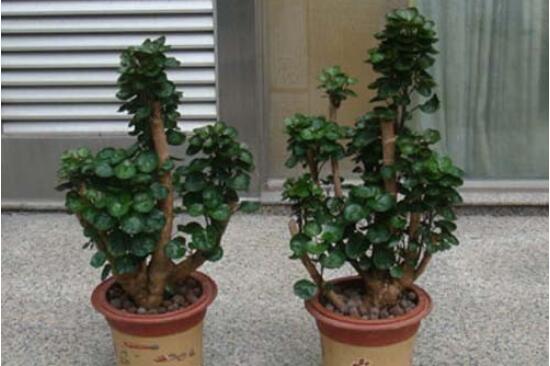
When it comes to how to propagate Polyscias guilfoylei, there are generally two methods: cuttings and layering. Cuttings are very simple: cut a section of well-grown stem from a potted Polyscias guilfoylei and insert it into growing medium, then wait for it to root. Layering is more difficult: on a robust branch, make a ring cut through the bark, treat it accordingly, and then press it into a new flower pot.
II. The two propagation methods for Polyscias guilfoylei
(1) Cutting propagation of Polyscias guilfoylei
1. Cutting time
To propagate Polyscias guilfoylei, you first need to choose a good time, preferably spring or autumn, with a temperature of around 20-25°C (the editor recommends March or April). At this time the branches of Polyscias guilfoylei are at their most active, and the survival rate of cuttings is also higher.
2. Cutting insertion
For cutting propagation of Polyscias guilfoylei, the most important thing is choosing the cutting. From a potted Polyscias guilfoylei, choose healthy 1-2 year old branches and cut about 10 cm as the cutting. To reduce water evaporation and nutrient consumption, you should remove most of the leaves from the branch, keeping only 2-3 leaves at the base of the branch.
Cutting treatment: To help the Polyscias guilfoylei branch root quickly, gardeners should soak the cutting in 500 ppm indolebutyric acid or No. 1 ABT rooting solution for about ten seconds.
3. Starting the cuttings
After making the preparations above, the cutting propagation of Polyscias guilfoylei can officially begin. Insert the treated cutting into a loose, airy substrate, water appropriately, and keep the soil moist and the air humid. In about one month the branch can root and survive. Once the cutting sprouts new buds, it can be transplanted into a pot, and afterward it can be cared for according to Polyscias guilfoylei cultivation methods.
(2) Layering propagation of Polyscias guilfoylei
How do you propagate Polyscias guilfoylei? Besides cuttings, because Polyscias guilfoylei branches are relatively soft, layering can also be used. According to the personal experiments of many gardeners, for layering propagation of Polyscias guilfoylei, the best time is May-June, and the specific steps are as follows:
On a potted Polyscias guilfoylei, select a robust branch and make a ring cut through the bark 20-25 cm from its top. Then wrap the wound with mud medicine or peat soil, pinch it into a ball of soil with your hands, and wrap it tightly with plastic film. Then prepare a new flower pot filled with soil, bend the branch down, and bury the stripped part in it. Generally speaking, after 2 months the mother plant can be cut off, and the branch can slowly grow into a larger potted plant.
Overall, propagating Polyscias guilfoylei is not difficult; whether by cuttings or layering, it can survive. Of course, methods are fixed but people are flexible; everyone can choose how to propagate according to the actual situation, as long as the general direction is right. That is all for the editor's introduction to the propagation methods of the money tree; I hope it can help everyone.
Propagation methods of Polyscias guilfoylei
Growth habits of Polyscias guilfoylei
Polyscias guilfoylei likes a hot and humid environment and is not cold-tolerant. During growth it must have sufficient light, but direct sun exposure should be avoided. It is relatively shade-tolerant and drought-tolerant, but not moisture-tolerant.
Cutting propagation of Polyscias guilfoylei
Cutting propagation of Polyscias guilfoylei can generally be carried out in both spring and autumn, but spring cuttings are more common because spring cuttings give better results. In March or April, use scissors to cut a robust branch of Polyscias guilfoylei about 10-15 cm long, keep 2-3 leaves at the base of the branch, soak the branch in 500 ppm indolebutyric acid or No. 1 ABT rooting solution for about ten seconds to promote rooting, and then insert it into the substrate. After cutting, water thoroughly, cover with plastic film to prevent water loss, keep the temperature in the range of 25-30°C, and provide appropriate shading. Generally after twenty to thirty days it can root, and once the cutting sprouts new buds it can be transplanted into a pot.
Layering propagation of Polyscias guilfoylei
Layering propagation of Polyscias guilfoylei is generally carried out in May or June. Select a robust branch of Polyscias guilfoylei and make a ring cut through the bark, with the stripped position about 20-25 cm from the top. After stripping, wrap the stripped area with mud medicine or peat soil, pinch it into a ball of soil, then wrap it tightly with plastic film, leaving a water inlet at the top. If the stem is too thin to support the soil ball, you can tie the soil ball to a bamboo pole to support it.
The above are the propagation methods for Polyscias guilfoylei!
Polyscias guilfoylei Polyscias guifoylei Bailey Polyscias guilfoylei illustrated guide: how to grow Polyscias guilfoylei / how to propagate Polyscias guilfoylei
Polyscias guilfoylei profilePolyscias guilfoylei Polyscias guifoylei Bailey
Cultivation methods and precautions for Polyscias guilfoylei Introduction to Polyscias guilfoylei
Polyscias guilfoylei, also known as round-leaf Polyscias and round-leaf Ming aralia, belongs to the Araliaceae family as an evergreen shrub and is native to the Pacific islands. The plant height is 1~3 m, the side branches are slender, and the branching lenticels are prominent. Leaves alternate, odd-pinnate compound leaves, leaflets 3~4 pairs, opposite, elliptical or long elliptical, serrate margins, leaf green often with white spots, umbellate inflorescence, flowers small. Pale white-green, mainly used for potted plants, garden trees and hedges.
Plant toxicity
Contact with the sap of Polyscias guilfoylei may cause a red rash; when it touches the mouth, it sometimes causes swelling and pain that makes swallowing impossible.
Morphological characteristics of Polyscias guilfoylei
Polyscias guilfoylei is an evergreen shrub or small tree, with many branches, grayish-brown stems, and densely covered lenticels.
Polyscias guilfoylei branches are soft, leaves alternate, odd-pinnate compound leaves, leaflets 3~4 pairs, opposite, elliptical or long elliptical, serrate margins, leaf green often with white spots, umbellate inflorescence, flowers small.
Polyscias guilfoylei blooms in summer and fruits in autumn.
Ecological habits of Polyscias guilfoylei
Polyscias guilfoylei likes a high-temperature environment and is not very cold-tolerant; it requires bright light, but is also relatively shade-tolerant and avoids direct sun exposure; it likes humidity and is also relatively drought-tolerant, but avoids waterlogging.
Cultivation techniques for Polyscias guilfoylei
Polyscias guilfoylei likes a high-temperature environment and is not very cold-tolerant; it requires bright light, but is also relatively shade-tolerant and avoids direct sun exposure; it likes humidity and is also relatively drought-tolerant, but avoids waterlogging.
Temperature
Its suitable growth temperature is 15-30°C, of which from April to October it can be kept at 20-30°C, and from October to the following April at 13-20°C. Beautiful plants are usually a bit delicate, and Polyscias guilfoylei is the same. Its variegated varieties are less cold-resistant. In general, even ordinary pure green-leaf varieties should maintain a room temperature of no less than 10°C in winter. When the summer temperature reaches above 32°C, you cannot simply leave it be: for mass production, build a shade shed; for home viewing, place it in a cool place and spray water around it to lower the temperature, creating a cool micro-environment relatively close to its native conditions. In late autumn and early winter, when the temperature drops to 15°C, move it indoors promptly to avoid cold damage to the plant. In winter, if the room temperature can be maintained above 20°C, its stems and leaves will continue to grow; if the temperature is not high, the plant stops growing and enters a semi-dormant state.
Light
Taking round-leaf Polyscias guilfoylei as an example, it needs bright light. Insufficient light easily causes leggy stems and leaves, dim leaf color, and fading of markings, but at the same time it avoids strong direct sunlight, especially in early summer after a long rain when the sky first clears, to prevent the leaves from being scorched. For home potting, it can usually be placed in a well-ventilated spot. In summer it can be placed in front of a north- or east-facing window, and in winter it should be placed in a brighter spot indoors. For production cultivation, from mid-spring to mid-autumn it should be placed under a shade shed, with 40-60% shading according to light intensity and duration. In short, in a semi-lit environment with bright scattered light, it grows most vigorously.
Water
Potted Polyscias guilfoylei likes relatively moist soil and air conditions. During the growing period there must be sufficient water supply; water after the surface of the potting soil dries, and slightly dry soil is also fine, but do not water too much, to avoid water accumulation and root rot. In midsummer when the temperature is high, besides watering sufficiently, also spray the leaf surface once a day, which can both keep the leaves clean and glossy and raise the air humidity around the plant. In late autumn and early winter, when the temperature drops below 15°C, watering should be controlled. In winter, reduce the amount of water or replace watering with spraying, keeping the potting soil slightly moist and a little dry; but when spraying the leaf surface, make sure the water temperature is basically the same as room temperature.
Soil
Loose, fertile, well-drained sandy loam is best, providing a loose, moist, fertile soil environment. For potting soil, mix 4 parts leaf mold, 4 parts garden soil, 2 parts sand, and a small amount of decomposed cake fertilizer powder or bone meal. During the growing season, combined with fertilization, loosen the soil of the pot once a month so that the potting soil remains well aerated for a long time and root rot caused by soil compaction is avoided. For plants in open ground or under a shade shed, during the plum rain season or continuous rainy weather, strengthen inspection; if water accumulation is found in the pot, pour it out promptly and repot with fresh soil to avoid leaf drop or root rot. In general, change the soil once every two years in spring.
Fertilization
Round-leaf Polyscias guilfoylei and others require sufficient fertilizer. In the vigorous growth period from April to June, apply a dilute cake fertilizer solution once a month, or use fermented low-concentration poultry manure liquid, but organic fertilizer must not adhere to the leaf surface. Fertilization can be scheduled after loosening soil and pruning or pinching, or before rain; after applying organic fertilizer, it is best to rinse the leaf surface once with water. For home potting, apply a mixed solution of 0.2% urea and 0.1% potassium dihydrogen phosphate, or scatter or bury a small amount of multi-element slow-release compound fertilizer granules on the surface of the potting soil. After mid-autumn, stop applying nitrogen fertilizer, and apply phosphorus and potassium fertilizer 1-2 times to increase the plant's cold resistance and help it overwinter smoothly. After winter begins, the plant has stopped growing, so stop fertilizing to avoid damaging the roots.
Cultivation methods for Polyscias guilfoylei: key cultivation points
There are no strict requirements for the cultivation soil; any well-drained soil can support growth, but fertile sandy loam gives the best growth. It can grow in full sun or partial sun, but grows more vigorously in partial sun.
For fertilization, organic fertilizer or nitrogen, phosphorus, and potassium can be used, applied once every 1-2 months. For potted plants, change the soil once every 2-3 years. Prune and shape the plant every spring; new branches and leaves will sprout more vigorously. If the plant has aged, severe pruning should be carried out to promote new growth of branches and leaves. Usually the growing soil should be kept suitably moist, which is beneficial for growth.
It likes high temperature and humidity, but is also extremely drought-tolerant. The suitable growth temperature is about 20~30°C. In winter it should overwinter in a warm, wind-sheltered place. When a cold snap brings the temperature below 10°C, reduce watering to prevent cold damage; in particular, Polyscias guilfoylei 'Fernleaf' cultivated under full sun and strong light has an extremely bright golden leaf color, but has the poorest cold tolerance in winter, so potted plants should be kept warm and wind-sheltered for overwintering, otherwise cold damage will cause the whole plant to lose its leaves.
Home care
At home it can be kept for a long time indoors in bright light. If it can see several hours of sunlight indoors every day, it will grow even more vigorously. In summer, avoid direct strong outdoor sunlight. During the growing period, keep the potting soil moist but not waterlogged, and frequently spray the plant with water close to room temperature to increase air humidity and keep the leaf color fresh. Apply special fertilizer for foliage plants or fully decomposed dilute liquid fertilizer about once every 2 weeks. If it is a variegated variety, note that the nitrogen content in the fertilizer should not be too high, to avoid the patterns on the leaves fading or even disappearing. Stop fertilizing after September so that the new branches mature and become woody, which helps overwintering.
In winter, place it indoors in a sunny spot, reduce watering appropriately, and maintain the temperature above 12°C; otherwise, excessively low temperature will cause a large number of leaves to fall, or even plant death. Repot once every 2 to 3 years. The potting soil should be loose and fertile, rich in humus, and have good drainage and air permeability. You can use leaf mold or peat soil plus 1/3 river sand, and mix in a small amount of decomposed chicken or cow manure as base fertilizer.
Propagation methods of Polyscias guilfoylei: cuttings
It can be done in both spring and autumn, but spring cuttings give better results. From March to April, cut a 10-15 cm piece of foliage, keep only 2-3 leaves at the tip, make the lower cut preferably 0.2 cm below a node, soak it in 500 ppm indolebutyric acid or No. 1 ABT rooting solution for 10 seconds, and then insert it into a sand bed or vermiculite. For small-scale cuttings, a wide-mouthed flower pot filled with vermiculite can serve as the cutting bed. After watering thoroughly, cover with plastic film to retain moisture, maintain the suitable rooting temperature of 25-30°C, and provide 40-50% shading; it can root in 20-30 days. After the cutting sprouts new buds, transplant it into a pot.
Layering
For Polyscias guilfoylei, from May to June, choose a robustly growing stem and make a ring cut through the bark 20-25 cm from its top. The width of the stripped ring is about 2-3 times the stem diameter. Wrap the ring-stripped area with peat soil or mud medicine, pinch it into a soil ball, wrap and tie it tightly with plastic film on the outside, and leave a water inlet at the upper end. If the stem is relatively thin and cannot support the soil ball, insert a bamboo pole as support and tie the soil ball against the bamboo pole.
Disease control of Polyscias guilfoylei: anthracnose
This disease mostly occurs at the leaf tip or leaf margin, starting as small water-soaked yellow spots with a grayish-white or grayish-brown center, indistinct cloud-like markings, and dark brown edges; later many small black dots appear on the lesions, arranged in concentric rings, and finally the lesions dry up. The disease is severe under conditions of insufficient light, poor ventilation, and excessive nitrogen fertilizer. Strengthen light and ventilation, and pay attention to balanced nitrogen, phosphorus, and potassium when fertilizing. If disease occurs, promptly remove and destroy diseased leaves. In the early stage of disease, spray the plant with 80% carbendazim-thiram wettable powder 800x solution, or 50% carbendazim wettable powder 600x solution, or 50% thiophanate-methyl wettable powder 600x solution, or an equal mixture of 75% chlorothalonil 1000x solution and 70% thiophanate-methyl 1000x solution; the last one gives the best effect. Spray once every 10 days, 3-4 times in a row.
Scale insects
Under conditions of poor ventilation, poor light, and high temperature and humidity, the plant is prone to harm from various scale insects. During the peak hatching period of nymphs, spray the plant with 25% buprofezin wettable powder 1500x solution, or 40% methidathion 2000x solution, or 40% omethoate emulsifiable concentrate 1000x solution.
Variety classification of Polyscias guilfoylei: main categories
According to the leaves, Polyscias guilfoylei has three types: round-leaf Polyscias guilfoylei, fine-leaf Polyscias guilfoylei, and fern-leaf Polyscias guilfoylei.
Round-leaf Polyscias guilfoylei is relatively common, also known as round-leaf Polyscias and round-leaf Ming aralia. Its leaves are relatively small, about 5-8 cm in diameter, and the leaf margins are edged with irregular milky white markings, making it deeply loved by flower enthusiasts. Round-leaf Polyscias guilfoylei has an upright stem and bright, changeable leaves. It is a relatively popular foliage plant and can be used in different sizes to decorate living rooms, bedrooms, studies, balconies, and other places; it is both fashionable and elegant, and natural and fresh. There are also variegated and silver-edged varieties.
Distribution area of Polyscias guilfoylei
Polyscias guilfoylei is native to the Pacific islands.
Uses of Polyscias guilfoylei: potted uses
Polyscias guilfoylei is suitable for courtyard beautification or potting.
Ornamental value
Round-leaf Polyscias guilfoylei has an upright stem and bright, changeable leaves. It is a relatively popular foliage plant in recent years and can be used in different sizes to decorate living rooms, bedrooms, studies, balconies, and other places; it is both fashionable and elegant, and natural and fresh.
Landscape uses of Polyscias guilfoylei
Polyscias guilfoylei is pale white-green and mainly used for potted plants, garden trees, and hedges.
Cultural background of Polyscias guilfoylei: beautiful essay appreciation - Green turns to Polyscias guilfoylei
Every time I walk into the office, I always take a few more glances at the potted plant my colleague asked me to care for. This is because the potted plant is composed of three Polyscias guilfoylei plants, with branches and leaves winding and alternating in clear layers, and a quite beautiful ecological shape.
Facing the morning sun, after the early sunlight poured into the room, I unexpectedly discovered that the small Polyscias guilfoylei that had originally been deliberately transplanted had, overnight, let its tender leaves droop, even though yesterday it had still been upright and full of vitality. So I immediately hurried to take remedial measures, quickly digging it up and planting it in another pot, to see whether I could promptly save its already fragile life.
This potted plant originally had three Polyscias guilfoylei plants winding and growing together, but for some unknown reason, one of them actually rotted and withered from the roots. In order to maintain its overall structural shape, another Polyscias guilfoylei of similar height was transplanted in. But what was puzzling was that this newly planted Polyscias guilfoylei also at first had thriving branches and leaves, just like the original potted situation. However, after about two weeks, it likewise repeated the scene of root rot and drooping leaves. So I quickly pulled up the whole plant, cut off the damaged branch parts, divided it into two plants, put them in separate pots, and soaked them in water, hoping they could once again take root and sprout, because based on past experience, Polyscias guilfoylei can be propagated by cuttings.
From the previously discovered mutual-growth relationship between yam and butterfly, turning to the potential structure of the overall development of Polyscias guilfoylei, it is necessary for us to think and act differently about natural phenomena. Why did this bonsai cause three Polyscias guilfoylei plants to wither one after another within the same area? Obviously, this absolutely cannot be understood or explained by the word coincidence. From the visible exterior, the soil and water environment of this area does indeed conceal certain unfavorable factors for plant development, but exactly what factors they are remains unexplained to this day. Since visible observation and detection provide no answer, then it seems we can only shift angles and ponder from the invisible spiritual level.
In fact, this Polyscias guilfoylei bonsai already strongly hints at the potential direction of natural development: forced external transplantation will destroy the originally existing stable foundation and is not necessarily beneficial to the overall development of the plant. Therefore, seeking the best development opportunity within the existing framework by guiding according to circumstances, so as to gradually construct and expand its proper scale, may be the best way and practice at present.
Now, apart from replacing the soil in that area, it has already been decided not to replant, but only to spray water diligently on the original branches, hoping that under the nourishment of water they can proliferate side branches as much as possible, so that on the existing foundation their own scale and shape can be gradually constructed. The formation of this line of thinking is based on a previously discovered case in which a tree originally split in two by a typhoon, after two or three years, actually developed again into a perfectly shaped tree form. Nature's self-healing ability is not only breathtaking, but also truly worthy of our humble learning.
In fact, this kind of instance of guiding according to circumstances also happened when I was previously serving as principal of the affiliated primary school. At that time, during the handover between old and new positions, my teacher sent a pot of Polyscias guilfoylei two meters tall with an upright branch structure. Not long afterward, school colleagues brought back another pot of Polyscias guilfoylei that had originally been placed in the principal's office. This Polyscias guilfoylei was about more than one meter tall, with an obviously curved branch structure, and among its main trunks a red ribbon was wrapped around them in an interlaced way, appearing somewhat abrupt visually.
When I first saw this old bonsai, I was indeed somewhat surprised. What surprised me was not the curved and somewhat unruly shape, but the branches bound by the red ribbon. After trying to untie the ribbon, I was shocked to discover that one Polyscias guilfoylei branch had grown especially strangely, never growing upward in the normal way, but instead deviating from the center and developing sideways, and affecting nearby branches so that they also became crooked together. Therefore, the original purpose of using the ribbon to pull it was to hopefully effectively guide its suitable growth and return it to the overall shape.
But this good intention clearly did not achieve the expected effect. Because based on more than two years of observation, I found that as long as the ribbon was untied, that crooked appearance would immediately gradually reappear, as if there were no sign of change at all. What is more, because the Polyscias guilfoylei branches had been pulled toward the center for years, the central area that should originally have flourished was severely squeezed, so that the new buds it produced had no room to develop at all, and a phenomenon of curling and withering appeared.
By contrast, another pot of Polyscias guilfoylei sent by my teacher, although its branches were upright at the time and not squeezing one another, also had dense foliage only at the upper end, while the middle and lower parts were almost bare, with few side buds emerging. However, after deliberately spraying water to moisten its branches, it gradually flourished with side branches and formed a scene of layered peaks. This Chinese-painting-style growth pattern not only won many words of praise, but also attracted quite a few admiring glances.
On an accidental early morning, I suddenly had an insight and thought, "Why can't I give that old Polyscias guilfoylei more room to grow freely, instead of binding it like this?" So I untied the ribbon and chose an appropriate place, using the utility knife in my hand to carefully cut off the originally crooked upper part. From then on, this Polyscias guilfoylei never again showed any crooked phenomenon. Now, not only has the part that was cut off at the time sprouted ring-shaped new buds again, but even the central part that had originally been deliberately squeezed has gradually sprouted new buds and new leaves one after another, showing a vigorous new atmosphere, simply incomparable with that bleak scene at the beginning!
Polyscias green turns, new buds and tender leaves race to sprout; old Polyscias new foundation, layered peaks without limit. To construct a vision, one must recognize the surrounding reality, take its advantages and proceed step by step, and absolutely avoid blindly imitating and forcing things; otherwise, the story of the Polyscias guilfoylei bonsai will continue to repeat itself around you and me. I always feel that things have two sides and matter has a beginning and an end. If one can take its advantages and give play to its strengths, then why bother fussing over facade shape and merely trapping oneself in the ridicule of a confused role!
Sudden insight opens the spirit infinitely; gathering the myriad phenomena reveals vitality. Heaven and earth are one book; the great earth holds inexhaustible treasures. Observe sincerely, experience with your heart, and after breaking free from original fixed thinking, another kind of elegance can gradually unfold. Circumstances arise with the mind, and the mind turns according to circumstances; the same earthly scene, written with a different mood, will also have different results. And the difference among them seems to lie only in whether my mind can be still, clear, and pure as transparent crystal.
The flower language of Polyscias guilfoylei
The flower language of Polyscias guilfoylei: double happiness of fortune and prosperity.
Pictures of Polyscias guilfoylei