How to propagate Malus micromalus? Detailed explanation of seed sowing, division and grafting methods
Malus micromalus is an ornamental flowering plant with high ornamental value, and many people in various provinces of China grow it. As more people grow it, questions about its propagation have also drawn people's attention. How to propagate Malus micromalus? What are the propagation methods of Malus micromalus? Let's take a look below.
1. How to propagate Malus micromalus: sowing / division / grafting
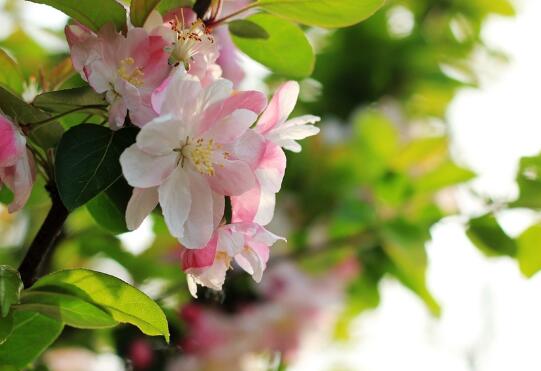
Speaking of how to propagate Malus micromalus, it is mainly divided into three methods: seed sowing propagation, division propagation and grafting propagation. As long as we operate properly and are careful enough in the process, all three methods have a very high survival rate. As for the specific details of the three propagation methods, they are described in detail below. Let's take a look.
2. Propagation methods of Malus micromalus
Seed sowing propagation
Seed germination promotion: Before sowing Malus micromalus seeds, there is a pre-treatment to do, which is to promote the germination of the seeds. First, we can soak the seeds in warm water for 12-24 hours, and then when the seeds begin to absorb water and swell, take them out for sowing. This allows the seeds to germinate faster.
Sowing method: Before sowing, we should first apply an appropriate amount of base fertilizer into the soil, then evenly scatter the germinated Malus micromalus seeds on the soil surface. After scattering, cover them with 1-2cm of soil and then water. When watering, it is best to use the soaking pot method, because its seeds are small in size, and if watered directly from above, the seeds are easily washed away.
Division propagation
When we propagate Malus micromalus by division, we can do it together with repotting. The time can be chosen in spring. When dividing, we should lift the overly dense mother plant out of the pot soil, then divide it into several clumps and pot them separately, planting as we divide, which makes survival very easy. Generally, after potting, it is already a complete flowering plant.
Grafting propagation
Grafting propagation is mainly suitable for superior varieties of Malus micromalus. We can select their branches as scions, then carry out cut grafting and cleft grafting in spring, and approach grafting during the growing season. The grafting method can follow the general grafting methods for woody plants.
Malus micromalus Makino Malus micromalus profile: how to grow Malus micromalus / how to propagate Malus micromalus
Malus micromalus cardMalus micromalus Makino
Cultivation methods and precautions of Malus micromalus Introduction to Malus micromalus
Malus micromalus (scientific name: Malus micromalus) is a plant of the genus Malus in the family Rosaceae, and is endemic to China. It is distributed in Yunnan, Gansu, Shaanxi, Shandong, Shanxi, Hebei, Liaoning and other places in China, growing in areas from 100 m to 2400 m in altitude. It has now been introduced and cultivated artificially. Malus micromalus grows well in the dry zones of northern China. It likes light, is cold-resistant, drought-tolerant, and avoids waterlogging. It is the best product among shrubs and a relatively popular product in greening projects. It is now the city flower of Baoji, a livable garden city in northern China.
Morphological characteristics of Malus micromalus
Deciduous tree, up to 8 m tall; branchlets cylindrical, upright, reddish-brown when young, covered with short soft hairs, dark brown when old, hairless.
Leaves elliptical to oblong, 5-8 cm long, 2-3 cm wide, apex gradually pointed or rounded-obtuse, base broadly wedge-shaped or nearly rounded, margin with closely appressed fine serrations, sometimes partly entire, both sides covered with soft hairs when young, soon falling off and becoming hairless; petiole 1.5-3 cm long, covered with short soft hairs; stipules membranous, lanceolate, entire.
Inflorescence nearly umbellate, with 5-8 flowers; pedicels slender, 2-3 cm long, sparsely covered with soft hairs; flowers 4-5 cm in diameter; outer surface of calyx tube hairless or densely covered with soft hairs; calyx lobes triangular-ovate, 3- mm long, shorter than or nearly equal to the calyx tube, apex acutely pointed, entire, outer surface hairless or nearly hairless, inner surface covered with white tomentum; petals ovate, base with a short claw, 2-2.3 cm long, white, pink to red when first opening; stamens 20-25 (30), half as long as the petals; styles 5, rarely 4, slightly longer than the stamens, base covered with white tomentum.
Fruit nearly spherical, 1.5-2 cm in diameter, yellow, base not sunken, calyx lobes persistent; fruiting pedicel slender, 3-4 cm long, apex slightly thickened.
Ecological habits of Malus micromalus
It likes light, is cold-resistant, avoids waterlogging, avoids excessively humid air, is relatively drought-tolerant, and has low requirements for soil texture and moisture. It grows best in fertile, loose and well-drained sandy loam. Flowering period April-May, fruiting period September.
Distribution area of Malus micromalus
Native to China, it is now cultivated in Liaoning, Hebei, Shanxi, Shandong, Shaanxi, Gansu, Yunnan and other places.
Disease and pest control of Malus micromalus
Attention should be paid to the control of pests such as scarab beetles, leaf rollers, aphids, bagworms and red spiders, as well as diseases such as rot disease and red star disease.
Rot disease, also known as bark rot, is one of the important diseases of various crabapples, damaging the trunk and branches. Generally, it begins to occur from April to May each year, with the peak period from May to June, and after July the disease gradually eases. In the early stage of the disease, water-soaked lesions appear on the trunk, and later the cortex of the diseased part rots, shrinks and sinks. In the later stage, many black needle-like small protrusions grow, namely pycnidia.
Control methods: Remove diseased trees, burn diseased branches, and reduce sources of pathogens. Spray lime sulfur mixture in early spring or brush lime agent on the trunk. At the initial onset, cut crisscross knife marks about 0.5 cm apart on the lesions, reaching deep into the xylem, then spray or apply fungicide.
Cultivation techniques of Malus micromalus
Crabapples are generally planted in the ground, with the time preferably before budding in early spring or after leaf fall in early winter. Keeping the root system of the seedlings intact when leaving the nursery is the key to survival. Generally, large seedlings should be with a soil ball, and small seedlings should retain native soil according to the situation. After planting, the seedlings should be tended and managed more intensively, and kept loose and fertile regularly. Prune once after leaf fall and before budding in early spring, cutting off dead and weak branches and diseased and pest-infested branches, so as to keep the crown open and provide ventilation and light. To promote vigorous flowering of the plant, long vigorous shoots must be shortened to reduce nutrient consumption during sprouting. Fruiting branches and rubbed branches do not need pruning. During the growing period, if pinching can be carried out in time to limit vegetative growth early, the effect will be even more remarkable.
For bonsai with old stumps, the material is taken from wild old tree stumps, dug before budding in spring, with native soil kept, roots protected and moisture retained. After 1-2 years of care, once the stump has initially taken shape, it can be potted before Qingming. When first planted, more soil should be mounded around the roots, and later the roots should be gradually raised, paired with ornamental stones, to form a crabapple stump bonsai with a wild mountain forest charm. Newly potted stump bonsai should be shaded for a period before entering normal management. To make the stump bonsai bloom abundantly and bear many fruits, water and fertilizer management should be strengthened. Before flowering, apply 1-2 topdressings of mixed phosphorus and nitrogen fertilizer, then apply a dilute phosphorus-potassium fertilizer once every half month. In deep winter, the method of heating to force flowering can also be used: move the potted Malus micromalus stump bonsai to a sunny place in a greenhouse, water it, apply liquid fertilizer, then spray an appropriate amount of water on the branches and trunk each day, and keep the room temperature at 20°C-25°C. After 30-40 days, it can bloom for display and viewing during New Year's Day or Spring Festival.
Propagation methods of Malus micromalus
Crabapples are usually propagated by grafting or division, and can also be propagated by sowing, layering and root cuttings. Seedlings obtained by grafting can bloom earlier and can maintain the original superior characteristics.
Sowing method
Although seedlings grow relatively slowly, they often produce variation, so the sowing method is still used when obtaining large quantities of rootstock or for hybrid breeding. Commonly used rootstock types in northern China include Malus baccata, Malus micromalus, Malus transitoria, etc.; in the south, Malus hupehensis is used. Before sowing, crabapple seeds must undergo 30-100 days of low-temperature stratification treatment. Fully stratified seeds emerge quickly, uniformly, and with a high emergence rate; unstratified seeds cannot germinate, or germinate very little. It is also possible to harvest the fruit in autumn, remove the flesh, dry slightly, and then sow on a sand bed, allowing the seeds to after-ripen naturally. Cover with soil to a depth of about 1 cm, cover with plastic film to preserve moisture, remove the plastic film after emergence, and promptly scatter a layer of loose fertile soil. Strengthen fertilizer and water management during the seedling stage, and transplanting can be done in late autumn of the same year.
Grafting method
Use seedlings propagated by sowing as rootstock for stem grafting or bud grafting. Carry out stem grafting or bud grafting. In spring, when sap flows and buds sprout, carry out stem grafting; in autumn (between July and September), bud grafting can be done. For stem grafting, methods such as cut grafting and cleft grafting can be used. Select well-developed 1-year-old branches as scions, take their middle section (with more than 2 plump buds), and after grafting cover the scion with fine soil. For bud grafting, the "T" method is mostly used. About 10 days after grafting, if the bud is fresh and the petiole falls off at a corner, it is proof that the graft has taken, and after a few days the binding material can be removed. When the seedling is 80 cm-100 cm tall, train scaffold branches, and thereafter only prune overly dense branches, inward-growing branches and overlapping branches to maintain a rounded crown.
Division method
Carry out before budding in early spring or after leaf fall in autumn and winter. Dig out the suckers sprouting from the root crown, divide them into several individual plants, or take 2-3 rooted shoots as a clump for transplanting. After division and planting, water thoroughly in time, pay attention to moisture preservation, provide shading when necessary, and water during drought. Soon new branches will grow from the broken openings of the residual roots. After leaf fall in autumn or before budding in early spring, dig them out and transplant, and they become independent new plants.
Layering and root cuttings
Both are carried out in spring. Small seedlings can be layered by bending branches to the ground and pressing them into the soil; for large seedlings, the high-pressure method is used. At the place where soil is pressed, use a sharp knife to cut and wound. Whether ground layering or air layering, the soil must be kept moist. After roots develop, cut them off from the mother plant and plant separately. Root cuttings are mainly carried out when transplanting and digging seedlings. Cut overly long and relatively thick main roots into small sections of 10 cm-15 cm, bury them shallowly in the soil, and cover with grass to retain moisture, which makes survival easy.
Medicinal or dietary therapeutic value of Malus micromalus
The medical information and health dietary information on Huhuawang are for reference only and cannot be used as a basis for diagnosis or medical treatment. Any health issues should be consulted with professional medical staff, and the treatment of any disease should follow a doctor's advice.
Ultimate flower-protecting task: Love yourself, start from reality, and strictly follow a doctor's advice. Toward illness, do not be careless, do not delay, do not give up hope, face it bravely, warm the silent world with love, and care for the flower field in your heart with your heart.
Ornamental value
The flower color is gorgeous, and it is generally mostly cultivated in courtyards for greening. Among crabapple flowers, Malus micromalus has an upright tree form, like a graceful young girl. The flowers are a mix of red and pink, the leaves are tender green and lovely, and the fruit is fresh and attractive. Whether planted alone, in rows, or in clumps, it is extremely beautiful. It is best planted by the waterside and in a corner of a small courtyard. In Guo Zhen's crabapple poem, "The red railing brightly shines on the yellow pond, fragrant trees interlace and pillow the low wall." This is the most vivid and image-like portrayal. In modern courtyards, with dark green coniferous trees as the background and crabapples planted in the front row, their colors appear especially eye-catching. If planted in rows as a flowering hedge, with flowers in full bloom, it is spectacular.
Edible value
The fruit is called crabapple fruit, similar in taste and shape to hawthorn, sweet and sour and delicious, and can be eaten fresh or made into candied fruit.
Cultural background and origin of the name of Malus micromalus
It is named because it grew in Xifu during the Jin Dynasty. Crabapple flower is one of China's traditional famous flowers. Its flower posture is elegant and unrestrained, and when it blooms it is like brocade. Since ancient times, it has been a famous flower enjoyed by both refined and popular tastes, and has long had the reputation of "immortal among flowers" and "imperial consort among flowers," with the honor of "national beauty." Literati and poets of successive dynasties wrote about it endlessly. The great literary giant Su Dongpo was also captivated by it: "I only fear that in the deep night the flower will fall asleep, so I burn a tall candle to illuminate the red makeup." Also, because "in the eighth month of autumn during Emperor Ming's reign, several branches of double-petaled white lotus bloomed in Taiye Pool. The emperor feasted and admired them with noble relatives. Those around all sighed in admiration for a long time, and the emperor pointed to the imperial consort and showed those around him, saying: 'How can she compare to my flower that understands speech?'" Therefore the crabapple has the elegant name "flower that understands speech." According to the Ming Dynasty "Qunfangpu," crabapples have four varieties, all woody. The four varieties mentioned here are: Malus micromalus, Malus halliana, Chaenomeles sinensis and Chaenomeles speciosa. Crabapple flowers are delicate and charming when blooming, but ordinary crabapple flowers have no fragrance. Only Malus micromalus is both fragrant and gorgeous, and is the finest among crabapples. Before its flowers open, the buds are bright red, like dots of rouge; after opening, they gradually turn pink, like the morning glow at dawn.
Cultural symbolism
Crabapple flower posture is elegant and unrestrained, and when it blooms it is like brocade. Since ancient times, it has been a famous flower enjoyed by both refined and popular tastes, and has long had the names "immortal among flowers," "imperial consort among flowers," and "noble among flowers." When planted in royal gardens, it is often paired with magnolia, peony and osmanthus to form the artistic conception of "Jade Hall Wealth and Honor." Literati of successive dynasties wrote many widely praised verses admiring crabapple. Lu You wrote in a poem: "Though gorgeous, it has no vulgar posture; the Great Sovereign is truly wealthy and noble." This describes the crabapple as gorgeous, beautiful and elegant. In another poem by Lu You: "Scarlet red and parrot green are extremely heavenly in craft, layered calyxes and repeated bases dazzle the morning sun." This describes the image of crabapple's bright red flowers and green leaves, and its abundant flowers contending with the morning sun. In the Song Dynasty, Liu Zicui wrote: "With a secluded posture and gentle manner it plays in the spring clear, borrowing the charm of plum and the lightness of willow; after several nights of rain its fragrance still remains, dyed all over with rouge yet impossible to paint." This describes the crabapple as like a quiet and modest lady. Therefore the crabapple combines the merits of plum and willow and is charming and moving; after rain its clear fragrance still remains, and its floral beauty is hard to depict. No wonder Emperor Ming of Tang also compared the sleeping Yang Guifei to a crabapple.
Among crabapple flowers, Malus micromalus has an upright tree form, like a graceful young girl. Red flowers, green leaves, beautiful fruit. Whether planted alone, in rows, or in clumps, it is extremely beautiful. It is best planted by the waterside and in a corner of a small courtyard. In Guo Zhen's crabapple poem, "The red railing brightly shines on the yellow pond, fragrant trees interlace and pillow the low wall." This is the most vivid and image-like portrayal. In modern courtyards, with dark green coniferous trees as the background and crabapples planted in the front row, their colors appear especially eye-catching. If planted in rows as a flowering hedge, with flowers in full bloom, it is spectacular.
Malus micromalus is planted in the Imperial Garden of the Forbidden City and the Summer Palace in Beijing, China. At the turn of spring and summer, it stands upright in the wind, with a bright and charming flower posture, delicate and graceful, accompanied by magnolia, peony and osmanthus, forming the meaning of "Jade Hall Wealth and Honor."
Many modern celebrities and writers also have an indissoluble bond with crabapple flowers. Mr. Bing Xin once wrote a short essay, "Crabapple Flower," using crabapple flowers to express the feeling that spring light is fleeting and life is short.
Premier Zhou particularly favored the crabapple flower in Xihuating at Zhongnanhai, where he lived. After his death, his wife Deng Yingchao, seeing the flowers and thinking of him, wrote the article "The Crabapple Flowers in Xihuating Have Bloomed Again," recalling her fifty years of revolutionary life accompanying and supporting the Premier. Mr. Liang Shiqiu also loved crabapple flowers. In his essay "Brief Notes on Many Flowers," he placed crabapple first and used the most space to praise Malus micromalus. He wrote, "Rows upon rows of Malus micromalus, tall to about a zhang, with green temples and rosy countenance, are at the stage of boundless charm and intoxicating spring beauty, giving one the feeling of suddenly encountering peerless beauty." Regarding the unique beauty of Malus micromalus, his view was also very insightful. He said, "The crabapple (note: here referring to Malus micromalus, and the same below) buds are the most gorgeous. After opening, the front of the petals is pink, while the back remains deep red, rising and falling in orderly disorder, with rich and light tones well arranged. The crabapple leaves also set it off well, tender green, glossy and delicate, giving the overall impression of delicate smallness and gorgeousness. I stood in front of those rows of Malus micromalus and for a long time could not bear to leave."
City flower of Baoji
At the end of 2008, the Baoji Municipal Greening Committee organized forestry and landscaping experts and, in light of Baoji's actual conditions, proposed 10 candidate city trees including Populus tomentosa and Pinus bungeana, and 10 candidate city flowers including crabapple and azalea. At the end of March 2009, the voting results were announced. Pinus bungeana won the city tree title with 3230 votes, and crabapple overwhelmed the others with 3332 votes to become the city flower.
Malus micromalus pictures
What is the flower language of Malus micromalus? How to propagate Malus micromalus
What is the flower language of Malus micromalus? Through the ages, there have been no few people who like Malus micromalus, but most do not understand its flower language. Next, Xiao Qi will introduce the flower language of Malus micromalus.
1. Flower language of Malus micromalus
The flower language and symbolic meaning of Malus micromalus: unrequited love
The flower color is gorgeous, and it is generally mostly cultivated in courtyards for greening. Among crabapple flowers, Malus micromalus has an upright tree form, like a graceful young girl. The flowers are a mix of red and pink, the leaves are tender green and lovely, and the fruit is fresh and attractive. Whether planted alone, in rows, or in clumps, it is extremely beautiful. It is best planted by the waterside and in a corner of a small courtyard. In Guo Zhen's crabapple poem, "The red railing brightly shines on the yellow pond, fragrant trees interlace and pillow the low wall." This is the most vivid and image-like portrayal. In modern courtyards, with dark green coniferous trees as the background and crabapples planted in the front row, their colors appear especially eye-catching. If planted in rows as a flowering hedge, with flowers in full bloom, it is spectacular.
2. Propagation methods of Malus micromalus
1. Sowing method: Although seedlings grow relatively slowly, they often produce variation, so the sowing method is still used when obtaining large quantities of rootstock or for hybrid breeding. Commonly used rootstock types in northern China include Malus baccata, Malus micromalus, Malus transitoria, etc.; in the south, Malus hupehensis is used. Before sowing, crabapple seeds must undergo 30-100 days of low-temperature stratification treatment. Fully stratified seeds emerge quickly, uniformly, and with a high emergence rate; unstratified seeds cannot germinate, or germinate very little. It is also possible to harvest the fruit in autumn, remove the flesh, dry slightly, and then sow on a sand bed, allowing the seeds to after-ripen naturally. Cover with soil to a depth of about 1 cm, cover with plastic film to preserve moisture, remove the plastic film after emergence, and promptly scatter a layer of loose fertile soil. Strengthen fertilizer and water management during the seedling stage, and transplanting can be done in late autumn of the same year.
2. Grafting method: Use seedlings propagated by sowing as rootstock for stem grafting or bud grafting. Carry out stem grafting or bud grafting. In spring, when sap flows and buds sprout, carry out stem grafting; in autumn (between July and September), bud grafting can be done. For stem grafting, methods such as cut grafting and cleft grafting can be used. Select well-developed 1-year-old branches as scions, take their middle section (with more than 2 plump buds), and after grafting cover the scion with fine soil. For bud grafting, the "T" method is mostly used. About 10 days after grafting, if the bud is fresh and the petiole falls off at a corner, it is proof that the graft has taken, and after a few days the binding material can be removed. When the seedling is 80 cm-100 cm tall, train scaffold branches, and thereafter only prune overly dense branches, inward-growing branches and overlapping branches to maintain a rounded crown.
3. Division method: Carry out before budding in early spring or after leaf fall in autumn and winter. Dig out the suckers sprouting from the root crown, divide them into several individual plants, or take 2-3 rooted shoots as a clump for transplanting. After division and planting, water thoroughly in time, pay attention to moisture preservation, provide shading when necessary, and water during drought.
The above isthe flower language of Malus micromalusandthe propagation methods of Malus micromalusintroduced. Malus micromalus has an elegant flower posture, blooms like brocade, and has a rich floral fragrance, which will give you a different mood.