The propagation methods for the blood lily (Scadoxus multiflorus) include seed propagation and bulb division propagation.
The blood lily is a flowering plant with high ornamental value, and many people across various provinces in our country cultivate it. As more people grow it in different regions, questions about its propagation have drawn people's attention. How does the blood lily propagate? What are the propagation methods for the blood lily? Below, the editor takes everyone through a look.
1. How does the blood lily propagate: seed sowing / bulb division
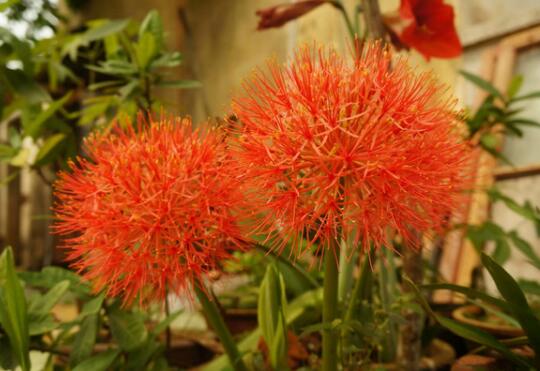
Regarding how the blood lily propagates, it mainly comes down to seed propagation and bulb division propagation. As long as we operate properly and carefully throughout the process, the survival rate of both propagation methods is very high. As for the specific operation methods, they are described in detail below, and interested friends can take a look.
2. Propagation methods for the blood lily
Substrate, well-draining
First, no matter which propagation method is used, we all need to choose a substrate, which is the step of laying a solid foundation and is very important. Generally, it is best to choose loose, fertile sandy loam as the substrate. This kind of soil has good drainage and breathability, allows the plant to absorb nutrients better, and is not prone to waterlogging.
Disinfection, high-temperature disinfection
After choosing the substrate for the blood lily, we also need to disinfect it to avoid carrying pests and diseases that could infect the plant. When disinfecting, we can break it up and spread it flat under the sun to bake, or put it into an iron wok and stir-fry it over high heat, so that even if there are pests and diseases in it, they will be killed by the high temperature.
Seed propagation, germination in 15 days
Seed germination: Before carrying out seed propagation of the blood lily, there is a preliminary task to do, which is to germinate its seeds. We can soak its seeds in warm water for about 24 hours, and when they begin to absorb water and swell, take them out for planting. This allows the seeds to germinate more quickly.
Sowing method: After germinating the seeds, we can plant them. First, we need to apply an appropriate amount of base fertilizer to the substrate, then evenly scatter the seeds on the soil surface, and afterward cover them with 1-2 cm of soil before watering. When watering, we can use the immersion method, placing the flower pot about one-half into water and letting the water slowly soak upward. When the substrate has a certain moisture level, take it out, and germination will occur in about 15 days.
Bulb division propagation, divide bulbs in autumn
When carrying out bulb division propagation of the blood lily, we can generally choose to do it in autumn together with repotting. First, we need to dig the mother bulb out of the soil, then break off the small daughter bulbs around the mother bulb and plant them separately. Because the bulb has a poor ability to form daughter bulbs, bulb division propagation is generally carried out once every 2-3 years.
Blood lily propagation methods
Bulb division propagation
The blood lily is generally propagated by bulb division in spring. Take the plant out, shake off the soil, gently break off the new small bulbs around the mother bulb, and plant them separately. Usually the blood lily needs bulb division propagation once every two to three years, and the bulbs should not be buried too deep. After germination, water lightly.
Seed propagation
One to two months after the blood lily fades, the seeds will mature and can be collected and sown at any time. Generally, sowing in a flower pot will germinate in about 15 days. Its seedlings grow slowly and must be cultivated for four to five years before flowering.
Propagation methods for the blood lily
The blood lily is commonly propagated by bulb division and sowing. Bulb division propagation is carried out during spring repotting; simply break off the small daughter bulbs around the mother bulb and plant them separately. Because the bulb has a poor ability to form daughter bulbs, bulb division propagation is generally carried out once every 2-3 years.Seed propagation: 50-60 days after the flowers fade, collect seeds when they mature and sow them immediately after collection, using pot sowing. They germinate about 15 days after sowing. The seedlings grow slowly and need 4-5 years of cultivation before flowering. Bulb division propagation is the main method, and seed propagation can also be used.
Bulb division propagation is carried out in autumn. Separate and plant the small bulbs produced at the sides of the mother bulb; after 3-4 years of cultivation, they can flower. Because the mother bulb has a weak ability to produce offsets, the southern regions also use seed propagation (the Shanghai region is not suitable for seed setting). Seedlings need 5-6 years before they can flower.
April to May is the planting period, mostly using pot cultivation, though ground planting is also possible. In spring, carry out division together with repotting, planting large and small bulbs separately; large bulbs are used for flowering, and small bulbs are cultivated to grow larger. Cover with soil and avoid burying too deep. After the bulb germinates, watering should be moderate, and water must not accumulate in the pot.
During the growing period, fertilize once every 10 days. When the light is too strong in summer, place it in a semi-shaded area for care. In late autumn and early winter, the leaves begin to turn yellow and wither, and the bulb enters dormancy. Watering should be gradually stopped, the soil kept dry, and the bulb dug out and stored indoors.