The main propagation method for the tiger lily is seed sowing.
The tiger lily (Lilium lancifolium) is a flowering plant with high ornamental value, and it can be seen in many regions of China. As more people grow it in various places, questions about its propagation have drawn people's attention. How does the tiger lily propagate? What propagation methods does the tiger lily have? Below, the editor takes everyone to learn about it.
1. How does the tiger lily propagate: sowing / cuttings / division / bulbs
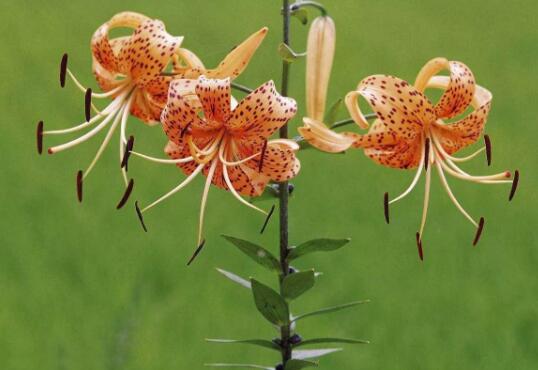
When it comes to how the tiger lily propagates, it is mainly divided into four methods: seed sowing, scale cuttings, division, and bulb propagation. As long as the operations are done properly, the survival rate of all four methods is very high. The details are described in the text below; interested friends can take a look.
2. Propagation methods of the tiger lily
1. Seed sowing propagation
Seed sowing propagation of the tiger lily is generally carried out every spring. When sowing, we first need to apply an appropriate amount of base fertilizer into the substrate, then evenly scatter the seeds on the soil surface, and afterwards cover them with 1-2 cm of substrate before watering. When watering, we can use the immersion method, because the seeds of the tiger lily are relatively small, and if watered directly they are easily washed away.
2. Cutting propagation
Cutting propagation can also be called the scale cutting method. In autumn, we dig out the bulbs of the tiger lily, then separate the plump scales one by one. The base of the detached scales should carry a small portion of the stem disc. Afterwards, we can use the cutting method, inserting the scales about two-thirds into the substrate, then keeping the substrate at a certain humidity. Generally, after about a month and a half, they will take root.
3. Division propagation
Among the propagation methods of the tiger lily, division propagation is a relatively rarely used method, applicable only to a few types, but as long as it is done properly, the survival rate is equally very high. This method involves taking the small bulbs formed in the leaf axils of the aboveground stems and cultivating them. From growing into a large bulb to flowering usually takes 2-4 years.
4. Bulb propagation
Bulb propagation is a propagation method relatively suitable for potted tiger lilies. Usually, some small bulbs grow around the stem disc of the old bulb. We can separate these small bulbs in autumn, store them in indoor sand to overwinter, and wait until the spring of the following year to plant them. Generally, after about 2-3 years they can grow into large bulbs and be cultivated into large plants.
5. Follow-up management
After we have successfully propagated them according to the above methods, we need to carry out daily care for the tiger lily. During care, we need to pay attention to regularly applying water and fertilizer, and to light management, etc. For specific details, everyone can refer to the article on the cultivation methods of the tiger lily, which contains detailed teaching. The editor will not introduce them one by one here.
Can tiger lilies be grown in Lishui? High-quality and high-yield cultivation techniques for tiger lilies in the Lishui area
The tiger lily is a medicinal plant with high ornamental value, and is also often called Juandan. Below, the editor will talk with you about the high-quality and high-yield cultivation techniques for tiger lilies in the Lishui area.
Lishui City is located in the mountainous area of southwestern Zhejiang Province, with nine parts mountain, half part water and half part field. The terrain is mainly mid-mountain and hilly landforms, with obvious vertical climate differences. The land area above 500 m elevation is 14,000 hm2. Because these lands are shaded by trees around them and have streams passing through the middle, with cool summers, large day-night temperature differences, and high soil organic matter content, they are conducive to the accumulation of organic matter in crops, and the incidence of pests and diseases is low. In order to fully leverage the rich geographical resource advantages and diverse climate conditions of the Lishui mountainous area, increase the economic income of mountain farmers, and accelerate the pace of mountain farmers escaping poverty and becoming prosperous, lilies were introduced for trial planting, from which tiger lily varieties with good yield performance, strong disease resistance, good commodity quality, high nutritional and medicinal value, broad market prospects, and suitability for planting in the Lishui mountainous area were selected. After trial planting and promotion in recent years, the current planting area in the whole city has reached 378.7 hm2, the yield can reach 22.5 t/hm2, and the economic benefit can reach 120,000-150,000 yuan/hm2. They are now mainly distributed in Qingtian, Suichang, Jingning, Songxian and other counties. The high-yield cultivation techniques for tiger lilies in mountainous areas are summarized as follows.
1. Plot selection
The tiger lily likes drought, fears waterlogging, prefers cool shade, and is very cold-resistant. High-temperature areas will affect its growth. It grows vigorously, has large bulbs, and high yield. When planting, sandy loam or loam with an elevation above 500 m, fertile soil, high and open terrain, good drainage, and loose texture should be selected for cultivation; the natural conditions of sparse forest and half shade and half sun in mountainous areas should be used. Lilies should not be continuously cropped. It is advisable to choose plots where the previous crop was not lilies, Atractylodes macrocephala, potatoes or other root and tuber crops. The previous crop is best beans, melons, or vegetables. After harvest that year, the following year it is more suitable to plant rice, wild rice stem and other crops for paddy-upland rotation cultivation.
2. Land preparation and base fertilizer application
2.1 Land preparation and bed making
5-10 d before planting, remove residues of the previous crop and weeds in the field, then plow 30-35 cm and harrow finely and level. Generally, the bed surface width is 80-100 cm, the bed height is 20-30 cm, made into a turtle-back shape, and the ditch width is 30 cm, which is conducive to drainage, ventilation, and farming operations such as weeding. At the same time, when plowing, spread quicklime 900-1,200 kg/hm2 for soil disinfection.
2.2 Apply sufficient base fertilizer
The whole growth period of the lily exceeds 250 d, and its fertilizer demand is large. The base fertilizer should mainly be long-acting, high-quality, decomposed organic fertilizer[2]. Apply decomposed organic fertilizer 18.0-22.5 t/hm2 or cake fertilizer 2,250 kg/hm2 (the cake fertilizer uses tea seed cake, which can kill eggs of underground pests such as cutworms), superphosphate 375 kg/hm2, and ammonium bicarbonate 750 kg/hm2. Apply in furrows and cover with soil to prevent nutrient volatilization and loss. The soil in the Lishui mountainous area is generally deficient in potassium, with a pH value of about 5, slightly acidic, so potassium sulfate or plant ash needs to be appropriately added. Generally, add potassium sulfate 150 kg/hm2 or plant ash 1,500 kg/hm2. Quicklime 3,750 kg/hm2 can also be used for disinfection and acid adjustment.
3. Sowing at the appropriate time
3.1 Seed selection
For seed bulbs, choose lily bulbs with a single head weight of 30-40 g and 3-4 heads as seed bulbs. The seed bulbs are required to be flat-headed, spotless, undamaged, and with scales tightly clasped without splitting. The seed rate is 3,750-4,500 kg/hm2.
3.2 Disinfection
Before sowing, soak the seed bulbs in 800-1,200 times dilution of fungicides such as carbendazim wettable powder or thiophanate-methyl for 15-30 min for disinfection, then take them out and place them in a cool place to dry.
3.3 Selection of sowing period
Tiger lilies are sown from early October to mid-November. Generally, high mountain areas above 500 m elevation are suitable for sowing in early to mid-October, and areas below 500 m elevation are suitable for sowing in mid to late October. The specific time should be adjusted according to different elevations. As the elevation increases, the sowing period should be correspondingly earlier.
3.4 Sowing
The soil should be kept moist when sowing. The sowing density is 30-35 cm row spacing and 15-20 cm plant spacing. Open furrows, place the seed bulbs with the bulb tips facing up, and the sowing depth is 10-15 cm, then cover with 4-6 cm of soil. In dry weather, shade nets or weeds can be used for covering, which is conducive to moisture retention and seedling emergence. After emergence, remove the shade nets.
4. Field management
4.1 Straw covering
Before lily emergence, attention should be paid to moisture retention, heat preservation, and weed prevention. In mid to late November, when the weather gradually turns cooler and the temperature drops, cover with straw, bean stalks, corn stalks and other mulching materials for heat preservation, moisture retention, weed prevention, prevention of heavy rain erosion, and prevention of surface soil crusting. The Lishui mountainous area promotes straw return to the field, and there are many usable mulching materials. Covering is conducive to early emergence and good emergence.
4.2 Fertilization
After emergence, apply seedling fertilizer steadily, generally in early to mid-January. Because the weather in January is relatively cold and the temperature is relatively low, organic fertilizer should be the main component, with an appropriate amount of compound fertilizer added. Generally, apply decomposed organic fertilizer 7,500-12,000 kg/hm2, evenly scattered on the bed surface, to play a role in heat preservation and frost prevention, and apply compound fertilizer 150 kg/hm2 as a seedling-promoting fertilizer. From sowing to emergence, the lily generally takes about 100 d in the Lishui mountainous area. After emergence, generally in mid-March, when the lily seedlings are 10-20 cm tall, apply decomposed cake fertilizer 1,500 kg/hm2 and compound fertilizer 150 kg/hm2 as a seedling-promoting fertilizer to promote strong seedlings. Apply topping fertilizer appropriately. In mid to late May, after topping, apply urea 150 kg/hm2 and potassium sulfate 150 kg/hm2 to promote scale enlargement. At the same time, use 0.2% potassium dihydrogen phosphate solution for foliar fertilization. This topdressing should be completed 45-55 d before harvest.
4.3 Hilling
Combine shallow hilling with intertillage and weeding. The hilling should not be too thick, and it is appropriate that the bulbs are not exposed above the soil surface. After the lily grows and closes the rows, intertillage and weeding can be stopped. However, ditches should be cleaned in time to ensure smooth water flow, so as to avoid water accumulation affecting plant growth and development.
4.4 Bud removal
In mid to late May, when buds appear, choose sunny noon and top and remove buds in time according to plant growth. Plants with vigorous growth should be topped heavily, and weak plants should be topped later, and the flower buds should be removed. Generally, about 5 cm is topped. Topping is an important technical step for high yield of tiger lilies. The yield difference between topping and not topping is 15%-20%.
4.5 Water management
Lilies fear waterlogging. In the rainy spring season and after heavy rain, ditches should be dredged and drained in time, keeping ditches unobstructed, cleaning ditches and draining in time, and ensuring that water dries after rain stops. In summer, prevent rot caused by high temperatures; in continuous drought weather, irrigate with shallow water; drain in time after the soil becomes moist. From July to August, the bulbs enlarge and enter summer dormancy, so the soil should be kept dry and loose, and waterlogging must be strictly avoided.
5. Control of diseases, insects, and weeds
The occurrence of pests and diseases in mountainous areas is relatively mild. During the growth and development of lilies, the more common main pests and diseases are Phytophthora blight, viral disease, gray mold, aphids, seed maggots, and so on.
For the control of Phytophthora blight, agricultural control measures focusing on prevention should be adopted, paddy-upland rotation should be implemented, and plots with good drainage and loose soil should be selected for cultivation or deep-furrow and high-bed cultivation should be used to facilitate drainage. In the early stage of the disease, spray 40% fosetyl-aluminum wettable powder 250 times dilution, or 58% metalaxyl mancozeb wettable powder (or 64% sandofan wettable powder) 500 times dilution, or 72% DuPont Curzate wettable powder 800 times dilution. After the disease occurs, promptly pull out diseased plants, burn or bury them deeply in a centralized manner, and treat the surrounding diseased area with 50% lime milk.
For the control of viral disease, strengthen field management, appropriately increase the application of phosphate fertilizer and potassium fertilizer, so that the plants grow robustly and enhance disease resistance; during the growing period, promptly spray 10% imidacloprid wettable powder 1,500 times dilution or 50% pirimicarb ultra-micro wettable powder 2,000 times dilution to control virus-transmitting aphids and reduce the spread of pests and diseases. In the early stage of the disease, spray 20% Dukexing wettable powder 500-600 times dilution or 0.5% antiviral agent No. 1 aqueous solution 500 times dilution, once every 7-10 d, for 3 consecutive sprays.
For the control of gray mold, select healthy and disease-free bulbs for propagation. Fields or greenhouses should be ventilated and let in light, avoid planting too densely, promote robust plants, and increase disease resistance. In winter or after harvest, promptly remove diseased and residual plants and burn them, promptly remove diseased leaves, and remove diseased flowers to reduce sources of infection. In the early stage of the disease, start spraying 30% basic copper sulfate suspension 400 times dilution, or 36% thiophanate-methyl suspension 500 times dilution, or 50% iprodione wettable powder 1,000-1,500 times dilution. To prevent drug resistance, rational rotation and alternating use should be advocated. Stop using the drug 3 d before harvest.
For the control of aphids, clean the field, eradicate field weeds, and reduce overwintering insect populations. During occurrence, spray 10% imidacloprid wettable powder 1,500 times dilution, or 50% pirimicarb ultra-micro wettable powder 2,000 times dilution. Grub larvae can be controlled with malathion or phoxim. Mites can be controlled with acaricides. For the control of seed maggots, first, carry out soil disinfection; second, use 90% trichlorfon 800 times dilution to irrigate the roots, which also controls underground pests such as cutworms.
For the control of cutworms, use 90% trichlorfon 800 times dilution to irrigate the roots, which also controls underground pests such as white grubs and mole crickets. After lily harvest, flood the whole field to drown them or force them to leave.
For uncovered field plots, carry out one intertillage combined with the application of seedling fertilizer, and adopt manual weeding. If already covered, generally no further weeding is needed.
6. Harvest
In the autumn of the following year after planting, harvest begins after the aboveground parts completely wither and the underground parts fully mature. At this time, harvesting not only gives high yield but also stores well. Lilies generally begin to be harvested in late July. Fresh edible lilies are harvested in batches according to market conditions. Medicinal lilies are harvested once on sunny days. After the bulbs are dug out, cut off the aboveground parts, fibrous roots, and seed roots, and immediately move them indoors to a ventilated place for storage, so as to avoid sunlight causing the scales to dry and discolor.
7. Processing
The tiger lily is a lily variety used both for fresh eating and medicine. In order to increase economic income, when fresh-eating sales are weak, drying processing can be carried out. During processing, wash the harvested fresh lilies clean, then separate the scales. When peeling the scales, the outer scales, middle scales, and inner scales should be separated separately, so as to avoid uneven old and tender scales during blanching, making it difficult to control the blanching time and affecting quality. When blanching, after the water boils, put the scales into the pot and stir them promptly. After 5-10 min, when the edges of the scales are soft and the backs have slight cracks, quickly take them out, put them into cold water to cool, and rinse to remove mucus. Then take them out and immediately dry them with a dryer. During drying, the temperature should be controlled between 60-70 degC, and the drying time is generally about 12 h. When the moisture content is below 12%, take them out and spread them to cool to room temperature, then grade, package, and store.
The above is the high-quality and high-yield cultivation technique for tiger lilies in the Lishui area compiled by the editor of Huinong Network. Have you all learned it?
Huinong Network's 2018 spring seedling procurement festival high-quality supplier recruitment is in full swing.Click here to sign up!
Tiger lily
Tiger lily, also known as tiger skin lily. The petals of the tiger lily include flat-spreading ones and outwardly curled ones, hence the beautiful name "Juandan" (rolled red). If planted in a courtyard, its flowers can be enjoyed in summer and its bulbs can be eaten in autumn, so it has relatively high practical value. In China it is mainly used as an edible lily. Its bulbs contain a large amount of starch and protein and can be eaten as a vegetable.
Plant name: Tiger lily
Scientific name: Tiger Liliy
Alternative names: tiger skin lily, inverted lotus, medicinal lily, yellow lily, Yixing lily
Family and genus: Liliaceae, Lilium
Plant uses: ornamental, edible, medicinal, etc.
Plant morphology
Bulb nearly broadly spherical, about 3.5 cm high, 4-8 cm in diameter; scales broadly ovate, 2.5-3 cm long, 1.4-2.5 cm wide, white. Stem 0.8-1.5 m tall, with purple stripes, covered with white woolly hairs. Leaves scattered, oblong-lanceolate or lanceolate, 6.5-9 cm long, 1-1.8 cm wide, nearly glabrous on both surfaces, with white hairs at the apex, papillose along the margin, with 5-7 veins, bulbils in the axils of upper leaves. Flowers 3-6 or more; bracts leaf-like, ovate-lanceolate, 1.5-2 cm long, 2-5 mm wide, obtuse at the apex, with white woolly hairs; pedicels 6.5-9 cm long, purple, with white woolly hairs; flowers pendulous, tepals lanceolate, revolute, orange-red, with purple-black spots; outer tepals 6-10 cm long, 1-2 cm wide; inner tepals slightly wider, with papillae on both sides of the nectary, and also fringed protrusions; stamens spreading in four directions; filaments 5-7 cm long, pale red, glabrous, anthers oblong, about 2 cm long; ovary cylindrical, 1.5-2 cm long, 2-3 mm wide; style 4.5-6.5 cm long, stigma slightly swollen, 3-lobed. Capsule narrowly long-ovoid, 3-4 cm long. Flowering period July-August, fruiting period September-October.
Varieties include: var. splendens, with large orange-red flowers; var. fortuni, with stems densely covered with hairs. Wild triploid plants have been found in Japan, with large and beautiful flowers. This species is also a breeding material for lily-type flowers, and crossing with closely related plants such as Lilium davidii Dacharte forms many horticultural varieties.
Habitat and distribution
It grows on mountain slopes under shrub forests, in grasslands, roadsides, or beside water, at an elevation of 400-**** m. It is distributed in Jiangsu, Zhejiang, Anhui, Jiangxi, Hunan, Hubei, Guangxi, Sichuan, Qinghai, Xizang, Gansu, Shaanxi, Shanxi, Henan, Hebei, Shandong, Jilin and other provinces and regions. It is cultivated in various places. It is also distributed in Japan and Korea.
Division propagation
Division time and method
It is best to carry out division in early spring (February and March) after the soil thaws. Take the mother plant out of the flowerpot, shake off excess potting soil, separate the tangled root system as much as possible, and cut it open with a sharp knife into two or more plants. Each divided plant must carry a considerable root system, and its leaves should be appropriately pruned to facilitate survival.
Potting and disinfection
Soak the divided small plants in 1,500 times dilution of chlorothalonil for five minutes, take them out to dry, and then pot them. It is also possible to immediately drench the roots with chlorothalonil after potting.
Management after division
After division and potting, drench the roots or water once thoroughly. Because its root system is greatly damaged and its water absorption capacity is very weak, it takes about 3-4 weeks to recover and sprout new roots. Therefore, within 3-4 weeks after division, watering should be controlled to avoid root rot, but the transpiration of its leaves is not affected. In order to maintain the water balance of the leaves, it is necessary to spray the leaf surface 1-3 times a day (spray more when the temperature is high, and spray less or not at all when the temperature is low). Do not apply fertilizer during this period either. After division, also pay attention to excessively strong sunlight, and it can be placed in a shade shed for care.
Potting or transplanting
When potting small seedlings, first place coarse-grained substrate or ceramsite 2-2 cm thick at the bottom of the pot as a drainage layer, sprinkle a layer of fully decomposed organic fertilizer on top as base fertilizer, about 1-2 cm thick, then cover with another layer of substrate about 1-2 cm thick, and then place the plant in, so as to separate the fertilizer from the root system and avoid burning the roots. For the substrate used for potting, one of the following can be selected. Garden soil: cinder = 3:1; or garden soil: medium-coarse river sand: sawdust (mushroom residue) = 4:1:2; or one of paddy soil, pond mud, and leaf mold. Or peat, perlite, ceramsite = 2 parts, 2 parts, 1 part; garden soil, cinder = 3 parts, 1 part; peat, cinder, ceramsite = 2 parts, 2 parts, 1 part; sawdust, vermiculite, medium-coarse river sand = 2 parts, 2 parts, 1 part. After potting, water once thoroughly and place it in a slightly shaded environment for one week of care.
When transplanting small seedlings, first dig the planting hole, sprinkle a layer of organic fertilizer at the bottom of the planting hole as basal fertilizer (base fertilizer), about 4-6 cm thick, then cover with a layer of soil and place the seedling in, so as to separate the fertilizer from the root system and avoid burning the roots. After placing the seedling in, backfill the soil, cover the root system, and press the soil firm with your foot, then water once thoroughly.
Planting management
Humidity management
It likes a relatively dry air environment. If rainy days last too long, it is susceptible to pathogen infection. It fears rain, and the leaves should be kept dry at night. The most suitable relative air humidity is 40-60%.
Temperature management
It likes a cool climate and avoids intense heat. Growth is very slow in summer; it is not frost-resistant, and when the temperature drops below 10 degC it enters dormancy. The most suitable growth temperature is 15-28 degC.
Light management
In the three seasons of late autumn, winter, and early spring, since the temperature is not very high, it should be given direct sunlight to facilitate photosynthesis and the formation of flower buds, flowering, and fruiting. If encountered with high-temperature weather or in summer, about 30% of sunlight needs to be shaded out. After flowering, if placed indoors for ornamental care, it should be placed near southeast-facing doors and windows to prolong the flowering period and increase the number of flowers as much as possible.
Fertilizer and water management
It does not have high requirements for fertilizer and water, and also fears random fertilization, concentrated fertilizer, and one-sided application of nitrogen, phosphorus, and potassium fertilizers. It is required to follow the fertilization (water) principle of "light fertilizer applied frequently, small amounts but many times, complete nutrition":
Biological characteristics
It likes a warm, slightly cool and dry climate, and has relatively strong shade tolerance. It is cold-resistant, and the suitable growth and development temperature is 15-25 degrees. It can tolerate drought. It most avoids intense heat and excessive rain. It is a long-day plant, and likes light in the early and middle stages of growth. It is suitable to choose sunny, deep soil layer, loose and fertile, well-drained sandy soil for cultivation, and low wetland is not suitable for planting. It should not be continuously cropped, and rotation with legumes and grass-family crops is better.
Cultivation techniques
Both asexual propagation and sexual propagation are possible. At present, production mainly uses scales, small bulbs, and bulbils for propagation. Scale propagation: dig bulbs in autumn, peel off the inner scales, select the plump ones and soak them in 1:500 benomyl or captan aqueous solution for 30 min, take them out, dry them in the shade, insert them with the base facing down into the seedbed, dig them out in September of the second year, and transplant them at 15 cm x 6 cm row and plant spacing. After 2-3 years of cultivation, they can be harvested. Seedling boxes can also be used for breeding. Small bulb propagation: at harvest, sow small bulbs at 15 cm x 6 cm row and plant spacing, and after 2 years of cultivation they can be harvested. Bulbil propagation: harvest bulbils in summer, mix and store them with wet sand in a cool and ventilated place, sow them on the seedbed in August-September of that year, and after the aboveground parts wither in the autumn of the second year, dig out the bulbs and sow them at 20 cm x 10 cm row and plant spacing. Harvest in the autumn of the third year, and cultivate the smaller ones for another year. [2] Field management
After the seedlings emerge completely and in May, carry out intertillage and weeding once each, and at the same time topdress, hill, and apply a mixture of human and livestock manure water, oil cake, plant ash, superphosphate, etc. 0.2% potassium dihydrogen phosphate can also be used for foliar topdressing. In late May, top and remove bulbils, and during the budding period from June to July, flower stems should be removed in time. In the high-temperature and rainy summer season, pay attention to drainage.
Pest and disease control
Diseases include viral disease. Select disease-free bulbs for propagation and eliminate aphids that transmit the disease. For damping-off, avoid continuous cropping, pay attention to drainage, and when diseased plants are found, immediately pull them out and spread lime for disinfection. Insect pests include aphids, which can be controlled by spraying 50% malathion 1,000 times dilution.
Main components
Stems and leaves contain lilioside C. Pollen contains hexokinase, and also contains protein 21.29%, fat 12.43%, starch 3.61%, vitamin B1 443 microm%, B2 1829 microm%, pantothenic acid 306 microm%, vitamin C 21.2 mg%, and beta-carotene, etc.
Pre-harvest management and harvest
The planting density is 9-12 plants per sq m. The tiger lily likes a slightly moist soil environment and is somewhat drought-tolerant. An appropriate amount of leaf mold can be applied as base fertilizer when planting, and in the vigorous growth stage, a thin liquid fertilizer should be topdressed every 10 days. The tiger lily likes sufficient light, and receiving direct sunlight for no less than 4 hours a day is appropriate. Keeping the environment ventilated helps the post-harvest storage of bulbs. The tiger lily likes warmth, and its optimum growth temperature is 16-28 degC. The overwintering temperature should not be low
Harvest
For medicinal and edible harvest, dig in autumn and winter, remove the aboveground parts, wash off the soil, peel off the scales, blanch them in boiling water or steam them slightly, then roast them dry or sun-dry them. Fresh scales can be directly processed for consumption. For cut flower harvest, the suitable harvest time for tiger lilies is when the flower buds swell and the leaves are orange-red, generally 1-2 days before flowering. Make 1 bundle of every 10 stems, keep the buds facing upward, wrap them well with wrapping paper, then box them and bring them to market.
Application value
Ornamental, edible, medicinal
Garden ornamental
Because its petals curl outward and its flower color is fiery red, the tiger lily has the beautiful name "Juandan". If planted in a courtyard, its flowers can be enjoyed in summer. Abroad, it has become an important ornamental flower. Its flower shape is peculiar and graceful, suitable not only for flower beds, flower borders, and courtyard planting in gardens, but also as a good material for cut flowers and potted plants.
Edible value
The bulb of the tiger lily is rich in starch and can be eaten. [1] It is the main species of edible lilies in China. Medicinal value
Cultivation points
Planting site and soil: choose a sunny place with good drainage, preferably sloping land; the soil should preferably be clay loam with a deep soil layer, followed by sandy loam. To avoid pests and diseases, continuous cropping must be avoided.
Planting: when the plants wither in early September, they should be dug out and planted. Early planting is conducive to the growth of basal roots. Be careful not to let the scales dry out or be injured; if they cannot be planted in time, the bulbs need to be stored in wet sand or sphagnum moss. Before planting, prepare high beds. The planting depth is 10-12 cm.
Fertilization: mainly organic fertilizer, combined with a small amount of chemical fertilizer (cake fertilizer, plant ash, superphosphate, etc.). Apply sufficient base fertilizer before planting. After new shoots emerge in spring, topdress twice up to the bud stage. When fertilizing, be careful that the fertilizer does not touch the bulbs.
Intertillage and weeding: carry out intertillage and weeding in spring. In the plum rain season, weeds need to be removed in time to keep the soil loose. But at this time, be careful not to step into the garden, otherwise the bulbs are prone to infection and rot.
Sunlight: the tiger lily is a light-loving plant, but its bulb development is easily inhibited by strong light. Therefore, growers aiming to harvest bulbs need to plant it in semi-shade or plant densely so that it shades itself.
Pests and diseases: the main diseases are gray mold, damping-off, and rust. During the disease period, spray Bordeaux mixture or 65% zineb 500 times dilution. For rust, spray 15% triadimefon 800 times dilution for control.