Why are the leaves of Buddha belly bamboo turning yellow? Too much light and improper watering are the main causes
To make the indoor environment fresher and more beautiful, many people choose to keep a few plants, and Buddha belly bamboo is popular for its unusual shape and emerald-green leaves. However, when growing Buddha belly bamboo, due to improper methods and a poor environment, its leaves can turn yellow. So why are the leaves of Buddha belly bamboo turning yellow? Today the editor will solve this problem for everyone.
I. Why are the leaves of Buddha belly bamboo turning yellow
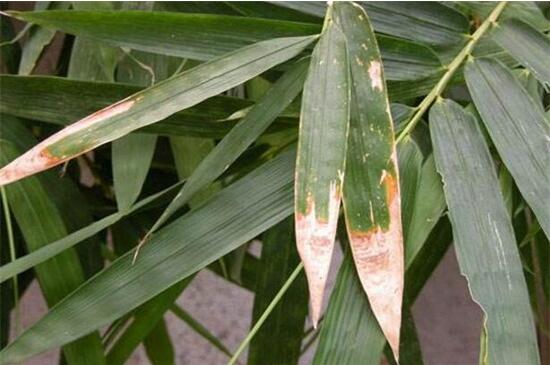
When it comes to yellowing leaves on Buddha belly bamboo, apart from an unsuitable environment, it is caused by improper care: if there is too much light, it needs appropriate shading; if it is watered too much, loosen the soil more, and if there is root rot, cut it off, then change the potting soil and replant; if it is caused by soil that is too alkaline, just replace the potting soil; if it is caused by pests and diseases, then we need to spray pesticide for control.
II. Causes of yellowing leaves on Buddha belly bamboo and solutions
1. Sudden environmental change
There are many reasons for yellowing leaves on Buddha belly bamboo, and the first thing to consider should be a problem with the environment. Nowadays, most people's potted Buddha belly bamboo is bought online, which easily causes a large regional difference and too great a sudden change in environment, so the Buddha belly bamboo cannot adapt for a while, resulting in yellow leaves.
Solution: Very simple, according to the growth habits of Buddha belly bamboo, provide it with the most suitable growing environment: plenty of diffused light, slightly moist potting soil, and a ventilated environment. After a period of time, the plant will recover its health.
2. Too much light
Buddha belly bamboo likes light, and sufficient light lets it grow with lush branches and leaves. However, everyone should note that Buddha belly bamboo dislikes strong light; once it is placed in the sun to bake, the chlorophyll in its leaves will be destroyed, the tissues cannot carry out normal photosynthesis, and thus the leaves slowly turn yellow.
Solution: Move the potted Buddha belly bamboo to a cool, ventilated place in time, and after it recovers, slowly increase the light so the leaves can photosynthesize effectively, and the leaves of the Buddha belly bamboo will gradually turn green again.
3. Improper watering
① Insufficient watering: Buddha belly bamboo likes a moist environment. If watered too little, the roots cannot get nutrient supply, and the leaves will naturally turn yellow. Solution: Supplement water in time, but do not water too much at once; just keep the potting soil slightly moist.
② Overwatering: Although Buddha belly bamboo likes water, if watered too much and water accumulates in the pot, the roots will have difficulty breathing, and over time root rot will occur, and the leaves will also turn yellow because they cannot absorb nutrients. Solution: Loosen the soil more to let the water evaporate quickly; if the roots have already been soaked and rotted, take the plant out of the pot, cut off the rotten roots, and replant with new potting soil.
4. Alkaline soil
Flower lovers who know something about Buddha belly bamboo know that it likes acidic soil. If the soil is alkaline, or long-term watering with mineral water makes the soil alkaline, the plant will grow poorly, showing symptoms of yellow leaves.
Solution: Very simple, if it is caused by alkaline soil, just replace the potting soil. Take the plant out of the pot, then replace it with soil mixed from leaf mold, garden soil, forest soil, and fine sand in a 2:1:2:1 ratio, and replant.
5. Pests and diseases
Besides the above points, yellowing leaves on Buddha belly bamboo may also be caused by pests and diseases. Common pests include scale insects and bamboo locusts, which mainly attach to the leaf surface and absorb nutrients from the leaves, so the leaves turn yellow and wither as well.
Solution: Determine the specific pest or disease. When there are few, remove them directly by hand; when there are many, spray pesticide liquid in time. For the specific pesticide to use, refer to pest and disease control for Buddha belly bamboo.
Overall, the growing method for Buddha belly bamboo is not difficult, but because many flower lovers are beginners, symptoms of yellow leaves inevitably appear. However, after reading the whole article, I believe everyone has a clearer idea, and when yellow leaf problems appear, just remedy them according to the above methods. That is all the editor will introduce about yellowing leaves on Buddha belly bamboo, hoping to bring everyone help.
How to grow potted bamboo? How to grow lucky bamboo in soil?
There are many varieties of bamboo. When making bamboo bonsai, it is best to use small bamboo types with thin, short culms and narrow small leaves, such as Shibataea kumasaca, small Buddha belly bamboo, small-leaf fernleaf hedge bamboo, and white-striped yin-yang bamboo, which are more suitable for bamboo bonsai making. So how should they be grown? Let's learn together below.
How to grow potted bamboo
For transplanting bamboo, it is best in spring to choose well-developed one- or two-year-old root bamboo with rhizomes, dig it up with the roots, and when transplanting, the roots should carry original soil, the main culm should be shortened, and about 50 cm of culm should be left in the pot. It is best to first plant it in a small clay pot, and after it survives, plant it in a shallow pot. For bamboo bonsai, humus soil is best. Because the growth of potted bamboo is controlled, the small bamboo shoots produced in spring and autumn are relatively slender and short, so they are very suitable as material for bamboo bonsai. After planting, water thoroughly once, place it in a cool, moist, ventilated place to cultivate for one year, and in the second year it can be processed into a bamboo bonsai.
When making bamboo bonsai, different layout methods can be adopted according to different types of bamboo. Small bamboo types such as Shibataea kumasaca can be planted in square or oval pots; medium bamboo types such as green bamboo can be planted in rectangular or oval shallow pots. If planting on one side of the pot feels unbalanced, a beautiful stone of graceful shape and in appropriate proportion to the size of the bamboo can be placed at the other end of the pot, which can both achieve balance and increase the charm of the bonsai, making it look lively and natural. Large bamboos such as Phyllostachys sulphurea, Phyllostachys glauca, and spotted bamboo, if used to make bonsai, need artificial dwarfing treatment and should be planted in medium or small shallow pots to achieve the effect of "shrinking a dragon into an inch." Bamboo bonsai should be sparsely planted, not densely planted; it is better to plant them scattered rather than crowded. Just three, five, or seven branches, orderly in height, well spaced, naturally arranged, planted in a shallow pot, decorated at the side with a beautiful stone, slightly covered with moss, plus one or two antique pottery figures, strolling among them, full of poetic charm, can be called an excellent bonsai and can make the whole bamboo bonsai present a natural bamboo forest scene. Otherwise, it will be chaotic, like a pile of reeds or weeds, with no bonsai charm at all and losing ornamental value.
To increase the beauty of bamboo bonsai, when potting the bamboo, plant it with the roots raised. After the bamboo has grown and developed for a stage, remove part of the surface soil from the roots so that part of the bamboo roots is exposed above the surface soil, presenting the appearance of suspended roots and exposed claws, revealing the beauty of the bamboo roots, which is very pleasant to view.
Placement location: Bamboo bonsai should be placed in a warm, moist, wind-sheltered, sunny place. In summer it should not be exposed to the sun; it is best placed under a shade shed or beside a water pool; bamboo species that are not cold-tolerant in winter (such as small Buddha belly bamboo, small-leaf fernleaf hedge bamboo, etc.) should have their pots moved indoors for warmth and cold protection.
How to water bamboo bonsai: For the management of bamboo bonsai, special attention should be paid to the supply of water. During the vigorous growth period or in summer high temperatures, water and spray frequently. Although bamboo likes moisture, it dislikes water accumulation in the pot, otherwise it easily causes rhizome (root) rot.
How to fertilize bamboo bonsai: Although bamboo likes fertilizer, potted plants should be fertilized as little as possible, only with thin fertilizer. From May to August each year, apply 2 to 3 additional applications of thin, fully decomposed cake fertilizer water, etc. If the potting soil lacks nutrients, it will cause poor growth (such as dull and not bright leaf color, etc.).
Pruning of bamboo bonsai: Bamboo sprouts and grows quickly. Usually pay attention to pruning to maintain the graceful posture of the bamboo bonsai. For overlapping branches, crossing branches, and branches that affect the beauty of the shape, pruning can be done at any time, and overly long branches can be shortened. After the bonsai shape is set, generally the newly emerging shoots can be pulled out in time to avoid disrupting the shape of the bamboo bonsai and consuming nutrients that affect the growth of the mother bamboo.
Bamboo bonsai should be repotted: Bamboo should be repotted once every 2 to 3 years, preferably in April to May. When repotting, be careful to protect the fibrous roots on the rhizomes and fill with fertile, loose culture soil. After repotting, place it in a shaded place, keep the potting soil moist, and spray the leaf surface with water frequently to prevent the leaves from shrinking.
Pest and disease control of bamboo bonsai: Potted bamboo has relatively few pests and diseases, mainly bamboo borers, scale insects, aphids, etc., which can be controlled by spraying with 800 times dilution of trichlorfon or 1000 to 1200 times dilution of dichlorvos. Usually, as long as it is carefully maintained, keeping it always with a beautiful landscape and green, elegant, and beautiful branches and leaves, a pot of bamboo bonsai can be enjoyed by people for a long time.
How to grow lucky bamboo in soil
First, growth temperature, the same as water culture. The suitable growth temperature for lucky bamboo is 20-28 degrees, but once winter comes, special attention must be paid that the temperature is not too low, otherwise it is easy to get frostbitten.
Second, light requirements: Suitable for a semi-shaded place, and absolutely avoid strong light, otherwise the leaf surface easily turns yellow, etc.
Third, moist potting soil: Lucky bamboo is relatively tolerant of waterlogging and afraid of drying out, so its potting soil must be kept in a moist state; too dry will cause the leaf surface to turn yellow. Generally speaking, water once every 2-3 days, and in winter the watering frequency can be reduced.
Fourth, frequently spray water on the leaf surface to maintain relatively high environmental humidity; too dry will cause the leaf surface to dry up.
Fifth, the most suitable planting time for potted lucky bamboo is the same as for water culture, also April to September, which is the most suitable period for rooting.
Sixth, in the peak growth months of May to September, apply granular compound fertilizer to the lucky bamboo potting soil 2-3 times per month to keep the leaf surface lush.
Finally, precautions for growing lucky bamboo
First, newly bought lucky bamboo mostly already has its roots trimmed, so just get the water, nutrients, light, and environment right.
Second, lucky bamboo needs to go through a difficult adaptation process, and this adaptation process easily causes yellow leaves; in fact, it is because the lucky bamboo has not yet rooted. After the lucky bamboo roots, with careful care, the leaves will gradually turn green. So many friends hastily throw it away when they see yellow leaves on lucky bamboo, which is really a pity. What the editor wants to say here is that only after lucky bamboo has rooted will the leaves gradually turn green, so please pay more attention and observe carefully when growing it in water.
How to grow fernleaf hedge bamboo_How to care for fernleaf hedge bamboo
Fernleaf hedge bamboo likes a sunny environment, can tolerate shade, and is not very cold-tolerant! To let everyone grow fernleaf hedge bamboo better, next we will share the key points of growing fernleaf hedge bamboo, hoping to help everyone!
Growing conditions for fernleaf hedge bamboo
1. Soil selection
For potted fernleaf hedge bamboo, the potting soil is more suitable if made from fertile, loose leaf mold rich in humus, surface-matured garden soil from vegetable plots, mixed with an appropriate amount of sandy soil. Put a layer of coarse sand at the bottom of the pot, then apply decomposed cake fertilizer crumbs as base fertilizer; good water permeability is beneficial to the development of rhizomes and the growth of branches and leaves.
2. Fertilizing
Fernleaf hedge bamboo also needs fertilizing, especially when planted in large quantities in courtyards; basal fertilizer should be applied well. When planting, barnyard manure, bone meal, farmyard manure, and pond mud can be mixed and filled into the bottom of the pot or used to mound the base in autumn and winter. This not only increases the effective fertility of the soil and the ground temperature, but is also very good for new bamboo shoots. For fernleaf hedge bamboo bonsai, during the growing season, quick-acting fertilizers such as urea and potassium dihydrogen phosphate can be made into a 0.3% nutrient solution and applied to the pot for its growth needs, with the best effect. Fernleaf hedge bamboo is not tolerant of drought or waterlogging, so the water should be controlled during daily watering. During the growing period of fernleaf hedge bamboo, the amount of watering should be moderate; just keep the potting soil in a moist state. When it is dry in summer, frequently spray and wash the leaves with clean water to maintain their condition. During the growing period, also pay attention to supplementing fertilizer; fertilize about once every 20 days or so, mainly with organic fertilizer. In winter, no fertilizing is needed. Apply organic fertilizer once each season, and in the peak growth season apply a thin compound fertilizer once a month to help the leaves stay emerald green. During the growing period, also pay attention to loosening the potting soil. Apply several additional applications of thin, decomposed cake fertilizer water. In early winter each year, apply wind chemical fertilizer or miscellaneous fertilizer to improve the soil structure and benefit the growth and development of bamboo rhizomes.
3. Watering
During the growing period, fernleaf hedge bamboo should be watered moderately, keeping the potting soil moist; water as soon as it is half dry, and do not let water accumulate. In summer, frequently spray water on the branches and leaves; in winter, reduce the water amount, water once every 4 to 5 days or so, and place it in a sunny place for care. Water is an important factor for the vigorous growth of fernleaf hedge bamboo. Nutrients applied into the soil must be dissolved in water before they can be absorbed by the fernleaf hedge bamboo. So water is needed all year round; in spring, potted fernleaf hedge bamboo begins to sprout branches and leaves, and water needs must be ensured, so it can be watered once every 2 days; in summer, water once in the morning and once in the evening. In autumn and winter, the frequency and amount of watering can be reduced as appropriate; before winter, water thoroughly once, and afterward keep the potting soil moist. For potted fernleaf hedge bamboo, the principle of watering is to water thoroughly and not to give "halfway water," otherwise growth will be affected.
After potting, pay attention to shading and keeping the potting soil moist, and frequently spray water on the leaf surface to prevent bamboo leaves from curling due to dryness. But it should also not be too wet and waterlogged, which causes root rot. During the vigorous growth period and summer high-temperature period, besides watering in the morning and evening, also spray water on the leaf surface several times. At the same time, set up a shed for shade to prevent strong sunlight exposure.
4. Light and temperature requirements
Fernleaf hedge bamboo likes warmth and moisture, and a wind-sheltered, sunny place. In spring and late autumn, it can be placed in a sunny spot for cultivation. In summer and early autumn, when sunlight is strong, fernleaf hedge bamboo should be placed in a shaded place or a place where it can receive sunlight in the morning and evening; placing it beside a water pool or ditch is even better. In winter it should be brought indoors to overwinter, with room temperature around 8°C. When it is cold in winter, it should be moved indoors to overwinter, and indoor temperature must not be lower than 5°C. Fernleaf hedge bamboo loves sunlight, but cannot be exposed to the sun for a long time, especially during summer high temperatures; long-term exposure to light will cause the plant leaves to turn yellow. Therefore, in summer there should be shade measures. In spring and autumn, when temperatures are suitable, it only needs to be placed at a ventilated south-facing window; receiving light for a period each day allows it to grow healthily. In winter, give it plenty of sunlight, but once the temperature drops below 0 degrees, move it indoors to ensure its temperature.
5. Pest and disease control
Common diseases include rust and leaf blight. For rust, spray 500 to 600 times dilution of 80% zineb wettable powder; for leaf blight, spray 1000 times dilution of 70% thiophanate-methyl wettable powder for control. There are also aphids and wireworms. For aphids, spray 1500 times dilution of 80% dichlorvos emulsion or 1000 times dilution of malathion; for wireworms, in early spring use 1000 times dilution of 5% phoxim to irrigate the roots to kill adults or larvae.
Propagation methods for fernleaf hedge bamboo
Fernleaf hedge bamboo can be propagated by division, cuttings, and sowing. Because seeds are not easy to obtain and cuttings are relatively difficult to root, division is the main propagation method.
(1) Division propagation: In February to March, select robust 1- to 2-year-old mother bamboo, dig out the mother bamboo together with the underground rhizome and soil, separate the bamboo clumps, with 3 to 5 culms as one clump, and plant them separately with soil.
When planting, fill part of the pit with vegetable garden soil, pour in clean water, and stir forcefully to make it into mud, then insert the divided bamboo seedlings into the mud, then fill with soil and firm it, and mound soil around the planted bamboo lower inside and higher outside to facilitate future water management. Fernleaf hedge bamboo division has a high survival rate and fast development, and is currently the main method of propagating fernleaf hedge bamboo.
(2) Cutting propagation: Every year from April to September, carry it out during the growing period together with pruning. Select the top shoots with buds and leaves from the branches cut during pruning, keep 10 to 15 cm as cuttings, insert them into a sand bed to a depth of 1/3 to 1/2, water thoroughly, and set up an arched shed for warmth and moisture retention. The time for cuttings to root varies with the season, generally ranging from 30 to 60 days; in the plum rain season they survive in about 30 days, while in autumn in September they often need 50 to 60 days to survive. After the cuttings sprout new leaves and are confirmed to have survived, they can be transplanted.
Pruning and repotting methods for fernleaf hedge bamboo
Pruning fernleaf hedge bamboo bonsai is relatively simple; crossing branches and branches that hinder the shape can be cut off at any time, and whether to keep newly sprouted shoots is decided according to the needs of the shape. When a pot of fernleaf hedge bamboo grows relatively dense and tall, division propagation can be carried out when repotting. May is the best time for repotting. Generally, fernleaf hedge bamboo bonsai is repotted once every 2 years. The root system of fernleaf hedge bamboo is not as strong as that of Buddha belly bamboo. Remove 1/2 of the old potting soil, properly prune the roots and branches, add new well-drained culture soil, and when repotting the shape can be changed. According to the intended composition, place several groups of fernleaf hedge bamboo on the left and right sides of an irregular white marble shallow pot, with a Yanshan stone of certain appearance and height placed in the middle, giving a distinctive charm.
What to do if fernleaf hedge bamboo leaves turn yellow
As a commonly used ornamental plant at home, fernleaf hedge bamboo can show signs of yellow leaves during cultivation due to different reasons. Yellowing leaves on fernleaf hedge bamboo is a relatively common phenomenon. To deal with such a situation, first consider the root cause of the yellowing, then take corresponding measures. If long-term exposure to sunlight causes the leaves to lose water and turn yellow, in that case just move it to a cool place. In addition, if nutrients are insufficient during cultivation, lack of fertilizer can also cause leaves to turn yellow, so water and fertilizer should be supplemented in time. Lack of fertilizer causes yellowing, and too much fertilizer does the same; if too much fertilizer is applied, the leaves lose luster and even turn yellow, so use clean water to dilute the fertilizer. If the leaf color is watery yellow and the young leaves are small and thin, it indicates too much water in the soil, so loosen the soil and then blow-dry the moisture. If the yellowing is at the edges and leaf tips, also yellow and dry, and in severe cases falling off, it indicates that it is caused by lack of water, and water needs to be supplemented in time. If fernleaf hedge bamboo is placed in a dark environment for a long time, lack of light will also cause the leaves to lack chlorophyll and turn yellow, so it should often be moved to a cool place with light.
Differences between fernleaf hedge bamboo and areca palm
(1) Fernleaf hedge bamboo is a woody plant. The main culms grow densely, but are hollow. The main culm can reach up to 3 m at its tallest. The leaves of fernleaf hedge bamboo are mostly small, some even needle-shaped, and soft, curved, and drooping, just like a phoenix tail.
(2) Areca palm is a shrub, taller than fernleaf hedge bamboo, reaching up to 7 or 8 meters at its tallest. Its most important feature is that the stem is relatively smooth and golden yellow, and the leaves of the areca palm are slender and ring-patterned, up to 150 cm long, with a bright green leaf surface.
Precautions for growing fernleaf hedge bamboo
(1) Fernleaf hedge bamboo grows in clumps. When planted in the ground, it sheds leaves in winter and grows new leaves after spring; this is a reflection of its fear of cold. In warm places it stays evergreen all year round. Spring, summer, and autumn are its growing seasons, when small shoots repeatedly grow from the rhizome, full of vitality and quite interesting. During metabolism, old culms gradually wither and can be cut off at any time to maintain a graceful posture;
(2) Potted fernleaf hedge bamboo should have its soil changed once every 2 or 3 years. If the plant is crowded, divide it and plant separately. If the culms are too elongated or too close together, prune appropriately to facilitate ventilation and beauty.
(3) Fernleaf hedge bamboo is an evergreen clumping shrub. It likes a warm, humid, and semi-shaded environment. It is somewhat less cold-tolerant, not tolerant of strong sunlight exposure, afraid of waterlogging, and suitable for fertile, loose, and well-drained loam. Winter temperature should not be lower than 0 degrees.
(4) It likes light, is slightly shade-tolerant, and likes a warm and humid climate. It likes moisture and warmth, and also likes semi-ventilation and semi-shade. In winter it should be moved indoors to a sunny place. Fernleaf hedge bamboo likes sunny, high, and open places; there is a saying that "it flourishes facing the sun and should be planted on a high platform"; but it can also tolerate shade and can serve as an ideal indoor decoration for foliage and form appreciation. In spring, summer, and autumn, it only needs to be placed at a ventilated window; in winter, place it in a sunny place, and it can grow well. For ground-planted fernleaf hedge bamboo, new leaves grow after spring (this is a reflection of its fear of cold), and in warm places it stays evergreen all year round.
(5) Fernleaf hedge bamboo likes acidic, slightly acidic, or neutral soil, with pH 4.5 to 7.0 being suitable, and it dislikes heavy, alkaline soil. Northern soil is strongly alkaline, so 0.2% ferrous sulfate can be added. The soil is best as loose, fertile, well-drained sandy loam, which can be made from farmland soil mixed with red-yellow soil, humus soil, and fine sand. If Shibataea kumasaca is planted in ordinary potting soil, the survival rate is low; vermiculite or peat mixed with perlite can be used as the substrate, giving a higher survival rate. To maintain a graceful posture, it also has low soil requirements; generally loose sandy soil is enough.