What to do when the leaves of the Brazil iron tree turn yellow? Adjusting light, water and fertilizer is key
As a foliage plant, the Brazil iron tree has broad, fresh green leaves that spread out to both sides, and together with its sturdy, handsome shape it looks especially beautiful. But during cultivation, many flower lovers find their Brazil iron tree developing yellow leaves, which seriously affects the plant's ornamental value. So what should you do when the leaves of the Brazil iron tree turn yellow? Today the editor will help everyone solve this problem.
I. What to do when the leaves of the Brazil iron tree turn yellow
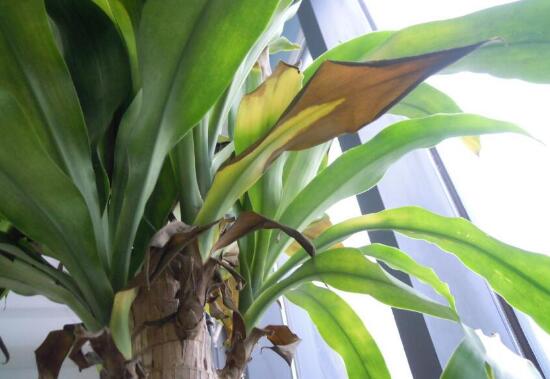
When it comes to yellow leaves on the Brazil iron tree, apart from unsuitable environment, it is caused by improper care: if light is insufficient, supplemental light is needed; if yellowing is caused by harsh sun exposure, shade it promptly; if watered too much, loosen the soil more, and if there is root rot, cut it off, then change the potting soil and replant; if the branches and leaves are too dense, simply prune them in time.
II. Causes of yellow leaves on the Brazil iron tree and solutions
1. Sudden environmental change
There are many causes of yellow leaves on the Brazil iron tree, and you can first consider whether there is a problem with the growing environment. This situation generally appears on newly bought potted plants, because flower lovers mostly buy online, which easily causes a large drop, the environment changes too much at once, and the Brazil iron tree cannot adapt for a while, thus developing yellow leaves.
Solution: Very simple, repot the Brazil iron tree into the soil it likes, ensure timely nutrient supply, then according to the Brazil iron tree's cultivation methods create the most favorable growing environment for it, and after a period of time the plant will recover its health.
2. Improper light
① Insufficient light: The Brazil iron tree likes light, and needs sufficient light during growth; once light is insufficient, yellow leaves appear. Solution: Very simple, move the potted plant to a sunny place for care, then move it back after a period of time, so care and viewing are both taken care of.
② Excessive light: The Brazil iron tree dislikes strong light. In summer, if it is placed under the scorching sun, its leaves will also turn yellow, and in severe cases the tips of the leaves will become withered and scorched. Solution: Shade the potted plant promptly, and when the temperature is high spray an appropriate amount of water to cool it down, and before long the plant will recover its health.
3. Overwatering
When it comes to yellow leaves on the Brazil iron tree, the most likely cause is overwatering. The Brazil iron tree likes a moist environment, and what flower lovers love to do most is water it, while beginners find it hard to control that degree when watering, and the result is too much water, causing waterlogging, which leads to yellow leaves.
Solution: If the situation is not serious, loosen the soil more, then move the potted plant to a ventilated sunny spot so the water evaporates quickly; if the roots have already been soaked and rotted, you need to take the plant out of the pot, then cut off the rotten roots, change to fresh potting soil and replant.
4. Delayed pruning
When the Brazil iron tree grows indoors, if water and fertilizer are appropriate, it will grow lush branches and leaves. And for beauty, as well as for the Brazil iron tree's healthy growth, pruning is generally needed. Once pruning is delayed, and beginners find it hard to control that degree when watering, the result is too much water, causing waterlogging, thus producing the symptom of yellow leaves on the Brazil iron tree.
Solution: When encountering this situation, we should promptly prune the branches and leaves, and apply fertilizer, carrying out careful care, and I believe the green leaves will soon return.
5. Soil and water on the alkaline side
It is understood that the Brazil iron tree is suitable for growing in slightly acidic soil. If the soil is on the alkaline side, or long-term watering with purified water causes the soil to become alkaline, the plant will develop yellow leaves because it cannot absorb iron.
Solution: Don't overthink it, just change the potting soil directly, replace it with suitable soil, and alleviate it by applying some special fertilizer.
Overall, the Brazil iron tree is very easy to grow, but because many flower lovers are beginners, yellow leaves inevitably appear. However, after reading the whole article, I believe everyone has a clearer idea now; when yellow leaves appear, just remedy it according to the methods above. That is all the editor has to introduce about yellow leaves on the Brazil iron tree, hoping it can help everyone.
How to grow, care for and prune the fragrant dragon blood tree
The fragrant dragon blood tree, also known as the Brazil iron tree or fragrant thousand-year tree, is a plant of the genus Dracaena in the family Agavaceae. It is an evergreen tree with an upright stem, naturally reaching up to 6 m tall, with long strap-shaped leaves that are fragrant. Cultivated ornamental varieties include: golden-edged fragrant dragon blood tree and golden-centered fragrant dragon blood tree. At home, formed plants are mostly grown by planting three seedlings, large, medium and small, together in a pot. Native to Guinea in Africa, it likes high temperatures, a humid environment and sufficient light, but is also shade-tolerant. The optimum growth temperature is 20-30°C.
1. Placement
The fragrant dragon blood tree has a distinctive shape and elegant, warm leaf color, is relatively shade-tolerant, and is suitable for home placement. Large fragrant dragon blood trees can be placed as a main feature, configured with other small plants. Small fragrant dragon blood trees can be placed alone on a flower stand. They can also be grown hydroponically and placed on a flower stand.
2. Four-season care
(1) In spring it is suitable for placement on east-, south- and west-facing balconies. Repot after the temperature rises in spring; for small plants the potting soil is best a fertile, loose, well-drained sandy loam. Because the stems of large plants store nutrients and water internally, they have low soil requirements. Garden soil with a high sand content can be used for planting. The fragrant dragon blood tree likes sufficient light, so in early spring it should be placed in a spot with sufficient light for cultivation. With insufficient light, the markings on the leaves easily fade and turn green, and the leaf color turns yellow. Late spring is the season when the fragrant dragon blood tree grows new leaves, so it should be placed in a bright spot or a place with morning and evening light; when strong light shines directly at noon, the new leaves easily age, turning dark green, which is not good for viewing, and the new leaves easily curl or even get scorched. Fragrant dragon blood trees cultivated in semi-shade have new leaves that are large and brightly colored. After the new leaves have grown, it can be placed in a spot with sufficient light, or in a bright spot. After the temperature rises in spring, attention should be paid to water and fertilizer management; small plants should keep the potting soil moist, while formed plants should keep the potting soil moist to slightly dry. The fragrant dragon blood tree has high requirements for air humidity, so relatively high air humidity should be maintained.
(2) In summer it is suitable for placement on east- and north-facing balconies. When temperatures are high in summer, the fragrant dragon blood tree should be placed in a bright spot for cultivation; because evaporation is relatively large, pay attention to water supply, and also pay attention to increasing the frequency of misting to raise the indoor air humidity.
(3) In autumn it is suitable for placement on east-, south- and west-facing balconies. After the temperature turns cool in autumn, the fragrant dragon blood tree can gradually be moved to a place with morning and evening light. Pay attention to water and fertilizer supply. Because autumn air is dry, pay attention to misting to raise air humidity. After the temperature drops in late autumn, pay attention to maintaining the balcony temperature.
(4) In winter it is suitable for placement on east-, south- and west-facing balconies. The fragrant dragon blood tree is not cold-tolerant, and can only overwinter safely when the indoor minimum temperature is around 10°C. The temperature should be kept above 10°C. When the temperature is too low (5°C), it easily causes leaf drop. Low temperature is the main cause of leaf drop or death in home-cultivated fragrant dragon blood trees. At this time, sufficient light should be ensured, and the potting soil is best kept moist to slightly dry, but misting should be done more to raise air humidity.
3. Pruning
When a single-planted specimen is too tall, it can be cut back to the height you need; by maintaining certain temperature and humidity conditions, new shoots will soon grow below the cut. When the small branches on an assembled formed plant are too long or the leaves age and the plant becomes bare at the base, the old stem can be sawn shorter and a section cut off, with the top sealed with wax or paint; by maintaining relatively high temperature and humidity conditions, new branches and leaves will grow below the saw cut.
What flowers bloom in October? What flowers and plants are suitable for planting in October
We all know that different flowers have different growth cycles and different viewing times, so different months have different flowers in bloom. So what flowers bloom in October?
What flowers bloom in October
Osmanthus
Blooms from September to early October. Osmanthus is one of China's ten traditional famous flowers, an excellent garden tree species combining greening, beautification and fragrance, with both ornamental and practical value. Osmanthus is so pure it seems to rise above the dust, and when strong its fragrance travels far, making it truly peerless. Especially in mid-autumn, when clusters of osmanthus bloom in full glory, on a quiet night with a full moon, drinking wine and admiring the osmanthus, with its aged fragrance filling the nose, makes one feel refreshed and invigorated. In ancient Chinese poems praising flowers, the number of works praising osmanthus is also quite considerable. Since ancient times it has been deeply loved by the Chinese people and regarded as a traditional famous flower. Osmanthus flowers grow between the leaf axils, with a gamopetalous corolla split into four parts, small in shape, and there are many horticultural varieties, the most representative being golden osmanthus, silver osmanthus, red osmanthus, sweet osmanthus and so on.
Chrysanthemum
Blooms from September to November. The chrysanthemum is the third of China's ten famous flowers, one of the four gentlemen among flowers (plum, orchid, bamboo, chrysanthemum), and also one of the world's four major cut flowers (chrysanthemum, rose, carnation, gladiolus), with the highest output. The chrysanthemum is fully deserving of being the master of autumn. Whether it is the many artificially cultivated varieties such as specimen chrysanthemums, desk chrysanthemums, cliff chrysanthemums, dahlia chrysanthemums, small dahlia chrysanthemums, Japanese small chrysanthemums and so on, or wild chrysanthemums such as sweet wild chrysanthemum, gallant soldier, windhairdaisy, aster, small red chrysanthemum, asters and so on, they all bloom competitively in autumn, making one's eyes dazzled and drawing endless praise.
Red spider lily
Blooms from September to October. The Japanese alias of the red spider lily is "Manjusaka", which comes from<<法华经>> the transliteration of the Sanskrit "Mahamanjusaka" in the text. Its original meaning is a flower in heaven, a large red flower, and it is one of the four flowers of auspicious signs sent down from heaven (Manjusaka, Mahamanjusaka, Mandarava, Mahamandarava). The scriptures say that those who see this flower have their evil removed of itself.
By red spider lily we usually mean the red-flowered Lycoris radiata. The common white-flowered Lycoris and yellow-flowered Lycoris cannot be considered "red spider lilies" in the true sense; they are close relatives of the red spider lily, and there is another famous ornamental flower called "hudixiao", also known as iron-colored arrow. Hudixiao and the red spider lily look very similar, but their flowering periods differ and their meanings differ too; the flower language of hudixiao is: happiness, joy and surprise.
Morning glory
Blooms from June to October. Under the warm autumn sun, morning glories bloom unrestrained amid the rustling sound of wind blowing fallen leaves. There are many kinds of morning glory with a great variety of flower colors, and besides being ornamental, the seeds are also a commonly used Chinese medicinal material, called erchou. The most common in Beijing are Pharbitis purpurea and Pharbitis hederacea, which are among the most common climbing ornamental flowers in parks and courtyards in autumn.
Epiphyllum
Blooms from June to October. Epiphyllum is native to South Africa, Mexico and other places, and belongs to the epiphytic cactus family. Epiphyllum can increase the negative ion content indoors. Although its flowering period is very short, when it blooms it is beautiful and noble, with a rich fragrance spreading all around.
Epiphyllum enjoys the reputation of "beauty under the moon". After the flower gradually unfolds, it slowly withers again after 1-2 hours, and the whole process lasts only about 4 hours. Hence the saying "a fleeting epiphyllum". It is widely cultivated in various regions of the world; it is commonly cultivated in all provinces and regions of China.
Verbena
Blooms from May to November. Verbena is a perennial herbaceous plant of the genus Verbena in the family Verbenaceae, with a suitable growth temperature of 5-25°C. It is native to South America. The flowering part is corymb-shaped, and flower colors include white, red, blue, snow blue, pink and so on. It is very robust and can be used as flowerbed and flower border material, and can also be grown as pot flowers or planted in large areas in places suitable for pot viewing or for arranging flower platforms, garden gaps and tree beds.
Cotton rose
Blooms from August to November. The cotton rose flower is a shrub or small tree native to China's Yellow River basin and various places in East China and South China. Its flowers are either white, pink or red, as bright as a lotus emerging from water, as gorgeous as a lotus unfolding its petals. Because it grows on land and is a woody plant, it is also called "cotton rose". The flowers of the cotton rose change three times in a day, so it is also called "three-change flower". Its flowers begin to bloom in late autumn; though struck by frost and dew, they remain full of grace and beauty, dominating the deep autumn charm, and thus it is also called "frost-defying flower".
Hibiscus
Blooms from July to October. In the south it is mostly used as flower hedges and green hedges; in the north it is used as courtyard decoration and indoor potted plants. Aliases include white hibiscus flower, palm tree flower, big bowl flower, hedge flower, Qingming hedge, white rice flower, chicken flower, lard flower, morning-open evening-fall flower. The hibiscus flower is brightly colored and is an excellent plant for free-growing flower hedges; it is suitable for planting along roadsides, in parks, courtyards and other places, and can be planted alone, in rows or in masses. Hibiscus flowers can be used as medicine and can also be eaten. The hibiscus flower is the national flower of South Korea, also known as the endless flower, and in North America it has the fine name "desert rose". Some hibiscus flowers appear light purple, some deep purple, and they grow relatively fast with lush branches and leaves. The national flower of Malaysia is also the hibiscus (also known as big red flower) Bunga Raya.
Globe amaranth
Blooms from August to November. Globe amaranth aliases: ten-thousand-year red, thousand-day white, spherical cockscomb, globe amaranth, belonging to the genus Gomphrena in the family Amaranthaceae. Globe amaranth likes sunlight, tolerates dry heat, and is very robust by nature; it is native to tropical America and is a common flower in the tropics and subtropics. It is for ornamental use, and its capitulum remains unchanged for a long time; besides being used in flowerbeds and bonsai, it can also be used for decorations such as wreaths and flower baskets. It is distributed in most areas of China, and not only has great medicinal value but is also a raw material for flower tea suitable for clearing heat, reducing internal heat and health preservation. In ancient times people regarded the globe amaranth flower as a symbol of sincere friendship, and many much-told tales spread widely because of this.
What flowers are suitable for planting in October
Flowers suitable for courtyard display
In October, temperatures drop in most parts of the country, with the monthly average temperature between 10°C and 19°C.
There are many kinds of potted ornamental plants suitable for courtyard display in October, among which the woody ornamental plant species include: Norfolk Island pine, five-needle pine, Japanese umbrella pine, lacebark pine, Japanese fir, spruce species, Buddhist pine, bamboo-leaf podocarp, sago palm, Canary Island date palm, Dutch iron, Chinese jasmine orange, Lanyu cinnamon, osmanthus, cotton rose, rubber tree, Schefflera octophylla, variegated banyan, Chinese hibiscus, golden larch, croton, Brazil wood, money tree, palmetto, ponytail palm, broadleaf mahonia, Japanese fatsia, spotted laurel, thick-leaved fig, fishtail palm, areca palm, king coconut, cordyline, beautiful phoenix palm, fiddle-leaf fig, desert rose, South American cycad, large Buddha-belly bamboo, red maple, silver birch, Aglaia odorata, Michelia alba, orange jasmine, heavenly bamboo and so on.
Herbaceous flowers include: scarlet sage, large-flowered canna, dahlia, China aster, chrysanthemum, small chrysanthemum, bamboo-joint begonia, dragon's mouth flower, French marigold, African marigold, five-color pepper, cockscomb, pot marigold, periwinkle, globe amaranth, dwarf petunia, Guinea impatiens and so on. Note: in North China, Northeast China and other places, when the temperature drops below 10°C, pay attention to cold protection for southern flower species planted in the north.
Propagation of courtyard flowers
1. Sowing Woody flower species that can be sown include: tree peony, red-flowered camellia, Michelia species, magnolia species, manglietia species, buckeye species, summer sweetshrub, soapberry, broadleaf holly, Buddhist pine, bamboo-leaf podocarp, French holly, Elaeocarpus, beautiful phoenix palm, Chinese yew, Chinese fan palm, privet, small-leaf privet, camphor, Weigela floribunda, windmill palm, pond cypress and so on. Among them, when sowing buckeye the hilum should face down, and before sowing summer sweetshrub the seeds should first be soaked for 24 to 36 hours. Apart from summer sweetshrub and Weigela floribunda seeds, which can be dry-stored until sowing the next spring, the above seeds can all be cleaned, then stored in wet sand to promote germination until the next spring when the seeds split open and show white, and then sown. Note that before storage for germination promotion the seeds should be rinsed clean; the water content of the sand should be such that it forms a ball when held in the hand and disperses when released, and the ratio of seeds to sand is about 1:3. During storage and germination promotion the seeds should be checked frequently to prevent the seeds from drying out or becoming moldy.
Herbaceous flower species that can be sown include: hollyhock, musk mallow, corn poppy, pot marigold, snapdragon, Dianthus species, pansy, Boston ivy, blackberry lily, dwarf catchfly, tall catchfly, California poppy, daisy, black-eyed Susan, iris, verbena and so on. Greenhouse flowers such as nasturtium, gloxinia, dwarf petunia, cineraria, fairy primrose, African daisy and calceolaria can also be sown in plastic greenhouses.
2. Cuttings Woody flower species that can be propagated by cuttings include: red-backed eupatorium, Schefflera octophylla, night-blooming jasmine, lantana, firethorn, mahonia, Buddha's hand, clerodendrum, cordyline, Michelia, aucuba, Chinese hibiscus, bougainvillea, jasmine, pearl orchid, red-leaf barberry, golden-leaf privet, four-season osmanthus, gardenia, Weigela floribunda, snowball viburnum, red-flowered spiraea, spiraea, hypericum, red-leaf plum, rose, Chinese snowball, crape myrtle, hibiscus, oleander, fig, Chaenomeles speciosa and so on. The cutting medium can be ordinary sandy loam or yellow subsoil, or a mixture of half sand and half rice-hull ash, using fully enclosed moisture-retaining cuttings. In addition, when taking cuttings of some southern flowers and trees, when Frost's Descent arrives, pay attention to cold protection work.
Herbaceous flower species that can be propagated by cuttings include: scarlet sage, globe amaranth, African marigold, four-season begonia, bamboo-joint begonia, inch plant, golden pothos, artillery plant, coral flower, golden shrimp plant, shrimp plant, golden-vein justicia, cold chrysanthemum and so on.
Succulent flower species that can be propagated by cuttings include: jade plant, Aeonium, epiphyllum, queen of the night, portulacaria and so on.
Tips for planting flowers in October
I. Light should be sufficient
Some light-loving woody flowers that bloom in summer, such as jasmine, Chinese hibiscus and orange jasmine, should still be placed in a sunny spot, so the plant fully receives light, allowing the leaves to carry out photosynthesis better, supply nutrients in time, promote the maturation of the current year's branches, enable safe overwintering, and ensure lush flowers and leaves the following year. Potted flowers that bloom around the Spring Festival, such as azalea, clivia, cyclamen, poinsettia and Christmas cactus, should also be placed in a sunny spot to receive full sun, otherwise the flowering period is delayed or they may even fail to bloom. Generally, foliage plants are relatively shade-tolerant and can be given some light, but avoid direct strong light at noon.
II. Water and fertilizer should be appropriate
In early autumn, especially in the first and middle ten days of September, the temperature is still relatively high, the plant transpiration is large, and most flowers should be watered thoroughly once every 1-2 days. From the middle and last ten days of September, the amount of watering should be controlled and fertilizing stopped, so as to avoid root rot from too much water and excessive vegetative growth of branches and leaves from too much fertilizer, which affects overwintering. Some flowers that bloom around the Spring Festival, such as cyclamen, clivia, Christmas cactus and azalea, have already passed the dormancy period and begin to enter the peak growth season, so from autumn until they bloom at the Spring Festival, fertilizer and water should be continuous, and phosphorus and potassium fertilizer can be appropriately increased to help flower bud formation and budding and blooming.
III. Pruning should be reasonable
Besides flowers that bloom in early spring, most flowers such as jasmine, crape myrtle and pomegranate can be pruned and shaped in autumn, with branch cutting carried out in late autumn and early winter. This can reduce nutrient consumption in winter for the plant, promote the robustness of potted flowers, and lead to more flowers the following year. When pruning, remove diseased branches, dead branches, overly dense branches and leggy branches, laying a good foundation for potted flowers to overwinter.
IV. Pest and disease control should be thorough
Autumn is still a season with a high incidence of pests and diseases, and plants are easily harmed by pests such as scale insects, red spiders, aphids and whiteflies. Diseases include leaf spot disease, rot disease of branches and stems and so on. Before potted flowers are brought indoors, these pests and diseases must be thoroughly treated, and they must never be allowed indoors to cause harm. For those with no pests or diseases found, spray medicine for prevention.
V. Propagation should be timely
After the Start of Autumn the temperature drops, and some biennial herbaceous flowers, such as pansy, Dianthus, cineraria and hollyhock, are at just the right time for sowing. Sowing can be done from September to October, and after sowing pay attention to spraying water to keep the soil moist. There are also some woody flowers suitable for cutting propagation in autumn, such as fuchsia, rose, geranium, jasmine, bougainvillea and golden-edged daphne, which have a relatively high survival rate when cut in autumn. For perennial flowers that are relatively dense and need division, such as tree peony and Chinese peony, divide and propagate promptly. For bulb flowers that bloom around the Spring Festival, such as hyacinth, tulip and amaryllis, pot them up promptly.
VI. Bringing indoors should be timely
The time for bringing potted flowers indoors differs according to the flower. Warm-loving flowers and trees such as Chinese hibiscus, poinsettia, begonia, cyclamen, jasmine, coleus and Swiss cheese plant should be moved indoors when the temperature is 10°C; spider plant, asparagus fern, Aspidistra, Schefflera octophylla and rubber tree should also be moved indoors when the temperature drops to 5°C. The vast majority of flowers are best brought indoors before Frost's Descent. Potted flowers indoors should be kept ventilated, and when the temperature is relatively high at noon the doors and windows can be opened for ventilation and heat dissipation.