How to care for Bleeding Heart Vine in summer and winter? Shade in summer, supplemental light in winter
Summer and winter are the two seasons with the greatest contrast in a year, and many plants show a certain degree of maladjustment to these two seasons during their growth process, and Bleeding Heart Vine is one of them. So how do you care for Bleeding Heart Vine in summer? How do you care for Bleeding Heart Vine in winter? Let me walk you through it below.
1. How to care for Bleeding Heart Vine in summer: pay attention to shading
1. Water: once a day
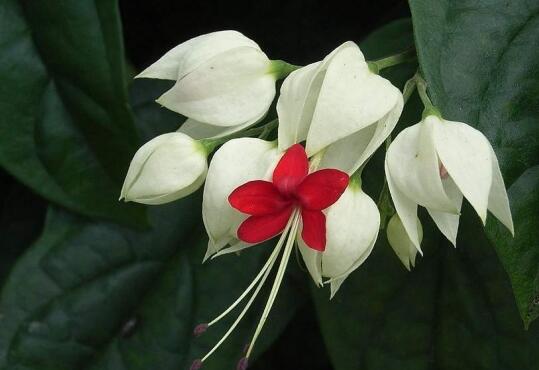
Bleeding Heart Vine likes to grow in a warm and humid environment, and summer is the hottest season of the year, when water evaporates relatively quickly. So when we grow it in summer, we basically need to water it every day, and we should also frequently use a spray bottle to mist its leaves to maintain humidity; otherwise, the plant can easily dry out and turn yellow.
2. Light: pay attention to shading
Bleeding Heart Vine likes light fairly well, but it is not tolerant of strong light. When we grow it in summer, we can place it outdoors in the morning to receive light, but as noon approaches, we should move it indoors to a semi-shaded spot. This is because the midday sun in summer is quite strong, and if we do not pay attention to shading, it will scorch the plant.
3. Pests and diseases: deal with them promptly
Summer is the hottest season of the year and also a season with a high incidence of pests and diseases. If we are not careful enough with Bleeding Heart Vine care in summer, pests and diseases can easily appear. These problems are very harmful to the plant, so we must deal with them promptly when we find them. For specific treatment methods, you can refer to the article on pest and disease control for Bleeding Heart Vine, which has detailed information.
2. How to care for Bleeding Heart Vine in winter: pay attention to frost protection
1. Temperature control: 18-30°C
If you want Bleeding Heart Vine to grow well, you need to create a comfortable growing environment for it. This plant is not cold-tolerant, and its suitable growing temperature is between 18-30°C, while the growing temperature in winter should preferably not be lower than 8°C; otherwise, the plant can easily be damaged by cold. So in winter, we should preferably keep it indoors and also maintain room temperature, so that it can overwinter safely.
2. Water: control watering frequency
After entering winter, the growth rate of Bleeding Heart Vine slows down, so we should water according to the situation. If its leaves are upright and pointing upward, it means water and fertilizer are fairly normal, and we can just maintain the status quo. If the leaves droop, it means we have watered too much or too often, and at this point we need to reduce the amount of watering.
3. Light: supplemental light at noon
When it comes to how to care for Bleeding Heart Vine in winter, light is also a very important aspect. The time it receives light in winter can be said to be completely opposite to summer. In winter, because the temperature is lower, we generally grow it indoors, and only when the temperature starts to rise at noon each day can we move it outdoors to grow, so that it can also grow better.
How to care for Bleeding Heart Vine in winter: this way is labor-saving and scientific!
Growth habits
To understand winter care for Bleeding Heart Vine, you first need to understand its characteristics. Bleeding Heart Vine likes to grow in a sunny, warm, and humid environment, and it cannot withstand cold. So in winter, make sure the temperature is above 15°C, which helps it overwinter. Indoor temperatures in winter need to be maintained above 10°C; low temperatures can easily cause frost damage to Bleeding Heart Vine, so you need to pay attention to the effect of temperature.
Care methods
Watering
The first key point of winter care is water. Because winter temperatures are low, the plant's water demand is relatively small, so we need to reduce the amount of water compared with usual and just keep the soil at moderate dryness and moisture. When watering, do it from the bottom, and when necessary, we also need to control the water temperature, avoiding watering it with water that is too cold. Water at normal temperature is most suitable.
Light
Light is indispensable for any plant. In winter, Bleeding Heart Vine needs a large amount of light to ensure its growth needs. If it does not get light for a long time, Bleeding Heart Vine will show dull leaf color, making overwintering more difficult. Therefore, during the day, place it in a spot with sufficient light to supplement light. Sometimes the light at noon in winter is also relatively strong, and at this time you should be careful to avoid sunburning the plant.
Fertilizing
Bleeding Heart Vine in winter does not need much fertilizing. At this time, its demand for fertilizer is not very great; it is enough to ensure proper water and sufficient light. With these preparations done, Bleeding Heart Vine can safely pass the winter.
How to care for Bleeding Heart Vine
Bleeding Heart Vine generally lives in a semi-shaded environment and likes warm, humid conditions, but it is not cold-tolerant. Its suitable growing temperature is 18-24°C, so in winter the temperature needs to be maintained, and it should preferably be moved indoors or into a greenhouse.
1. Watering
During the growing period of Bleeding Heart Vine, keep it frequently moist, but do not overwater; just ensure the potting soil is moist. In high temperatures, water thoroughly to help Bleeding Heart Vine replenish water, and provide shade. In winter, reduce watering to let Bleeding Heart Vine enter dormancy and overwinter safely.
2. Sunlight
In summer, when temperatures are high, place Bleeding Heart Vine in a spot not exposed to direct sunlight; in winter, move it to a sunny indoor spot. During the flowering period of Bleeding Heart Vine, provide sufficient light to promote flower bud development. Insufficient light will have an adverse effect on the flowering of Bleeding Heart Vine.
3. Fertilizing
When cultivating Bleeding Heart Vine, do not over-fertilize; applying diluted nutrient solution once a month is enough. When Bleeding Heart Vine is in its flowering season, apply decomposed, thin cake fertilizer water as a top dressing continuously for one month at intervals of 7-10 days. If you find the leaves of Bleeding Heart Vine turning yellow, apply 0.2% ferrous sulfate water as a top dressing in small amounts several times.
4. Pests and diseases
The main pests of Bleeding Heart Vine include scale insects, whiteflies, and so on, which can be sprayed with a 1000-fold to 1500-fold dilution of 40% omethoate. However, when mosaic disease occurs, promptly remove diseased leaves, strengthen ventilation, and keep the leaves dry.