How to grow Dracaena sanderiana? Cultivation methods and precautions, avoid direct strong light
For flower lovers, Dracaena sanderiana should be familiar; it is also called lucky bamboo, a widely cultivated foliage plant that is deeply loved by flower enthusiasts. In daily life, because Dracaena sanderiana has strong benefits, many people want to grow it, so how do you grow Dracaena sanderiana? The following is a carefully compiled guide to the cultivation methods and precautions for Dracaena sanderiana, very detailed, friends who want to grow it should definitely take a look~
1. How to grow Dracaena sanderiana: understand its habits
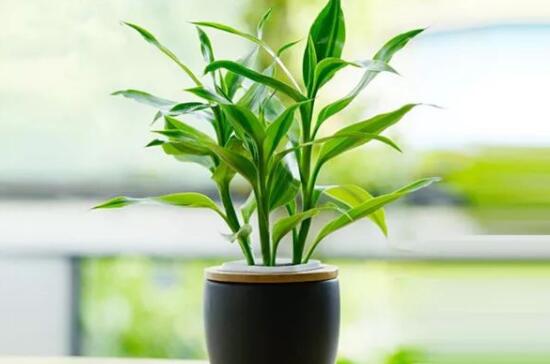
Dracaena sanderiana likes high temperatures and humid environments; it is drought-tolerant, not cold-tolerant, likes semi-shade, and avoids strong light, so how do you grow Dracaena sanderiana? When growing it indoors, you should place it in an environment with plenty of diffused light, water it regularly to keep the potting soil moist, and take good cold-protection measures in winter. As for the growing medium, Dracaena sanderiana is not strict about soil.
2. Cultivation methods and precautions for Dracaena sanderiana
1. Soil
How do you grow Dracaena sanderiana indoors? The editor suggests everyone reselect the potting soil. It is understood that nowadays when people grow Dracaena sanderiana, they all like to buy it online, and there is ready-made potting soil, but that soil is very cheap. It is okay for normal care, but if you want to grow it well, it is best to replace the soil.
Soil choice: according to the growth habits of Dracaena sanderiana, although it is not strict about soil, it grows best in loose, fertile, well-drained sandy soil rich in humus. For this, the editor recommends using soil mixed with leaf mold and river sand or cinder ash.
2. Light
In the cultivation methods for Dracaena sanderiana, light is very important, but it likes semi-shaded environments, so when caring for it at home you can place it under a south-facing window or on a balcony. Grown under sufficient diffused light, Dracaena sanderiana will grow beautifully~
Precautions: Dracaena sanderiana avoids strong light, and in summer you must avoid direct strong light; however, except in summer, it is best to give Dracaena sanderiana some light in other seasons, otherwise the golden-yellow stripes in the middle of its leaves will become dull and disappear, seriously reducing its ornamental value.
3. Temperature
How do you grow Dracaena sanderiana? Adjusting the temperature in a timely way is also very important. It is understood that the most suitable growth temperature for Dracaena sanderiana is 20-30°C. If you want its leaves to stay evergreen through the four seasons, it is best to maintain this temperature when growing it indoors.
Precautions: Dracaena sanderiana is not cold-tolerant. Once the temperature is below 10°C, the plant is easily frostbitten. So in winter, you should move Dracaena sanderiana indoors and keep the overwintering temperature above 10°C.
4. Watering
Water is the source of life, so in the cultivation methods for Dracaena sanderiana, watering is a very important part. Because Dracaena sanderiana likes humid environments, and mild drought or dampness will not harm the plant, in home care watering should alternate between dry and wet; shading can make the branches and leaves dense and the nodes compact, giving high ornamental value.
5. Fertilizing
After watering, let's talk about fertilizing, which is also very important in the growth of Dracaena sanderiana. However, Dracaena sanderiana does not have high fertilizer requirements. Besides adding a certain amount of decomposed organic fertilizer as base fertilizer when repotting, you can apply organic fertilizer liquid during the growing season. But fertilizer should be applied in small amounts many times, and it is best to water promptly after each fertilization.
6. Pruning
For the sake of appearance, besides daily care, timely pruning of Dracaena sanderiana is very important. However, Dracaena sanderiana has a certain perennial-root habit and can grow new branches from the roots, so the plant shape is generally good. Therefore, pruning Dracaena sanderiana is mainly for shaping; just cut off yellow leaves, old leaves, overly dense branches, and so on.
7. Potting soil replacement
Although Dracaena sanderiana does not like fertilizer, adding base fertilizer to the potting soil is still very important. But as cultivation time increases, the nutrients in the potting soil will continuously be lost, so flower lovers should repot Dracaena sanderiana once every 2 years in spring. When changing the pot and soil, add a certain amount of decomposed organic fertilizer as base fertilizer to ensure good growth.
Overall, Dracaena sanderiana is still quite easy to grow, but if you want to grow it attractively, you need to put in more effort and care for it according to the requirements above, so that it can grow with luxuriant branches and leaves. That is all the editor has to introduce about the cultivation methods and precautions for Dracaena sanderiana. Flower lovers who are tempted might as well try growing it~
Cultivation methods and precautions for golden-edged lucky bamboo
Chinese scientific name: golden-edged lucky bambooLatin scientific name: Dracaena sanderianaAlso called: Wanshou bamboo, Xian Da dragon blood treeKingdom: PlantaePhylum: AngiospermsClass: MonocotyledonsSubclass: LiliidaeOrder: LilialesFamily: AgavaceaeGenus: DracaenaGolden-edged lucky bamboo, also known as ribbed bamboo, is native to Congo and Cameroon. It is an evergreen shrub with slender, upright stems, branching at the base, 1.5 m tall and 40 cm wide. The leaves are slightly wavy, curved, lanceolate, 15-25 cm long, with yellow longitudinal bands on both sides of the midvein on the leaf surface. It likes high temperatures, high humidity, and a sunny environment, is not cold-tolerant, tolerates pruning, avoids direct strong light in summer, prefers loose sandy loam soil, and the winter temperature should not be lower than 10°C.1. Morphological characteristics
The plant is 2 m tall, with upright stems and relatively few branches; the base of the stem easily produces suckers. Leaves are alternate, lanceolate, with twisted leaf margins, deep green, and glossy.It has pale yellow, white, or golden-yellow margins or longitudinal stripes, elegant and brilliant, and with a graceful posture, full of bamboo charm.
2. Growing environment
It likes high temperatures, high humidity, and a sunny environment, is not cold-tolerant, tolerates pruning, avoids direct strong light in summer, prefers loose sandy loam soil, and the winter temperature should not be lower than 10°C.3. Distribution
Native to the Cameroon and Congo region of western Africa.4. Cultivation techniques
Propagation methods
Cutting propagation is commonly used. For cuttings, June-July during the rainy season is best; select mature branches, cut them into 10 cm pieces, insert them into coarse sand, and under 25-30°C conditions they will root in about 25-30 days, and after 2 months they can be transplanted into pots.Cultivation methods
During the growing season, keep the potting soil moist, spray water to increase air humidity, fertilize once every half month, repot every April-May, and prune the whole plant so as to encourage new branches to sprout. Summer is a period of vigorous growth, so shade appropriately and water frequently; do not let the potting soil dry out.5. Pest and disease control
Common problems include leaf spot, stem rot, and root rot; a 100-fold Bordeaux mixture can be sprayed several times. Pests include thrips and scale insects; spray with 50% omethoate emulsifiable concentrate at 1000-fold dilution.6. Main value
Golden-edged lucky bamboo has a short plant shape and brilliant colors. It is suitable for home greening decoration, placed on windowsills, balconies, and desks, and can also be used as row accents in halls, as well as a cut-flower accessory.7. Daily care
Fertilizer:Its demand for fertilizer is not strict; during the growing season, either chemical fertilizer or organic fertilizer liquid can be applied as a top dressing, but when applying chemical fertilizer, use small amounts many times and water promptly after fertilizing. In addition, when repotting and changing soil each year, add a certain amount of decomposed organic fertilizer as base fertilizer to ensure good growth.Soil:Dracaena sanderiana has good adaptability and can grow in clay and sandy soil, but it grows best in loose, fertile, well-drained sandy soil rich in humus. It can be mixed with 1 part plant nutrient soil, 1 part leaf mold, and 1 part river sand. For home cultivation, leaf mold mixed with river sand or cinder ash can be used as the substrate. Repot once every 2 years, and choose foliage plant potting soil.
Light:Dracaena sanderiana likes light but also avoids direct summer sunlight. For home care, place it under a south-facing window or on a balcony, only avoiding direct light in summer. In other seasons it is best to give it some light, otherwise the golden-yellow stripes in the middle of the leaves will become dull and disappear, seriously reducing ornamental value.
Humidity:The most suitable growth temperature is between 20-30°C, and the overwintering temperature is best kept above 10°C; it is not tolerant of low-temperature freezing damage. During growth it needs a certain amount of air humidity, otherwise the leaf color becomes dull and the glossiness decreases. During the growing season, spray the plant with clean water frequently, and if conditions permit, it is best to increase moisture humidity in the environment.
Complete introduction to the cultivation methods of golden-edged lucky bamboo
Golden-edged lucky bamboo is also one of the best ornamental potted plants. It likes high temperatures, high humidity, and a sufficiently sunny environment, and it is not cold-tolerant but tolerates pruning. In summer, direct strong light should be avoided, the soil should preferably be loose sandy loam, and the winter temperature should not be lower than 10.
*Growing environment of golden-edged lucky bamboo
Golden-edged lucky bamboo likes a humid, high-temperature, and sufficiently sunny environment, and it is not cold-tolerant but very tolerant of pruning. In summer, direct strong light should be avoided, the soil should preferably be loose sandy loam, and the winter temperature must not be lower than 10 degrees.
*Cultivation methods of golden-edged lucky bamboo
We often use cutting propagation. For cuttings, the plum rain season in June-July is best; select mature branches and cut them into 10 cm pieces, insert them into coarse sand, and under 25-30 degrees conditions they will begin to root in about 20-30 days, and after 2 months they can be transplanted into pots.
During its growth period, keep the potting soil moist at all times, spray water to increase air humidity, fertilize it once every half month, repot it every April-May, and prune the whole plant so as to encourage new branches to sprout. Summer is its peak growing season, so shade appropriately and water frequently; do not let the potting soil become too dry.
The most suitable growth temperature is between 20-30°C, and the overwintering temperature is best kept above 10°C; it is not tolerant of low-temperature freezing damage. During growth it needs a certain amount of air humidity, otherwise the leaf color becomes dull and the glossiness decreases. During the growing season, spray the plant with clean water frequently, and if conditions permit, it is best to increase moisture humidity in the environment.
Dracaena sanderiana has good adaptability and can grow in clay and sandy soil, but it grows best in loose, fertile, well-drained sandy soil rich in humus. It can be mixed with 1 part plant nutrient soil, 1 part leaf mold, and 1 part river sand. For home cultivation, leaf mold mixed with river sand or cinder ash can be used as the substrate. Repot once every 2 years, and choose foliage plant potting soil.
*Main value of golden-edged lucky bamboo
Because its plant type is short and its colors are brilliant, it is very suitable for home greening decoration. Place it on windowsills, balconies, and desks, and it can also be placed in halls as an accent; finally, it can also be used as a cut-flower accessory.