If the Brazil iron tree (Dracaena fragrans) grows too tall, cut the roots and stems: a detailed guide to pruning methods
The Brazil iron tree, also called Brazil wood, has a sturdy, handsome form and broad, glossy leaves, making it one of the most popular foliage plants today. In everyday life, many people grow Brazil iron trees, but few manage to make them look beautiful, and this is mostly because the pruning was not done properly. So how do you prune a Brazil iron tree? Below are the pruning methods for the Brazil iron tree, let's take a look together!
I. How to prune a Brazil iron tree
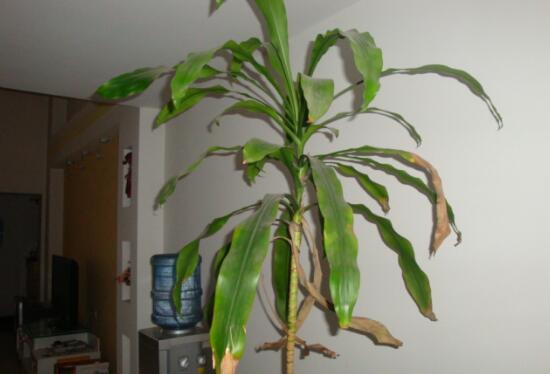
As a beautiful foliage plant, the Brazil iron tree has many benefits, but what people like most about it is its ornamental value. However, during cultivation, flower lovers often run into some problems, such as the Brazil iron tree growing too tall or its leaves growing too long, and this is when timely pruning is needed. Only by pruning branches and leaves can we control the height and beauty of the Brazil iron tree.
II. Pruning methods for the Brazil iron tree
(1) Pruning tools
How do you prune a Brazil iron tree? First, of course, you need the pruning work itself: scissors and a small knife must both be sharp, and alcohol is also indispensable for disinfection. You also need a marker pen, so that after marking you can prune out the ideal shape.
(2) How to prune a Brazil iron tree that has grown too tall
The Brazil iron tree has a sturdy, handsome form, and its main trunk grows upright. Once nutrients are sufficient, it can grow as tall as 6 m! Such a height is certainly not suitable indoors, so properly pruning to control the height of the Brazil iron tree is very important. The specific pruning methods are as follows:
① Disinfection: Before pruning, to ensure the plant's safety, you should disinfect the scissors and small knife with alcohol;
② Marking: After disinfection, we need to use the marker pen, so that you can determine which section you want to prune;
③ Pruning: After the preparations are done, you can prune the Brazil iron tree. When pruning, generally a branch is cut off from the entire root node section, cutting from top to bottom, then from bottom to top. Be careful to keep the cut smooth and flat, and it is best to keep it close to the main trunk.
(3) Pruning the leaves of the Brazil iron tree
When the Brazil iron tree is too tall, its leaves will also keep growing, and as a result they grow too long and affect its appearance. As for how to prune Brazil iron tree leaves that are too long? Just prune the branches and leaves that have grown too long in time, but because the Brazil iron tree has numerous leaves, before pruning you must mark the leaves to be cut on the plant with a marker pen, so that you do not cut the wrong ones due to there being too many leaves.
(4) Care after pruning the Brazil iron tree
The cultivation method for the Brazil iron tree is already simple, and care after pruning is not difficult either. You only need to water less and place it in a cool environment. However, note that after pruning you should fertilize less, because too much fertilizer will make the plant grow rapidly due to sufficient nutrients, and in that case the purpose of shortening the Brazil iron tree is lost.
Cultivation methods for the Brazil iron tree
1. Watering
We need to frequently spray water on its leaf surface, but must not let the potting soil become waterlogged, as waterlogging will cause root rot. In winter, be careful not to water too much, otherwise the leaves will turn yellow. In summer, the watering frequency needs to be increased to prevent drought. After the pruning work is completed, we should increase our care of the Brazil iron tree to prevent infection caused by our oversight.
2. Light
The Brazil iron tree has no great demands for light; it can survive in semi-shade or direct sunlight.
3. Soil
The soil for the Brazil iron tree needs to be mainly sandy soil with strong air permeability, strong drainage, and easy loosening.
4. Temperature
The suitable growing temperature for the Brazil iron tree is 18 to 24°C. From March to September the temperature is on the higher side, at 24 to 30°C, and from September to March of the following year, it can survive at temperatures between 13 and 18°C.
That is all for today's introduction to pruning the Brazil iron tree. Even if you are not tall enough, it does not matter, but you still need to be somewhat strong. I hope everyone can grow a perfect Brazil iron tree at home. Thank you for your patient reading!
How to grow a Brazil iron tree? Cultivation methods and precautions for the Brazil iron tree
The Brazil iron tree, also known as Brazil wood, Brazil thousand-year wood, etc., belongs to the Liliaceae family of evergreen trees. The Brazil iron tree has a neat and graceful plant form, with leaves so green they seem about to drip, and it has high ornamental value. However, during care, if you do not pay attention to its growth habits, it is very easy to run into problems. So how should the Brazil iron tree be grown? The cultivation methods and precautions for the Brazil iron tree are introduced below.
Image: Brazil iron tree
I. Cultivation methods for the Brazil iron tree
1. Light:The Brazil iron tree likes a warm environment with sufficient light, is relatively shade-tolerant and cold-tolerant, but also fears exposure to the scorching sun. Therefore, when growing the Brazil iron tree, it should be placed near a balcony where there is sunlight or sufficient scattered light. Full absorption of light allows it to carry out photosynthesis well, and full plant growth can make the home's air fresh and breathing easy.
2. Temperature:The suitable growing temperature for the Brazil iron tree is between 20-30°C. A warm ambient temperature allows the Brazil iron tree to carry out photosynthesis and respiration better, filling the home with vitality.
3. Soil:For the Brazil iron tree, it is suitable to use loose, fertile, well-draining sandy loam. When planting the Brazil iron tree, this kind of soil can ensure smooth drainage for the Brazil iron tree, greatly reduce waterlogging in the potting soil, prevent root rot, and also allow it to grow healthily and robustly.
4. Watering:The Brazil iron tree likes a warm and humid environment and climate, so growing the Brazil iron tree requires maintaining relatively high air humidity, and waterlogging must be avoided, as waterlogging will cause root rot. The Brazil iron tree should not be watered too much normally; water again only after the potting soil has dried out. When winter comes and the temperature drops to 13°C, it will enter a dormant period, and at this time watering should be appropriately reduced to keep the potting soil moist but on the dry side; if the potting soil remains too wet for a long time, it will cause root rot and death of the plant.
5. Fertilizing:The Brazil iron tree does not have high demands for fertilizing. During the growth period of young plants, apply a thin liquid fertilizer once every 15 days; for mature plants, fertilize once every 2 months during the growth period. Fertilizing should mainly use phosphorus-potassium compound fertilizer, though more nitrogen fertilizer can be applied.
Image: Brazil iron tree
II. Precautions for growing the Brazil iron tree
1. Around midday in summer, prevent direct sunlight. In winter, it can get more sunlight to promote sturdy branches and leaves. If it is kept in an overly shaded place for a long time, the leaves will turn yellow and fall off, so attention should be paid to letting it receive some moderate, not-too-strong sunlight.
2. The potting soil for cultivating the Brazil iron tree is made by mixing leaf mold or peat soil with sand, and adding an appropriate amount of decomposed cake fertilizer or sesame paste residue. During the growth period, the potting soil should always be kept moist; too much watering plus poor drainage easily causes root rot. If the potting soil is too dry, growth will be poor.
3. In summer, spring, and autumn, water should often be sprayed on the leaf surface, stem, and surrounding ground to increase air humidity. If the air is too dry, new leaves easily curl and may even partly dry up, causing poor leaf expansion later. On rainy days, it should be moved outdoors to receive rain, which is beneficial for growth, but care must be taken to prevent waterlogging.
4. The Brazil iron tree is very tolerant of pruning. If the plant grows too tall or the lower leaves fall off, the top part of the trunk can be cut off, and then the buds below the cut will sprout and grow new branches and leaves, making the plant moderate in height and beautiful in shape.
Image: Brazil iron tree
[Editor's concluding remarks]The Brazil iron tree likes a high-temperature, humid environment with sufficient sunlight, and extra attention is needed during care. The above has introduced the cultivation methods and precautions for the Brazil iron tree, and I hope it can be of help to everyone!