How to grow Lilium longiflorum (Easter lily)? Growing methods and precautions: avoid strong light and provide shade
Lilium longiflorum is one of the lily varieties and has high ornamental value. It can be seen in many regions of our country, but to grow it well, there are many things we need to pay attention to. How to grow Lilium longiflorum? What are the growing methods and precautions for Lilium longiflorum? Below, the editor will guide everyone to learn about it.
1. How to grow Lilium longiflorum: understand its habits
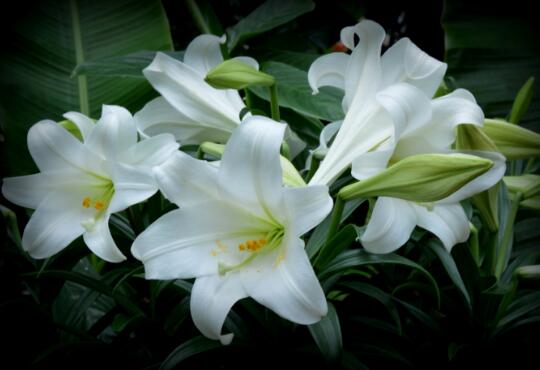
To know how to grow Lilium longiflorum, we first need to understand the growth habits of this plant. This plant likes a cool and humid climate, is not cold-tolerant, and is not heat-tolerant either, so temperature management is very important when we grow it. In addition, daily watering and fertilizing should also be carried out regularly so that it can grow better.
2. Growing methods and precautions for Lilium longiflorum
1. Soil: humus soil
When growing Lilium longiflorum, we first need to choose the soil. This is the step that lays the foundation and is very important. Generally, it is best to choose loose, fertile, slightly acidic humus soil. This kind of soil has good drainage and is rich in nutrients, allowing the plant to grow more vigorously. It is best not to choose calcareous or alkaline soil, because it will grow poorly in such soil.
2. Temperature: 15°C-20°C
During the growth of Lilium longiflorum, we need to create a good environment for it and let it grow at a suitable temperature. Its suitable temperature is between 15°C-20°C. It should not be too low or too high, because if the growing temperature is below 5°C, the plant's growth enters a stagnant state; when it exceeds 25°C, growth also stagnates, and the plant's flower bud differentiation is also severely affected.
3. Fertilizing: once every half month
Fertilizer is one of the main nutrients during the growth of Lilium longiflorum. Especially after it enters the growing period, its demand for fertilizer is very high. Basically, we need to fertilize once every half month so that it can have enough nutrients to grow vigorously. However, there are also particular points when fertilizing it. We should note that the concentration should not be too high, and we should apply thin fertilizer, because if the fertilizer concentration is too high, it is easy to burn the plant.
4. Water: avoid waterlogging
Watering is an indispensable step when growing Lilium longiflorum, but to let it grow well, watering should be appropriate. Generally, keeping the soil slightly moist is enough. Do not water too much, because Lilium longiflorum is not tolerant of waterlogging. If water accumulates, it can easily cause root rot.
5. Light: avoid strong light
Lilium longiflorum is a long-day plant, and the length of daylight has an important effect on the growth and flowering of Lilium longiflorum. Lilium longiflorum requires sufficient light, preferably scattered light, and should avoid direct sunlight. Summer sunlight is strong, so shading is needed. In winter, daylight is short, so artificial light can be used for supplemental lighting.
6. Pests and diseases: timely prevention and control
When growing Lilium longiflorum, if we are not careful enough, it is easy for pests and diseases to take advantage of the situation. Such problems are very harmful to the plant, so once we find them, we must deal with them promptly. As for specific handling methods, everyone can refer to the article on pest and disease control for Lilium longiflorum, which has detailed introductions.
How to grow lilies: teaching you the growing methods and precautions for potted lilies
Like countless living things, for lilies to grow vigorously and finally bloom beautifully, the most fundamental conditions are: the bulbs themselves must be of good quality, the environment must be suitable, management must keep up, and from the time you plan to plant them until the final flowers wither, you must always care for them and manage them carefully. In this way, you can certainly ensure that the lilies are as you wish, pleasing to the eye. As for whether they can make money, that still depends on whether the market cooperates, but flower lovers grow them for their own enjoyment, so this is not within the scope of this article.1. Successfully ordering high-quality bulbs is the foundation of successful planting. However, because bulbs are not industrial products but agricultural products, and are also imported products facing various national quality inspection requirements, there will always be various problems. No matter which company it is, domestic or foreign, if they pat their chest and guarantee that everyone's order (supply, supply quality) has no problems at all, then they are definitely a liar. That being the case, we can only choose reliable suppliers to reduce the probability of problems with the bulbs.High-quality lily bulbs: firm, clean, with a good root system
A common problem with lily bulbs is Penicillium infection (as shown in the figure below). If the infection has not endangered the basal plate of the bulb, the problem is not serious.Freeze damage -- the bulb's sprout turns black (as shown in the figure below). In severe cases, it can only be discarded.2. Environment: The common promotional phrase is "even small grass has life." I remember a Dutch expert also said, "The water you can drink, it can drink too; the environment you can stay in, it can stay in too." "Even small grass has life" tells the truth. You must treat it like your own baby, touch it, perceive it, and then change its environment at any time, so that it can repay you with beautiful flowers.
1) Soil:
Soil structure: Although lilies can grow in all soils, it is very important to ensure that the cultivation soil has a good structure and maintains good drainage throughout the entire growth stage. Poor soil structure and compaction often make the lily root system grow weakly or even die due to lack of oxygen, or because of poor drainage, Pythium runs rampant and causes lily root death, ultimately leading to poor growth or even death of the lily.
The figure below shows the situation where soil was flooded by heavy rain during a typhoon, causing root death from lack of oxygen. Of course, overly compacted soil also makes the situation worse.Soil pH and salinity: Maintaining an appropriate soil pH is very important for the development of the lily root system and correct nutrient absorption. If the pH is too low, it will lead to excessive absorption of mineral nutrients (such as iron, manganese, and aluminum), while if the pH is too high, it will lead to insufficient absorption of phosphorus, manganese, and iron. Everyone knows that insufficiency is bad, but not everyone necessarily knows that excess is just as bad as deficiency.
Lilies are also sensitive to salinity. Too high salinity can form hard, fragile roots that are yellow or brown, reduce the root system's water absorption, affect lily quality, and in severe cases even cause lily root death and lily plant death. Soil salinity is often affected by the fertilizers and water used.
The figure below shows what was originally a very beautiful root system. Because of the use of uncomposted organic fertilizer, part or all of the root system died. It is a great pity.Soil-borne pathogens: Lilies often die because soil fungi harm the root system. Common fungi include Rhizoctonia, Pythium, and Phytophthora. Rhizoctonia only harms the plant while the sprout is still in the soil, and Pythium can be reduced by improving soil drainage. Generally speaking, during the entire growth process, it is very necessary to use broad-spectrum fungicides several times, such as chlorothalonil.
The figure below shows the damage caused by Rhizoctonia and Phytophthora.From the above, it can be seen how crucial suitable cultivation soil is to successful cultivation. If the soil is not good, even if you spend a huge amount of energy managing it, you can only face it with tears. Therefore, it is best to choose soil that has not previously been used to grow lilies for planting lilies. Of course, the most ideal choice is peat (domestic peat is fine). To reduce management difficulty, using 80% peat and adding 20% perlite or pine bark medium is very wise. If considering base fertilizer, using controlled-release fertilizer with controllable release is the most ideal. If you are very fond of organic fertilizer, please be sure to use fully composted organic fertilizer.With such a good root system, why worry about not having beautiful lilies?
2) Temperature
Rooting stage temperature: For 2-3 weeks after planting, maintaining a suitably low temperature (10-12°C) to ensure that lilies can grow good stem roots is very critical. However, most of the time, we cannot guarantee such ideal weather. Therefore, professional growers use cold storage for rooting, and we can use the crisper compartment of a refrigerator. Wrapping lily bulbs in peat (peat not too wet; enough if a handful can drip water) (breathable) and placing them in the refrigerator's crisper compartment for rooting is a good idea. Although low temperature will prolong the growth period, I think everyone should not mind managing them for a few more days.In the case of pre-rooting, in high-temperature seasons, root first, then plant.
Growing period temperature: Although the most ideal growth temperature for lilies is 15-25°C, we cannot control the temperature of nature. However, we still need to avoid extreme situations. Lilies below 5°C are very prone to freeze damage, and above 35°C, the growth period will be greatly shortened and quality will decline accordingly. In summer when sunlight is strong, we can lower the temperature by shading and strengthening ventilation. How pleasant it would be to have cool breezes under the shade of trees in summer.
3) Relative humidity: The suitable relative humidity for lilies needs to be between 70-80%, but this is for professional producers carrying out production in greenhouses. For everyone growing lilies in the yard or placing them on the balcony, there is no need to consider this point. In greenhouses, poor growth is often caused by excessively high humidity, but I have not seen outdoor lilies grow poorly even because of continuous rainy weather (provided the soil drainage is good and fungicides are regularly applied to control Botrytis). Of course, slight effects will still occur. This is because ventilation in greenhouses is very unsatisfactory. When people go in, they feel very stuffy, and plants feel the same way.
Here are a few pictures of lily leaf damage caused by excessively high greenhouse humidity.Because the humidity is too high, the water pressure inside the plant becomes too great, and ultimately the leaves are damaged when the cell walls rupture. In severe cases, even the flower buds are gone. This is a physiological disease, not damage from pathogens, so applying fungicides is useless. Using calcium fertilizer can increase the resistance of cell walls and can reduce the damage.Long-term rainy weather makes the plant's leaves very tender, and because the plant needs to expel excess water from its body, the leaf stomata remain open all the time. Being open for a long time ultimately makes the leaf stomata lose their closing function (they originally open and close automatically according to climate conditions). After the rainy weather passes, the leaf stomata still remain open, transpiring and expelling water, ultimately causing the leaves to lose water, become papery, and even scorch.
4) Shading: Shading can control temperature, relative humidity, and light.
In summer, sunlight is usually very strong. For 2-3 weeks after planting (before budding), 80% of the light can be blocked. After budding, because Asiatic lilies and LA hybrid lilies are sensitive to light, lack of light can cause bud abortion, so shading can be appropriately reduced, such as blocking 50% of the light. Oriental lilies are not sensitive to light, so 50-70% of the light can still be blocked.
The general steps for potted lilies at home:
1. Preparation stage:
1) Growing medium: Everyone is advised to choose peat soil as the main medium for planting.
2) Fertilizer: It is recommended to mix 3 kg of 14-14-14 slow-release fertilizer and 0.5 kg of calcium nitrate per cubic meter of medium as base fertilizer.
3) Pots: A 13 cm pot can plant 3 bulbs of the 12-14 cm size; a 15 cm pot can plant 3 bulbs of 12-14 cm or 14-16 cm; in this way, choose pots according to your own situation. It is best if the pot height is above 12 cm.
2. Receiving lily bulbs: After long-distance logistics, when everyone receives the lily bulbs, they have thawed. Normally, there should be a small sprout. As long as the sprout length does not exceed 5 cm and it is not broken, then even a curved sprout is no problem at all. Please plant it with confidence.
After receiving the bulbs, they can be soaked for 30 minutes in a 600-800 times dilution of chlorothalonil.
3. Planting:
1) First mix the medium and base fertilizer evenly, and water until a handful can drip water.
2) Spread 2-3 cm of the mixed medium at the bottom of the pot.
3) Plant the bulbs in the pot with the sprouts facing outward.
4) Cover the bulbs with about 8 cm of medium.
5) Water thoroughly and place in a shaded place, avoiding sunlight as much as possible.
4. It is recommended to plant 1, 3, or 5 bulbs per pot. Odd numbers look better. If there are more than 5, then odd or even numbers do not matter.
At temperatures in June-July, sprouts generally emerge in 7 days.
1. Medium: peat soil2. Fertilizer: controlled-release fertilizer, calcium nitrate3. Pot: 160 dual-color pot, plant 3 bulbs4. Planting
1) Correct planting method: the bulb sprouts face toward the pot wallIncorrect planting method: the bulb sprouts face toward the middle. Consequence: the sprouts all gather in the middle, which looks bad.Of course, if planted randomly, when the sprouts grow out, they will be very messy and disorderly, and will not look good. As for potting, it is best to wait until the bulbs have 3-5 cm sprouts before planting, so that the direction of the sprouts can be controlled, making the overall appearance of the plant better.
What kind of growing environment after planting?
For two weeks after planting, lily growth still needs relatively low temperatures to continue developing a good root system. Therefore, for potted lilies, after planting, choose a place without direct sunlight; for lilies planted in the open ground, use a shade net to block direct sunlight. However, whether potted or field-grown, once lilies show flower buds, they should immediately be given light. Potted ones can be moved to a place with sufficient light, and for open-ground ones, the shade material must be removed. Otherwise, it will affect the number of lily buds and flowering quality, especially for Asiatic lilies, which are more sensitive to light; in severe cases, all buds may drop. Appropriate topdressing can make lily stems thicker and stronger, especially in hot summers. However, note that the concentration should be lighter than usual application to avoid fertilizer damage. For topdressing, you can still choose a high-potassium lily-specific fertilizer 15-15-30 diluted with water, at a concentration of 1000-1500 ppm, that is, add 1 gram of water-soluble fertilizer to 1-1.5 liters of water and mix evenly.
Each variety has different characteristics, and the timing of flowering also differs. However, high or low temperatures will also affect how early or late flowering occurs. For the conventional flowering time of specific varieties, please refer to the product information for each variety. Here, I want to remind friends in the northernmost areas that in the later growth stage of lilies, if the nighttime temperature is below 10°C, please move the lilies indoors at night. Generally speaking, the time from rooting to flowering for Oriental lilies is about 100 days, while Asiatic lilies need only about 60 days. Therefore, when choosing varieties, flower lovers should choose varieties according to local climate conditions and their own care conditions, to avoid the situation where, just at the moment of flowering, they are frozen and all previous efforts are wasted. Would that not be a pity?
Notes:
1. The earlier mentioned "you can use the crisper compartment of a refrigerator. Wrapping lily bulbs in peat (peat not too wet; enough if a handful can drip water) (breathable) and placing them in the refrigerator's crisper compartment for rooting is a good idea" -- put them in the refrigerator's cold storage compartment for the 2-3 week rooting period. Then, when taking them out from a temperature of 5°C in the cold storage compartment, the outside temperature is at least 25°C. Can they adapt?
Answer: Yes. Professional lily cut flower producers take rooted lily bulbs out of cold storage, and the temperature inside the greenhouse is as high as 40°C. However, please pay attention to shading in the early stage. After budding, please reduce the degree of shading. If heavy shading of 80% is maintained all along, Asiatic lilies may abort buds due to lack of light.
2. How to handle the bulbs after the flowers fade
After the flowers fade, please cut off the remaining flowers. Of course, the stems and leaves are retained. At the same time, please maintain normal care. Generally, when the low-temperature season (November-December) arrives, the aboveground stems will die, and the bulbs will be in the soil. During this stage, please reduce the use of water and fertilizer. After spring begins, as long as the bulbs have not rotted or been eaten by insects, they will grow and bloom again. For lilies planted in the yard, you do not need to take care of them; the next year they will grow out well, year after year, and more and more small lilies will appear.
3. Post a few pictures of professional lily potting abroad.★How to pot lilies
Lilies belong to cool-climate flowers, meaning regions with a cool climate and large day-night temperature differences are most suitable for growing lilies.
Lilies do not have the layer of brown old skin on the outside of tulip bulbs. Before being planted in soil, they must be stored at a constant temperature of 2°C, otherwise they will quickly develop roots and are also prone to rotting. Therefore, after purchasing lily bulbs from the market, we must plant them as soon as possible and cannot leave them for long.
1. Prepare the bulbs
The top is the sprout, and the bottom is the root. Do not put it in upside down! Some bulbs have not yet grown roots; look at the scales, the side with the opening facing upward is the sprout!
Before planting, the bulbs should first be disinfected. Soak them in a 1000 times solution of imported carbendazim for 20 minutes, rinse with clean water, and plant after drying.2. Prepare soil and pots
Lilies like fertile sandy soil with good water retention and drainage. Peat: river sand: perlite = 2:2:1. You can also use soil for cactus plants. In any case, clay soil cannot be used.
Because lilies are bulbous flowers with two layers of root systems, the container chosen should be a relatively deep pot.3. Planting
First put 10-15 cm of soil into the bottom of the pot, place the bulbs. If there are three bulbs in one pot, place the heads of the bulbs toward the edge of the flowerpot, that is, place them tilted toward the pot edge, so that after sprouting the plants are distributed evenly. Cover the tops of the bulbs with about 5 cm of soil, water thoroughly, and place in a cool place for 1-2 days.4. Care
Water: Keep the soil moist. From just having buds to the flowering period, spraying water twice a day, in the morning and evening, is enough. In addition, use a 1000 times solution of imported carbendazim to water twice a month.
Fertilizing: Generally fertilize once every half month.Common problems in lily cultivation
1. Leaf scorch
Cause of leaf scorch: caused by physiological calcium deficiency.
Conditions for occurrence: It is prone to occur under conditions such as excessive shading, poor ventilation, high air humidity, continuous cloudy days, too low soil pH, and poor plant root systems.
Preventive measures: Improve ventilation conditions and increase plant water transpiration.
Appropriately provide light earlier and harden the seedlings.
Use rooting treatment before planting, which is beneficial to root development and the absorption of calcium ions.
Peeling leaves (separating tightly clasped leaves) before the period when leaf scorch is about to appear can also reduce the occurrence of leaf scorch.
Keep dry and avoid prolonged water accumulation on the plants.
Increase the application of calcium fertilizer such as calcium nitrate, which can be done through root fertilization or foliar fertilization.2. Root burn
Cause of root burn: excessive salt concentration in the soil solution.
A. The soil itself is severely salinized and the EC value is too high;
B. Improper fertilization, applying too much fertilizer at one time, causing the soil solution concentration to be too high;
C. Insufficient water and overly dry soil can also cause the soil solution concentration to increase.
Preventive measures: Do not choose soil with excessively high salinity; do not directly place high-salt medium or fertilizer on the bulbs; adopt the method of applying thin fertilizer frequently to avoid using a large amount of fertilizer at one time and causing root burn; check the root system frequently. If root burn occurs, water promptly and combine with foliar fertilizer spraying.3. High temperature has a serious impact on lilies, so high temperature should be avoided as much as possible, including high temperatures in soil and the environment. Anything above 30°C is called high temperature.4. Common leaf yellowing5. Phytophthora blight
Preventive measures:
A. Focus on prevention, avoid continuously excessive soil moisture (especially avoid flooding) and excessive air humidity, and try to avoid air humidity above 90%.
B. Disinfect soil and bulbs before planting. Dexon, phosethyl-Al, hymexazol, etc. can be used.
C. Avoid continuous cropping in Phytophthora-infested crop land with shared pathogen hosts, such as avoiding continuous cropping with Gypsophila, carnation, Solanaceae, cucurbits, and other vegetables. That is: soil that has grown Gypsophila, carnation, Solanaceae, or cucurbits should be avoided for planting lilies again as much as possible.
6. Root rot
Preventive measures:
Control soil moisture.
Disinfect bulbs and soil with carbendazim, Dexon, hymexazol, etc.
Reduce the amount of nitrogen fertilizer used, especially ammoniacal nitrogen, and appropriately increase the application of phosphorus and potassium fertilizers.7. Fusarium stem rot
Preventive measures:
Disinfect bulbs and soil before planting; lower soil temperature8. Gray mold - avoid continuously high humidity conditions9. Blind flower (no flower)
Causes of blind flower:
A. Insufficient water and fertilizer supply: Lilies are a flower variety that needs a relatively large supply of water and fertilizer. In the early stage, the plants mainly rely on the nutrients of the bulb for growth, while in the middle and late stages they mainly rely on fertilizer and water supply and photosynthesis to maintain growth. If the water and fertilizer supply is poor, it will seriously affect the growth and development of lilies, causing the branches to be thick at the bottom and thin at the top, weak plants, and in severe cases causing blind flowers and bud drop.
B. Too high temperature: Too high a temperature will seriously affect lily quality. Lilies prefer a cool climate. If the temperature is too high, growth is too fast, the accumulation of substances in the plant is low, and organic matter consumption is high, which will cause malnutrition and in severe cases lead to blind flowers and bud drop.
C. Insufficient light: Insufficient light, overly dense planting, and poor ventilation affect the plant's photosynthesis, leading to low substance accumulation and easily causing weak plants or even bud drop. OT-type lilies are especially sensitive to light, and insufficient light easily causes bud abortion.
D. Insufficient nutrients in the bulb: Bulbs that are too small in size, harvested too early, or stored too long will also have insufficient nutrients, easily causing blind flowers and bud drop in lilies.
E. Planting too deep: Planting too deep causes lilies to emerge slowly, consuming a large portion of the bulb's nutrients, resulting in insufficient nutrients for the plant, poor growth, and in severe cases causing blind flowers.
F. Poor root growth in lilies: Poor lily roots and insufficient absorption capacity cause insufficient plant nutrition. The nutrients supplied for flower bud growth are not enough, flower bud growth is inhibited, and blind flowers and bud drop can also occur.★Lily variety selection and planting methods
I. Basic introduction
Are lilies hard to grow?
Actually not
I am a bulb enthusiast, and the order I have arrived at from years of cultivation is
Ease of growing: (common problems in parentheses)
Rain lily > Amaryllis (expensive...) = Freesia (lodging) = Grape hyacinth (messy foliage) = Crocus (degeneration) > Lily (bud abortion and bulb rot) > Daffodil (bulb rot, degeneration, slow growth) > Hyacinth (stuck flower spike, bulb rot, degeneration) > Tulip (bulb rot, bud abortion, one-time) > Ranunculus (one word: rot) > Anemone (rotting nonstop from the very beginning)
There are too many Oxalis varieties to say for sure; some are as easy to grow as weeds, while others are god-tier difficult
Gloxinia and Cyclamen are better grown as herbaceous plants and are not included in the ranking. Bulbous iris is not widely popular either, so it is not included.
It can be seen that lilies are not only suitable as cut flowers in flower shops; as household potted plants and perennial garden plants they are also very good
Most of the parents of lily hybrids actually come from China. They are truly Chinese flowers and are very well adapted to our climate (except Oriental lilies, which come from Japan).
II. Variety selection
Ease-of-growing order
LA > Asiatic (A) > Longiflorum (L) = LO > OT > Oriental (O)
LA is an improvement on Asiatic lilies, producing bulblets faster, with large flowers
LO can be considered an improvement on Longiflorum, with richer flower colors and stronger fragrance
OT improves the heat tolerance, reproduction rate, and ease of growing of Oriental lilies
Fragrance
Oriental = OT > Longiflorum = LO >> LA Asiatic = 0
The last two, the Asiatic types, are basically fragrance-free, suitable for flower lovers who dislike the fragrance of lilies
Longiflorum has a light, sweet fragrance, stronger at night.
The first two are strongly fragrant. Oriental lilies have the scent of flower shop lilies. Some OT are sweet and some are pungent. LO has a mixed scent of Longiflorum and Oriental, and the fragrance is very weak in hot weather.
1. Lily flowers generally have the strongest fragrance 1-2 days after opening, then gradually fade. It is normal for them not to be very fragrant just after opening
2. The fragrance of lilies is not harmful to the human body and will not trigger allergies. It is only that an overly strong fragrance may stimulate the olfactory nerves of sensitive people, causing symptoms such as dizziness and excitement with difficulty sleeping
3. Lily pollen easily stains clothing and skin. Do not rinse with water, as it will stick more firmly. It should be removed with clear tape. Even so, cutting off the stamens is a good method
Main hybrid classifications and their detailed advantages and disadvantages
1. Asiatic lilies (Asiatic)
Advantages: Many flower colors, short plant height, many flower buds, flowers facing upward, early flowering (2-3 months from planting), easy to grow, fast reproduction, extremely cold-hardy (can overwinter outdoors in Northeast China)
Disadvantages: Flowers are on the small side (12-15cm), no fragrance, relatively high light requirements during the bud stage, and insufficient light easily causes bud abortion
Representative varieties: Many; most can be chosen with confidence, and there are also potted types with a plant height of about 20-30cm
The potted effect of Asiatic lily Spring Field, pot diameter 15cm. The right side shows the result of chlormequat treatment, and the far left is the original plant height
Actual pot cultivation cannot reach the stated plant height (110cm); that is the height after two to three years of cultivation
SpringfieldTinos2. Oriental lilies (Oriental), together with OT commonly known as fragrant lilies, flower shop cut flowers
Advantages: Strong fragrance and large flowers (15-20cm), low light requirements, flat flower shape, broad leaves, bold and gorgeous blooms
Disadvantages: Some varieties are spindly and prone to falling over, not very heat-tolerant, relatively slow to reproduce, late flowering, and lower leaves yellow more severely
Representative varieties: Sorbonne (the light pink flowers in flower shops), Siberia (the white flowers in flower shops)
Potted Oriental lily effect (famous variety Stargazer), very beautiful. Note that the leaves are fewer and thicker than those of Asiatic liliesSorbonne3. Musk/Longiflorum lily (Longiflorum), also called Easter lily
Advantages: Elegant and graceful flower shape, very easy to grow, moisture-tolerant, fast to reproduce, relatively poor cold tolerance, native to the subtropics, does not need low-temperature dormancy
Disadvantages: Only white (all pink and yellow series are LO hybrids; online shops all labeled them incorrectly this year), pollen easily stains the petals
Representative variety: Everyone has heard of the famous White Heaven, right?4. LO hybrids - recommended
Advantages: Inherits the flower shape and ease of growing of Longiflorum, and the flower color and fragrance of Oriental lilies. Very easy to grow and reproduce, large flowers (18-25cm), fast development, does not need low-temperature dormancy
Disadvantages: Under high temperatures the flowering period is not long, flower buds are on the fewer side, color fades with insufficient light, and there are relatively few varieties in China
Representative variety: Triumphator is its outstanding representative. It is especially recommended, one of the lilies that any beginner can keep alive (often sold out...)
Potted effect of Little T. Note that it is relatively tall and has large flowersUnder strong light and low temperature the flower color is very intense5. OT hybrids - recommended
Advantages: Inherits the excellent genes of Trumpet lilies (parents include Lilium regale from Sichuan, etc.). Flower colors are richer than Oriental lilies, heat-tolerant and easy to grow, robust plants, does not need low-temperature dormancy. Stems are very thick, flowers are large (20-25cm), fragrance is rich, suitable for courtyards and large containers. Commonly called Tree lily abroad
Disadvantages: Usually not many flowers in the first year, some varieties have flowers so large they are deformed, and flowers easily droop
Representative varieties: Conca D'or, Yelloween, Nymph. Color coverage is broad, especially the yellow series that Oriental lilies lack
Note: Except for Yelloween, yellow varieties generally have fewer flower buds. Even a 16-18cm bulb has only two to three flower buds
A perennial Conca D'or. Note the height and number of flowersYelloween, large flowers, with a rich fruity sweet fragrance6. LA hybrids - recommended
Advantages: Reproduces even more crazily than Asiatic lilies, large flowers, some varieties have a light fragrance. This type likes to split bulbs wildly and is not as prone to bud abortion as Asiatic lilies
Disadvantages: Like Asiatic lilies, the flower shape is relatively stiff, flowers are prone to deformation, and the number of flowers is often fewer than Asiatic lilies
Representative varieties: Red Alert, Diamond Party, etc. Basically you can choose at will, with no taboos
Potted effect of Red Alert. Compared with Asiatic lilies, the flowers are larger and the leaves wider. The Longiflorum flower shape was not inherited, and the fragrance comes and goesRed Alert7. Edible lilies
The most common is often the Chinese native species Lilium lancifolium. The plant is tall and slender, with recurved petals. Easy to grow, but not suitable for indoors
Its ornamental value may be inferior to Dutch hybrids. It is one of the parents of Asiatic lilies
Very distinctive reversed, drooping flowers
Sometimes used by unscrupulous sellers to pass off as fragrant lilies8. Double-flowered lilies
Divided into Asiatic and Oriental types, with the same characteristics and care as above. They are rather like double amaryllis, while the distinctive features of lilies are not strong. Prone to deformation and incomplete petalizationIII. Indoor care
1. Light
Not very picky; an enclosed balcony can also work, and east, west, and south exposures are all fine
At least 3 hours of direct light, with 4-6 hours being better
The intense sun of a west-facing exposure may scorch Oriental lily leaves, so moderate protection should be used
Note that when Asiatic lily buds are the size of peanut kernels, they must not lack light, otherwise the buds will abort
2. Soil. This is the most important. Water permeability and air permeability are the first principles
I use peat and perlite, but the materials are not limited; as long as it is loose, airy, and lightweight, to prevent bulb rot
Peat (sedge peat, sterilized nutrient soil, compost soil, coco coir): perlite (or various granular growing media) = 2:1 to 1:1
The soil near the bulb can have more perlite added, which is safer
When mixing soil, slow-release fertilizer/organic fertilizer can be evenly incorporated. Do not pile it all at the bottom of the bulb; it will not be absorbed and easily causes bulb rot
3. Water
Except that Oriental lilies are best kept evenly moist, other varieties are very drought-tolerant (especially when planted in the ground), so it is better to err on the side of less than too much. It is fine to wait until the pot feels lighter or the surface soil is completely dry before watering
For each watering, you can rely on the weight of the pot; water thoroughly when it becomes lighter
The signs of overwatering are bulb rot, a large number of lower leaves turning yellow and dropping, scorched flower buds, and scorched yellow top leaves. If any one appears, you must be alert
Underwatering rarely occurs. Bulbs and fleshy stems can both store water, so if you see wilting, first suspect bulb rot rather than lack of water
4. Fertilizer and bulb maintenance
Lilies like fertilizer, but apply light fertilizer frequently. Heavy fertilizer will cause leaf burn (scorched leaf tips, dead flower buds)
If growing for a single season, no fertilization is necessary
If you want them to rebloom every year, then fertilizing after flowering is very important, mainly with nitrogen and potassium fertilizer
The nutrient uptake ratio of lilies: nitrogen:phosphorus:potassium = 10:1:12, but phosphorus fertilizer is easily fixed and hard to absorb, so using a ratio of 1:1:1 or 1:1:1.5 is fine
Remember to apply light fertilizer frequently. Just add a little with each watering. There is no need for heavy fertilizer; its fertilizer requirement is smaller than that of other bulbs
Do not fertilize at sprouting. During rapid growth, mainly nitrogen fertilizer. When flower buds appear, mainly phosphorus and potassium fertilizer. Do not fertilize during the flowering period. Immediately after flowering, begin maintaining the bulb, with the fertilizer ratio as stated above
5.pH
For Oriental lilies, slightly acidic soil (5.5-6) is better. Peat itself is acidic enough
Other varieties have no special requirement
6. Temperature
Lilies are actually spring-planted bulbs: plant in spring, flower in summer, maintain in autumn, store in winter (for most parts of the country)
For the Guangdong and Guangxi regions, which are very hot and humid in summer, as well as Hong Kong, China and Taiwan, China, you can consider cold storage in summer, planting in autumn, and viewing flowers in winter and spring
When rooting in spring, keep the temperature at around 12°C, which is most favorable for stem root growth
In summer, take care to protect against high-temperature damage. Low temperatures can extend the flowering period. OT is very heat-tolerant, so it can bloom under the blazing sun, while Oriental lily flowers often wither rapidly when the sunlight is strongest
7. Dormancy
When winter temperatures are low (0-10°C), they will go dormant (leaves drop and stems yellow; at this point cut off the withered stems)
Ordinary Asiatic and Oriental lilies need a cold period of at least 1.5-3 months (4-5°C) before they can begin the next year's growth
Lilies with Longiflorum (LO, LA, L) and Trumpet (T) genes can be planted year-round and do not need a deliberately created cold period; it is only necessary for winter temperatures to be below 20°C
Natural low temperatures can be replaced by refrigeration in a refrigerator at 4°C
Varieties that are not heat-tolerant may go dormant 1-2 months after flowering, but early dormancy is unfavorable for maintaining the bulb and reblooming. Even more, do not cut off the stems and leaves as soon as flowering ends
Leaves dropping early and going dormant often means bulb rot or severely unfavorable conditions
8. How to plant
No need for a disinfecting soak
For the basal roots (the old roots at the bottom of the bulb), keep as many as possible. Severely rotted parts can be cut off
From the top of the lily bulb to the soil surface there must be at least 5cm of soil cover. Bulbs should be spaced more than 2-3cm apart. The sprout tip should lean slightly toward the pot wall rather than the center of the pot
9. Planting depth
Lilies have a two-tier root system. The roots at the base of the bulb are basal roots (they can remain functional for several years), and their absorption capacity is relatively weak. The bulbs you receive often have basal roots that are rotten and broken beyond recognition, so there is no need to worry.
The base of a newly sprouted shoot produces several layers of dense, pure white roots called stem roots (annual), and these are the main force for absorbing nutrients. Therefore, the top of the bulb must not be placed at the soil surface.
Planting at a moderate depth helps avoid heat damage and supports bulb development.
So the formula is drainage layer + 3-5cm of bottom soil + the bulb + 5-10cm of covering soil. Simple, right? The pot should be at least 15cm tall.
Water thoroughly to settle the roots, then wait patiently and do not dig around. Once the shoots break through the soil, resume normal care.
As shown in the picture.Here is an updated beginner planting method: "adding soil in stages" - different from the old method of adding all the soil at once.
I forgot to mention this earlier.
When planting lilies for the first time, you can let the soil cover only the lily bulb, without adding covering soil at first, and leave 8-10cm of space above the soil surface for adding more soil later. Water thoroughly, wait for the shoot to emerge from the top of the bulb, then gradually add soil to the normal depth (5-10cm from the top of the bulb to the soil surface).
The advantage is that it satisfies everyone's curious and impatient mindset, avoids the agony of being afraid the bulb will not sprout and wanting to dig it up but not daring to, and at the same time allows you to adjust the direction of the shoot as it grows, so that the shoot does not emerge crookedly from deep in the soil and look unattractive. The first watering is also easier to do thoroughly. (For reference only; this method will not interfere with stem root growth.)
10. After flowering and dormancy
After opening, they can be cut for vase arrangements, usually fading in 5-7 days, or simply enjoyed on the plant. The cut length should not exceed 1/3 of the plant height (leave at least 2/3, and the more you leave the better, otherwise what will feed the bulb?). The stamens can be removed to prevent staining the petals.
After flowering, remove the spent flowers to prevent seed formation.
Try not to force dormancy; following the lily's own rhythm is the best way to achieve good reblooming and a good multiplication rate.
During dormancy, keep them in the original pot, with almost no watering; give a little water each month just to keep the peat slightly moist.
In hot summer regions, the bulbs can be dug up in spring, stored in the refrigerator, and planted in autumn.
Asiatic lilies and Oriental lilies will sprout new shoots around February-March of the following year when temperatures rise.
Trumpet lilies may also sprout in autumn; let them grow and bloom naturally.
IV. Garden cultivation
This is very simple.
Planting depth is 15cm-20cm in the north, and shallower in the south as appropriate.
Asiatic lilies can be grown throughout China.
Oriental lilies can be planted in the ground with confidence except in South China and Northeast China.
OT, LO, and LA can be planted in the ground south of Liaoning.
Pure trumpet lilies can be planted in the ground south of the Yellow River.
In areas that are especially cold and without snow cover, branches, straw, compost, etc. can be used to cover them with 5cm; if there is snow, there is no need to worry about frost damage.
Cold hardiness: A > LA >> LO = OT > O >> L
A spring cold snap may damage newly sprouted lilies, so some covering protection is needed.
Be sure to deep dig; heavy clay soil should be formed into ridges, and more organic matter should be added to facilitate drainage (the key of keys). In hot, dry summers, water occasionally.
V. Lily propagation methods
1. Bulb division
When the main bulb grows to a certain size, the growth points naturally split into two to several connected bulbs (basically all of flowering size). This process begins after flowering and occurs every year, and it is the simplest propagation method.
The propagation speed mentioned when introducing varieties refers to the speed of bulb division.
L=LA=A>LO=OT>>O
Oriental lilies may divide every year or may not, depending on cultivation and care; the first five types all divide very readily.
When the number of divided bulbs is too large and the shoots are crowded, they can be separated by hand during winter dormancy. It is very simple and will not harm the bulbs.
Asiatic lilies very likely send up multiple shoots in the first year; such bulbs often flower poorly, but after one year of growing you have several plants.
The growth point splits in two, with the remains of that year's old stem in the middle.2. Stem bulbs
These are actually small bulbils produced on the stem roots. Their number and quality are greatly related to the quality of the stem roots and how well they were cultivated that year. After 1-3 years they can reach flowering size.
They develop faster than bulbils, equivalent to starting from the second growth stage of a bulbil (basal leaves - stem - flower).
Asiatic lilies, trumpet lilies, LA, and LO are likewise outstanding at this type of propagation.
Especially LA; the stem bulbs in the first year are very likely to reach flowering bulb size.
The picture shows small bulbs around the stem roots.3. Bulbils
After Asiatic lilies and tiger lilies flower, especially after bud abortion, they produce small bulbs at the base of the leaves, called bulbils. When mature, they often root and drop off.
They develop in the soil; in the first year they only produce a single grass-like leaf, then go dormant in winter, and in the second year produce a small bulb and clustered leaves.
After dormancy again, in the third year they send up a stem and flower. Although slow, they are produced in large numbers.
When mature they are purplish-black.4. Scales
Very similar to scale propagation of Hippeastrum. Remove healthy scales (or scales that have accidentally fallen off), insert them obliquely in sterilized moist peat or vermiculite, and refrigerate. After one month, small bulblets will grow and can be planted separately. The multiplication rate is high but it is slow.
The development process is the same as for bulbils.5. Seeds - not recommended
Not recommended unless you are an enthusiast. Aside from native species such as trumpet lilies and Lilium regale that can be tried, most hybrids either have empty seed coats or grow slowly, and self-pollinated offspring will vary.
6. Cuttings - not recommended
Only applicable to Taiwan, China lily (Lilium formosanum) hybrids, which can root.
If the stems of cut LO and LA flowers are kept moist, they can produce small bulbils that can be separated and planted, but the stems themselves are difficult to root.
It is basically useless for Oriental lilies and others, so cut flowers from flower shops cannot be grown.
Lilies are monopodial monocots; once the apical bud is damaged, that year's reproductive growth (flowering) stops. Therefore, never attempt topping or cuttings.
VI. Common problems
Basically, growers' questions are concentrated on the first two items.
1. Bulb rot - control watering well; better dry than wet.
Caused by fungi; waterlogging is the main trigger. By the time it is discovered it is often too late. If the basal plate is intact, the rotten scales can be peeled off and the bulb stored after disinfection.
Symptoms vary: yellowing leaf edges, abscission of lower leaves, plant wilting that does not improve with watering, blackening buds on OT, LO, LA, etc., and obvious stagnation of growth are all very likely to be bulb rot.
2. Bud abortion
Common in Asiatic lilies, caused by insufficient light (continuous rainy weather, being kept indoors). The phenomenon is that small buds turn from green to brown, then dry up and scorch, and they will not flower that year. Continue to care for the bulb well. In lilies without Asiatic blood, bud abortion is mainly caused by bulb rot.
3. Leaf scorch
Strong fertilizer or uncomposted fertilizer can damage the roots, causing severe scorching of leaf tips and withering of buds. At this point, flush the potting soil with plenty of water, and repot with fresh soil if necessary. Oriental lilies are relatively prone to leaf scorch, so be careful that chloride and fluoride ions in water and fertilizer are low (phosphorus fertilizers such as superphosphate contain more of these, so use them with caution).
4. Breakage
Treat the same as bud abortion: continue to care for the bulb. Lilies will not produce side branches, so a broken apical bud means they will not flower that year.
5. Lower leaves turning yellow and dropping
A common issue in lilies, especially severe in Oriental lilies and some Asiatic lilies. In LA, LO, and OT this phenomenon is not obvious. If it is not severe, it basically does not affect ornamental value, and it can serve as an indicator of the plant's health.
5. Pests
Not common; occasionally scale insects, Japanese beetles, aphids, etc. may attack. Snails may eat buds, so protection should be noted for ground planting.
6. Gray mold
Common in greenhouses with especially high humidity, and during hot, rainy weather. Mold-like lesions appear on the leaves and can be eliminated by spraying with fungicide.
7. Off-season sprouting
For especially vigorous varieties such as trumpet lilies, new shoots may emerge in winter near dormancy; let them grow.
8. Failure to sprout
This is what beginners fear most. Fortunately, unless it is due to bulb rot or shoot rot, this situation is rare and is often because the bulb has not experienced enough cold to break dormancy.
In this case, it can be placed in the refrigerator for treatment, and planted once there are signs of sprouting.
9. Deformed shoots, double flowers
Often appears in cold-treated autumn bulbs, related to overly long cold treatment. It generally does not affect planting.
VII. Selection, purchase, and storage
Each year suppliers have spring group orders and autumn group orders.
Spring is a good season to buy lilies. Now preorders are underway in various places, with shipping periods from February to April.
The bulbs you buy are often fresh bulbs with very short shoots or no shoots.
In autumn, cold-treated bulbs (to break dormancy for autumn flowering) and pre-rooted bulbs (provided with suitable temperatures in summer for stem root growth) are offered, with shipping periods from August to September and fewer varieties. They are recommended for indoor planting in the north and for the Guangdong and Guangxi regions. When planted outdoors in the north, they often dry up in the north wind before they can bloom.
When these bulbs arrive, the shoots are already very long and break easily, so never handle them roughly.
Lily bulbs do not store well because they have no protective outer skin; once they dehydrate, they die.
During winter dormancy they can be left in the original pot without taking them out. Water once a month to keep the potting soil slightly moist.
Those who insist on removing them from the pot can put moist peat in a plastic bag, remove the stems from the dug-up bulbs and bury them in it, then store in the refrigerator crisper (not the freezer!) until they break dormancy and sprout, then take them out and plant.
VIII. Other
Pot selection:
The bigger and deeper the pot, the better, as long as drainage is smooth.
For home use
Three 14-16cm bulbs can be planted in an 18cm pot.
Three 16-18cm bulbs can be planted in a 20cm pot.
A single bulb can also be planted in a 15cm-18cm pot.
This is the minimum for pot use; the pot diameter can be increased as appropriate. Do not use shallow pots, for the reasons already stated above.
Bulb size:
14-16cm bulbs are mainly L, A, LA, and LO varieties.
For Oriental lilies and OT, you generally need to buy 16-18cm bulbs to ensure the flower count.
Bulb circumference is strongly related to flower count. Generally flowering starts at 12-14cm, and 18-20cm is exhibition grade. Trumpet lily types and OT types can be grown to 25cm circumference.
Plant height:
When first growing lilies, seeing data of 90, 100, 110, 120, or even 130cm seems terrifying.
But that is the mature plant height reached after about two years of ground planting.
The height of potted plants is far below the listed values, and modern hybrids have very thick, sturdy stems, so even with large flowers and many flowers they will not lodge or break.
(In the first year, potted plants are about 1/2 to 2/3 of the standard height.)
In theory, strong light and moderately high temperatures make plants shorter and flowering earlier, while weak light and low temperatures make stems elongate and flowering later.
Asiatic lilies take 70-90 days from planting to flowering, Oriental lilies 90-120 days, and the remaining varieties are in the order starting with early A.
Please learn to grow lilies in a relaxed, low-maintenance way.
There are now many lily-growing posts on forums, but growers still treat them as too delicate: how to mix soil, how to disinfect, how to plant, how to water, whether to shade or sun them, all in exhaustive detail. Studying carefully is certainly good, but I think growing flowers should be a kind of leisure, focused on a calm and unhurried state of mind, rather than being filled with anxiety and worry. What meaning is there in growing flowers then?
Being too meticulous makes it especially easy to become overzealous, wanting to dig them up to look every day, water a little every day, and move them around constantly. The result is often too much water, rotten roots, and no flowers.
In fact, under natural conditions there is often a lack of water and fertilizer, pests and diseases run rampant, heavy rain pours down, and fierce winds blow, yet lilies still bloom and set seed year after year, growing and multiplying. If you ignore them, they can bloom very well.
★ How to grow potted lilies
Growth habits: They like moisture and light, and require fertile, humus-rich, deep, extremely well-drained sandy soil. Most varieties are suitable for growing in slightly acidic to neutral soil. Specifically, there are the following points:
Lilies like cool, moist environments; places with ample sunlight and slightly shaded environments are more suitable for lilies. They dislike drought and severe heat, and their cold hardiness is somewhat weaker.
The temperature for growth and flowering is 16-24°C. Below 5°C or above 30°C, growth almost stops. Plants grow normally only above 10°C. Above 25°C, growth stalls again. If winter nighttime temperatures remain below 5°C for 5-7 days, flower bud differentiation and bud development will be severely affected, delaying flowering or even causing blind flowers and split flowers.
They like fertile, deep soil rich in humus, and especially dislike hard clay; slightly acidic soil with good drainage is best, with a soil pH of 5.5-6.5.
How to grow potted lilies? Potted lily cultivation methods:
1. Cultivation time: Potted lilies are best planted in September to October.
2. Soil: The growing medium should ideally be a mix of leaf mould, sandy soil and garden soil in a 1:1:1 ratio, with plenty of fully rotted compost and a small amount of bone meal applied at the bottom of the pot as a base fertiliser. The planting depth is generally about 2 to 3 times the diameter of the bulb.
The potting soil should not be too wet, otherwise the bulb rots easily. Potted lilies should be repotted once a year, with fresh growing medium and base fertiliser.
3. Fertilising: Lilies are not very demanding when it comes to fertiliser; usually it is enough to apply some fertiliser when growth begins in spring and at the start of flowering. Some growers abroad believe that lilies need relatively large amounts of nitrogen and potassium, and that these should be applied once every 10 to 15 days during the growing period, while phosphorus should be limited, because too much phosphorus causes the leaves to turn yellow.
During the flowering period, phosphorus can be applied additionally for 1 to 2 days. To make the bulb plump, remove the spent flowers promptly after blooming to reduce nutrient consumption. Watering only needs to keep the potting soil moist, but during the peak growing season and in dry weather it must be watered a little more often, and water should often be sprinkled around the pot to raise the air humidity.
4. Temperature: The suitable growing temperature for lilies is 12 to 18°C. In winter, even if the temperature drops to 3 to 5°C, they will not die of cold.
5. Light: Lilies are cold-resistant, light-loving, fertiliser-tolerant and moisture-shy; a lack of sunlight and prolonged shading will affect normal flowering. However, they adapt to a fairly wide range of regions, and can be grown in the ground or in pots in both north and south.
Because lilies are bulbous plants, they can also be sown directly from the bulbs, which need to be planted deep, to six or seven cm, so that the lateral roots can reach deep and absorb as many nutrients as possible. The growing medium should preferably be sandy loam; clay and lime soils are unsuitable. If pond mud is used, some river sand and crushed charcoal should also be mixed in, so that the medium is loose and airy and the plants can flower on time.
In addition, during the growing period of lilies the pot should be turned once a week. Otherwise the plant tends to grow lopsided, which spoils its appearance.
★ How to grow lilies
Lilies are undoubtedly a flower that many gardening enthusiasts love very much. Many of them want to grow lilies at home to beautify their rooms, but do not know how to grow them. Here is a brief introduction:
Lilies prefer a cool, damp environment; a spot with plenty of daylight and a slightly shaded environment suit lilies better. They dislike drought and intense summer heat, and their cold tolerance is somewhat weaker. The temperature for growth and flowering is 16-24°C; if the winter night temperature stays below 5°C for 5-7 days, flower bud differentiation and flower bud development are seriously affected, delaying flowering or even causing blind flowers and split flowers. Lilies prefer deep, fertile soil rich in humus, and above all dislike heavy clay; a well-drained, slightly acidic soil is best. Lilies can be propagated by dividing the bulbs, by scale cuttings, by sowing and by tissue culture.
I. The growth habits of lilies
Lilies are bulbous flowers belonging to the genus Lilium in the family Liliaceae. They like a sunny environment and are long-day plants; day length not only affects flower bud differentiation but also affects the growth and development of the flowers. Lilies dislike high temperatures and prefer a cool, moist climate. The optimum growing temperature is 20-25°C by day for Asiatic lilies and Oriental lilies, and 25-28°C for Easter lilies (Lilium longiflorum), with night temperatures above 14°C. Temperatures above 30°C seriously affect the growth and development of lilies, causing bud abortion, and the flowering rate also drops markedly; below 10°C growth comes almost to a standstill.
II. Soil requirements for lilies
Lilies do best in a sandy loam rich in humus, with a deep, loose soil layer that retains appropriate moisture yet drains well. Clay must never be used to grow lilies.
Lilies prefer slightly acidic soil. The suitable soil pH is 6-7 for Asiatic and Easter lilies, and 5.5-6.5 for Oriental lilies. Lilies are generally not salt-tolerant; the fluorine and chlorine content in the soil should both be below 50 mg/L, and the total soil salinity should not exceed 1.5 ms/cm.
III. Preparations before planting
1. Soil disinfection: Before planting lilies the soil must be disinfected. The commonly used methods are steam disinfection and chemical disinfection. Steam disinfection is rarely used now because it consumes a lot of energy and is troublesome to carry out. Chemical disinfection uses
40% formalin diluted to a 1:50 or 1:100 solution and sprinkled over the soil at 2.5 kg per sq m; after sprinkling, cover with plastic film for 5-7 days, then uncover and let it air for 10-15 days before planting. Alternatively, 8-10 g/sq m of carbendazim technical powder can be scattered into the soil for disinfection.
2. Thawing and disinfecting the bulbs: As soon as the bulbs arrive, open the packaging and place them at 10-15°C to thaw. Once fully thawed, disinfect them. Disinfection method: soak the bulbs for 30 minutes in a 0.1% aqueous solution of captan, chlorothalonil, carbendazim, potassium permanganate or similar; the bulbs can also be soaked for 30 minutes in an 80-fold dilution of 40% formalin. After removal, rinse off the residual solution on the bulbs with clean water, then dry them in a shady place before planting. At some growing bases in China, the original basal roots are cut off before planting, which helps stimulate new basal roots.
3. Storing the bulbs: If thawed bulbs cannot all be planted immediately, they must not be frozen again, otherwise there is a risk of cold injury. They can be stored at 0-2°C, but for no more than two weeks; they can also be stored at 2-5°C for at most one week, and the plastic film packaging must be opened.
IV. Planting depth and density
For spring and summer planting, the planting depth should be such that the top of the bulb is 8-10 cm below the soil surface; in winter, 6-8 cm. Planting density varies with cultivar, bulb size and season. In spring and summer they can be planted more densely; in winter, when sunlight is weaker, they should be planted more sparsely.
The planting densities for lily bulbs of different groups and sizes (expressed as the number of bulbs per sq m) are listed below for reference:V. Management after planting
1. Temperature: To obtain high-quality lily cut flowers, temperature control in the greenhouse is very important. For 3-4 weeks after planting, the soil temperature must be kept low at 9-13°C to promote rooting. Too low a temperature unnecessarily lengthens the growing period, while a temperature above 15°C leads to poor development of stem roots. These stem roots soon replace the basal roots and supply the plant with 90% of its water and nutrients, so for high-quality lilies the development of the stem roots is crucial. After the rooting period, the ambient temperature should be controlled at 15-25°C for Oriental lilies and 14-23°C for Asiatic and Easter lilies. If the daytime temperature is too high, lower it by ventilating and shading; if the night temperature reaches 15-25°C, lily cut flower stems are short, there are few buds and quality drops. At this point (in China) a gibberellin solution is sprayed on the plants to increase stem length; the specific amount varies with the growth stage and the ambient temperature, generally less in the early growth stage and more later on. Winter temperatures in solar greenhouses in China generally prolong the growing period of lilies and seriously affect cut flower quality, so means of temperature regulation should be added.
2. Humidity: The soil moisture before planting should be such that it forms a ball when squeezed and crumbles when dropped. In hotter seasons, if conditions allow, water once with cold water before planting to lower the soil temperature. After planting, water again so that the soil and bulbs are in full contact, creating good conditions for stem root development. Thereafter, water so as to keep the soil moist, that is, a handful of soil forms a ball but no water comes out. Watering is generally done on a sunny morning. The relative humidity should preferably be 80%-85%, and large fluctuations in relative humidity should be avoided, otherwise leaf scorch may occur.
3. Fertiliser: In the early stage of growth, flowering lily bulbs mainly use the nutrients stored in their own scales, so no excessive base fertiliser is needed before planting. One month after planting, some fertiliser can be applied as a top dressing according to soil fertility. Lilies have a very high demand for potassium, and a compound fertiliser can be mixed in the ratio N-
P2O5-K2O = 14:7:21. Apply 10 kg per mu each time, once every 10-15 days, until 3 weeks before harvesting the flowers. Attention should also be paid to supplementing trace elements such as iron, boron and zinc.
4. Light: Light is an important factor in controlling quality, and lily flower bud development especially needs ample light. Insufficient light causes poor plant growth and causes lily buds to drop, the leaf and flower colours to fade and vase life to shorten. When growing lilies in winter in northern China, about 25-30% of the sunlight is blocked by insulating materials such as glass or plastic film, so besides keeping the glass and plastic film surfaces clean to let light through well, some cultivars also need supplementary lighting, which can be provided with incandescent lamps. In good modern greenhouses, horticultural high-pressure sodium lamps should be used. When producing lilies in summer, strong direct sunlight must also be avoided, generally by shading with shade netting: 40% shading for Asiatic and Easter lilies, 50% for Oriental lilies.
5. Carbon dioxide: Carbon dioxide benefits the growth and flowering of lilies. On sunny mornings between 8 and 10 o'clock, in an unventilated shed, apply carbon dioxide gas pellets to increase the carbon dioxide content in the shed. Other methods can also be used, for example: hang a plastic bucket every 15-20 m (with the bucket 1 m above the ground), fill the bucket with a 20% sodium bicarbonate solution (the baking soda commonly used at home is sodium bicarbonate), then gradually pour the prepared 10% dilute sulphuric acid solution into each plastic bucket in 3-4 portions; the sodium bicarbonate reacts with the sulphuric acid to produce carbon dioxide gas. A solar greenhouse 60 m long and 7 m wide requires 1.7 kg of pure sodium bicarbonate and 1 kg of concentrated sulphuric acid (98% concentration).
VI. Harvesting and storing lily cut flowers
1. Harvesting: Harvest only after at least 2-3 buds have coloured up. Harvesting too early affects flower colour, making the flowers look pale and unattractive, and some buds will not open. Harvesting too late makes post-harvest handling and packaging difficult, the petals get soiled with pollen, and the flowers that have already opened release ethylene, greatly shortening their keeping quality.
2. Handling: After harvesting, remove the bottom 10 cm of leaves, then grade and bundle. A grade interval of 10 cm is appropriate. Within a bunch, the longest and shortest stems of lilies should preferably differ by no more than 5 cm, with the flower tops aligned.
3. Storage: Bundled lilies should immediately be placed in clean, pre-cooled water and then put into a cold store; the temperature of the water and the cold store should preferably be 2-3°C.
VII. Common diseases and pests of lilies and their control
1. Lily fungal diseases
(1) Penicillium rot
Symptoms: During storage, white spots grow on the rotting patches of the scales, and then fluffy greenish-blue patches develop. Once infected, decay gradually increases even at a low temperature of -2°C. The pathogen eventually invades the basal plate of the bulb, making the bulb worthless or causing the plant to grow slowly. Although infected bulbs look unhealthy, as long as the basal plate of the bulb is intact, plant growth during the growing period will not be affected. After planting, the infection does not transfer to the stem, nor does it infect the plant from the soil.
Control: Store the bulbs at the recommended minimum temperature; do not plant bulbs whose basal plate has already been attacked; diseased bulbs must be soaked for 30 minutes in a 0.1% aqueous solution of captan, chlorothalonil, carbendazim or a similar fungicide before planting. After planting, maintain a suitable soil temperature.
(2) Bulb and scale rot and stem diseases caused by Fusarium
Symptoms: Plants with rotting bulbs and scales grow very slowly and have pale green leaves. Underground, brown spots appear at the top of the scales, on the sides, or where the scales join the basal plate; these spots gradually begin to rot, and if the basal plate stem is infected the whole bulb rots. The stem disease caused by Fusarium is a disease of the above-ground parts. The identifying sign is that the basal leaves turn yellow before maturity, and the yellowed leaves turn brown and fall off. On the underground part of the stem, orange to dark brown spots appear, which later enlarge and finally spread into the interior of the stem. The stem then rots, and finally the plant dies before maturity.
Control: a. Disinfect infected soil; b. Plant lightly or moderately infected bulbs as quickly as possible, and keep the soil temperature low.
(3) Rhizoctonia
Symptoms: If the infection is mild, it only harms the leaves in the soil and the green leaves at the lower part of young shoots, with sunken pale brown spots appearing on the leaves. Generally, although plant growth is somewhat affected, the plant can still continue to grow. In severely infected plants, the growth of the upper part is hindered, and the white underground leaves and the lowest above-ground leaves rot or wilt and fall off, leaving only brown scars on the stem.
Control: Disinfect soil suspected of being infected with a soil disinfectant. After disinfection, make sure the soil is not reinfected; if the previous crop has already shown infection, ordinary soil disinfectants cannot be used, so before planting treat the soil in advance with a fungicide for Rhizoctonia control (thoroughly incorporated to a depth of 10 cm).
(4) Phytophthora
Symptoms: Foot rot of the plant (Phytophthora) hinders growth or causes sudden wilting. Soft rot develops at the infected area at the base of the stem, turning dark green to dark brown and extending upwards, the leaves turn yellow, and discolouration begins at the base of the stem. Similar soft rot infections often occur on the above-ground stem too, causing the stem to collapse or bend.
Control: Disinfect infected soil with an ordinary soil disinfectant; during cultivation, fungicides that control Pythium can also effectively control foot rot; ensure the soil has good drainage; prevent the crop from staying wet for long periods after watering; keep the soil temperature as low as possible in summer.
(5) Pythium
Symptoms: These fungi attack both individual plants and plants within an area. The plants are stunted, the lower leaves turn yellow, the upper leaves become narrower and paler in colour, and the plants often wilt. Plants affected by root rot have shrivelled flower buds. When the plant is pulled up, translucent, pale brown rotting spots are visible on the bulb and root crown, or they have become completely soft and rotten.
Control: Disinfect infected or suspected soil with an ordinary soil disinfectant; keep the soil temperature low in the early cultivation period and follow correct cultivation procedures throughout the growing period; cultivation in boxes containing potting soil and peat can keep Pythium under control.
After the crop has emerged, or where a Pythium infection may have occurred, a fungicide for Pythium control that is easy to spray onto the crop can be used, preferably in the evening. Spraying water for a few minutes (about three minutes) before applying the fungicide will markedly enhance its effect, and it can also wash the crop clean.
2. Abnormal phenomena
(1) Leaf scorch
Symptoms: First, the young leaves curl slightly inwards, and a few days later yellow to white spots appear on the scorched leaves. If the leaf scorch is mild, the plant can still continue to grow normally, but if the leaf scorch is severe, the white spots can turn brown, and the leaves bend where the damage occurs. In very serious cases all the leaves and young shoots fall off and the plant will not develop further; this is called the most severe form of scorch. Control: Keep the soil moist before planting; it is best not to use susceptible cultivars; the planting depth should be suitable, with 6-10 cm of soil above the bulb; during periods of increased sensitivity, avoid large differences in temperature and relative humidity in the greenhouse, and keep the relative humidity at around 75% as far as possible.
(2) Bud drop and bud shrivelling
Symptoms: Bud drop occurs when the buds have grown to 1-2 cm. The colour of the buds turns pale green, and at the same time the flower stalk connecting them to the stem shortens, after which the buds drop. In spring the lower buds are affected first, while in autumn the upper buds drop first.
Control: Do not grow cultivars prone to bud drop in poorly lit environments. To prevent bud shrivelling, the bulbs must not dry out during cultivation. Make sure the bulbs have a good root system and grow them under conditions as suitable as possible, paying particular attention to light and transpiration.
★ How should potted lilies be grown?
How to grow potted lilies is something many gardening enthusiasts who want to grow lilies themselves want to know. Many articles online are very theoretical, leaving enthusiasts unsure, so let us use a practical case to explain in detail how to grow potted lilies.
First, a brief introduction: Lilies are perennial herbaceous bulbous plants of the genus Lilium in the family Liliaceae, mainly distributed in the temperate regions of the northern hemisphere such as eastern Asia, Europe and North America. More than a hundred cultivars have been found worldwide. China is their most important centre of origin, with more than fifty native species, and is the natural distribution centre of the genus Lilium.
I. The materials needed for planting lilies are as follows:
1. Soil Lilies are not very strict about soil; as long as it does not waterlog, ordinary garden soil will do, and of course a nutrient-rich potting mix is even better. For the fastidious, peat is also perfectly fine.
2. Pot This needs attention: lily roots are quite well developed, so a fairly deep and large pot is suitable; small pots are not suitable! The case below uses a 2-gallon pot.
3. Choice of location Some gardening enthusiasts ask whether a balcony with no light at home will do, or whether they can grow them on a rooftop terrace. Here it should be said that lilies prefer a cool, damp environment; a spot with plenty of daylight and a slightly shaded environment suits lilies better. They dislike drought and intense summer heat, and their cold tolerance is somewhat weaker. The temperature for lily growth and flowering is 16-24°C; below 5°C or above 30°C growth almost stops, plants only grow normally above 10°C, and growth stalls again above 25°C. If the winter night temperature stays below 5°C for 5-7 days, flower bud differentiation and flower bud development are seriously affected, delaying flowering or even causing blind flowers and split flowers.
II. A feast for the eyes first
The bulbs in the picture below are lily bulbs received just a few days ago; they look pretty good, right! Five were bought in total, and I will not post them one by one. Several hundred gardening enthusiasts on the forum joined the group buy!III. Planting process
First: I planned to plant my 5 bulbs in 2 pots. I first checked the colours of the bulbs: Siberia has 2 (this is because another cultivar was held up by customs and this was a substitute), white; Marlon is pink; Yelloween is yellow; and Tiber is also pink. I planned to plant Siberia and Marlon in white pots, and the other three in 2+ pots, so they would look striking when in flower.
Second: First clean the pot thoroughly, put airy coarse cinders at the very bottom, and cover with soil.
Third: Sprinkle some phosphorus fertiliser on the soil (bone meal can also be used instead). If you have no bone meal, chicken manure can be used instead, to ensure nutrition for flowering.
Fourth: Cover with soil again, and after covering, sprinkle carbendazim. (I carefully checked the root bulbs and found no mould. Enthusiasts who receive diseased root bulbs can soak them in carbendazim before planting.)
Fifth: Cover with soil again and place the root bulbs in. You can use scissors to cut off the dried root systems, then cover with soil, generally level with the upper shoots of the root bulbs. Leave some distance between the soil surface and the rim of the pot so that soil can be added later; this depth is not enough.
Sixth: Water thoroughly, then just place in a cool, open-air spot.IV. Answering questions during the planting process
Overall, lilies are very easy to grow. As long as you buy the right bulbs, the flowering and survival rate is almost 100%. The growing period varies with cultivar, generally around 90-150 days.
1. How many lilies can be planted in one pot
It depends on the size of the pot. For a 2-gallon pot with a diameter of about 25 cm, planting 1-3 is fine!
2. Can lilies bloom again
Whether lilies bloom again depends mainly on the first year of growing. If they were grown well the first year, there is no problem with them blooming again the second year.
3. Are lilies very fragrant
Different lily cultivars have different intensities of fragrance. Whether a particular one is fragrant can be determined from the cultivar description at the time of purchase.
★ Lily cultivation techniques
Authors: Zhu Yunyi, Yang Ming
The lily is a bulbous herbaceous plant of the genus Lilium in the family Liliaceae. Lily stems are upright and elegant, the leaves are emerald green, the flower shape is unusual, the flowers are large and brightly coloured, and the colours are refined. Lilies carry the meaning of a harmonious union lasting a hundred years, and are much loved. They are one of the bulbous flowers widely cultivated both in China and abroad. The introduction and cultivation of lilies in China is gradually expanding, and market sales are increasingly brisk.
I. Morphological characteristics
The lily is a perennial herbaceous plant. The bulb is a naked bulb, spherical, pale white, formed by several fleshy, thick, egg-spoon-shaped scales clustered together; the stem is upright, with stem roots at the underground nodes, cylindrical or rhombic in shape, the above-ground stem upright and sturdy, green and smooth, 3-10 mm in diameter, with a plant height of 70-200 cm; the leaves are scattered or alternate, sessile, lanceolate to elliptic-lanceolate, entire, with a total of more than 100 leaves; the flowers are borne singly in several leaf axils at the top of the stem, 1-10 of them, large, trumpet-shaped, with different flower colours and fragrances in different cultivars.
II. Requirements for environmental conditions
1. Temperature. Lilies like a warm environment with plenty of sunlight, are fairly cold-tolerant, and fear high temperatures, strong light and high humidity. The optimum growing temperature for lilies is 15-25°C; below 10°C growth is slow, and above 30°C growth is poor and leaf scorch occurs. During growth, a daytime temperature of 21-23°C and a night temperature of 15-17°C are best. However, the bulbs have a dormant period, and must be stored at a low temperature of 3-7°C for 4-6 weeks to break dormancy before planting will produce sprouts.
2. Light. Lilies like soft light, and also tolerate strong light and semi-shade. Insufficient light causes flower buds to drop; with ample light the plants are sturdy and short with brightly coloured flowers. Lilies are long-day plants; long light hours bring flowering forward, and short light hours delay flowering.
3. Water. When planting lily bulbs, the furrows should be filled three-quarters full with water so that the water thoroughly soaks through the bed surface. Thereafter, when water is short, irrigate by running water through the furrows, keeping the soil moist at all times. This can raise the sprouting rate of the bulbs, give uniform sprouting and favour stem and leaf growth.
4. Nutrients. Lilies are bulbous cut flower plants that like phosphorus and potassium and dislike excessive nitrogen. Ample phosphorus and potassium help improve flower quality and the formation and plumpness of the bulbs. Excessive nitrogen is unfavourable to the formation of flowers and bulbs, and flower quality is poor and weak. Fertilisation should be based mainly on organic fertilisers, mainly phosphorus and potassium fertilisers, with nitrogen as a supplement.
III. Cultivation techniques
1. Arrange the planting period reasonably. At present lilies are grown in Hunan, Sichuan, Henan, Jiangsu, Yunnan, Guizhou, Guangxi, Zhejiang, Guangdong and other places in China. We should make full use of the climate conditions unique to our southern winters and schedule the harvest period between late December and May Day, so as to avoid competing for the market with lilies grown in other provinces as much as possible, strive for a good price and obtain greater income and better economic returns. From planting to harvest and marketing, lilies generally take 80-130 days. Early planting (for example, before the Autumn Equinox) means high temperatures, long days and strong light, so the time from planting to harvest is shortened; late planting (for example, after Cold Dew) means low temperatures, short days and weak light, so the time from planting to harvest is lengthened. If they are to be marketed at Christmas, they should be planted in mid-to-late September; if for the Spring Festival, in mid-to-late October.
2. Choose the site, prepare the soil finely and apply plenty of base fertiliser. Choose a plot with deep soil, loose and fertile texture, high, well-drained terrain. A plot with half shade and half sun and slightly acidic soil is even better for growing lilies. Lilies should not be grown in succession, and fields whose previous crop was pepper, eggplant or similar crops should not be chosen; legumes or grasses are preferable.
3. Build frames and cover with shade netting for shade. To meet the light, temperature and humidity requirements of lilies during growth - lilies like soft light (semi-shade) and fear high temperatures and strong light - the frames and shade netting should be set up as soon as the land is prepared and the beds are made, before the bulbs emerge. Shade netting with a shading rate of 70-80% is best. For planting from April to August, an extra layer of shade netting should be added to lower the field temperature and light intensity, raise the field humidity, avoid or reduce scorching of the stems and leaves by high temperatures and strong light, and promote stem and leaf growth. But when the maximum daytime temperature falls to 26°C (generally in early December), the shade netting must be uncovered to increase light intensity and promote stem and leaf growth. When the average temperature falls below 10°C, nylon film is then put on again to raise the temperature and retain moisture, ensuring normal growth of the lilies and harvest at the expected flowering time.
4. Reasonable close planting. Since lilies tolerate semi-shade, they can be planted more densely on the basis of ample base fertiliser. Generally 12,000-18,000 bulbs can be planted per mu, with a plant and row spacing of 15-20 x 10-15 cm, and a planting depth of 10 cm (at least the height of 3 bulbs), so that the sun does not scorch the root system. After planting, spray butachlor at once to control early weeds in the field.
5. Field management. After the seedlings emerge evenly, before the seedlings reach 20 cm, in conjunction with cultivating and weeding, apply a top dressing of 500 kg of human and animal manure and 10 kg of superphosphate per mu, or 10-15 kg of a high-quality compound fertiliser (containing 15% each of nitrogen, P2O5 and K2O) plus 5 kg of urea. The concentration of the fertiliser solution should be dilute rather than strong; too high a concentration easily damages the roots and inhibits growth, so apply little and often, once every 8-10 days. When applying the top dressing, avoid the fertiliser solution coming into direct contact with the bulbs and stems, to prevent the bulbs and stems from rotting. If the fertiliser solution gets onto the stems and leaves, spray clean water immediately after applying it to wash the fertiliser solution off the stems and leaves, so as not to damage the leaves and plants. But when the winter temperature drops below 8°C, fertilisation should stop and be resumed when the temperature rises again. After the lilies emerge, deep hoeing for weeding should no longer be done, to avoid damaging the root system; weeds should be pulled out as soon as they appear to prevent weed damage.
6. Water management. Since lilies like moisture but fear waterlogging and dislike drought, the furrows should be cleared regularly to drain accumulated water on rainy days, and irrigation should be done in drought to keep the soil moist, ensuring that footprints remain after people walk through the furrow pits (but the feet do not sink), that the surface soil on the beds does not turn white, that the surface soil between the beds forms a ball when squeezed in the hand, and that when released from a height of one metre above the ground the mud ball breaks apart on landing.
7. Timely control of diseases and pests. Lilies have relatively few diseases and pests. The main diseases are anthracnose, grey mould, damping-off, root rot and bulb rot. Anthracnose can be controlled with chlorothalonil, Score, Ridomil, carbendazim or similar; grey mould can be controlled with mancozeb, Sumilex, 50% iprodione, chlorothalonil or 1% Bordeaux mixture; for damping-off, remove the diseased plants first, then control with 1% Bordeaux mixture, chlorothalonil, Tuzet or similar; for root rot and bulb rot, dress the seed with 0.5% quintozene before planting to prevent the disease, and in the early stage of the disease drench or spray with 300-500 times 50% amobam solution. For disease control in lilies, spray once every 7-10 days, for 2-3 sprays in succession. The main pests are aphids and white grubs. Aphids and white grubs often gather in groups on the young leaves and flower buds to suck sap, stunting the plants and causing poor growth; they can be controlled with fenvalerate, omethoate, imidacloprid or similar. When controlling diseases and pests, it is best to add some foliar fertiliser, which both controls diseases and pests and promotes stem and leaf growth.
8. Harvest the bulbs at the right time. When the underground bulbs have swollen, are plump and full, and the above-ground stems and leaves have yellowed or even dried up and fallen off, the bulbs can be harvested. Keep the root system on the harvested bulbs, remove all loose soil, pile them by grade, and later pack them into cold storage for low-temperature treatment.
★ Cultivation techniques for Oriental lilies
As people's living standards rise, sales of fresh flowers are increasing day by day. In 2007 we introduced and successfully cultivated Oriental lilies in small batches. Their cultivation techniques are described below:
1 Soil preparation
Deeply plough the soil 30 cm, and per 667 sq m apply 2-3 cu m of peat or rotted larch pine needles, 3-5 kg of ferrous sulphate, and 500-1000 kg of organic fertiliser such as puffed chicken manure, so that the soil pH is slightly acidic at 6-6.5; also add 1.5-2.5 kg of thiram or 2000-3000 ml of hydroxyisoxazole for disinfection.
2 Making the beds
Make raised beds 20 cm high and 80-100 cm wide, leaving a 40 cm path between two beds, with the length depending on the site.
3 Planting
The planting time must be determined by two indicators: the time the flowers are required and the growth cycle of the cultivar. Only bulbs whose dormancy has already been broken must be used. The dormant period differs with cultivar; generally, after the leaves yellow and the bulbs are lifted, 80-120 days at 0-4°C is enough to break dormancy. For bulb disinfection, dress with 5-10 g of carbendazim per kg of bulbs, or soak the bulbs in a 2% potassium permanganate aqueous solution for 10 minutes before planting. When planting, first scrape the top 8 cm or so of soil on the bed surface to one side, then use a nail board or tree root cut to the measured size to make holes at set distances. Generally, for medium-sized bulbs the density in spring and autumn is 13 cm x 13 cm; for large bulbs increase by 1 cm, and for small bulbs decrease by 1 cm. In winter the spacing is slightly larger, and in summer it is denser. Generally about 20,000 bulbs are planted per 667 sq m. After making the holes, place the bulbs on the holes, then fill the soil scraped to one side back onto the bed surface and rake it level.
4 Water management
After planting, water thoroughly with drip or sprinkler irrigation; except in summer, flood irrigation is prohibited. Thereafter, water the seedbed whenever it dries, watering until it connects with the moist soil below. Waterlogging must be avoided to prevent root rot. In very dry weather, water can be sprayed on the leaves to keep the relative air humidity at around 70%.
5 Temperature management
From planting the bulbs to emergence takes 20-30 days, during which the temperature should preferably be around 12°C to favour rooting. After emergence, raise the temperature, otherwise the plants are prone to infection by many diseases. Therefore, in winter production, oil-fired furnaces or small boilers should be used for heating, and in summer shade netting or ground cover of grass should be used to lower the temperature.
6 Light management
When planting lilies in winter, choose day-neutral lilies as far as possible; do not choose long-day lilies. In spring, summer and autumn, long-day cultivars are also acceptable. Lilies are fairly light-loving and not shade-tolerant, and supplementary lighting in winter gives better growth; if not supplementing light, open the straw curtains as early as possible and put them on late, to extend the light period. In summer, if 30% shading netting can be used to block part of the strong light, it helps lilies grow faster and produce larger flowers.
7 Nutrition management
When the seedlings have grown stems and the leaves have unfolded, start top dressing. Apply chemical fertiliser once every 10-15 days, mixing 4-5 kg each of diammonium phosphate and potassium nitrate per 667 sq m. When the plants are 60 cm tall, spray 2%-3% monopotassium phosphate on the leaves every 7-10 days. If the whole leaf surface yellows, spray 0.5% urea; if the small leaves yellow, spray 0.1% ferrous sulphate, together with trace fertilisers such as copper and zinc. When the flower buds are 6 cm long, stop top dressing.
8 Disease and pest control
The main diseases of lilies are leaf spot, gray mold and rust, which can be controlled by spraying a 500-fold dilution of 25% carbendazim wettable powder; pests include white grubs and aphids, which can be controlled by spraying a 1000-fold dilution of 25% dichlorvos emulsifiable concentrate.
★ Open-field cultivation techniques for lilies
Open-field cultivation is also a common production method for cut-flower lilies. It has the advantages of low production cost and simple cultivation management, but its drawbacks are also obvious: the flowering period is not easy to control, and low product quality is the main factor affecting open-field production of cut-flower lilies.
1. Selection of land
For open-field cultivation, lilies should be planted on land that is high and well-drained, with loose soil. Cool high-altitude mountain areas, or areas beside lakes and rivers and peninsulas, are ideal sites for growing lilies. Northwest Yunnan Province, Xichang in Sichuan, the Qinba Mountains in Shaanxi, Anshan in Liaoning, and Lanzhou in Gansu in China can all serve as bases for open-field production of cut-flower lilies.
Soil improvement
Generally speaking, the soil used for producing lilies does not occupy as vast an area as that for grain crops. If the soil texture is unsuitable, the method of locally replacing the soil can be used to create a suitable soil environment. When locally replacing the soil for a lily plot, first dig out the original soil in the rows where lilies are to be planted, and add soft, good soil media. So-called soil media refer to man-made materials used to replace soil; commonly used soil media include pine-needle soil, peat, fermented sawdust, vermiculite, perlite, and so on. Mix these materials with soil in a certain ratio and fill them into the planting furrows for lilies, then plant the lilies. In addition, attention should be paid to measuring the soil pH of the cultivation site.
How to improve soil pH: 6 weeks before planting, take soil samples for analysis to determine salt and oxide content, pH, and nutrient content. If the salt content and chlorine content exceed the standard, a large amount of irrigation water must be used to dilute the salts in the soil. Maintaining the correct pH helps lily roots absorb nutrients from the soil. Applying peat soil mixed with topsoil can lower pH, and using ammonium fertilizer and urea can also lower pH. In addition, mixing a small amount of sulfur powder or ferrous sulfate into the soil can also help lower soil pH. If the soil pH is too low, mix lime-containing compounds or magnesium-containing lime with the soil before planting. After using lime, wait at least 1 week before planting. During the growth stage, it is best to use nitrate nitrogen fertilizer, which can raise pH.
2. Crop rotation
To prevent a large outbreak of lily diseases and pests, crop rotation should be practiced. Before planting, an overall plan should be made for the land, and every plot used for growing cut-flower lilies should be rotated each year. During rotation, the previous crop should not be bulb flowers of the Liliaceae or Amaryllidaceae, and planting leguminous plants is most suitable.
Base fertilizer
The fertilizer applied before planting lilies is base fertilizer, generally a long-lasting organic fertilizer. There are two ways to prepare base fertilizer: one is to mix the soil with 1/3 of various humus fertilizers (organic fertilizer made by mixing decomposed leaf mold, compost, peat, cake fertilizer, etc.) and form a 30 cm deep furrow; first spread the above mixed soil in the furrow, then plant the lilies. Lilies planted in this mixed soil generally grow better. The mixed soil not only improves the soil but also achieves the purpose of applying base fertilizer.
3. Planting
Planting period: Open-field lilies are mostly planted in autumn, while spring planting is used in cold regions.
Taking Beijing's climatic conditions as an example, the lowest temperature in January in winter is generally 8-15°C, and most cut-flower lilies can overwinter in the open field. Summer is relatively hot, and the highest temperature in July can reach 33-36°C. Therefore, lilies are in a semi-dormant period during this time. According to Beijing's climatic characteristics, lilies can be planted in autumn or spring. Autumn planting is generally carried out in September-October, when the temperature drops noticeably. Lilies planted in autumn develop good root systems, grow robustly, and produce many flowers the following year. Spring planting is generally carried out in March-April, when the temperature begins to rise. They sprout in April-May, and bolt and form buds in May-June. From mid-June to the end of July is the peak flowering season for open-field cut-flower lilies.
The flowering periods of autumn-planted and spring-planted lilies differ little, but the stem height and flower number of spring-planted lilies are inferior to those of autumn-planted lilies.
Topdressing
For open-field lilies, topdressing should be carried out in the early growth stage, late growth stage, and bud stage. In the early growth stage, apply 37.5 kg of diammonium phosphate and 75 kg of urea per hectare; in the late growth stage, apply 75 kg of diammonium phosphate and 22.5 kg of monopotassium phosphate per hectare. The fertilization method is to dissolve the above fertilizers in water and pour the solution on the plants. In the bud stage, apply 22.5 kg of potassium sulfate, 30 kg of monopotassium phosphate, and 0.3 kg of boric acid per hectare, and spray 0.1% on the leaves.
Irrigation
Open-field lilies can obtain part of their water from natural rainfall, but because it is often not timely, it is far from sufficient to meet the needs of normal plant growth and development, especially in dry seasons, when timely irrigation is even more important. For open-field lilies, methods such as flood irrigation, sprinkler irrigation, and drip irrigation can be chosen according to local conditions. Flood irrigation is to direct water onto the bed surface, which causes soil compaction. Sprinkler irrigation distributes water evenly and can increase air humidity. Drip irrigation uses a low-pressure pipe system to make irrigation water drip slowly and continuously into the soil within the range of root activity. Modern cut-flower cultivation often combines sprinkler irrigation and drip irrigation: sprinkler irrigation creates a suitable air humidity environment for plant growth, while drip irrigation supplies the water needed for root activity. The amount, frequency, and timing of irrigation often vary with the season, soil texture, and cultivated variety. As for the amount of water per irrigation, the principle should be to water thoroughly and appropriately. In summer, temperatures are high and evaporation is great, so irrigation frequency should be higher; in autumn and early [season], water demand is low, so watering should be minimized, and one freezing-water irrigation should be given before the soil freezes. Clay soil should be irrigated less often, while sandy soil should be irrigated more often. During the day, irrigation in summer should be done in the morning and evening, when the difference between water temperature and soil temperature is relatively small and will not affect root activity.
4. Cultivation and weeding
In open-field lily cultivation, the soil tends to become compacted after rain or watering, which is unfavorable for root growth. In addition, because weeds have strong reproductive capacity, they grow together with lily plants and compete for water, nutrients, sunlight, and space, and can also lead to diseases and pests in lily plants. Therefore, timely cultivation and weeding are necessary to create a good living environment for lily plant growth.
Cultivation should be carried out together with loosening the soil after irrigation. The depth of cultivation should be: shallow hoeing at the seedling stage to prevent root damage; shallow hoeing near the plants, and deep hoeing in the rows away from the plants. When lilies grow luxuriantly and the field closes in, there is no need to loosen the soil further.
Weeding should be carried out as early as possible at the initial stage of weed occurrence, and weeds must be completely removed before they set seed. As for weeding methods, manual weeding is mainly used for small areas, while mechanical weeding or chemical weeding can be used for large areas.
5. Netting and staking
Open-field lilies are often vulnerable to adverse weather such as wind, rain, and hail, so nets and supports must be set up in time to prevent the plants from lodging.
6. Topdressing
Lily is a potassium-loving crop. According to nutritional analysis of Yixing lily plants at various growth stages, K2O content was the highest in all cases. The average content in aboveground stems and leaves at various growth stages was 3.76%, which is 5.55 times the K2O5 content and 1.59 times the N content. The average K2O content in underground bulbs at various growth stages was 2.16%, which is 4.48 times the K20 content and 1.59 times the N content. The seedling stage is the period with the highest K2O content among all growth stages, with 4.70% in stems and leaves and 2.88% in bulbs. The ratios of nitrogen, phosphorus, and potassium in lily plants at various growth stages show that the periods with the highest K2O proportion in aboveground stems and leaves and bulbs are both the middle and late growth stages of lilies. That is, the bulbil harvest stage and the full flowering stage (the beginning of aboveground stem and leaf decline). The ratios of nitrogen, phosphorus, and potassium in aboveground stems and leaves were 1:0.20:1.98 and 1:0.22:2.22, respectively; the ratios of nitrogen, phosphorus, and potassium in bulbs were 1:0.41:1.79 and 1:0.34:1.66. Traditional cultivation of Yixing lily uses straw mulching and applies organic fertilizers such as pig manure and cake fertilizer, which can supply large amounts of potassium. Generally, about 450 kg of dry straw is used per mu for mulching. Experiments have shown that if straw mulching is not used, yield decreases by 14.48%. Applying more potassium fertilizer to lilies can promote rooting during overwintering and growth at the seedling stage, and meet the peak potassium demand of lily plants in the middle and late stages. Potassium can promote the synthesis and transport of carbohydrates in the crop. When potassium supply is sufficient, the contents of lignin, cellulose, and starch in lily plants increase, and the carbohydrates formed by photosynthesis are quickly transported to the bulbs, promoting bulb enlargement. Experiments show that applying 15 kg, 10 kg of potassium sulfate, and 75 kg of plant ash per mu generally increases yield by 10% compared with the control. Among them, plant ash gave the highest yield. Applying potassium fertilizer in potassium-deficient fields increases yield even more significantly, with the highest increase of 54.29%; each kilogram of potassium sulfate can increase lily yield by 32.76 kg. While lilies emerge, new daughter bulbs also differentiate and develop in the heart buds of the seed bulbs, so it is necessary to promote strong seedlings and early growth in the early stage. Through repeated experiments, lily fertilizer management should adhere to the principle of "heavy early, controlled middle, supplemented late" and the two "mainly" fertilization methods, that is, mainly organic fertilizer, applied at planting time and before emergence, accounting for more than 70% of the total fertilization amount. Generally, base fertilizer per mu includes about 450 kg of dry straw mulch, 2.5 tons of high-quality pig manure, 50-75 kg of decomposed cake fertilizer, 30 kg of standard nitrogen fertilizer, 20-30 kg of phosphate fertilizer, and 15-20 kg of potassium fertilizer. When hilling soil before emergence, apply 50 kg of cake fertilizer, 15 kg of standard nitrogen fertilizer, 10 kg of phosphate fertilizer, and 15 kg of potassium fertilizer per mu (or 30-40 kg of a three-element compound fertilizer alone). If there is no potassium fertilizer, 100 kg of plant ash can be applied instead. For Yixing lily with a yield of more than 1000 kg per mu, the total fertilization amount is 42.7 kg of pure nitrogen, 514.1 kg of K2O, and 56.2 kg of K2O, with an N:P:K ratio of 1:0.33:1.32. Experiments with different amounts of nitrogen, phosphorus, and potassium fertilizers show that the optimal application rate of chemical nitrogen fertilizer is 5.6 kg of K2O5 per mu, and chemical potassium K2O 7.5-22.5 kg. The suitable soil pH for lily growth is pH 5.7-6.3. Soils along the Taihu Lake region are generally neutral to slightly acidic, with pH between 6.5 and 5.0. The results of experiments on phosphate fertilizer types show that calcium magnesium phosphate fertilizer is more effective than superphosphate. Lily bulbs are tender; affected by the free acid in superphosphate, the rate of rotting and missing plants increases, and disease is severe, with an incidence rate as high as 60% and a disease index as high as 52.5%, reducing yield by 4.6% compared with applying calcium magnesium phosphate fertilizer, and the bulb color is also poor. On alkaline soil with pH above 7.5, applying superphosphate can appropriately adjust soil pH and benefit lily growth.
★ Cultivation of Oriental lilies
Oriental lilies, also known as perfume lilies, are one of the ten most popular cut flowers in the world today. Because of their beautiful flower shape, bright colors, and rich fragrance, they are ideal materials for gift bouquets, flower baskets, and artistic flower arrangements. Since China's reform and opening up, they have developed rapidly. Especially in recent years, due to the sharp increase in flower consumption in China, their planting area has continued to expand, and Oriental lilies have become an indispensable type of cut flower. Their cultivation techniques are introduced as follows:
I. Site selection, bed preparation, and disinfection
(1) Site selection. Because Oriental lily bulbs degenerate quickly and have strict requirements for the cultivation environment, suitable planting areas are hard to find. Therefore, the selection of the planting site is also of utmost importance. Oriental lilies prefer cool, humid climates and semi-shaded environments. The soil should be deep, loose, well-drained, rich in humus, and slightly acidic.
(2) Bed preparation. The bed surface is generally prepared to 1-1.2 m wide and 25-30 cm high, with a ditch width of 40 cm between beds. Before preparing the beds, apply 1-1.3 tons of humus soil or pig manure to each simple greenhouse (30 m €?.5 m), sprinkle 2 kg of carbofuran or phoxim (to kill underground pests), water to loosen the soil, and mix it thoroughly.
(3) Disinfection. Because Oriental lilies are highly susceptible to stem rot, phytophthora blight, leaf blight, and gray mold, prevention should be the main approach, starting with soil control. Commonly used methods include steam disinfection and chemical disinfection. a. Steam disinfection: bury heat-resistant plastic pipes with small holes 30 cm below the bed surface, cover the bed surface with film, then introduce steam and fumigate continuously for 1 hour. b. Chemical disinfection: generally use 40% formalin prepared as a 1:50 solution and splash it on the bed surface at a rate of 25-30 kg/M, then cover with plastic film for 2 days, then uncover the film and air-dry for 10 days. Planting can be done only after the chemical vapor has completely dissipated.
II. Cultivation management
(1) Treatment of bulbs. Before planting, take the bulbs out of the bulb boxes. Handle them gently to prevent breaking the sprouts. At the same time, check bulb quality and remove unqualified bulbs such as those with broken sprouts or rot, or with rotten scales or basal plates. Soak the bulbs for 15-20 minutes in a 500-800-fold solution of fungicides such as thiophanate-methyl or chlorothalonil, carbendazim.
(2) Planting time. In order to bloom at Spring Festival and Valentine's Day, planting should generally be done in mid-October and early November. Planting is best done before 10 a.m. or after 4 p.m.
(3) Planting density and depth. Generally, plant spacing is 10-15 cm and row spacing is 15-18 cm; for depth, planting depth is about 6-8 cm above the sprout point. After planting, cover the surface with a layer of wood chaff and fallen leaves, cover well with a shade net, and water thoroughly at the same time.
(4) Make labels and records. After planting, labels should also be made, indicating specifications and planting date. Hang two thermometers and hygrometers in each greenhouse, one at the front and one in the middle, and keep a record book. Observe the thermometers and hygrometers three times a day and keep good records.
(5) Precautions
1. The sprout point of the planted bulb should face vertically upward from the ground.
2. The soil temperature should be lowered before planting.
3. The Oriental lilies we plant in Guangxi are generally air-freighted from Kunming and have already been thawed, so they should be planted as soon as possible, minimizing the time left in the open field, and preferably planted within two days.
4. After the seedlings grow 2 cm above the ground, misaligned seedlings should be straightened in time. This critical period must be strictly grasped. If this opportunity is missed, straightening the seedlings later can easily damage the root system, and not straightening them will seriously affect the survival quality of Oriental lilies.
(6) Water and fertilizer management. When planting Oriental lilies, sprinkle 5 kg of superphosphate in each greenhouse. Then, from planting until emergence, generally do not fertilize, but keep the soil moist, with the degree being that no water seeps out when the soil is held in the hand. Avoid being too dry or too waterlogged. Water demand is relatively high especially during the rooting period and harvest period, and especially it must not be too dry. When the seedlings grow to 10-15 cm, begin applying fertilizer for the first time, then apply once a week, adhering to the principle of light fertilizer applied frequently. At the same time, in each greenhouse, select several representative plants of each specification and measure their height, leaf length and width, and leaf number every three days, and keep records, so as to adjust and determine the ratio of nitrogen, phosphorus, and potassium fertilizer for the next application. Generally, in the early and middle stages, apply more compound fertilizer mainly containing nitrogen, phosphorus, and calcium, with a ratio of 10:15:8, to promote seedling growth and rooting; in the middle and late stages, emphasize compound fertilizer mainly containing nitrogen, potassium, and phosphorus, with a ratio of 8:10:20, to help increase stem hardness; spray monopotassium phosphate once every 10 days at a concentration of 0.1%. At the same time, pay attention to watering, avoid being too dry or too waterlogged, and maintain air humidity at 50%-80%.
Precautions: It is strictly forbidden to pour fertilizer onto the leaves. If fertilizer is accidentally poured onto the leaves, rinse quickly with clean water to avoid burning the leaves and affecting quality.
(7) Temperature management. The maximum temperature must not exceed 30°C, and the minimum must not be lower than 5°C. The most suitable soil temperature is 12°C-15°C. If it exceeds 18°C or is lower than 10°C, it is unfavorable for roots. After rooting, the temperature can be increased, maintained at 18-25°C during the day and 12-18°C at night. If the daytime temperature is too high, it will reduce plant height, decrease the number of flower buds per stem, and produce a large number of blind flowers. If the nighttime temperature is lower than 12°C, it will cause bud drop or leaf yellowing and reduce ornamental value.
(8) Light management. The development of Oriental lily flower buds especially requires sufficient light conditions, but excessively high temperatures will burn the leaves and reduce the ornamental effect.
(9) Netting and staking. In addition to the color, shape, and petal texture of the flowers themselves, the height standard of Oriental lilies also requires the stems to be upright and straight. Oriental lilies are strongly phototropic, and those cultivated in winter often lean southward and lodge, so nets and supports must be set up in time. According to bulb specifications: for large bulbs, set up supports and nets for the first time when they grow to 20 cm, and for the second time when they grow to 45-50 cm; for small bulbs, set up supports and nets for the first time when they grow to 15 cm, and for the second time when they grow to 40-45 cm.
(10) Prevention and control of diseases and pests. Oriental lilies are prone to phytophthora blight, gray mold, and stem blight. a. Pay attention to ventilation in the greenhouse and keep it clean; b. At the early stage of disease, immediately remove diseased plants, spray 1% Bordeaux mixture and a 600-fold solution of 65% zineb, or use an 800-1000-fold solution of bactericidal agents (such as thiophanate-methyl, chlorothalonil, agricultural streptomycin for bacteria, etc.) to drench roots or spray; c. Usually focus on prevention and spray bactericidal agents once every 10-15 days. D. Pests are generally aphids, which can be prevented with omethoate and rotenone, etc. After occurrence, spray 2-3 times continuously. Pay special attention not to use dichlorvos during the flowering period, otherwise it will damage the petals. Therefore, after aphids appear on the corolla, use deltamethrin or pyrethrum for control.
III. Harvest
For stems with 5-10 flower heads, at least 2 buds must be colored; for stems with fewer than 5 flower heads, at least 1 bud must be colored before harvesting. Harvesting is best done in the morning, which can reduce water loss and keep the buds from wilting easily. After harvesting, insert them into clean water containing a preservative as soon as possible so they can absorb water.
Methods for growing potted Oriental lilies
Oriental lily is the queen of lilies. The spots often seen on flowers of the Liliaceae cannot be seen on its petals. Below are the methods for growing potted Oriental lilies compiled by us; we hope they are helpful to everyone.
Methods for growing potted Oriental lilies: Soil
Oriental lilies have relatively high requirements for the soil in the pot. The soil should be fertile, the soil layer should be thick, and drainage should be good. Slightly acidic sandy soil can be considered.
Oriental lilies prefer fertile, deep soil rich in humus, and most dislike hard clay; slightly acidic soil with good drainage is best, with a soil pH of 5.5-6.5.
Methods for growing potted Oriental lilies: Watering
Oriental lilies are not drought-tolerant, so more attention should be paid to watering. It is best to water when dry and allow to dry somewhat between waterings. Do not let water accumulate, otherwise it will cause root rot in Oriental lilies.
Methods for growing potted Oriental lilies: Light
Oriental lilies require management of light. Long periods of sunlight are not suitable. In summer, avoid direct strong light.
Potted lilies have different requirements for light intensity at different growth stages. During the bud stage, shading treatment is needed. If leaf temperature is too high, appropriate shading should also be provided. At other growth stages, light should be strengthened, especially during flower development. Temperature: The growth and flowering temperature of Oriental lilies is 16-24°C. Below 5°C or above 30°C, growth almost stops. Plants grow normally only above 10°C. Above 25°C, growth stagnates again. If the winter nighttime temperature is below 5°C for 5-7 consecutive days, flower bud differentiation and flower bud development will be seriously affected, delaying flowering or even causing blind flowers and flower splitting.
Methods for growing potted Oriental lilies: Fertilization
Because lilies are flowering plants, a nitrogen-phosphorus-potassium compound fertilizer can be considered. It is better for the fertilizer to contain more nitrogen and potassium and less phosphorus, which can promote growth while also having a certain flower-forcing effect. For watering, it is only necessary to keep the pot soil moist. The pot soil should not be too wet, otherwise the bulbs rot easily.
Lilies have relatively large needs for nitrogen and potassium fertilizers, and should be fertilized once every 10-15 days during the growth period, while phosphate fertilizer supply should be limited, because too much phosphate fertilizer can cause yellowing leaves. (During the flowering period, phosphate fertilizer can be applied additionally for 1-2 days.)
Methods for growing potted Oriental lilies: Disease control
The main diseases of lilies include anthracnose, root rot, gray mold, damping-off, and bulb rot. At the early stage of disease, diseased plants should be removed immediately, and a 500-600-fold solution of 50% carbendazim should be sprayed or used as a root drench, or 300 g of 50% amobam can be used in mixture. When planting, healthy bulbs and disease-resistant varieties should be selected. Before planting, soil and bulbs must be strictly disinfected, crop rotation should be practiced, and Bordeaux mixture should be sprayed regularly after planting to prevent disease. For anthracnose, use 800-fold 75% chlorothalonil or 500-fold 50% anthracnose Tuzume wettable powder, spraying once every 10 days for 2-3 consecutive sprays. For gray mold at the early stage, use 500-fold 80% mancozeb, or 1500-fold 50% procymidone wettable powder, 800-1000-fold 75% chlorothalonil, or 1% Bordeaux mixture, spraying once every 10 days for 2-3 consecutive sprays. For damping-off at the early stage, remove diseased leaves, and use 1% equal-strength Bordeaux mixture, 500-800-fold 75% chlorothalonil wettable powder, or 800-1000-fold 50% thiram wettable powder, spraying once every 7-10 days for 3-4 consecutive sprays, which has a control effect. For bulb rot, before planting, seed treatment with 0.5% quintozene can prevent disease occurrence. At the early stage of disease, drench or spray with a 300-500-fold solution of 50% amobam. For damage by aphids and white grubs, spray 1000-fold 50% dichlorvos emulsifiable concentrate, or use a 1000-fold solution of 20% fenvalerate emulsion for control.
Related knowledge expansion about Oriental lilies:
The lily gets its name because its bulb is formed by many white scales wrapped around each other, shaped like a lotus, and thus it is named with the meaning of "harmony for a hundred years." Lilies represent purity, and white lilies are especially elegant, deeply loved by people around the world. The Chinese people have held deep affection for lilies since ancient times, believing that lilies carry the meaning of "all things in harmony," so among the people, lilies are often given as gifts on festive and auspicious days. Westerners regard the Easter lily as a symbol of the resurrection of Jesus, and the white lily is the national flower of the Vatican. In France, the lily was a symbol of ancient royal power, and as early as the 12th century the French people used the lily as a national emblem design. In the state of Utah in the United States, there was once a famine. The Native Americans living there had no grain to eat, so they dug up underground lily bulbs to satisfy hunger and were able to survive. Thus they regarded the lily as something sacred and made it the symbol of the state.
Japan is a major place of origin for lilies, and since ancient times lilies have been used there to praise the graceful posture of women walking. In Europe, the lily represents "holiness" and "resurrection" and is an important ornamental flower; the French especially honor it as a national flower. During Easter, people customarily use floral decorations combining lilies, pansies, and roses to symbolize good fortune and greatness. In some parts of Europe, people also have the custom of giving white lilies to remarried people, using them as a metaphor that they are reborn like a phoenix rising from fire.
In China, because of its flower name, the lily symbolizes "all things in harmony." There are about a hundred species of plants in the genus Lilium worldwide. Among the more common ones are the elegant Kuixiang lily, the fragrant Oriental lily, the gorgeous Hime lily, and the pure white Easter lily, and so on. Since ancient times, the beauty of the lily has often been the object of chanting by poets, writers, and singers. Ordinary people are very fond of it. Whether planted in a courtyard or placed in a vase indoors, it uniquely gives off a pure and elegant air. As for the origin of the name lily, it is because its bulb is formed by many white scales wrapped around each other, shaped like a white lotus, taking the meaning of "harmony for a hundred years." In ancient China, because lilies often give off a faint delicate fragrance when they bloom, a pattern combining lilies with narcissus, gardenia, plum, chrysanthemum, osmanthus, and jasmine was collectively called the Seven Fragrances design.
In the West, there are many legends about lilies, and they are deeply loved by people. The fresh and refined lily gives off a faint delicate fragrance, like an intoxicating woman's scent. Swaying in the wind, it is like a graceful and elegant beauty, indifferent to worldly affairs, only to be admired from afar and not to be trifled with. Its varied appearance is like a dream and illusion. The flower's style extends beyond the lip, just like a butterfly's antennae, beginning to dance gracefully, and its affectionate appearance is so endearing.